UF/IFAS
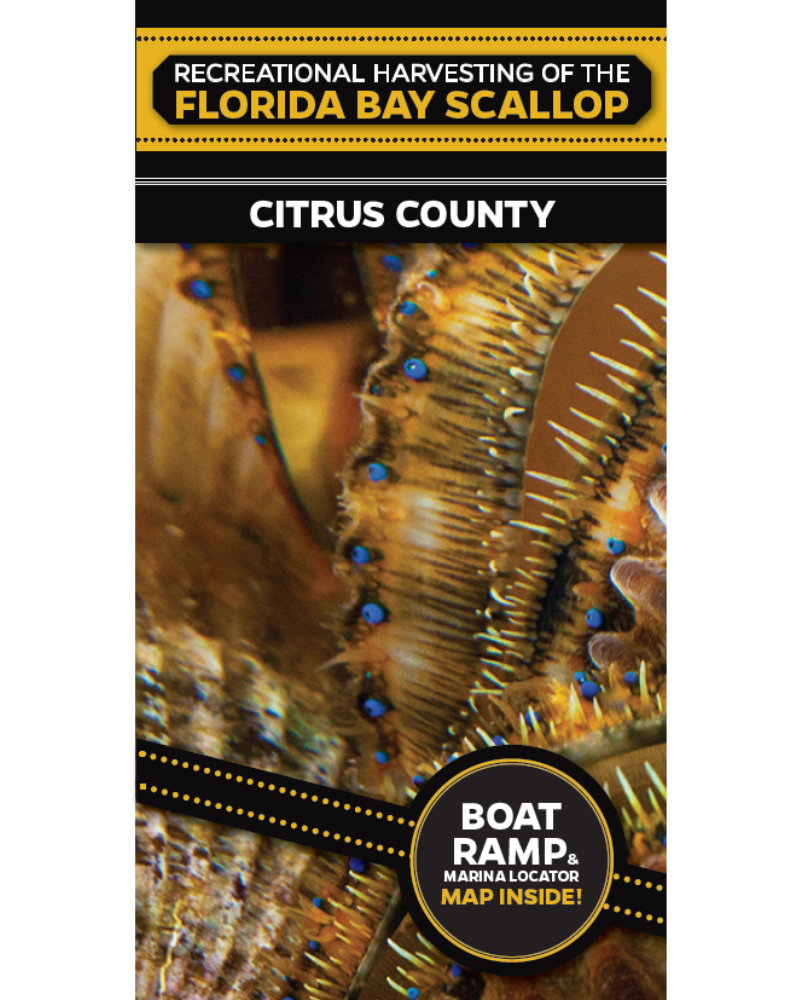
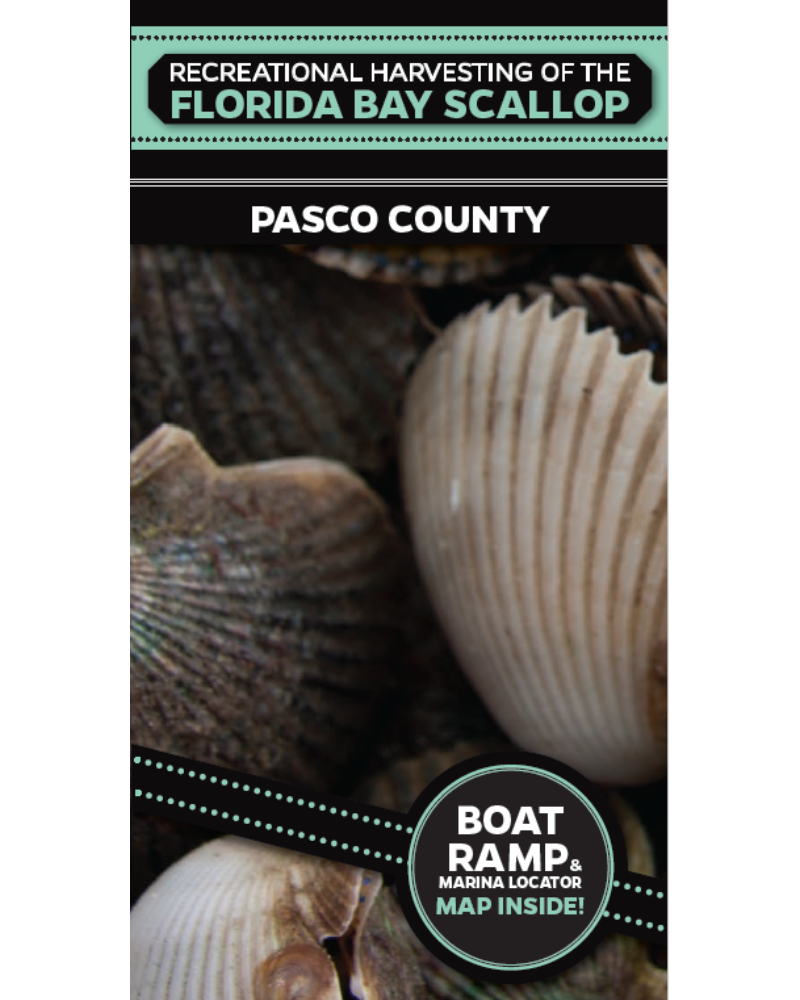
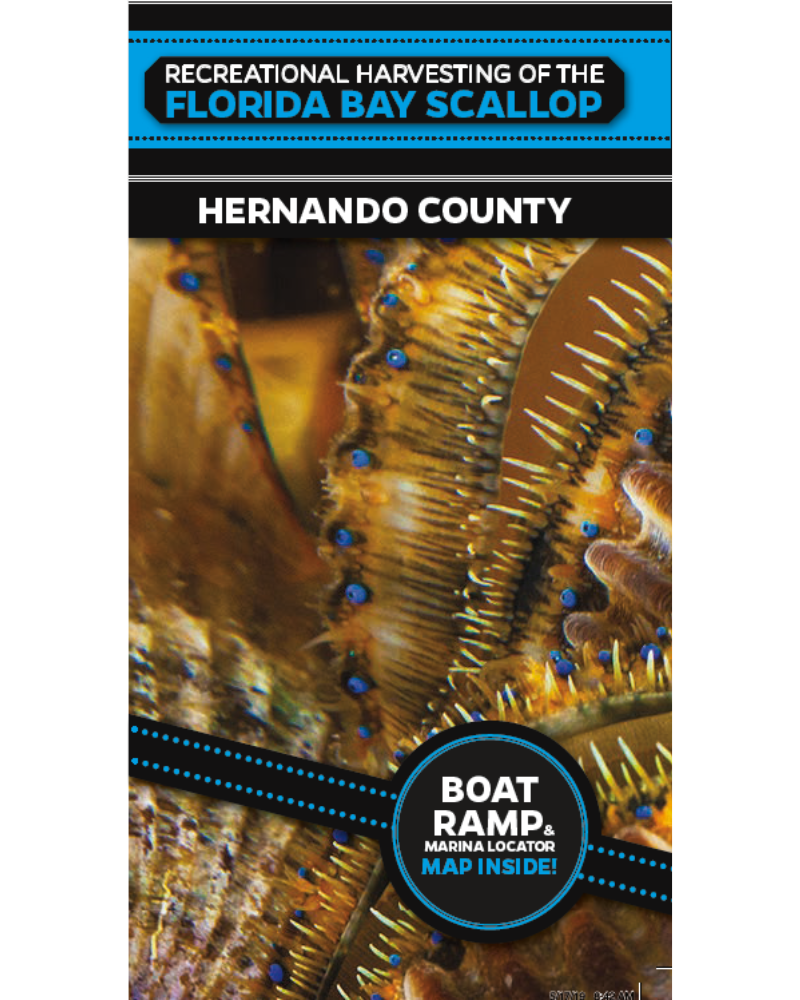
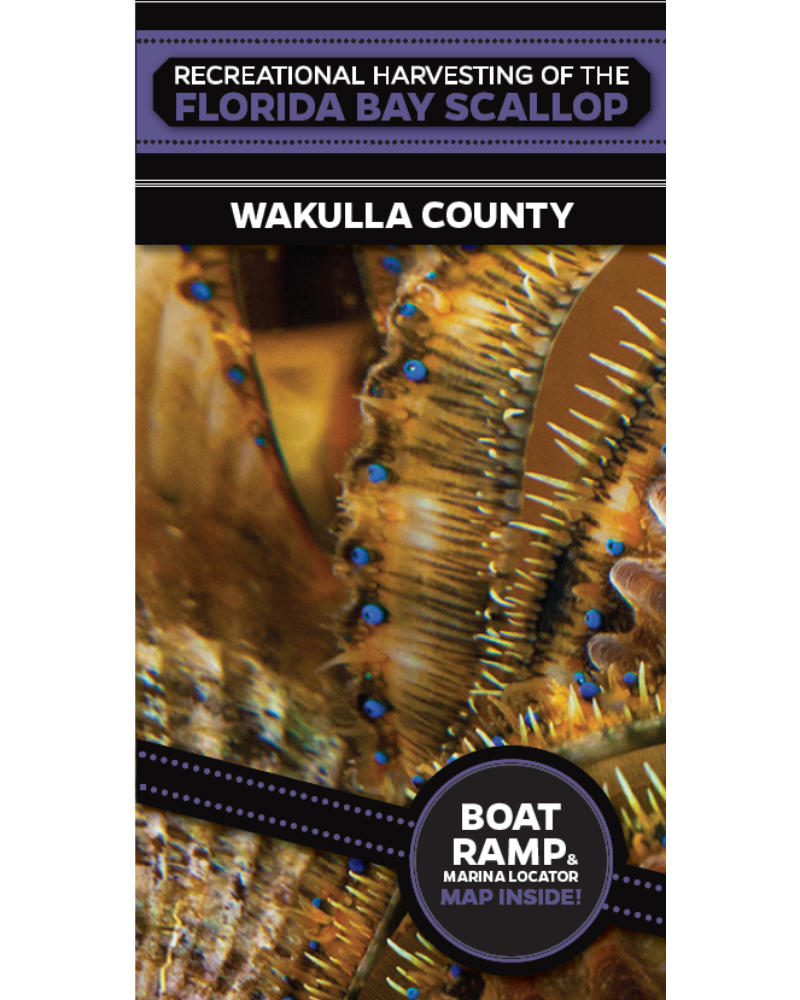
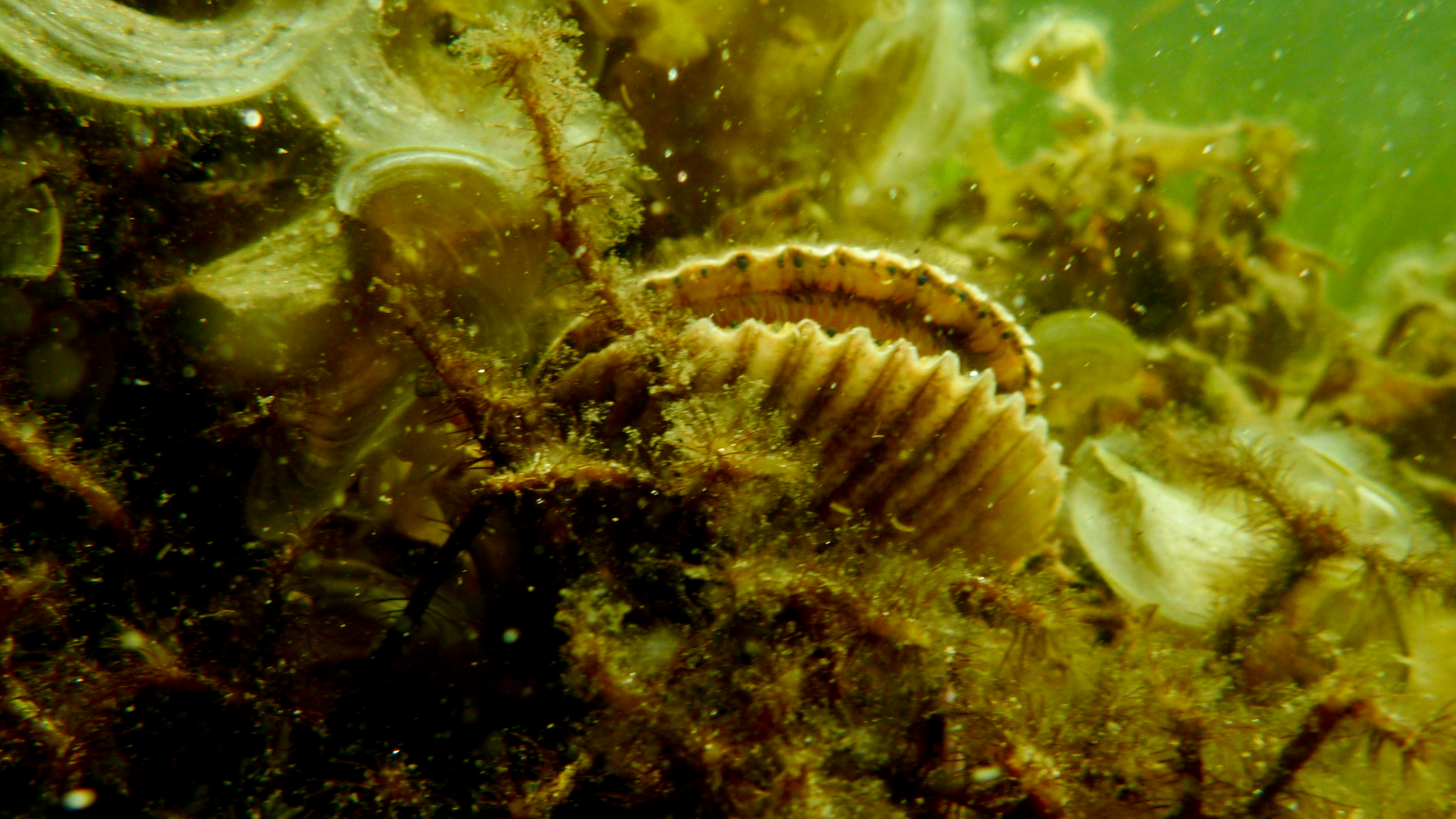
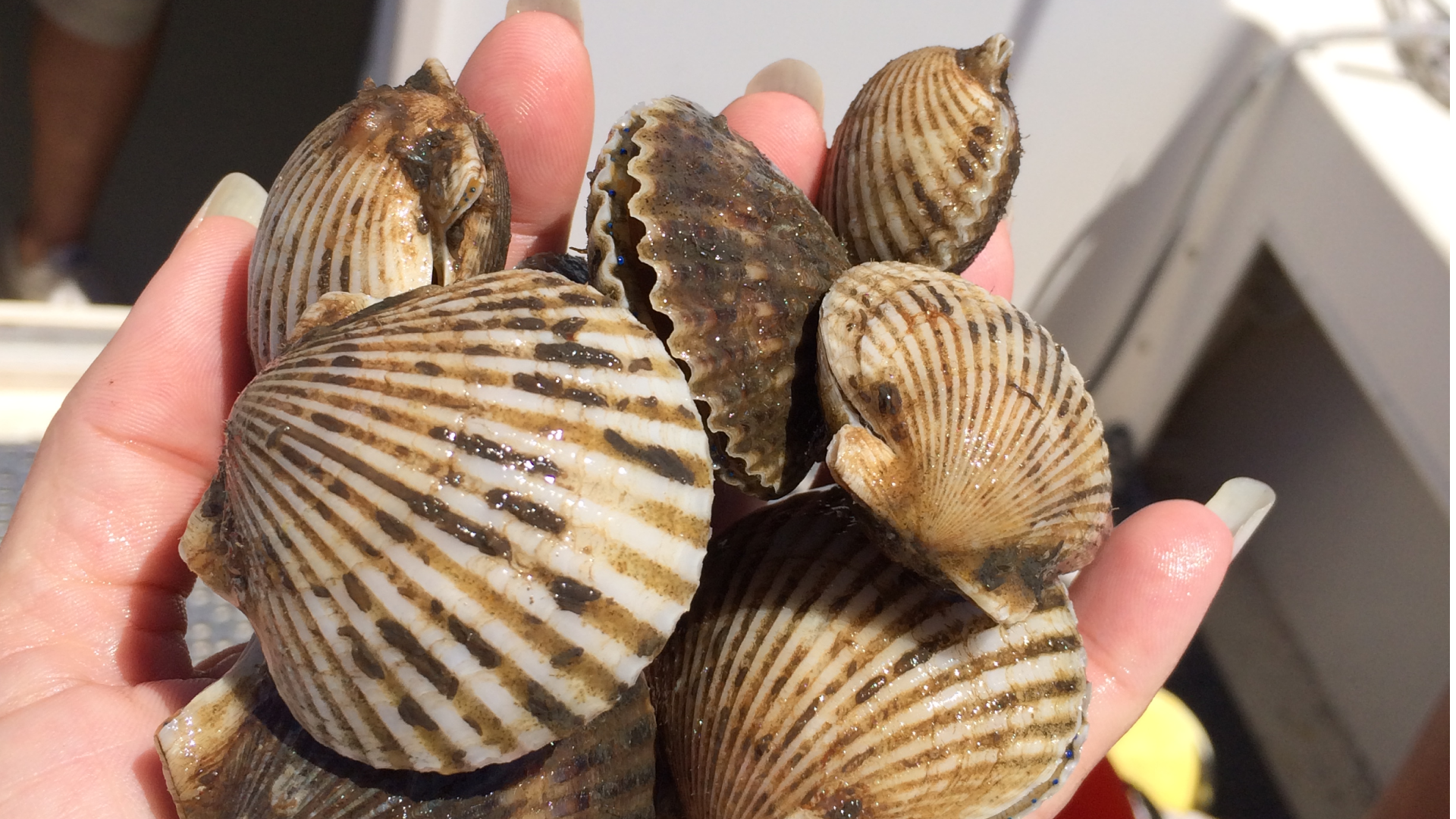
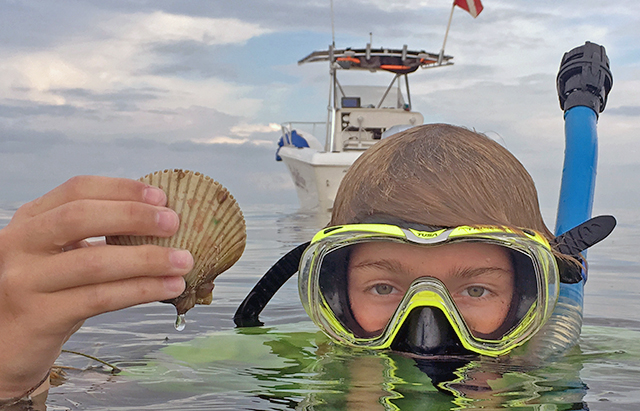
The recreational harvest of the Florida Bay scallop is one of Florida’s most anticipated summertime activities for residents and visitors of all ages. The Florida Bay Scallop is a bivalve mollusk that lives in seagrass beds in relatively shallow water, usually 4 to 10 feet deep. At one time, scallops were reported from as far east as West Palm Beach and as far west as Pensacola. Today, populations can only be found in selected locations along Florida’s west coast—principally St. Joseph Bay, the Steinhatchee area of the Big Bend, in the areas near the Crystal and Homosassa rivers with expansive seagrass beds, in patchy locations in Tarpon Springs and even down to Pasco County.
Learn more about the anatomy, reproduction and ecology of the Florida bay scallop.
Let 'Em Grow
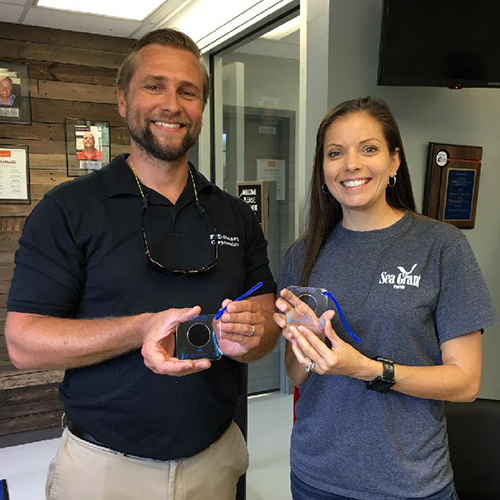
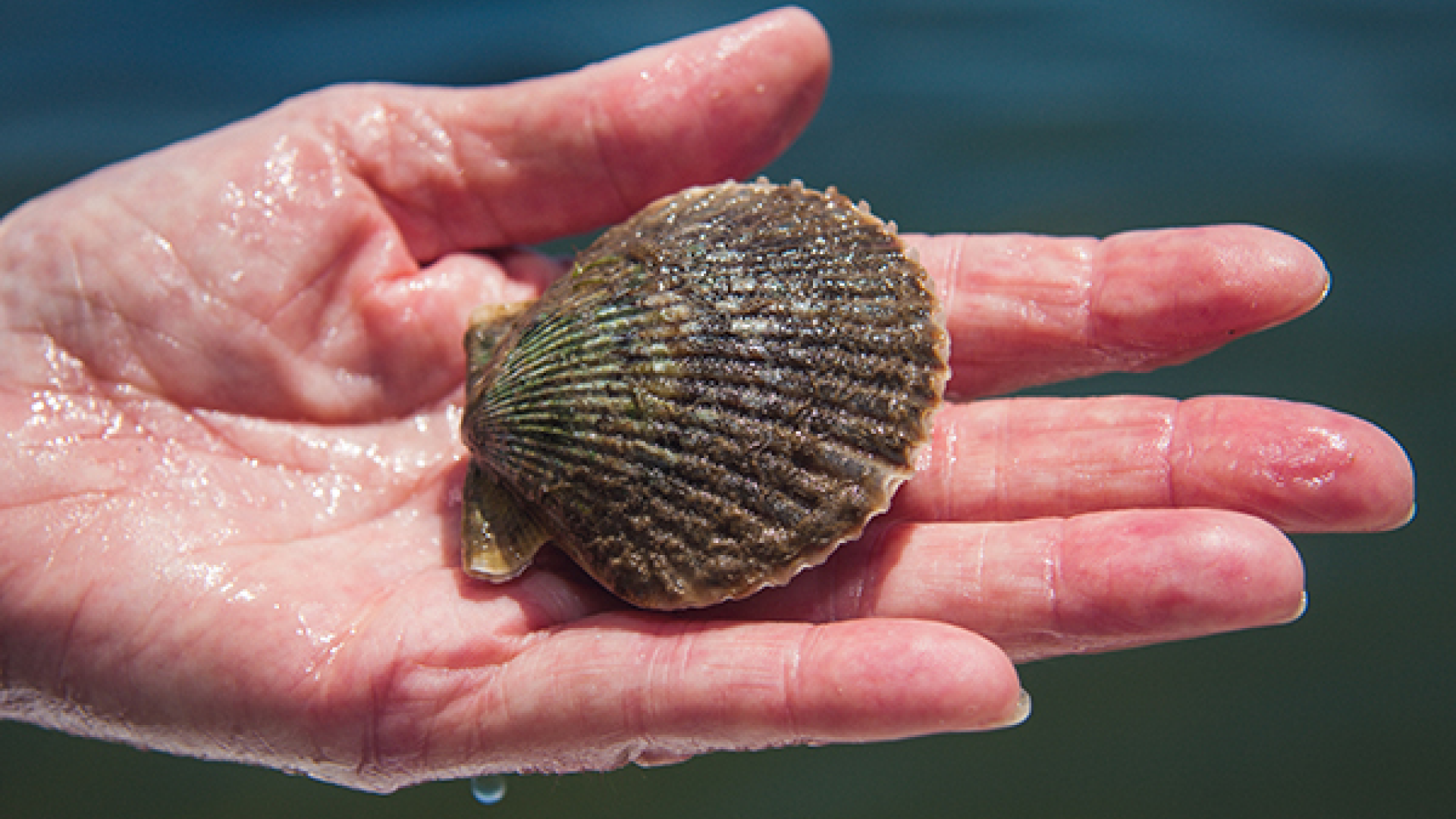
Although there is no regulation on minimum scallop size limit, allowing younger or smaller scallops to spawn helps sustain the fishery and ensure future scalloping seasons. Florida Sea Grant agents have developed an easy-to-use “scallop sorter” tool. Use this tool when collecting scallops to prevent harvesting smaller scallops (less than 2 inches) that have not yet had a chance to reproduce and replenish the local scallop population. Although there is no regulation on minimum size limit, allowing younger or smaller scallops to spawn helps sustain the fishery and ensure future scalloping seasons.
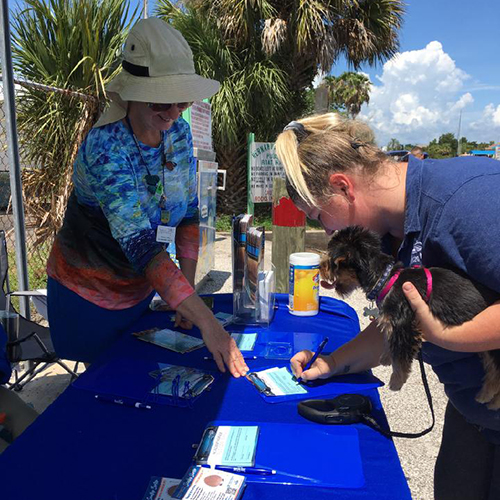
Scallop sorters will be available at select boat ramps, bait shops and marinas throughout the region. Contact the Hernando or Taylor County Extension Offices for more information.
To learn how you can easily create your own scallop sorter tools from found materials, check out the agent-authored “Let ‘Em Grow: Scalloping Best Practices” guide.
Scallop sorter tools were created in collaboration with PED-Stuart in Hernando County, Florida. The project was funded by Florida Sea Grant. Please direct questions or feedback about the project to Brittany Scharf or Victor Blanco.
Preparing To Go
UF/IFAS
1. Gather Personal Equipment
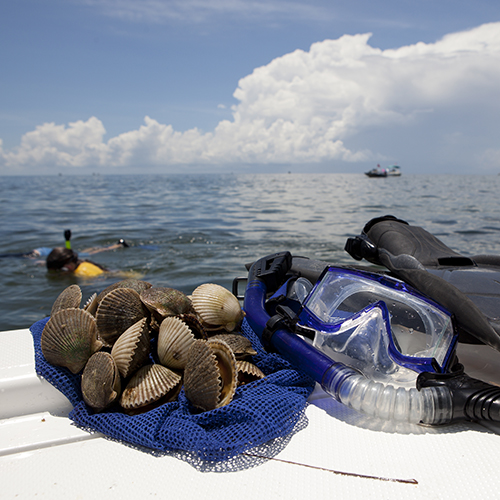
- Snorkel gear (mask, snorkel, fins)
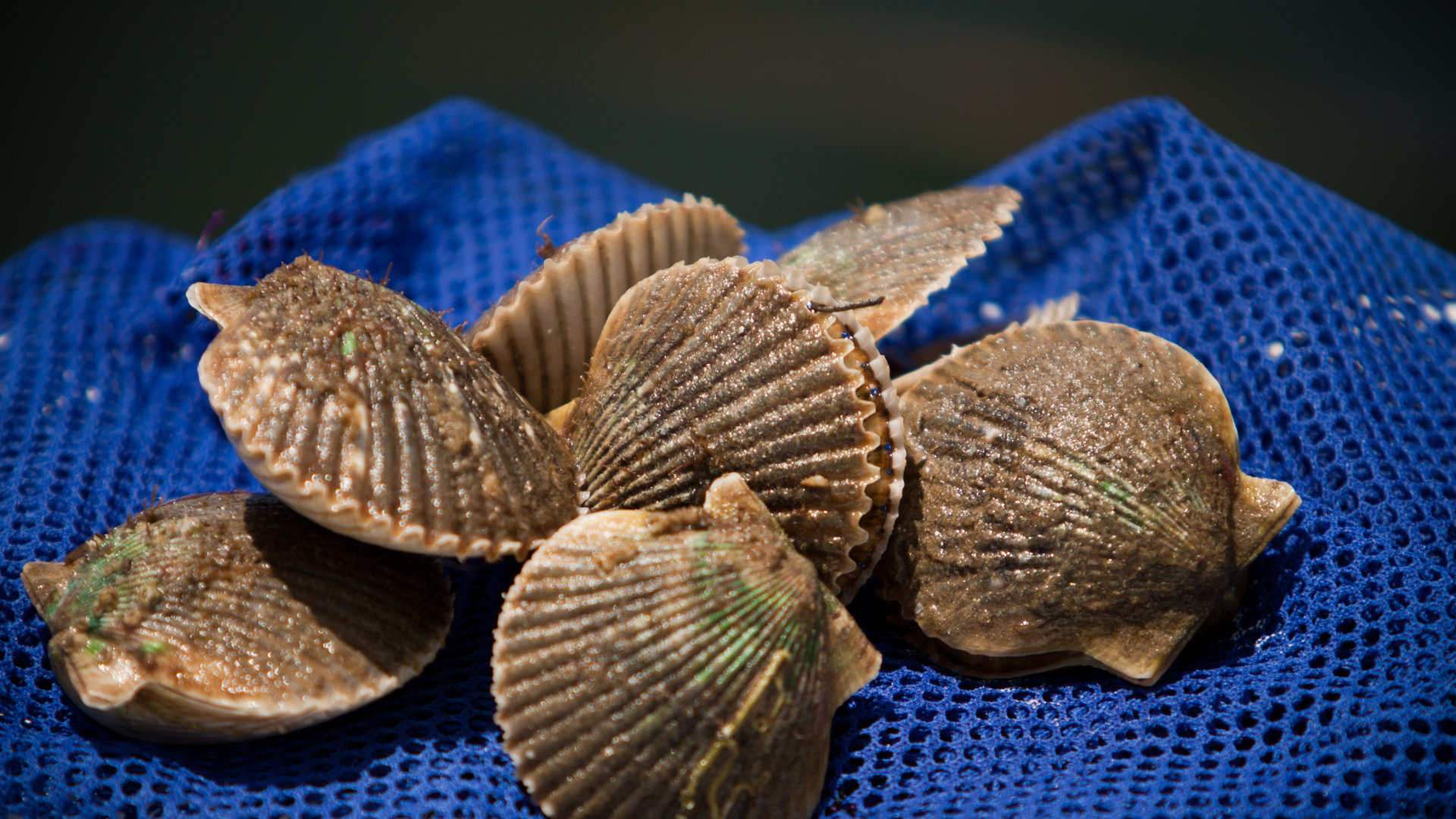
- Mesh bag and/or dip net to harvest scallops
- Plenty of water
- Hat and sunscreen
- 1-3mm wetsuit (if you tend to get cold)
- Sun suit or shirt
- Gloves (optional)
- Dive gear (optional)
2. Check License and Regulations
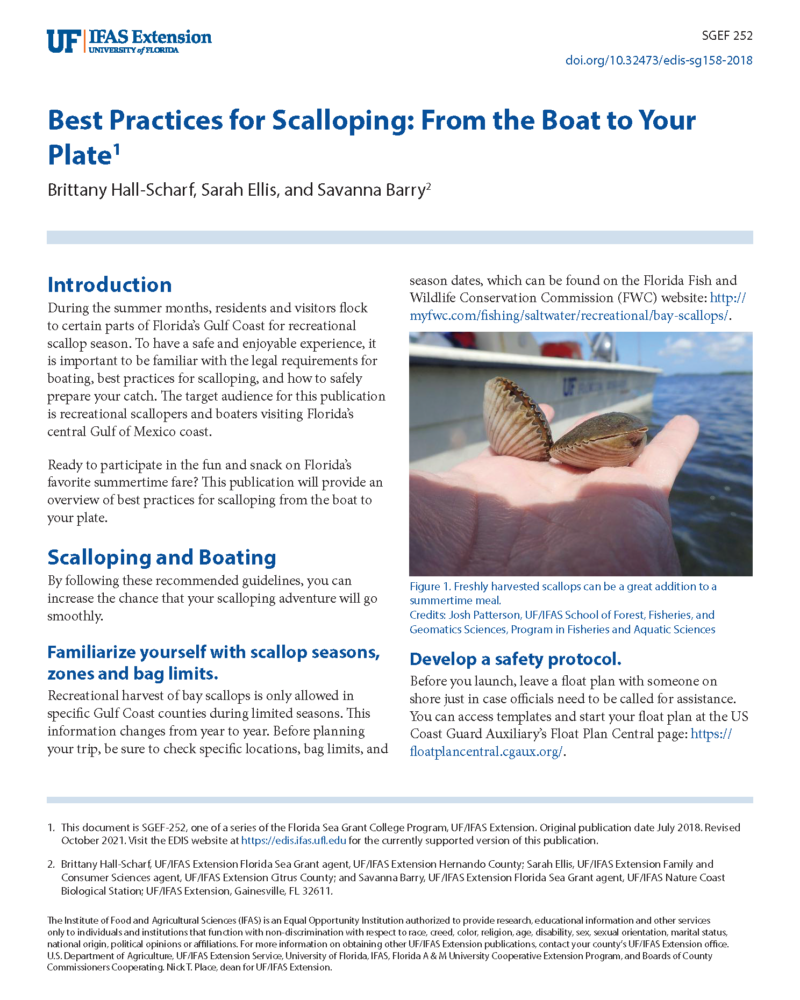
Anyone harvesting scallops needs a current Florida recreational saltwater fishing license, unless you are scalloping on a chartered trip. A saltwater fishing license can be obtained online from the FWC. Make sure you understand the open seasons and bay scallop harvesting regulations. FWC manages the fishery by opening certain zones along the Big Bend to scalloping at different times. This makes the rules more complicated for scallopers, so be sure you understand the open and closed seasons and areas. Check FWC’s website for the most up-to-date information on open dates and zones. A brief summary of basic rules is provided below (current as of Feb 2021).3. Check the Tides
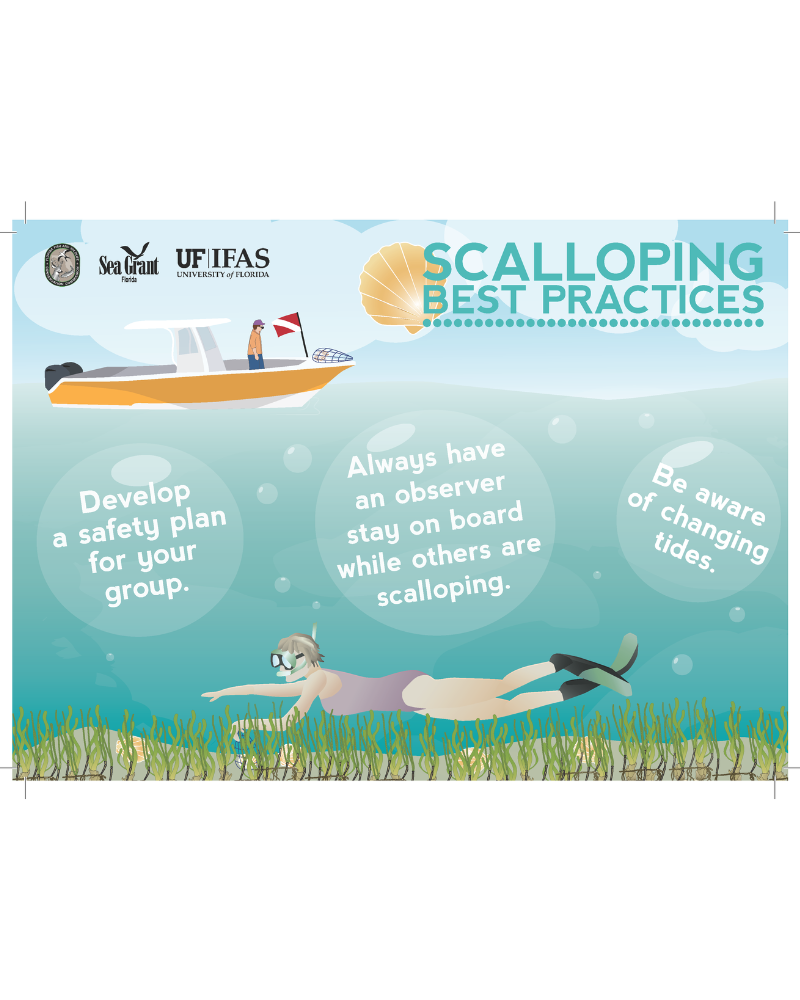
Be aware of changing tides. During outgoing tides, vessels can be stranded in shallow seagrass areas where scalloping is popular. Always check the tides for your area before venturing out and plan your trip accordingly. You can use a tide tracker like this one.- Minimum Size Limit: None, though it is recommended that you toss back scallops smaller than 2 inches across (about the size of a golf ball).
- Gear requirements: Scallops may only be landed by hand or by using a dip net, no other harvest methods are allowed.
- Transit through closed areas: In past years, it was illegal to land or possess scallops outside open harvest areas. Starting in 2019, it became legal to directly transit through closed areas with legally harvested bay scallops on board. This means that you can harvest scallops from open areas and return directly to a boat access point in a closed area without stopping. You may not stop and fish for other species, for example, if you have scallops on board within a closed area. See the FWC’s regulations page for more, including details about GPS coordinates for harvest lines.
4. Pack Boating Safety Gear
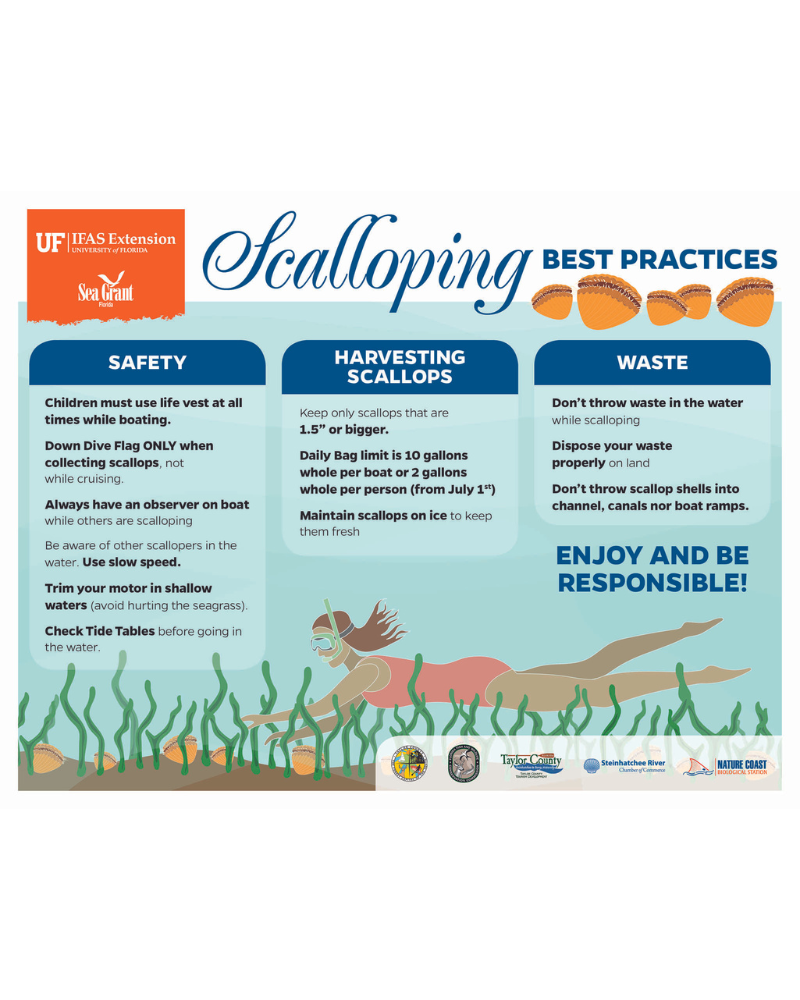
Be sure to pack your divers down flag and familiarize yourself with the rules for displaying the flag. One of the most common divers down flag violations is displaying the flag while underway. Always remember to stow your flag before moving to a new location! Also, check your standard boating safety equipment to be sure you have enough life jackets for every person aboard, a throwable flotation device, a sound-producing device such as a whistle or air horn, and a supply of visual distress signals in good condition (not wet or expired). Finally, you’ll want a cooler with plenty of ice to keep scallops cool and safe to eat.Scalloping Best Practices
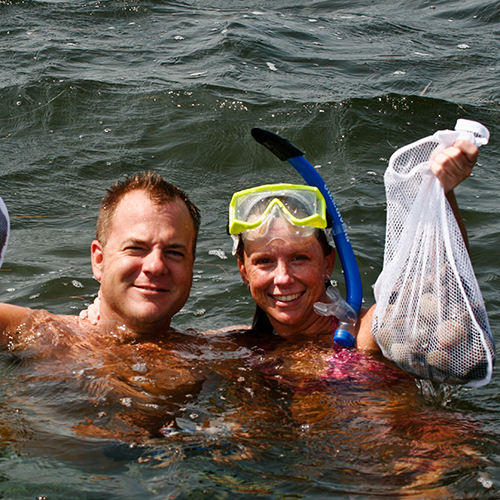
Following the best practices below will ensure the bay scallop fishery is protected for future generations to enjoy. See this comprehensive resource for a complete list of best practices related to planning your trip, protecting the fishery, and cleaning your catch.
- Throw back small scallops. Recreational harvest occurs before scallops are given the chance to reproduce. Smaller ones are younger than older and have a higher chance of living to reproduce in the fall and possibly again in the winter. In Florida, scallops typically live for about 18 months. While it is not legally required, throwing back small scallops (those less than 2 inches) is a great way to do your part to protect the fishery. Also, small scallops have smaller muscle meat so it might not even be worth your while to shuck the small ones.
- Keep only what you will eat. While “limiting out” might seem like an obvious goal, don’t forget that someone will have to shuck all those scallops! One pint of scallop meat (the typical daily limit for one person) is roughly four servings of scallops. Rather than setting a goal of catching your limit, consider setting a more conservative goal based on how much meat you will actually eat. Scallop meat only keeps in the fridge for 1 day or about 3 months frozen. Plan accordingly!
- Never double dip. Locals and law enforcement officers in the bay scallop harvest areas often report “double dipping”, or scallopers going out for a second trip after landing one limit. Without question, this is illegal. But is is also highly unethical and shows disrespect for the fishery and the people with livelihoods that depend on bay scallops.
- Protect seagrass when boating. Be aware of seagrasses while boating in shallow areas! Many species, including bay scallops, depend on seagrasses. Damage from propellers and boat anchors (called seagrass scarring) reduces habitat quality and resilience of seagrasses over the long-term. Please visit the Be Seagrass Safe website for more information
- Discard shells responsibly. Shells and soft tissues should be disposed of in open Gulf of Mexico waters with moderate to strong currents that are not channels, canals, marinas, springs, or boat ramps. Shells and soft tissues can cause problems for water quality and boating when dumped in high traffic areas close to shore. Shells disposed of in shallow swimming areas, such as springs or sandbars, pose a serious hazard to swimmers. If you clean your catch on shore, dispose of shells/soft tissues in the trash or clean and re-use for crafts or landscaping around the house.
Scalloping Regulations
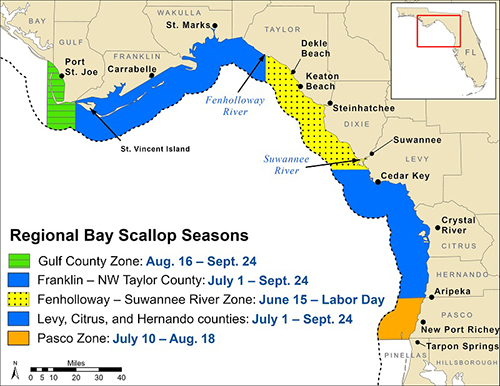
Visit the Florida Fish and Wildlife Conservation Commission’s bay scallop fishing regulations page to learn about scalloping seasons and harvest zones.