
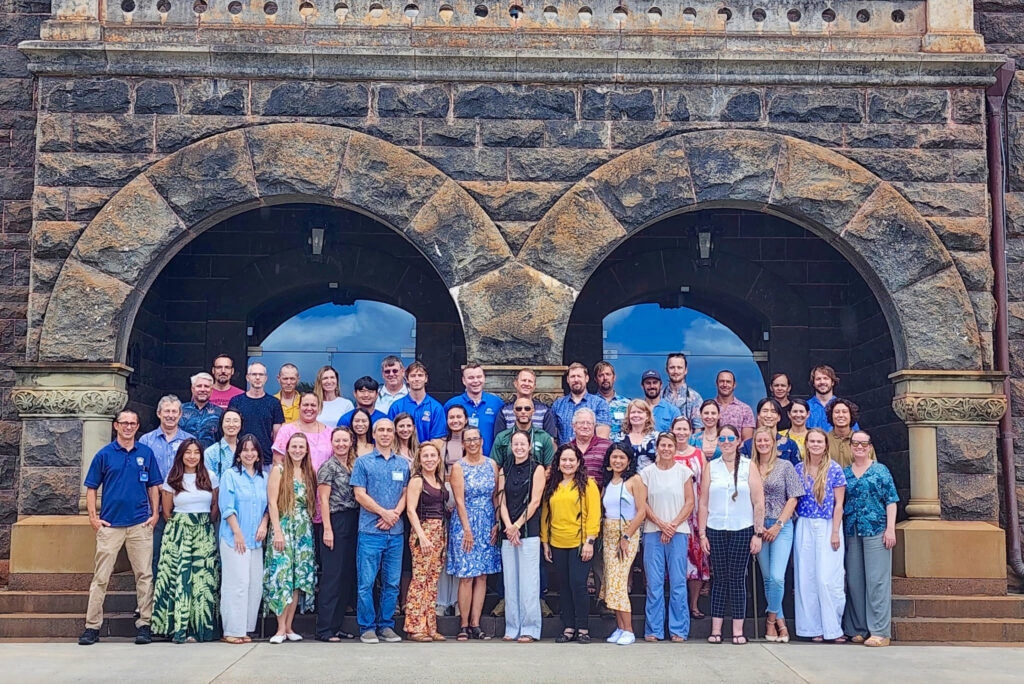
Participants from the Invasive Soft Coral Learning Exchange Workshop held at the Bishop Museum on O’ahu, Hawai’i. Photo credit: Bishop Museum.
Renee Crisostomo is the Pacific Coral Disturbance Coordinator for Florida Sea Grant. Her position supports coral disturbance preparedness and response across Pacific coral reef jurisdictions, including Hawai’i, American Samoa, Guam, and the Commonwealth of the Northern Mariana Islands, through capacity building, technical and logistical assistance, interagency coordination, and community engagement.
The Invasive Soft Coral Learning Exchange Workshop was held on O‘ahu, Hawai‘i from August 20–21 and brought together resource managers and marine invasive species experts from Hawai‘i, U.S. territories, and Florida. Participants gathered to exchange knowledge and discuss efforts to prevent and respond to invasive marine species, with a focus on addressing the illegal release and outplanting of marine aquarium organisms.
Day 1: Regional Response and Research
The first day of the workshop featured presentations on invasive soft corals impacting reefs in Hawai’i and Puerto Rico, including Unomia stolonifera and Xenia umbellata, as well as discussions on other emerging marine invasive species and coral diseases of concern. Jurisdictional managers from Puerto Rico, Hawai’i, the U.S. Virgin Islands, Guam, and the Commonwealth of the Northern Mariana Islands shared updates on their ongoing response and preparedness efforts addressing marine invasive species and other coral disturbances.
We also heard about ongoing research focused on invasive soft coral identification, novel control techniques for marine invasive species, Xeniid reproduction, distribution modeling for marine invasive species hot spots, and environmental DNA (eDNA) analysis, which uses genetic material collected from water samples to detect the presence of marine invasive organisms. This research provides valuable insights that can directly inform management strategies, improve early detection and monitoring efforts, and support the development of more effective response and control measures.
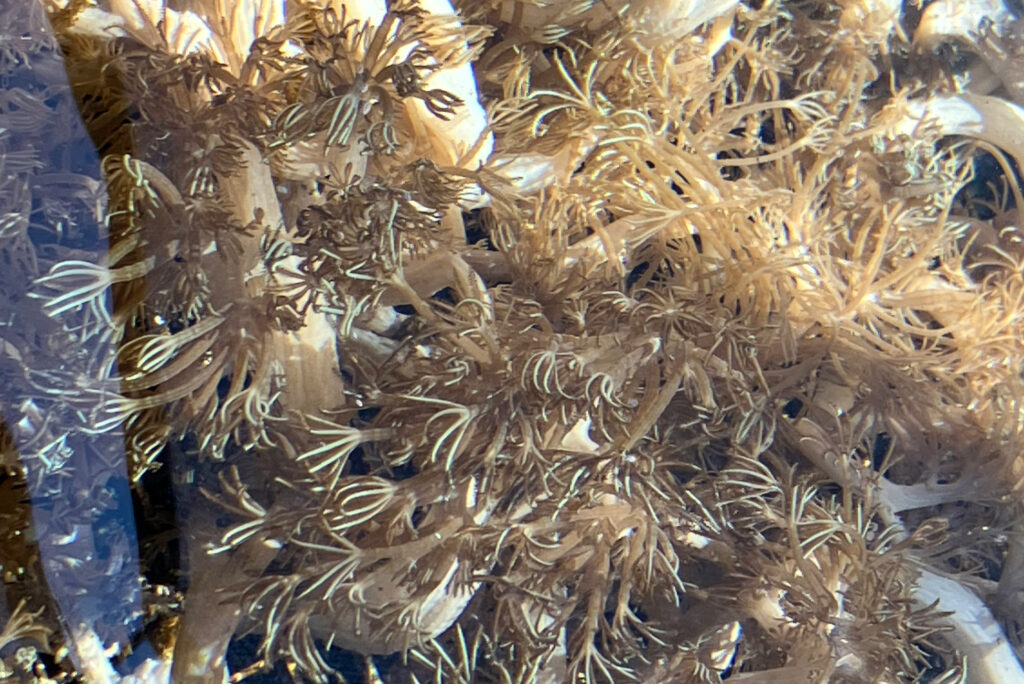
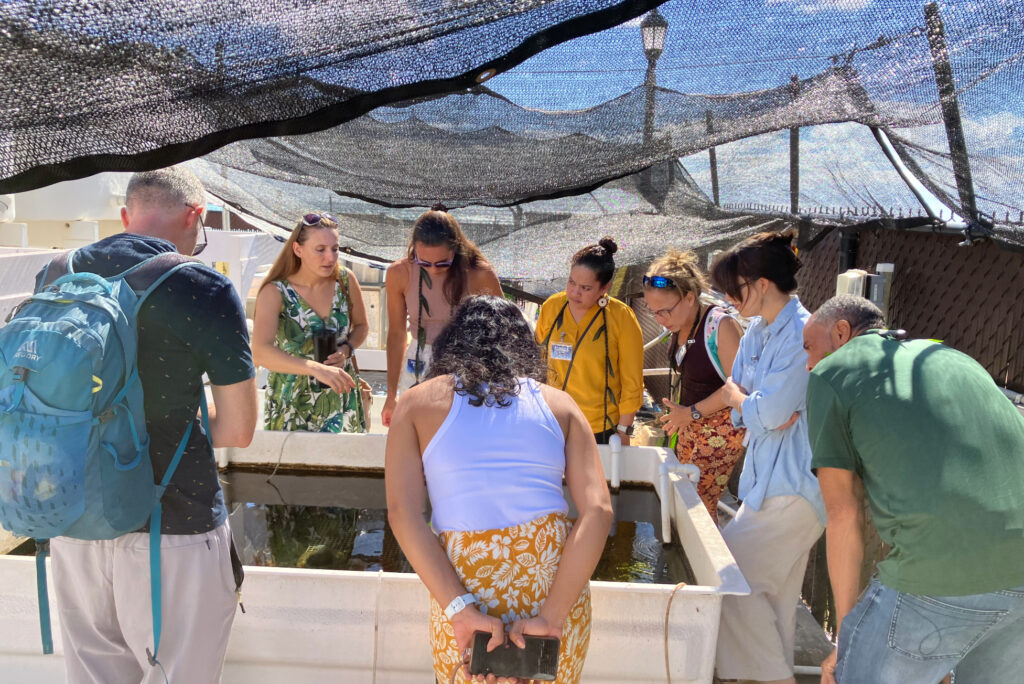
Left: Live sample of Unomia stolonifera at the Waikiki Aquarium (Photo credit: Christy Martin, CGAPS); Right: Workshop participants viewing tanks of invasive soft corals at the Waikiki Aquarium (Photo credit: Christy Martin, CGAPS).
Day 2: Rapid Reef Response Planning
On day two of the workshop, we conducted a tabletop exercise to develop a detection and rapid response scenario to Unomia stolonifera. The exercise informed the development of a plan for response efforts in the state of Hawai’i using the Aquatic Nuisance Species Task Force (ANSTF) Guidelines for the Establishment of an Aquatic Invasive Species Rapid Response Plan. While the tabletop exercise primarily focused on Hawai‘i’s response planning, other jurisdictions also gained valuable insights to inform the development of their own response plans. The U.S. Geological Survey (USGS) is in the process of creating an interactive template which will aid jurisdictions in completing and formatting their own Early Detection and Rapid Response plans utilizing the ANSTF guidelines. This interactive tool will be housed in their Siren system which is an online resource for invasive species information sharing and collaboration.
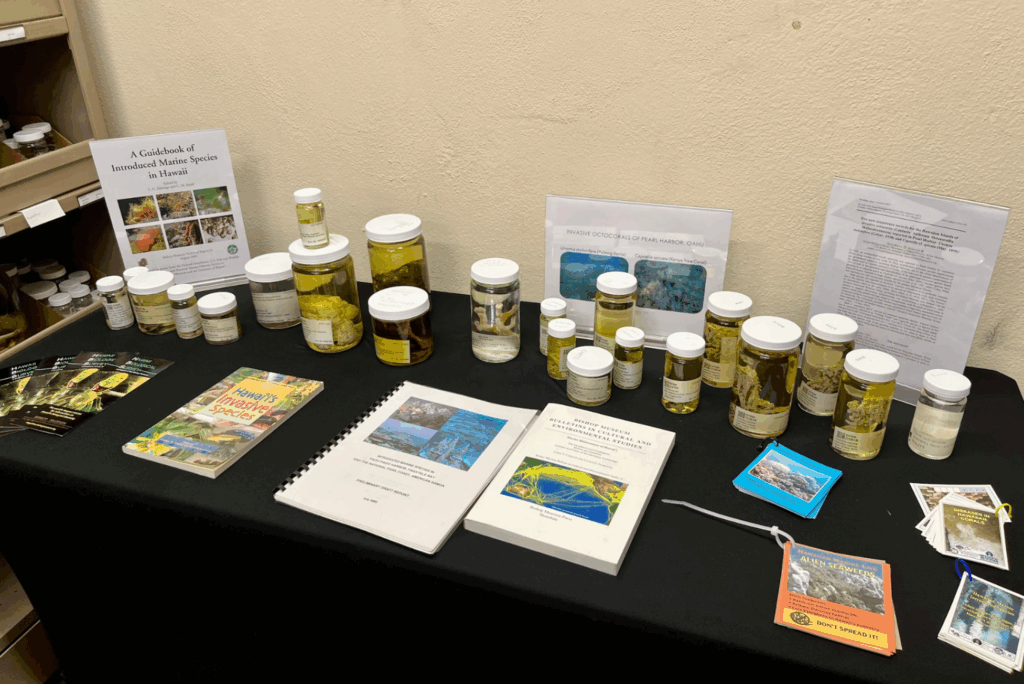
Preserved samples of invasive soft corals collected from Pearl Harbor as a part of the Bishop Museum Invertebrate Zoology Room collection. Photo credit: Renee Crisostomo, FSG.
During the second half of day two, participants split into two groups, where one group focused on outlining training workshops for early detection across Hawai‘i, and the other group discussed areas of research related to invasive soft corals they would like to see explored.
To close out the day, we were given a special tour of Bishop Museum’s Invertebrate Zoology Room. The Invertebrate Zoology Room collection held many different samples and specimens dating back to the early 1900s as well as a table display of newly preserved invasive soft corals found in Pearl Harbor.
This workshop provided me with a valuable opportunity to connect with experts and managers and gain insights into ongoing marine invasive species response efforts and research across coral jurisdictions. I was able to meet with response coordinators from the Pacific and strengthen those relationships as we work together to build capacity for coral disturbance response in the region. Additionally, I gained a deeper understanding of the response planning process and the key components involved in developing effective rapid response plans.
The workshop was organized by the Coordinating Group on Alien Pest Species (CGAPS), a project of the University of Hawai’i at Mānoa Pacific Cooperative Studies Unit, and funded through the National Fish and Wildlife Foundation Coral Reef Stewardship Fund. Special thanks to the Bishop Museum for being gracious hosts during the two day workshop.