
Julia Saltzman is 2026 FSG-Guy Harvey Fellow and a Ph.D. student at the University of Miami’s College of Arts and Sciences, specializing in movement ecology and quantitative conservation biology.
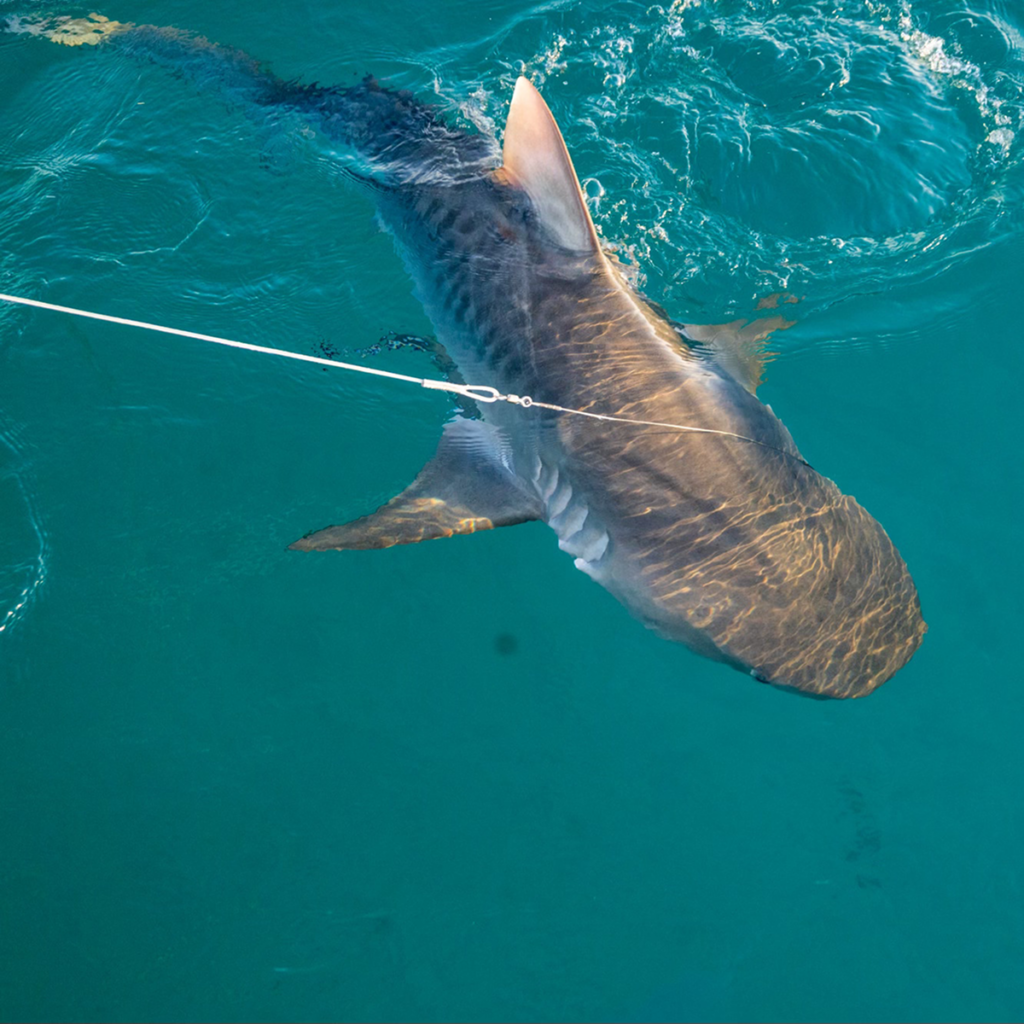
The tween years are strange.
You are not a little kid anymore, but you are not quite an adult either. You are bigger, bolder, and starting to explore more of the world, but you are still figuring out where you fit. You may take more risks, need more space, and move through your environment in new ways.
I remember being a tween very well! Like a lot of tweens, I was figuring out who I was, where I belonged, and how much independence I was ready for — all while making some truly questionable fashion choices and surviving painfully awkward social outings that still occasionally haunt me.
In some ways, sharks go through a version of this too. Scientists often call these in-between animals subadults: sharks that are no longer tiny newborn pups or “young-of-the-year,” but these juveniles are still far from maturity.
Shark scientists often focus on two life stages: newborn pups and mature adults. Newborn sharks are important because they often depend on nursery habitats, where shallow coastal areas can provide food, shelter, and protection during their earliest and most vulnerable months. Mature adults are important because they drive reproduction and population growth. But between those two stages is a long and often overlooked period: sharks that are no longer pups, but are still far from maturity.
“Tween” tiger sharks may be too big to behave like newborns, but too young to move like adults. After their first year or two of life, young tiger sharks are no longer tiny pups, but they are still years away from maturity. Males generally mature around 9–10 years old, while females often mature closer to 11–12 years old, meaning this in-between juvenile and subadult stage can last for much of a decade. During this time, they may start leaving the most sheltered nursery areas, exploring new habitats, expanding their range, changing what they eat, and encountering new risks.
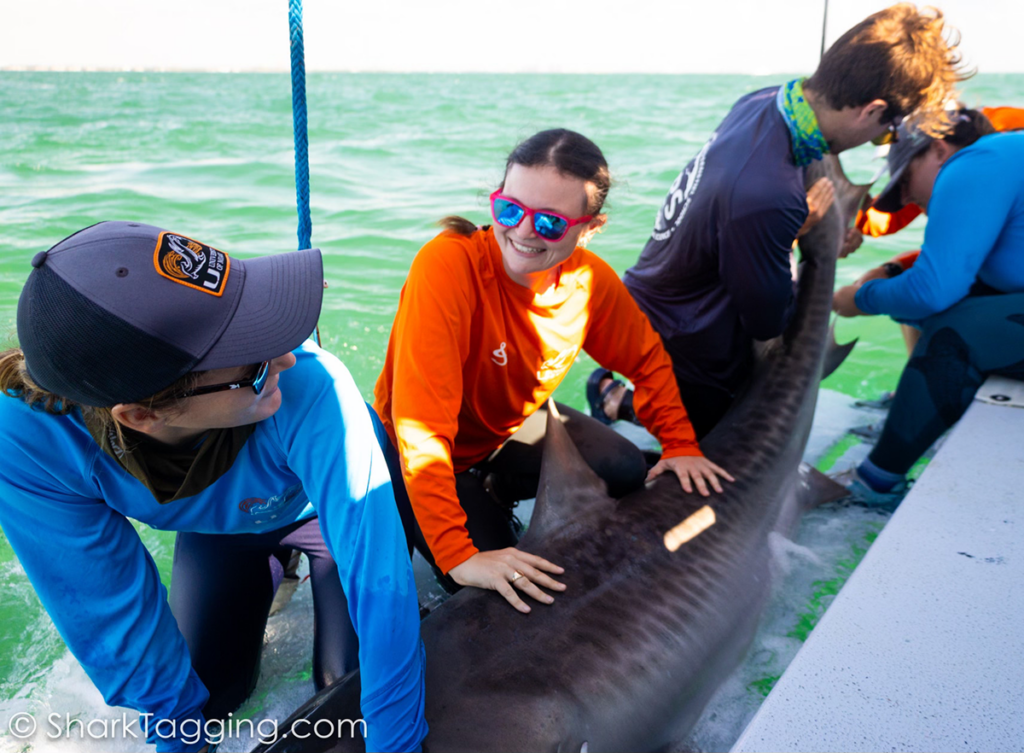
In my opinion, “tween” sharks may be one of the most important life stages to understand.
Studying this stage matters because survival before adulthood is critical for shark populations. A shark that survives its first year still has a long way to go before it can reproduce. For species that grow slowly and mature late, losing individuals during these in-between years can have major consequences. If we only study newborns and adults, we may miss the habitats, migratory corridors, and threats that determine whether young sharks ever make it to adulthood.
My research focuses on understanding how subadult (aka “tween”) tiger sharks move through South Florida’s coastal waters, including Biscayne Bay, Florida Bay, and the broader historic Everglades ecosystem. Biscayne Bay is busy and urban, shaped by boat traffic, fishing, coastal development, warming waters, seagrass loss, and water quality issues. Florida Bay is different, but just as important. It is closely tied to Everglades restoration, freshwater flow, seagrass health, and the future of South Florida’s coastal ecosystems.
For a tween tiger shark, these bays may offer food, space, and room to grow, but they also come with challenges. These sharks are no longer tiny newborn pups, but they are still far from adulthood. They are learning how to move through a connected landscape where urban coastlines, protected areas, and restoration efforts all meet.
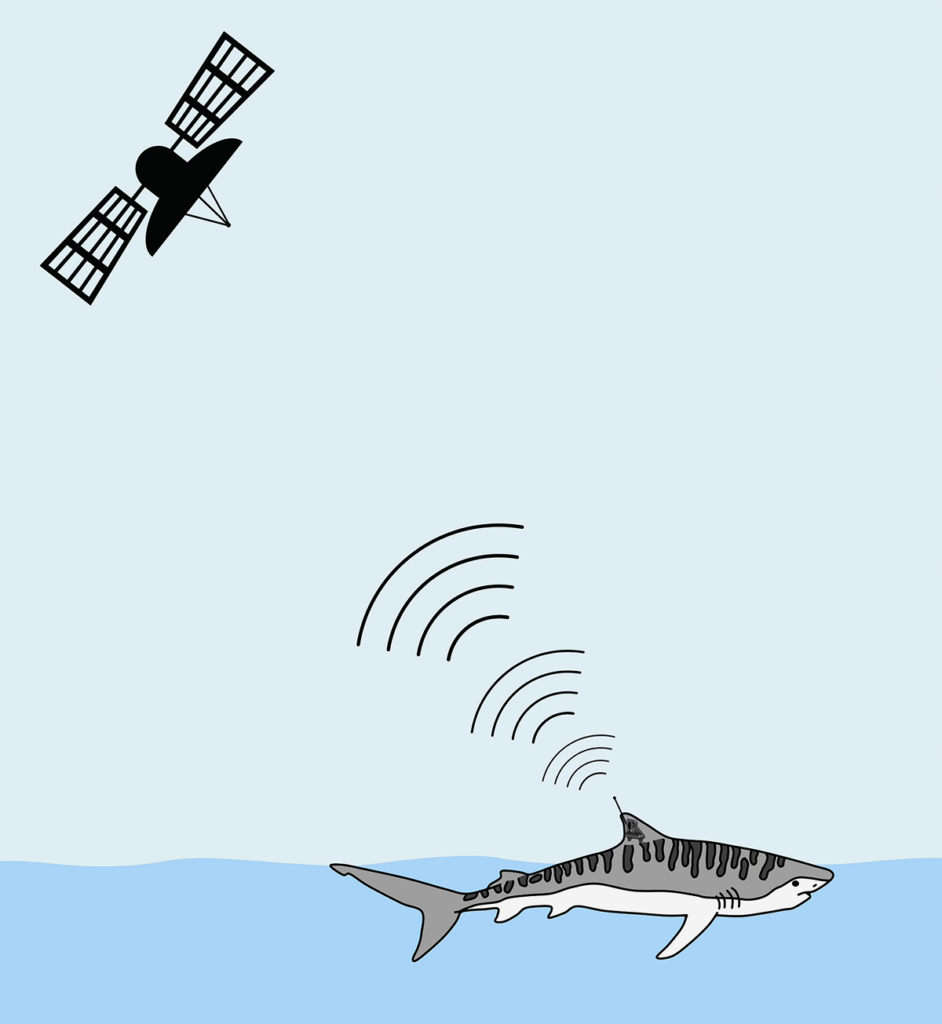
To understand where these sharks go, I use satellite tags. These tags are essentially GPS-like tracking tools for sharks. When a tagged shark’s fin breaks the surface, the tag can transmit a location to satellites overhead. Each point on the map gives us a small glimpse into that animal’s life. One point might show where a shark went after leaving the bay. A series of points can reveal whether it stayed close to shore, moved between habitats, or traveled through areas heavily used by people.
By tracking juvenile sharks across Biscayne Bay and Florida Bay, we can ask questions that are difficult to answer from catch data alone. Are young tiger sharks returning to the same areas over time? Do they use restored habitats differently from more urbanized parts of the coast? Are there movement corridors that connect Biscayne Bay to the broader Everglades? And where might their movements overlap with human activities like boating, fishing, or coastal development?
For sharks, identifying areas where they spend time is especially important because many species grow slowly, mature late, and produce relatively few young compared to other fishes. Protecting the habitats used by juveniles and subadults can therefore have long-term benefits for population recovery and resilience.
So far, the University of Miami Shark and Conservation Program has deployed 10 satellite tags on “tween” tiger sharks in South Florida, and we are excited to deploy more as this work continues. Each tag adds another piece to the puzzle, helping us understand how young tiger sharks move between Biscayne Bay, Florida Bay, and through the broader Everglades ecosystem.
This project is supported by the Florida Sea Grant Guy Harvey Fellowship, the Everglades Foundation, and the National Geographic Society, whose support is helping make it possible to study these overlooked life stages in a place where shark conservation, ecological restoration, and coastal management intersect.
The tween years may be awkward, but they are also formative. For tiger sharks, this in-between stage may help determine whether an individual survives long enough to become part of the adult population. By following these sharks through South Florida’s changing coastal waters, we can better understand the habitats they need, the risks they face, and the connected ecosystems that help them grow up. And maybe that is what makes tween sharks so interesting. They are not just passing through an awkward phase. They are showing us what it takes to grow up wild in a changing world.