
A tray of succulent oysters on a bed of crushed ice might entice at the Fourth of July party, but you ignore the allure because you’ve been told to only eat them in months that end in “R.” Or you picked up a filet of salmon at the supermarket, saw the “farm-raised” label, and hesitantly put it back.
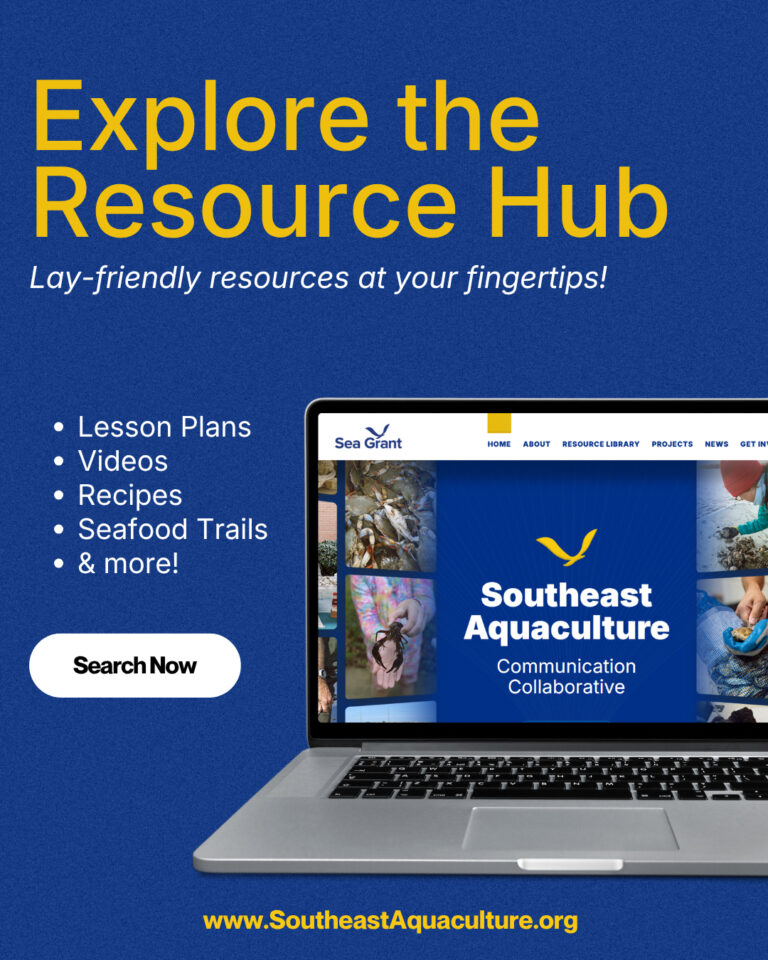
These everyday choices reflect common misconceptions about seafood, especially “farm-raised” or aquaculture products in the United States. That’s why the Southeast Aquaculture Communication Collaborative (SACC) has launched its online platform at https://www.southeastaquaculture.org, amplifying high-quality resources from organizations across the region to improve public aquaculture literacy.
“By aggregating science-based information about aquaculture, we aim to help folks of all ages learn about aquaculture, foster regional collaborations to promote locally grown seafood, and empower consumers to make informed choices,” says Emily Riewestahl, Florida Sea Grant’s Aquaculture Marketing & Communications Specialist and SACC project coordinator.
The SACC is a three-year, NOAA-funded initiative led by Florida Sea Grant and the National Sea Grant Law Center, with collaborative members from Florida, Texas, Louisiana, Georgia, North Carolina, South Carolina, and Mississippi-Alabama.
“The SACC website extends the impact of resources that may become “hidden gems” after their grant funding for promotion, tabling, or stakeholder engagement ends. It also helps reduce duplicative efforts of recreating a resource that already exists by sharing resources beyond state lines or expanding pre-existing efforts to broader regional relevance.”
The collection of over 250 resources on the website brings together & amplifies the past work of all of these states/territories to educate the public on aquaculture and seafood, providing approachable science-backed information for a wide audience, including students, children, educators, seafood consumers, and policymakers.
Resources on the site include:
- Aquaculture basics, including systems, species, and production in the Southeast U.S.
- Classroom-ready lesson plans, activities, and STEM-aligned teaching tools
- Career exploration and professional development resources highlighting aquaculture professions
- Science-based content on aquaculture sustainability, ecosystems, and food systems
- Seafood literacy materials covering nutrition, seafood safety, and consumer choices
- Multimedia content such as videos, webinars, and virtual learning tools
- Hands-on learning opportunities, including facility tours and field experiences
The site also features tools that allow users to recommend resources to be added to the collection. They welcome submissions of science-based and lay-friendly materials about aquaculture in the Southeast United States.
Despite its importance to the region’s sustainability, culture and economy aquaculture is often misunderstood and misrepresented.
“Science and data are advancing rapidly, and information can become outdated by the time it reaches the public. With so much new content constantly coming our way, it is increasingly difficult to sort through it all, especially in a media environment where science based, non emotionally driven messages often struggle to compete for attention.” says Emily.
Fortunately, the SACC website not only provides reliable information and educational resources, but also connects people with experts in their own communities who can answer questions and address concerns.
“I hope the SACC can harness the strength of stakeholders across the U.S. Southeast to tackle pervasive aquaculture myths, empower consumers, and place educational resources in the hands of educators.”
More about the Southeast Aquaculture Communication Collaborative
Funded by the National Oceanic and Atmospheric Administration (NOAA), the SACC is one of three regional collaboratives created to improve aquaculture communication and literacy nationwide. With a grant award of $749,884, the program brings together extension agents, educators, researchers, and industry partners to advance aquaculture literacy across the Southeast and ensure communities have access to accurate and relevant information.
Project Leads:
- Sherry Larkin and Charles Sidman, Florida Sea Grant
- Emily Riewestahl, Florida Sea Grant
- Stephanie Otts, National Sea Grant Law Center
- Terra Bowling, National Sea Grant Law Center