
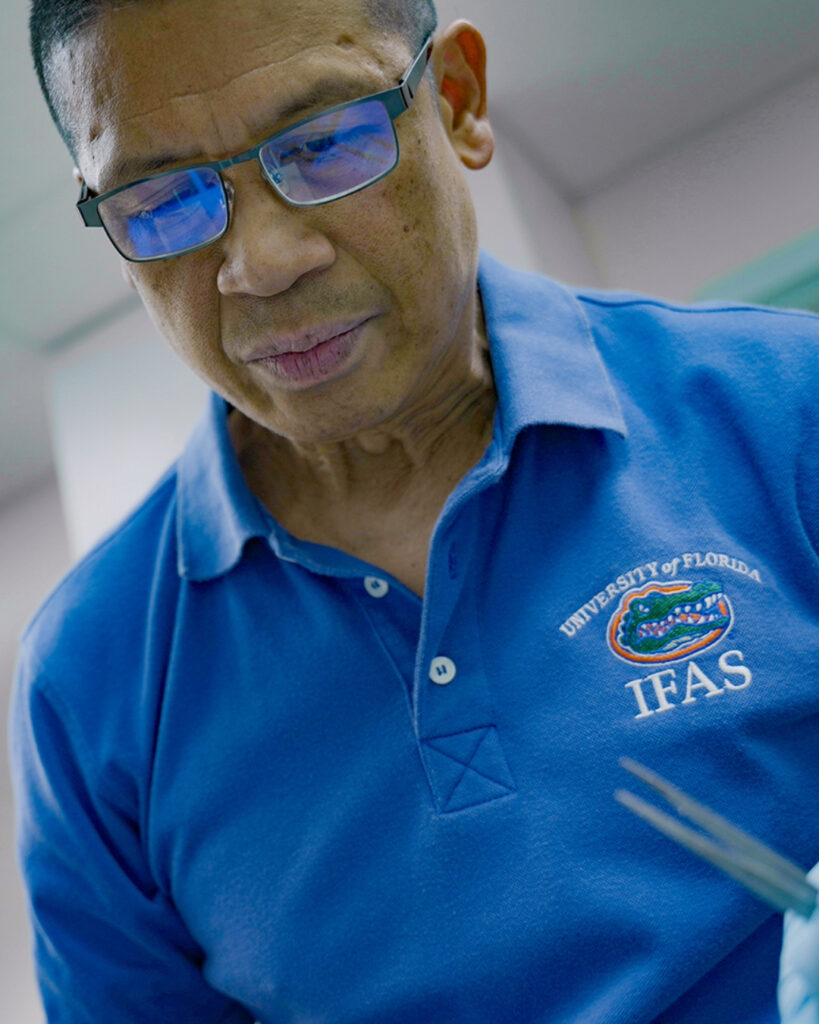
Roy Yanong, Extension Veterinarian and Professor in UF Fisheries and Aquatic Sciences (FAS).
You’ve probably checked off your hurricane prep list: extra ice, nonperishable food, batteries, flashlight… but what about your fish tank? When the power goes out, your fishy friends need more than luck to stay safe. Power outages affect temperature, oxygen levels, and other water quality measures. We sat down with Dr. Roy Yanong, Veterinarian and UF/IFAS Professor of Fish Health and Aquaculture, to get expert tips on best management for your aquarium during outages, especially during Florida’s storm season.
Q1: During a power outage, what key aspects of aquarium care should I prioritize?
A: Keep your eyes on the fish tank’s temperature, oxygen, and ammonia levels. Too much detritus (fish waste and other decaying matter) or uneaten food can lead to ammonia buildup, using up oxygen necessary for fish to survive. Warmer waters typically result in less oxygen. High ammonia and low oxygen are a dangerous combination.
Q2: How can I maintain steady oxygen levels in my fish tank?
A: The key to maintaining safe oxygen levels is proper aeration of oxygen from the air to dissolve into the water while letting carbon dioxide escape. Good aeration happens when the surface of the water is moving, ideally with a turbulent or “choppy” appearance. Still water means poor oxygen exchange. Use a battery-powered air pump or a small generator for your aquarium pump and filters to keep the surface moving and oxygen flowing. Be sure to keep extra batteries on hand, even if you have generator backup. Also, avoid overcrowding; too many fish can quickly deplete available oxygen. Live plants can help regulate oxygen and ammonia, but only if they receive enough light from a window or aquarium lights.
Q3: How can I manage harmful ammonia or nitrite spikes?
A: Beneficial bacteria in the biofilter usually break down ammonia produced by fish. During a power outage, the biofilter may stop working, causing ammonia and nitrite to rise and harm your fish. To prepare, stop feeding fish a day or two early to reduce waste—fish can go about a week without food if they are in good condition. Use battery-powered air pumps to maintain oxygen for fish and bacteria. If toxins rise, perform partial water changes (see question #13) and consider water conditioners like Amquel, which may reduce ammonia’s harm but doesn’t remove it. Remove any dead fish immediately to prevent further spikes and disease. Longer outages and crowded tanks increase risks, so plan ahead.
Q4: How can you manage the biofilter?
A: To keep your biofilter clean, remove the biofilter media (the porous material in the biofilter) from your hang-on-back (HOB), or canister filter, and place it directly in an aerated tank or container to ensure the beneficial bacteria stay alive. For loose filter material from canisters, place it in a mesh bag and suspend it in the tank. Once your system is back up, return the media to the filter.
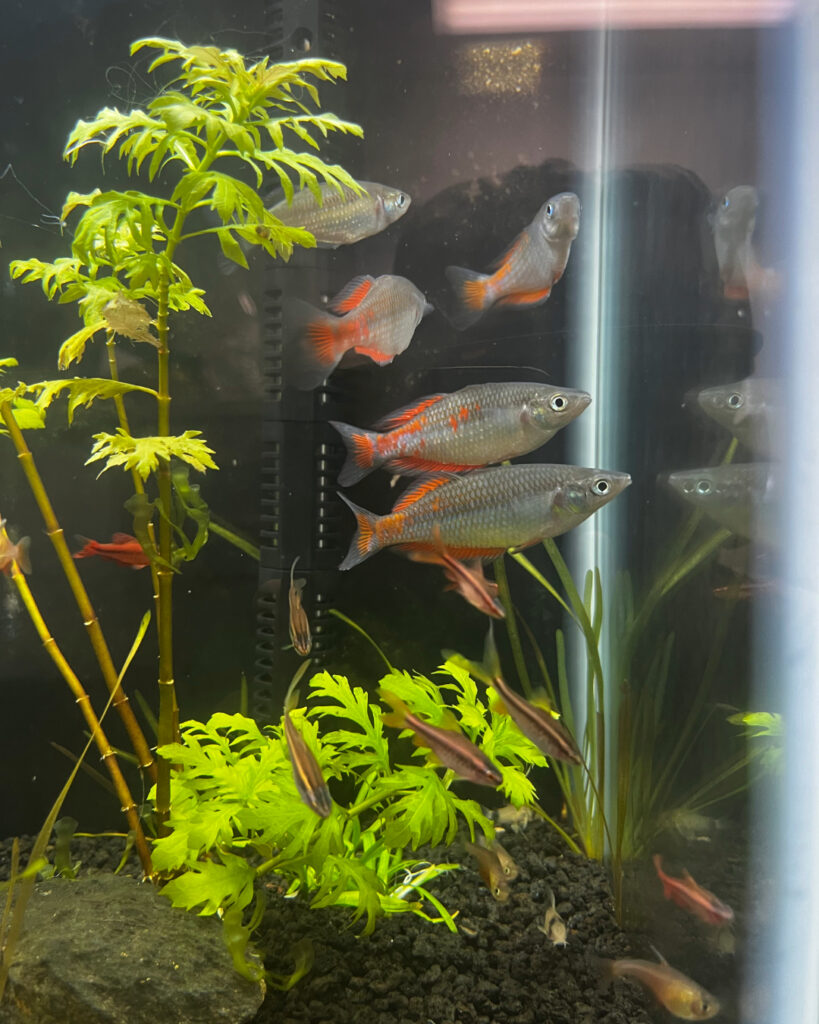
Florida Sea Grant freshwater aquarium fish. Image by Cassie Sexson.
Q5: You mentioned making sure tanks are properly lit for plants. How does a lack of light during a storm affect my aquarium plants and fish?
A: Fish can usually handle being in the dark during a storm, and it’s best to keep the tank or room dark to reduce stress and aggression for the fish. If you have live plants, they do need light—ideally 6–8 hours a day to produce oxygen. If power is out, try using indirect sunlight or a generator. If you can’t provide any light, it’s best to remove the plants, as dying plants will rot and harm the fish by polluting the water.
Q6: How can I keep my fish comfortable if the tank temperature changes?
A: Many tropical aquarium fish are comfortable in water temperatures between 75–85°F. However, when temperatures get close to 90°F, it can cause stress and health problems for the fish. Warm water holds less oxygen, and saltwater holds even less oxygen than freshwater. If you lose power and your home gets hot, it becomes even more important to have good aeration to keep your fish healthy. If the water gets too warm, (e.g., > 90°F) consider blowing a battery powered fan over the open top to provide evaporative cooling. To avoid shocking the fish, the safest way to change the temperature is gradually, aiming for a drop of about 1–2°F every few hours. Lastly, remember that larger tanks tend to stay cooler longer than smaller ones, which can help reduce the risk of sudden temperature changes.
Q7: Can I use ice to cool the water in the fish tank?
A:. Ice bags are a short-term fix and would need to be monitored (especially for small tanks). It would be difficult to replace ice bags if there is no power in the house or local store either. If you have a leaky ice bag (if you use the chemical gel packs) those could also be a problem. You should avoid otherwise and focus on aeration & evaporative cooling.
Q8: What are signs of distress in fish?
A: Distress in fish is usually caused by low or irregular oxygen levels or rising ammonia or nitrite. Common signs include abnormal behavior, or gasping at the surface, otherwise known as “piping”. Stress from poor water conditions can weaken their immune systems, making them more vulnerable to parasites and infections. Watch for signs like abnormal behavior, reduced appetite, or “flashing” (when fish scrape against surfaces). These can indicate disease beyond simple oxygen or nitrite issues. If you notice these signs, seek advice from a veterinarian or an experienced aquarium expert.
Q9: If I have a lot of fish in one tank, can I move them to another tank?
A: It depends on the size of the new tank and how many fish you’re moving. If you have a larger, fish-safe container (like a 30–55-gallon tank) and use dechlorinated water, it can help relieve overcrowding, especially if the fish are gasping despite aeration. Avoid moving fish to small bowls, as they hold less oxygen and lack beneficial bacteria to break down waste. If you use an uncycled tank or container, be prepared to do frequent water changes to keep the water safe.
Q10: What special considerations are there for saltwater tanks during outages?
A: Fish-only saltwater tanks usually have fewer issues. Reef tanks will require extra care and ideally a generator during a power outage, since more oxygen and lighting is needed for the coral and other animals. Temperature control is important, especially in warm places like Florida. Plants (in freshwater or saltwater tanks) can help reduce ammonia if they get enough light.
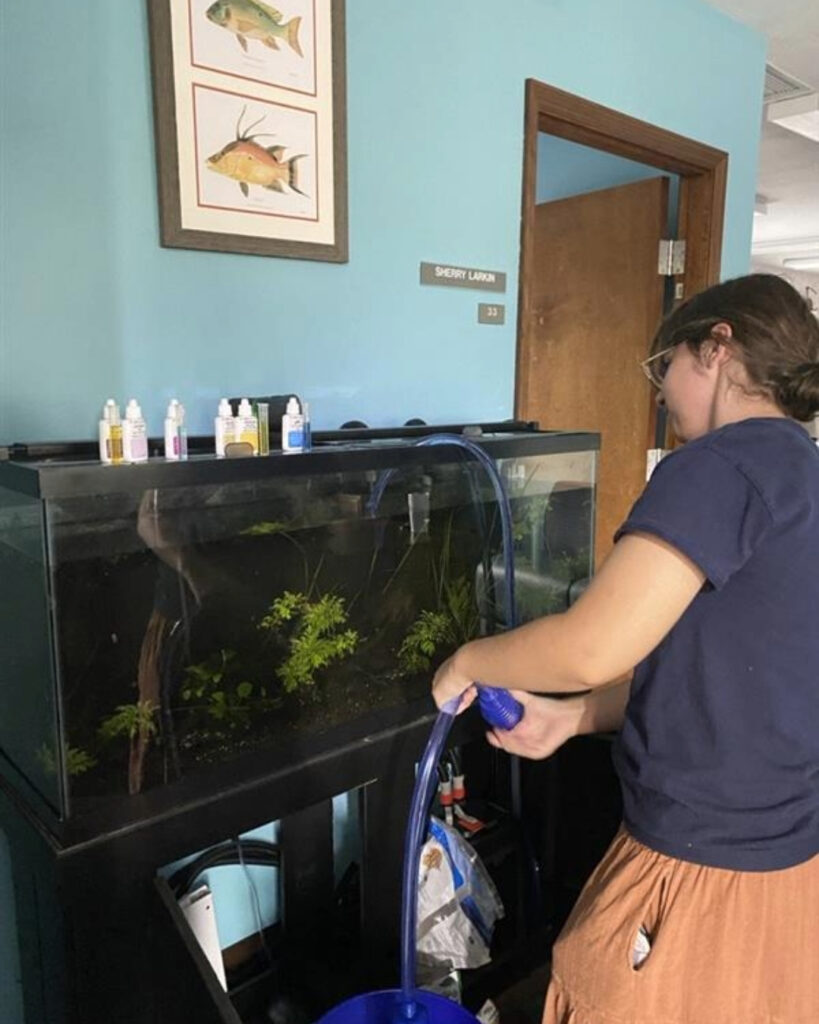
Student from UF Aquaculture and Aquarium Club conducts water change on Florida Sea Grant aquarium tank. Image by Cassie Sexson.
Q11: Any tips for keeping fish safe during an evacuation?
A: If you expect to evacuate, it’s a good idea to plan, like you would for a dog or cat. See if a friend or family member can temporarily care for your fish. You can transport fish in food-grade buckets or sealed coolers (like Igloo coolers) equipped with aerators, such as bait bucket aerators, to keep oxygen flowing. For shorter stays-just a few days or a week—they’ll need regular water changes with dechlorinated water. This approach helps keep your fish safe when you’re unsure about your home’s condition during the evacuation.
Q12: Are there special precautions when using (municipal) tap water or well water in my tank?
A: The water should be dechlorinated. Many municipalities use either chlorine or chloramines (chlorine combined with ammonia). Make sure the dechlorinator used can handle both chlorine and chloramines…most over-the-counter products do. If they’re in a rural area using well water, it likely won’t contain chlorine or chloramines. However, some deep wells may have low levels of oxygen or high levels of carbon dioxide, hydrogen sulfide (which smells like rotten eggs), or other gases, so the water should be aerated and properly prepared before use.
Q13: How should I properly prepare water for water change?
A: To prepare water, store extra treated water, either fresh or saltwater with chlorine and chloramines removed, equal to at least 10 to 20 percent of your tank’s volume for emergencies. Keep aquarium dechlorinated products on hand to treat new water as needed.
Q14: How frequently should I check on my aquarium during a storm?
A: During the storm, if you’ve prepared well and aren’t feeding, checking water quality hourly isn’t necessary. For the first day or two, your system should be stable, especially with proper aeration. If the fish starts showing signs of distress, like abnormal behavior or gasping near the surface, that’s when you should test for ammonia or nitrite. Otherwise, checking every 48 to 72 hours is sufficient.
Q15: What to do when power comes back on?
A: Do not feed for 24 hours. Test the water for ammonia and nitrite, and if the measurements are above 0 ppm, then perform a water change. Clean your HOB and canister filters to remove any dead bacteria and buildup of nitrogen waste before plugging them back in.
For more questions about hurricane preparation or power outage tips, contact your local aquarium society.
For a visual checklist of taking care of your fish tank, visit the infographic: How to Save Your Fish During a Power Outage
Para acceder a la infografía en español, utilice este enlace: Cómo Cuidar de Sus Peces Durante un Corte de Electricidad