
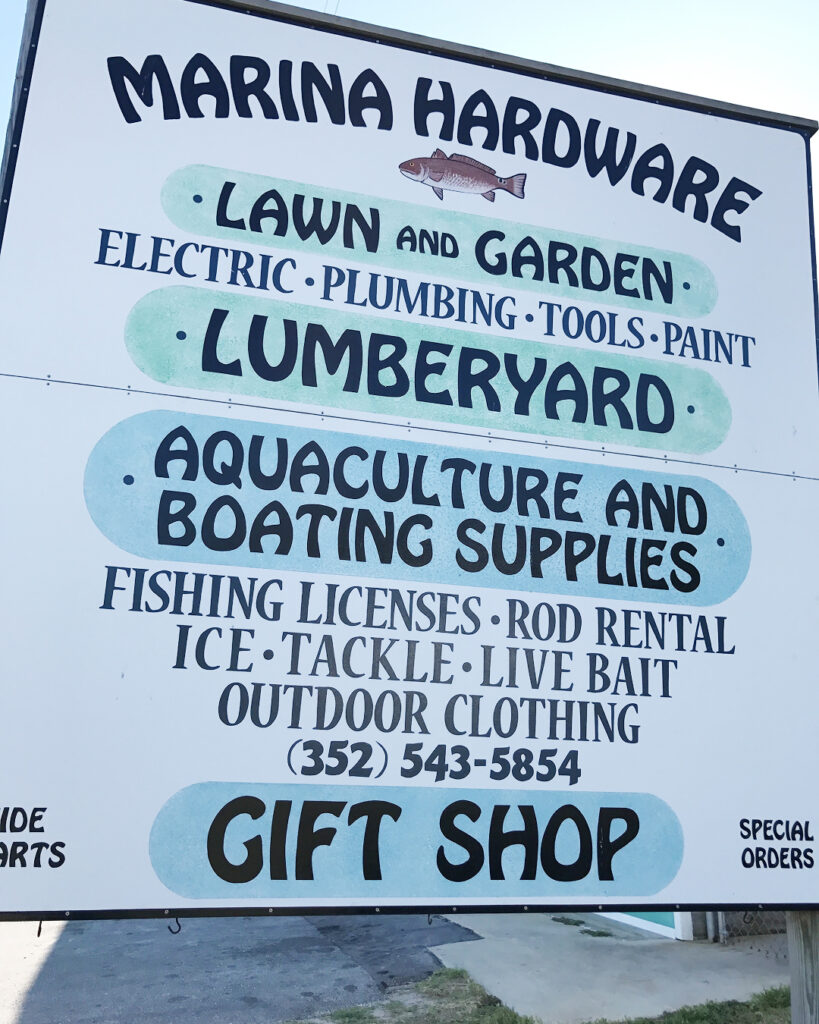
When you walk into a hardware store in Cedar Key, you might notice signs for “aquaculture and boating supplies”
alongside the usual tools and paint. Those signs reflect how deeply molluscan shellfish aquaculture is woven into the livelihoods of small coastal communities like Cedar Key. This $43.3 million industry in Florida has been shaped in large part by Leslie Sturmer, a Florida Sea Grant UF/IFAS Regional Specialist for Molluscan Shellfish and Aquaculture. She is also a household name for Cedar Key residents, and those beyond, involved in Florida’s shellfish aquaculture industry.
“When I first got into oyster farming, there were really only two names everyone knew: Dr. Bill Walton and Leslie Sturmer. While I was farming with Pensacola Bay Oyster Company, I worked with Leslie by providing oysters from our hatchery for her research. It wasn’t until I later launched my own catering and raw bar business that I fully realized just how invaluable she is to the entire industry,”
says Thomas Derbes, Florida Sea Grant UF/IFAS Extension Agent for Santa Rosa County.
Sturmer’s work mirrors the history of oysters harvesting in Florida. For decades, she has led a statewide program supporting Florida’s molluscan shellfish aquaculture industry for oysters, hard clams, ark clams, and sunray venus clams. Her work offers expertise in production technology, seed development, product quality, water quality, health monitoring, species diversification, and business development.
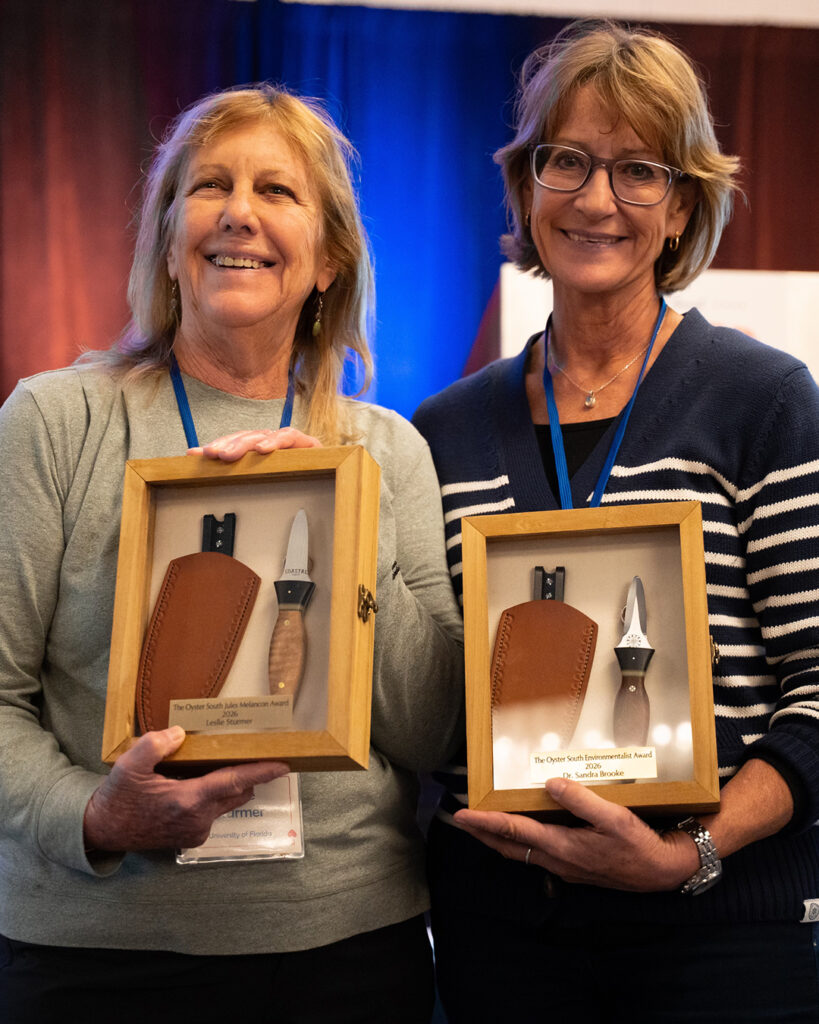
Her institutional knowledge, coupled with empathy for her community has helped position Florida as a major aquaculture producer in the United States and is among the leading states in terms of sales and number of aquaculture farms. Therefore, it came as no surprise to those in the industry when Sturmer was honored this year with the prestigious Jules Melancon Award at Oyster South’s annual gathering.
“What really makes Leslie stand out in this industry, is you can tell how personal it is to her. She has sympathy for the farmers and the work they do, and she really is driven to figure out oyster production in the state.”
The Jules Melancon award is named after a third-generation Louisiana oysterman who pioneered innovative, sustainable methods to restore Gulf Coast oysters after the 2010 Deepwater Horizon oil spill. In his memory, the honor recognizes individuals whose work advances the organization’s mission to connect communities, support oyster farmers, cultivate thriving coastal economies, promote healthy waters, and celebrate Southeastern seafood traditions.
“I’ve worked in the Cedar Key community for many years, and I’ve gotten to see the off-bottom molluscan aquaculture industry take off,” Sturmer said. “I’m getting toward the end of my career, and I really do feel like it’s been a privilege over the past decade to work with this new aquaculture industry sector.”
For generations, wild harvest from natural reefs defined the state’s oyster industry. But commercial landings plummeted between 1983 and 2012 in Apalachicola Bay, once home to 90 percent of Florida’s oyster fishery. Hurricanes, drought, poor recruitment, and high spat (juvenile oyster) mortality drove the collapse, ultimately leading to a five-year wild oyster fishery closure in 2021. The crisis forced state leaders and coastal communities to reconsider the future of oyster production.
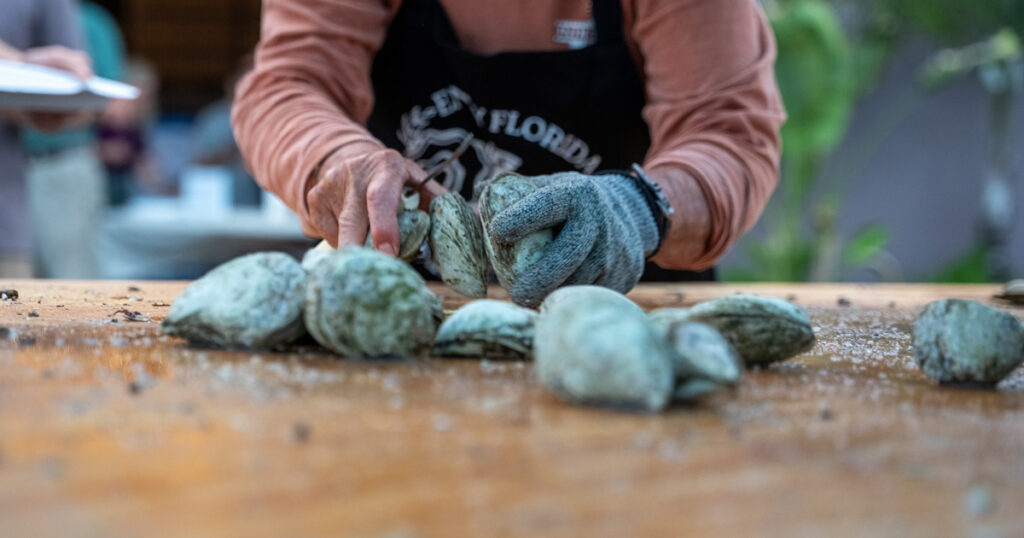
What emerged was a shift to off-bottom oyster aquaculture. Unlike traditional reef harvesting, this method grows hatchery-reared, single-set oysters in mesh bags, baskets, or cages suspended above the seafloor. By lifting oysters into the water column, growers protect them from predators and sediment while improving consistency, survival, and shell quality.
Sturmer initially approached the new model with caution.
“I was at first a little reluctant about this new off-bottom aquaculture project, but the enthusiasm in the Panhandle, along with the new allowance for water column lease agreements for shellfish farmers, really started moving things forward. I knew I needed to get on board and provide whatever assistance I could.”
I’ve worked in the Cedar Key community for many years, and I’ve gotten to see the off-bottom molluscan aquaculture industry take off. I’m getting toward the end of my career, and I really do feel like it’s been a privilege over the past decade to work with this new aquaculture industry sector.
A decade later, these locally harvested oysters from nearby farms are now featured as a delicacy across Florida’s restaurants, with diners slurping them fresh from the shell. Meanwhile, Sturmer recognizes her work is not over, as she recognizes the evolution of technologies and environmental challenges.
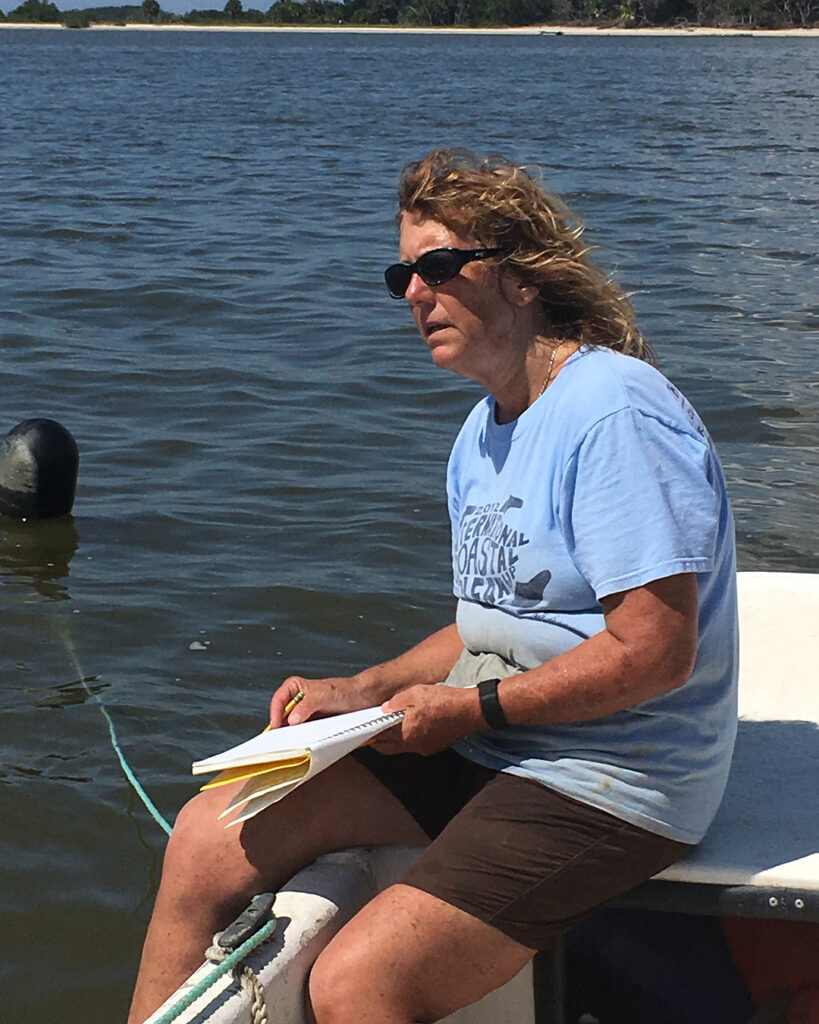
Working alongside Derbes, her current work involves helping growers in each of the water bodies across the state to understand oyster mortality events. The project, called Farms for Aquaculture Research and Monitoring of Shellfish (F.A.R.M.S) aims to provide farmers with “sentinel” oyster seed; these oysters are from the same stock, including triploid and half-sibling diploid oysters. Growers use their own culture gear and management practices, while monitoring growth, survival, and water quality conditions such as salinity and water temperature. The oysters are then examined for health. In 2025, the project received funding from NOAA to expand from statewide to regionwide, now involving oyster growers from Virginia to Texas.
“The most important thing Leslie has taught in this work is perseverance,” says Derbes. “In the oyster world it’s been a lot of failures, especially when it comes to this mortality study. At times when I am expecting 100% survival, I get 80% mortality. When something like this goes wrong, she has told me to keep my head up, and keep doing what I do best. It’s going to be worth it in the end.”
Sturmer also serves on the Oyster South Marine Advisory Board, helping plan programming that delivers meaningful information exchange across the industry. At this year’s symposium, Sturmer presented the Oyster Aquaculture Nutrient Removal Calculator and Florida Shellfish Farm Nitrogen Calculator, tools that quantify the environmental and economic values of oyster culture. The calculators estimate harvest totals and translate them into measurable ecosystem services, including nutrient removal and water filtration further underscoring how oysters now contribute not only to coastal economies, but also to ecological resilience.
When reflecting on the most rewarding parts of her job, she beams at the opportunity to work and build relationships with people across the state and the industry.
“These oyster farmers come from all different walks of life and backgrounds,” Sturmer said. “I really enjoy working with individual growers and families who are building something meaningful for their communities. It really is a community-based industry,” she said.
When asked her favorite way to enjoy these molluscan delicacies, she offers an answer enticing enough to send almost anyone rushing to the nearest raw bar.
“I like them [oysters] on the half shell so you can really appreciate the distinct flavors from different bodies of water and taste the unique characteristics each grower brings to their oysters.”