
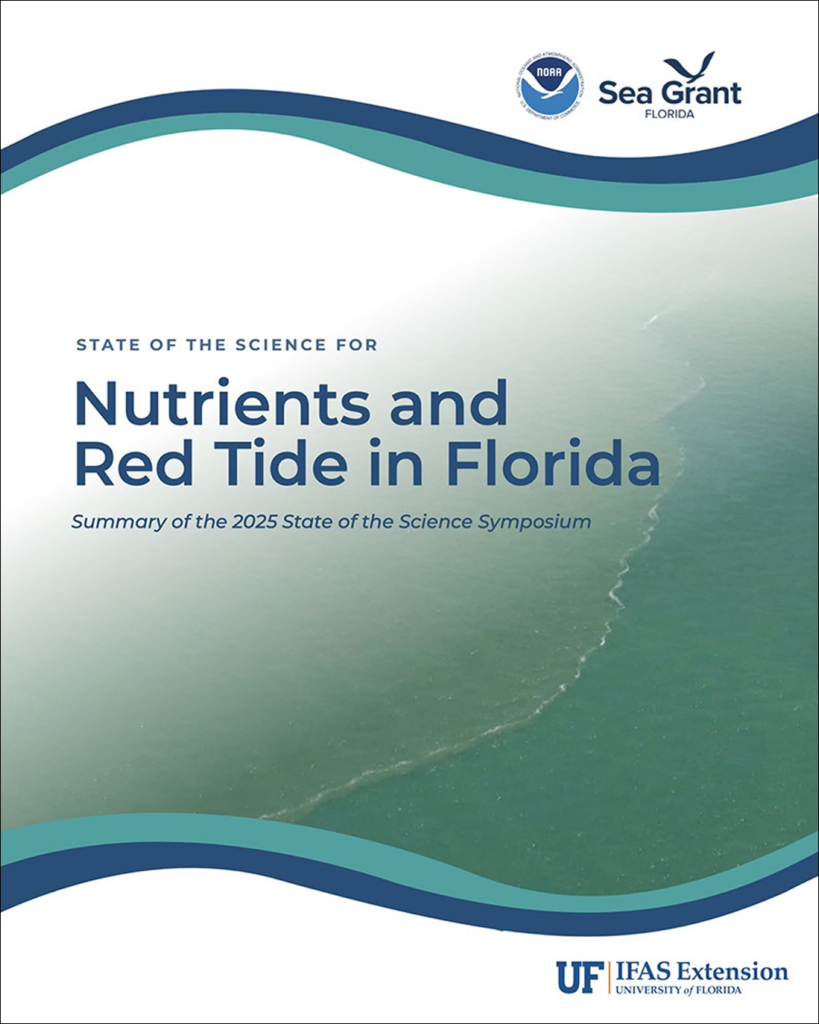
 The 2018 Karenia brevis red tide event left a $2.7 billion mark on the Sunshine state. Beaches and waters were littered with dead fish, residents suffered from respiratory irritation, property values dipped, habitats and water quality deteriorated, and tourism and commercial fisheries took a serious hit.
To address this conundrum, Florida Sea Grant and the University of Florida’s Institute of Food and Agricultural Sciences (UF/IFAS) convened at the Nutrients and Red Tide in Florida: State of the Science Symposium in April 2025 to understand the causes and the impacts of red tides in Florida, especially the role of nutrients. Building off of the previous state-of-the-science symposia, the 2.5-day symposium held at the University of South Florida’s St. Petersburg campus brought together approximately 50 invited experts from universities, government agencies, regional programs, and nonprofit organizations to evaluate the latest research, identify knowledge gaps, and define priorities for management and future study.
“The complexity in understanding the various sources of nutrients and how they transform and cycle within estuarine and coastal systems requires expertise across various fields of research and management,” says Symposium Chair and FSG-NOAA Harmful Algal Bloom Liaison Betty Staugler. “Meeting in the same room ensures that current nutrient reduction strategies guide future research questions, while new and emerging science can directly inform management decisions.”
Funded by the Florida Fish and Wildlife Conservation Commission’s Fish and Wildlife Research Institute Harmful Algal Bloom Grant Program — and convened at the request of the state Harmful Algal Bloom Task Force — the meeting focused on turning emerging science into actionable guidance for monitoring, policy, and response.
The symposium sessions centered on three core themes:
- Nutrient dynamics across bloom initiation, maintenance and termination
- Nutrient movement through coastal and estuarine systems
- Nutrient management and response in a changing Florida
An additional session focused on compiling an inventory of past, present, and future red tide and nutrient monitoring programs in Florida. This helped participants know when and where data has already been collected, fostering intra-project collaboration and to facilitate reevaluations of historic datasets.
An outcome of the Nutrients and Red Tide in Florida: State of the Science symposium is a new white paper aimed at synthesizing the current state of knowledge and efforts regarding the role of nutrients in red tide events, guiding research priorities and investments, informing local and state decision-making, and supporting stakeholders in reducing red tide impacts and addressing regulatory and technical gaps.
“This symposium was timely due to the influx of new research, technologies, and people working within this space. These efforts built upon the abundance of prior research and monitoring efforts that can drive successful mitigation of the impacts of red tide blooms”, says Dr. Lisa Krimsky, Symposium Chair and Florida Sea Grant UF/IFAS Regional Water Resources Extension Agent.
Read the State of the Science Symposium on Nutrients and Red Tide in Florida for key findings from each session and additional resources: https://www.flseagrant.org/publication/state-of-the-science-for-nutrients-and-red-tide-in-florida-summary-of-the-2025-state-of-the-science-symposium/
The Nutrients and Red Tide State of the Science Symposium was funded by the Florida Fish and Wildlife Conservation Commission.
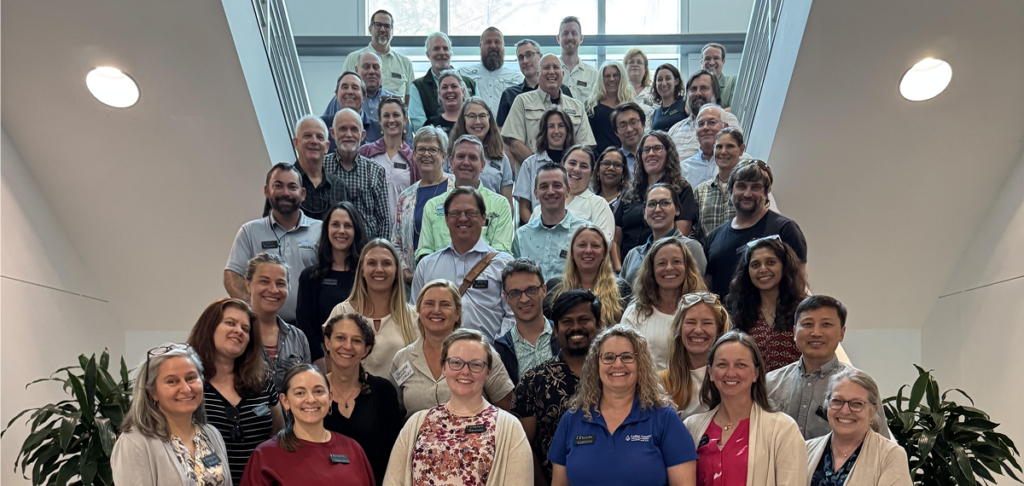
2025 State of Science Symposium participants. Image by Darlene Velez, UF Water Institute.