
Down here in Southwest Florida, we do rodeos a little differently.
Vaguely reminiscent of historic cattle drives, participants in the annual Southwest Florida Invasive Fish Roundup travel across the region to backyard canals and Everglades swamps in search of invasive fish that inhabit these freshwater systems. Instead of driving livestock to open ranges, anglers deliver their catch to the parking lot of a Bass Pro Shops, where invasive fish are identified, sorted, counted, and weighed in a lively competition, and their carcasses find a new purpose.
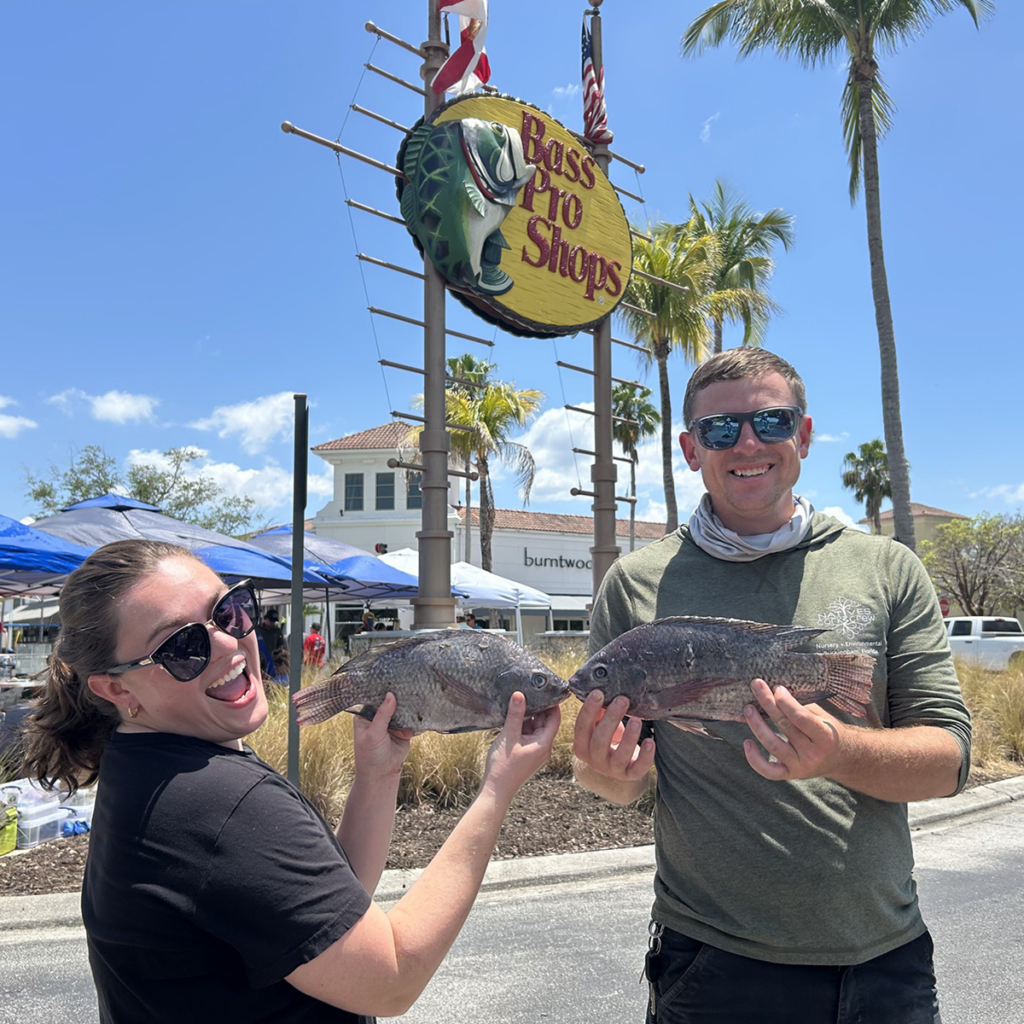
Organized by the Southwest Florida Cooperative Invasive Species Management Areas (CISMA), with support from Florida Sea Grant and Bass Pro Shops, the event rallies anglers to remove invasive fish species from local waterways across Collier, Lee, Charlotte, Hendry, and Glades counties.
Survival of (Non-native) Species
Iguanas, Burmese pythons, Cuban tree frogs, and giant African land snails. South Florida has a long history with invasive species.
“Florida is uniquely situated to be a hub for invasive species. The state has a large population and plenty of imports from visitors and perishable cargo,” says Mike Sipos, FSG UF/IFAS Extension Agent for Collier County and member of CISMA . “That combined with our favorable climate and disturbances from hurricanes to development, allows invasive species to really spread either through accidental or intentional introductions.”
More than 127 introduced fish species have been reported in Florida’s inland waters, with approximately 35 established populations. These freshwater fish include African jewelfish, black acara cichlid, blackchin tilapia, blue tilapia, brown hoplo catfish, jaguar guapote cichlid, Mayan cichlid, oscar, pike killifish, sailfin catfish, spotted tilapia, and walking catfish. Once established, these species can outcompete native fish, especially those that reproduce rapidly. Efforts to remove invasive species are often costly, and in many cases, complete eradication is nearly impossible. That’s where the Invasive Fish Roundup comes in.
Outreach and Education
The roundup has been held since 2018, but gained greater traction after the COVID-19 pandemic. The event draws anglers of all skill levels, tapping into their “hunting-and-gathering” instincts, all while contributing to conservation and research.
For the past several years, marine science teacher Chris Humphrey has given his students a weekend assignment unlike any other: go out and reel in hundreds of pounds of nonnative freshwater fish.
“One year, we had a group of competitive boys who went deep into the heart of the Everglades,” Humphrey said. “They filled four or five 144-quart coolers with Mayan cichlids and ended up taking home the prize with a weigh-in of nearly 603.6 pounds.”
At the weigh-in, participants can explore hands-on activities through fish exhibits, filleting demonstrations, and educational displays, while researchers and natural resource managers collect valuable data to support future management efforts. In 2025, more than 16,000 fish were turned in, weighing over 4,900 pounds.
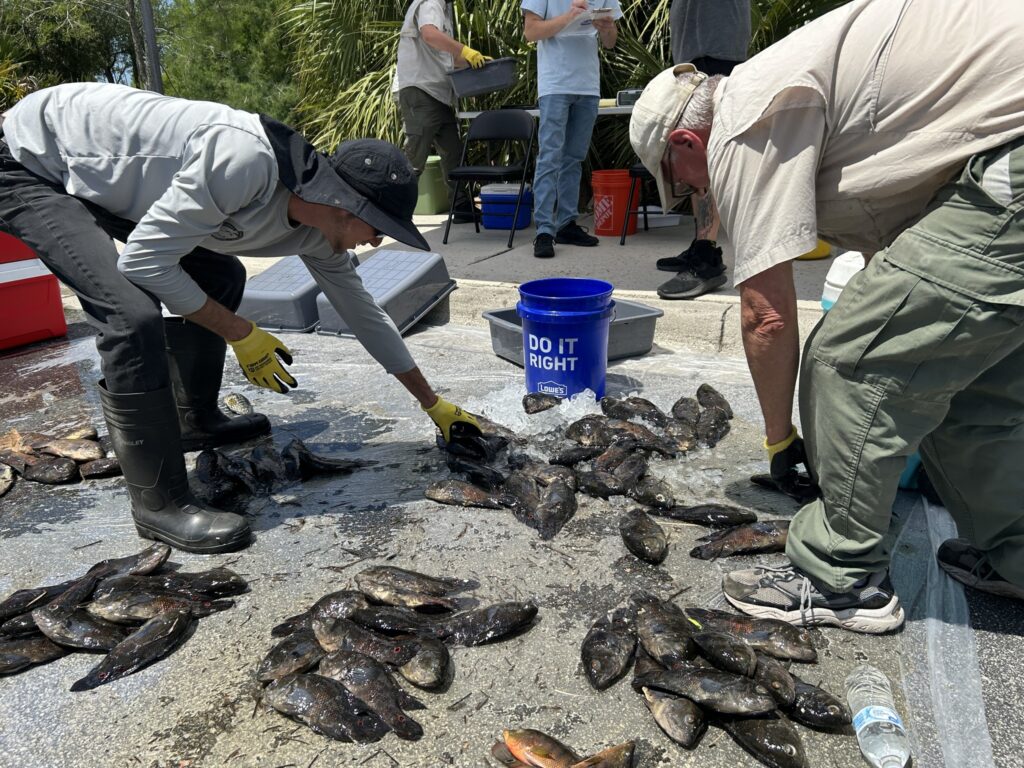
Humphrey, who garnered his passion for wild places and conservation from the UF School of Natural Resources and Environment, also runs his school’s fishing club. He sees the roundup as a powerful way to get students outdoors and engaged.
“This event helps students stay informed about what’s happening in the ecosystem, especially for threats and benefits,” he said. “For me, it’s a win-win: I get these kids outside, and afterward I can bring fish back to school for anatomy lessons.”
While some fish end up in classrooms, others are put to use in research. A portion is donated to explore alternative uses, such as composting.
There’s Something Fishy in the Soil
Researchers at the University of Florida are using blue tilapia to evaluate its potential as a sustainable compost material for basil and turfgrass, helping reduce reliance on conventional fertilizers and improve soil properties to retain nutrients in sandy soil.
Basil may be known as one of the top aromatics in cuisine, but it is also known for its fast growth rate, making it for quicker study results.
Turfgrass on the other hand was chosen because of its prominent feature across lawns, golf courses, and new communities being built in Naples.
“Golf course superintendents and turf land managers are always trying to be good stewards of the land and with more focus and education on soil health items,” says Ryan Czaplewski, Commercial Horticulture agent and Interim County Extension Director at UF/IFAS Collier County. “Pair this with higher cost of fertilizer as well as understanding that increasing organic matter in the soil allows for more nutrient retention in sandy Florida soils, different types of compost become another tool of interest to these land managers.”
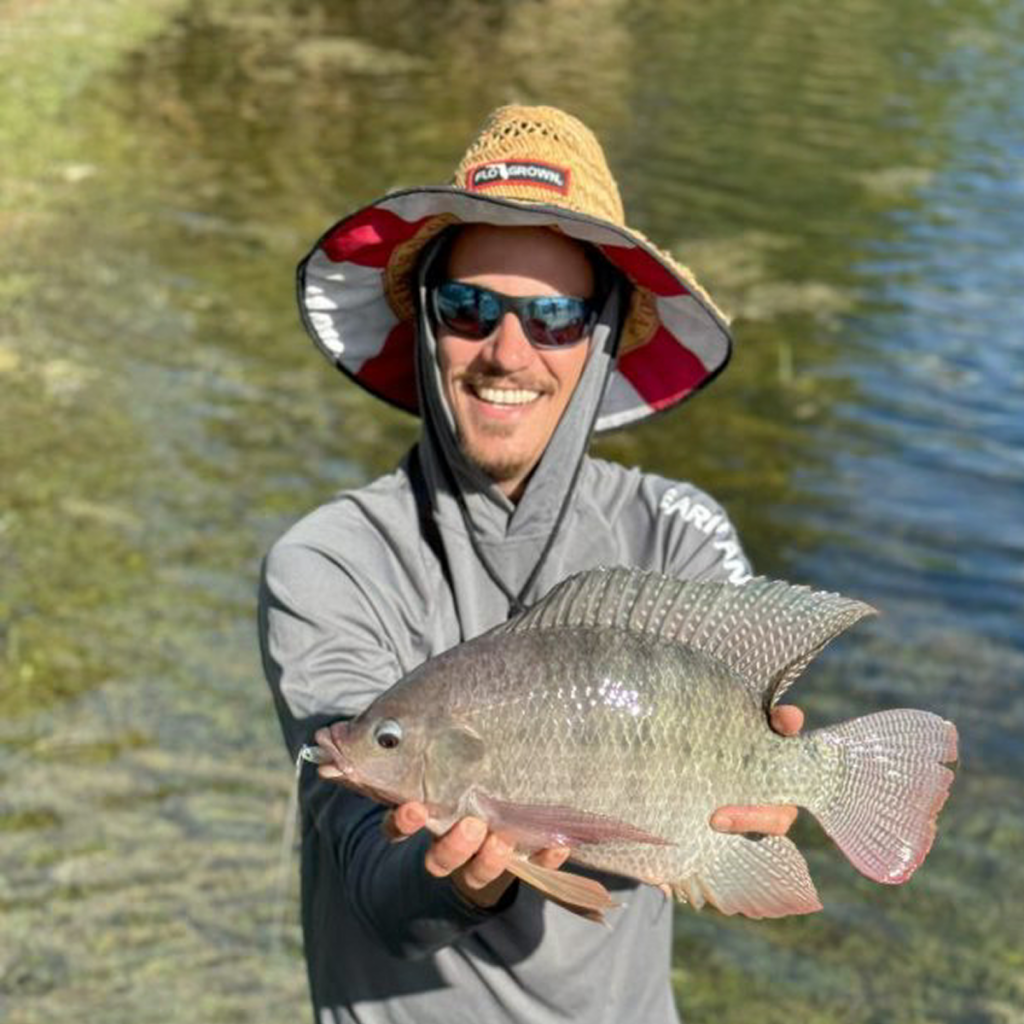
Tilapia, on the other hand, is given a proper burial in the ground for research on composting due to its many useful attributes. Native to Africa and the Middle East, tilapia were introduced to Florida in the early 1960s and have since spread throughout freshwater systems, competing with native fish for spawning sites.
“Since many species like blue and Nile tilapia feed lower on the food chain, there is plenty of food available for them, allowing them to make up a large portion of the biomass in certain areas,” says Sipos.
According to the Florida Springs Institute, Blue tilapia has exploded at Silver Springs over the last two years to 88% of the total fish population.
Tilapia is also chosen for these studies due to its abundance, and represents a size of fish that someone may take home to fillet.
“Finding new uses for their carcasses also helps address disposal issues for anglers regardless of species. A lot of times, folks will throw filleted carcasses into low flow freshwater systems, which may cause odors, attract unwanted wildlife like alligators, and increase nutrient levels that can lead to algae blooms.”
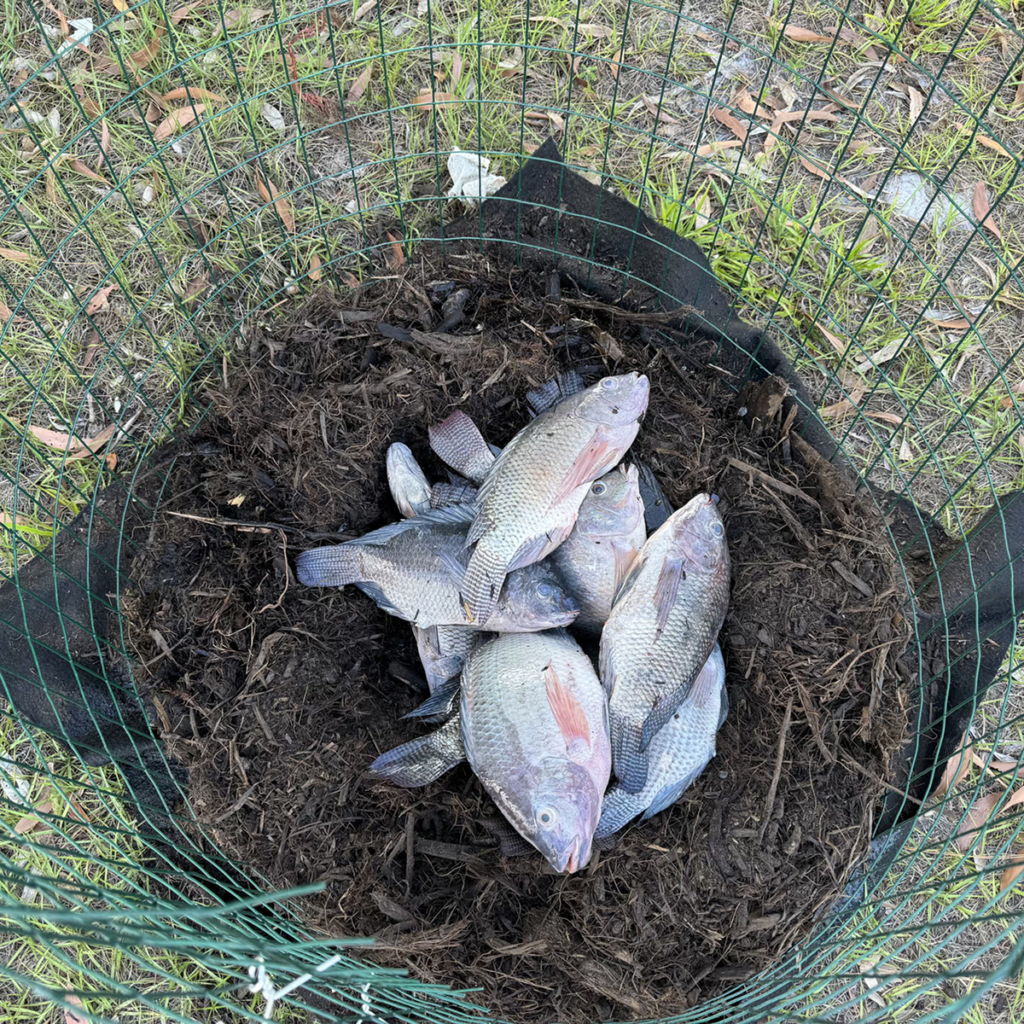
To address this, researchers are comparing compost made from standard food scraps with compost that incorporates whole and filleted tilapia carcasses. Using soil from a vegetable production site at the Southwest Florida Research and Education Center, they are growing basil under different compost treatments.
So far, results show that both “fillet” and “whole fish” compost significantly increase plant height and weight, regardless of the proportion used. Higher percentages of fish material in the compost mixture correspond to greater plant growth and final biomass.
Whether it’s students catching fish or researchers turning carcasses into compost, the roundup highlights how tackling environmental challenges requires education, cooperation, research, and maybe a little fun.
“The most lasting impacts of this event is increased awareness, better education, and innovative alternative uses. Research like this may encourage more people to remove invasive fish by providing better consumption data and practical alternatives for those who prefer not to eat their catch,” says Sipos.
Join the action at the next SW Florida Invasive Fish Roundup, happening April 24–26, 2026! It’s your chance to make an impact, enjoy the outdoors, and maybe even land your biggest catch yet. Get all the details and sign up here:
https://www.eventbrite.com/e/2026-swfl-cisma-invasive-freshwater-fish-roundup-tickets-1983083649579