
Roberto Ferrer is Florida Sea Grant’s Communications & Public Affairs Coordinator. He previously served as FSG’s Legislative Intern in the Florida House of Representatives and as FSG’s Public Relations intern in the University of Florida’s Office of Federal Relations. He continues to organize Hill Visits with Florida’s congressional delegation for the Sea Grant Association.
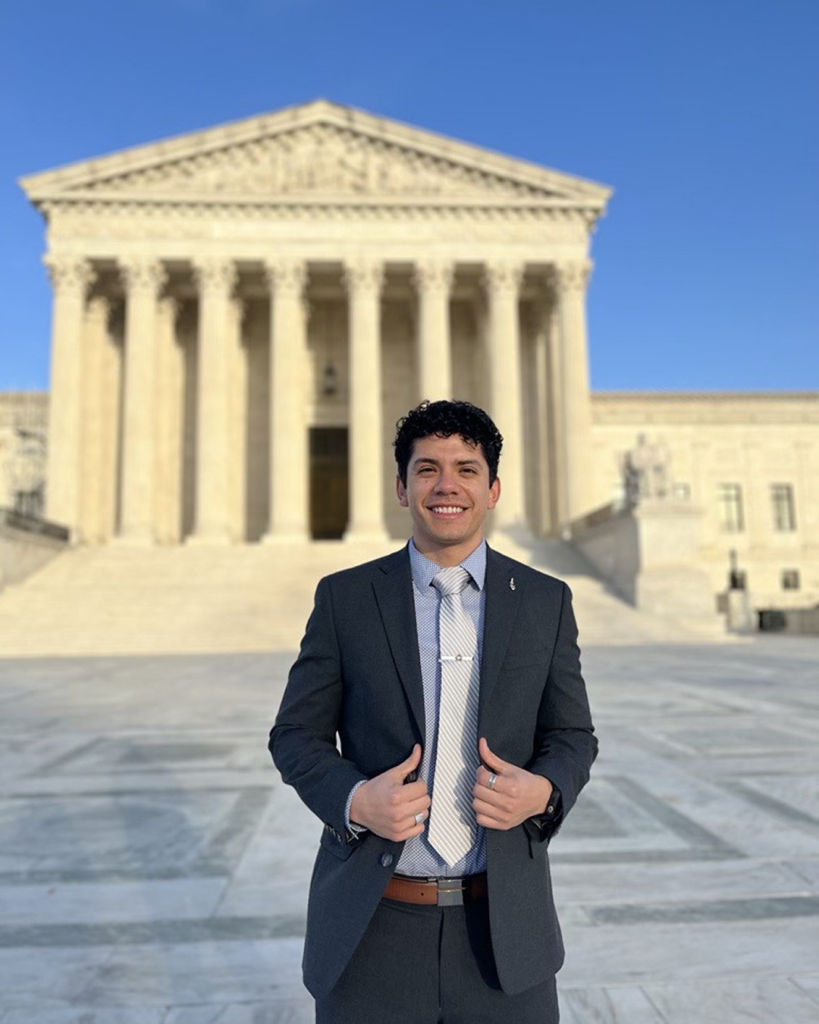
Roberto in front of the Supreme Court in Washington, D.C.
More than any other month, February is a time to reflect on our engagements with our romantic partners, our friends, and even our jobs. February also makes me think about my experience with civic engagement, since it is the middle of the legislative session.
During my time as an intern in Tallahassee, Thursdays were always my favorite. Truthfully, there wasn’t much action on Fridays since members often travelled back to their districts, so Thursday was our busiest day of the week. I was lucky enough to work alongside people who turned into great friends. We would welcome dozens of visitors, answer tons of calls, and comb through an email list that never seemed to end. All that while reading bills, organizing files, and providing our members with vote recommendations. Here, I learned the value of engaging with the political process. As they say, if you’re not at the table, you’re on the menu.
The most remarkable groups I dealt with were those that had a clear understanding of their priorities, the priorities of our lawmakers, and where those align. It’s all about finding the right dance partner and recognizing that sometimes it’s a tango, and other times it’s salsa (did I mention analogies are popular in politics?).
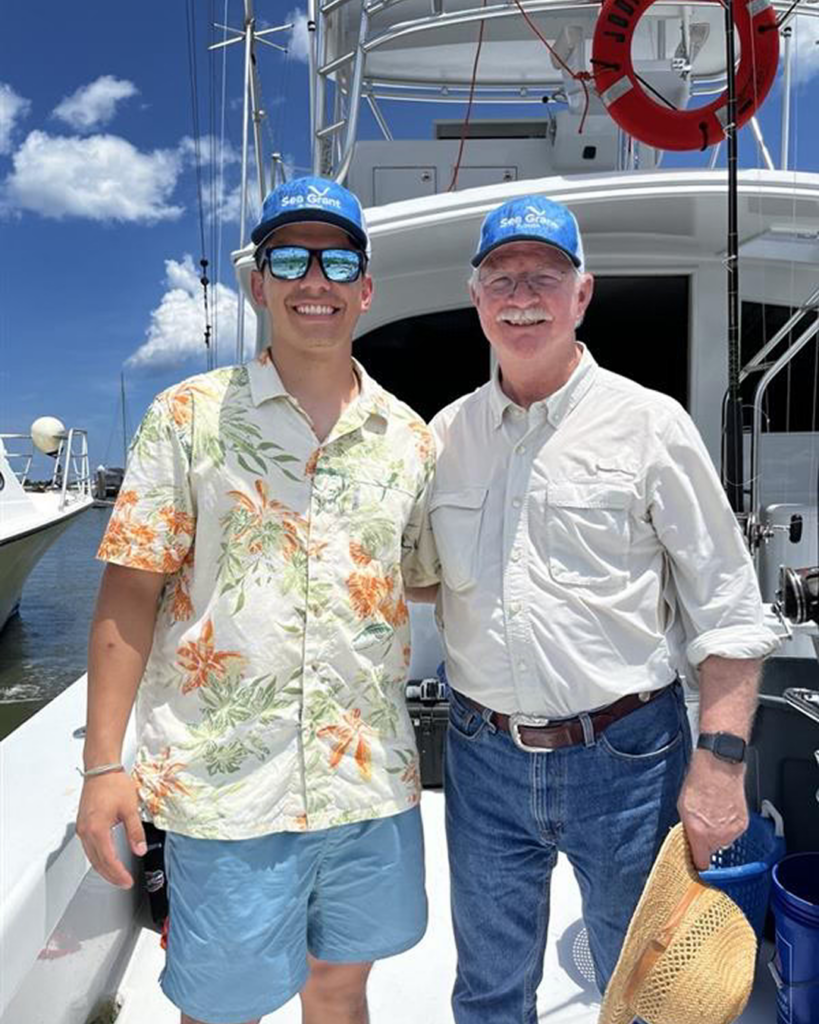
Roberto fishing for Red Snapper with Representative Rutherford off the coast of St. Augustine
Another layer of priority was given to those who lived and worked within our district. While state legislators serve the entire state, they’re voted in by folks in their district, so it makes sense to give their constituents a fast pass to the front of the line. The same is true for Congressmen who serve at the federal level. They are much more likely to meet and address issues affecting Florida residents, especially residents in their congressional district. In short, there are many ways you can engage with the political process, but going through your own elected officials is most effective.
Don’t judge me for this, but I only voted once before my time in politics. In a state and country made up of millions of people, I didn’t feel like my vote made a difference. Media coverage tends to focus on federal drama, so it’s easy to lose sight of the local issues that are more consequential to your community.
Who are your county commissioners? Sherriff? School board members? City Council members? Mayor? Judges? What is your local tax rate? How does your county/city approach community & natural resource planning? These things aren’t as sexy, but they influence everything from zoning to even policing practices. We all have a million opinions on how things should be run, but do you know how to effectively share those opinions?
1. First things first, are you registered to vote?
I know it seems obvious, but this is the easiest way to engage with the political process. I can’t help you assess your political beliefs, but I will encourage you to look beyond the letter next to the candidate’s name and do your due diligence on them. What is their position on issues you care about? What are their qualifications?
The League of Women Voters’ nonpartisan voting tool is a good place to start! You should gather as much information about them as possible. Check out their campaign website, flyers, blogs, ads, who they’ve been endorsed by, speeches, debates, town hall events, and, if possible, speak to them in person. Please don’t rely on the random Instagram story your friend Kyle posted to make voting decisions.
And I’ll even give you another insider trick. Florida candidates must disclose their campaign contributions. As a voter, you can check out their records and decide for yourself if you approve of who they receive money from. There’s some nuance to this, but to get started, click on this site, then click “Contribution Records”, and fill in the name of the candidate you’re curious about. After clicking submit, their contributions for the selected campaign year will pop up. The contributors aren’t always easy to track, but it gives you a good idea.
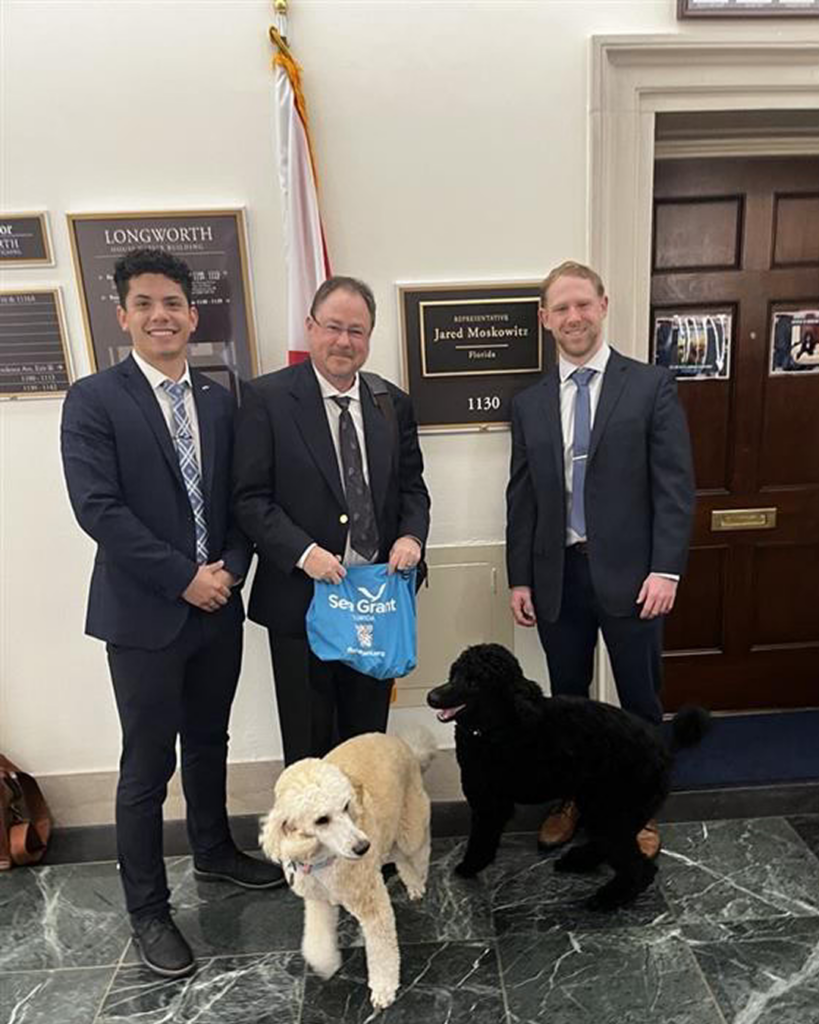
Roberto and Dr. Charles Sidman meeting with Representative Moskowitz’ staff (including secretaries “Salt” and “Pepper”).
2. Engaging in the decision-making process can also mean making your voice heard.
Policy proposals from state and federal agencies, fisheries management councils, and local governments will often offer a public comment period. This can mean filling out an online form, providing written testimony, and/or speaking at a public hearing. This also applies to proposed bills as they move through the legislative process. They have public committee hearings that anyone can watch or attend (just be sure to get there early).
3. The power of collective action should not be ignored!
During my internships, I realized that although the memory of individual emails, calls, and conversations might get blurry, the impact of collective action is impossible to ignore. Join an organization or network to connect with people with like-minded interests and beliefs. Afterall, a pod of dolphins is stronger than an individual cetacean. Peaceful demonstrations are probably the most American method of engagement and one that always draws attention.
4. Stay up to date on Policy!
There are a million ways to do this, and your political affiliation will likely influence how you keep up with the chaos. With thousands of state and federal bills filed every year, it’s easy to get overwhelmed. To try and keep up, I subscribe to things like the Punchbowl News newsletter, the Ocean Conservancy’s Daily and monthly newsletters, the SeafoodSource Newsletter, the Florida League of Cities Legislative Update newsletter, the 1000 Friends of Florida newsletter, the Florida Politics newsletter, the Florida Politics breaking news text messages, and the Captains for Clean Water newsletter.
If you ever have any questions about how to engage with your elected officials, just give me a holler! [email protected]