
 Beaches framed by rolling sand dunes, sea oats swaying in the breeze, and loggerhead tracks stitched across the shoreline—all as the sun settles over a stretch of Florida’s coast. It’s no surprise this landscape, which has inspired generations of artists and authors, draws more than 130 million visitors a year.
With so many visitors and residents, it is important the only footprint we leave is one that does not put Florida’s native ecosystems and rare species at risk.
To help address these challenges, Florida Sea Grant has launched Florida Friendly Visitor (FFV), an educational program focused on beach and ocean stewardship and sustainable travel. Whether Florida residents, out-of-state travelers, or international vacationers, everyone enjoying our beaches and waters can learn simple ways to make their trip a little more “Florida Friendly.”
“Florida has 24 million residents and about 130 million visitors. Everyone interacts with the natural environment differently, so we are trying to prompt small behavior changes in sustainable vacationing to protect these natural resources,” says Dr. Anna Braswell, FFV team lead.
The program grew out of Florida Sea Grant’s Shorelines, Estuarine and Aquatic Systems (SEAS) Working Action Group, a committee of UF/IFAS FSG extension professionals and experts who develop and guide regional and statewide integrated efforts that prioritize applied science.
The SEAS team surveyed tourism boards, hospitality partners, and community groups across the state to better understand what issues tourists create and how visitors are willing to engage with information to help protect Florida’s coastal resources.
“We came up with this idea of producing short videos that would reach tourists in a digestible format. I hope this project contributes that little extra bit that makes our landscapes cleaner, safer for wildlife, and simply more pleasant places to visit. Ultimately, none of us want litter on our beaches, and we certainly don’t want to harm sea turtles,” says Dr. Braswell.
Four short videos offer concise, actionable ways for beachgoers to “leave no trace”:
The videos will be featured in hotel lobbies, and Florida Sea Grant is excited to collaborate with Innisfree Hotels, a hospitality company with 27 properties across the Southeast, most located in iconic beach destinations. Founded on the belief that hospitality can change the world, Innisfree Hotels has long embraced the Triple Bottom Line philosophy, prioritizing impact on People, Planet, and Prosperity by integrating sustainability into daily operations.
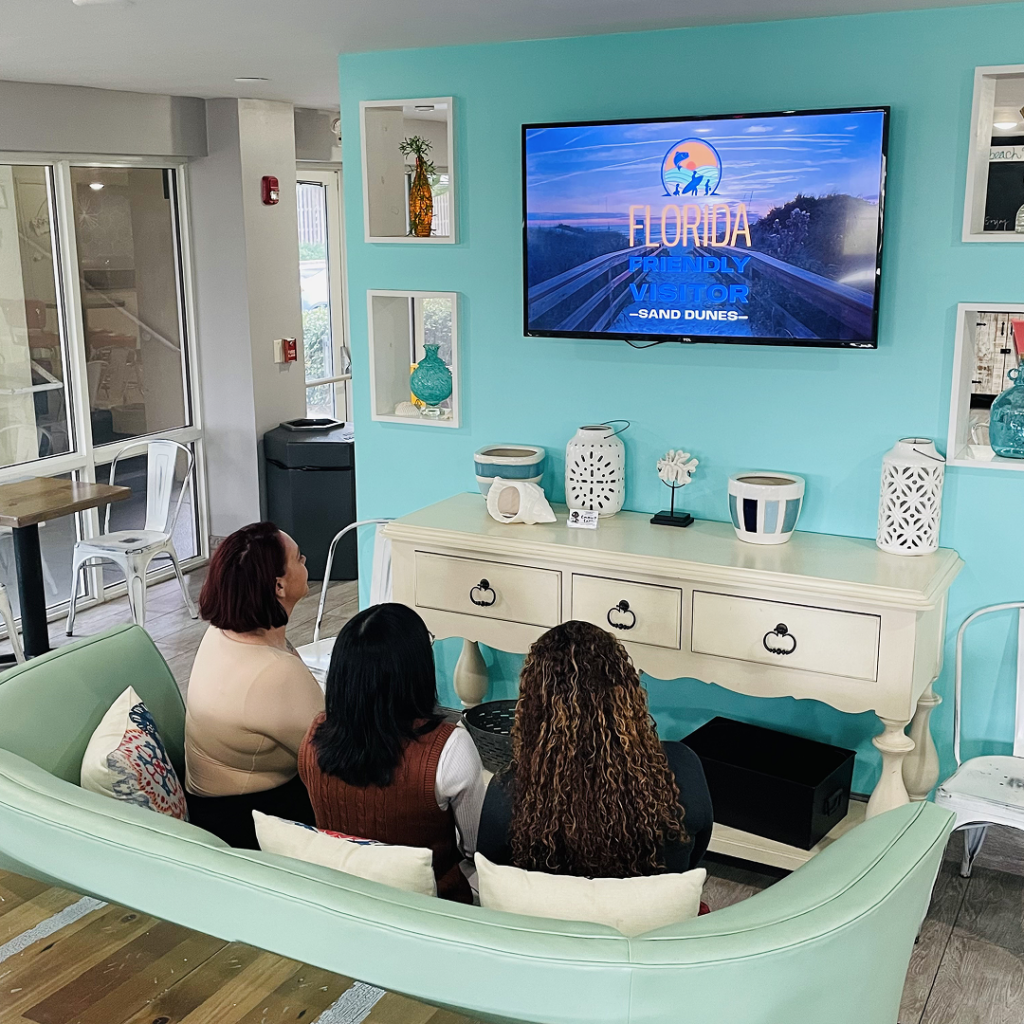 “At Innisfree Hotels, we believe sustainability starts with our people. Our teams are dedicated to protecting the ecosystems that support our communities and our business. The Florida Friendly Visitor program aligns seamlessly with our ongoing efforts to protect biodiversity and to build partnerships that help preserve the natural beauty of the places where we live, work, and welcome guests every day,” says Bethanne Edwards, Director of Sustainability for Innisfree Hotels.
In addition to the videos, visitors and residents are encouraged to sign a pledge reinforcing their commitment to keeping Florida’s resources as pristine as possible. Research shows that when people take a pledge to adopt a specific behavior, they’re more likely to follow through.
As Florida Friendly Visitor finds its home in several hotel lobbies across the coast, the FSG SEAS WAG team continue to develop creative ways to weave meaningful stewardship messaging into visitors’ vacation plans.
“Our plans for the future are to take what we’ve learned from these pilot projects and expand the program into more hotels and beyond. We’re a large, diverse group of agents with different needs along the coastline, so developing new messages that resonate across Florida’s hospitality spaces is our next step”, says Braswell.
Meet the Team
The project was led by Dr. Anna Braswell and developed by the Florida Sea Grant Shoreline, Estuarine and Aquatic Systems Work Action Group (SEAS WAG) team. The videos were voiced by Carolyn Kovacs and produced and edited by Donielle Nardi.
Explore More “Florida Friendly” Programs
- Florida Friendly Angler – a free online program for anglers interested in sustainable fishing and boating practices; also available in Spanish.
- Return ’Em Right – provides training to Gulf anglers to improve reef fish survival and support healthy fisheries.
- Florida Friendly Fishing Guide – an online certification covering science-based techniques that help ensure a minimal environmental footprint while fishing.