
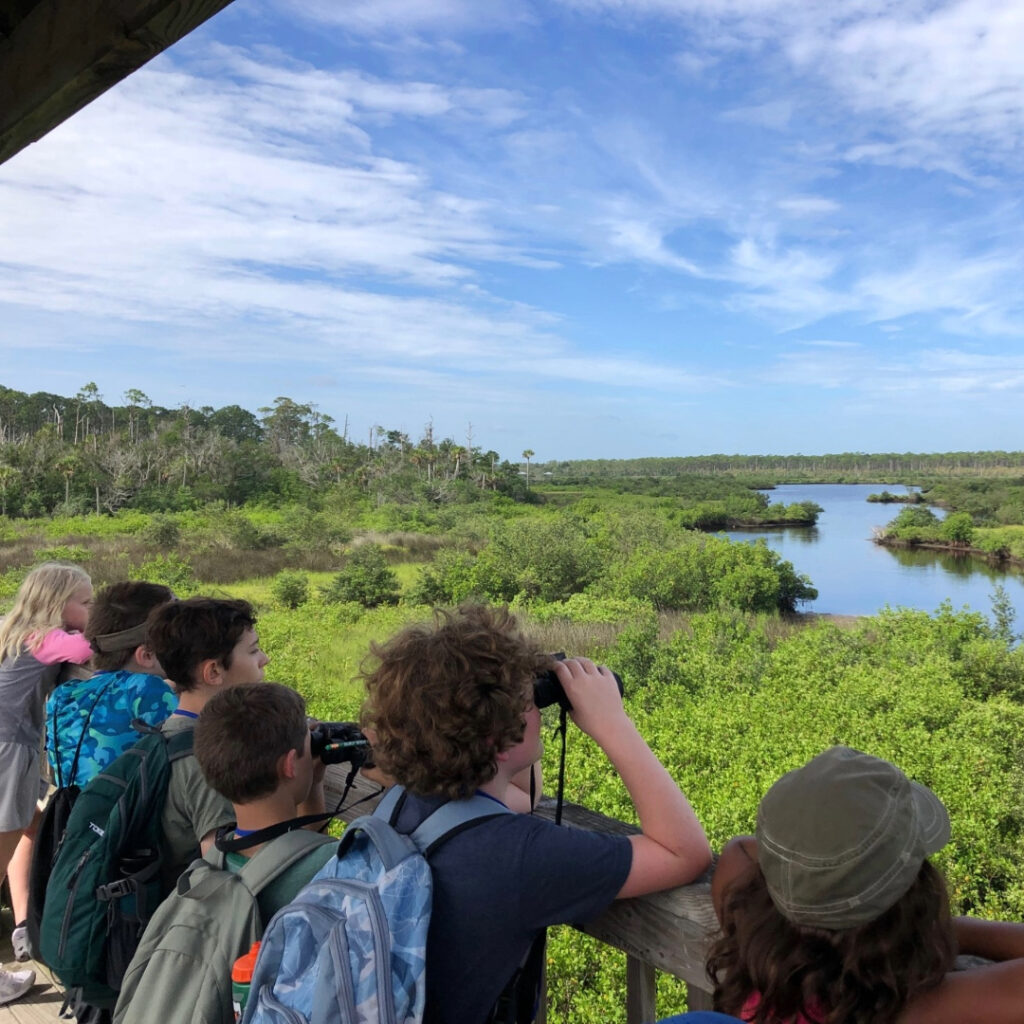
Florida Sea Grant 4-H Summer Camp. Images by Carolyn Kovacs, Florida Sea Grant UF/IFAS Extension.
Singing songs, taking boat tours, and collecting phytoplankton are far from your typical lecture-based pedagogy.
Each summer, youth in Flagler and Volusia Counties have the chance to become young marine scientists through Florida Sea Grant’s 4-H Marine Science Summer Camps. Led by Carolyn Kovacs, Florida Sea Grant Extension Agent for UF/IFAS Extension in Flagler and Volusia Counties, these camps provide hands-on, immersive experiences for youth ages 7–13. Now in their fourth year, the camps aim to educate participants about the rich estuarine, coastal, and marine ecosystems in their own backyard.
Through a mix of field trips, interactive lessons, and real-world science activities, campers learn about local ecosystems and the creatures that call them home. They also learn about the impact humans have on the environment and discuss ways they can help protect natural resources. This year, Kovacs teamed up with the Natural Resources Extension Agents in both counties to include freshwater education, highlighting the critical connection between inland and coastal environments.
In Volusia County, the “Eco-Explorers” camp took students on a journey through a variety of ecosystems, including estuarine, coastal, freshwater, and uplands. Highlights included a boat tour of the Indian River Lagoon with the Marine Discovery Center, where campers visited an intertidal island and learned to identify Florida’s three mangrove species with the help of a catchy mangrove song.
Campers also explored the Marine Science Center to learn about sea turtle conservation and had a special visit to Blue Springs State Park to observe manatees in their natural habitat.
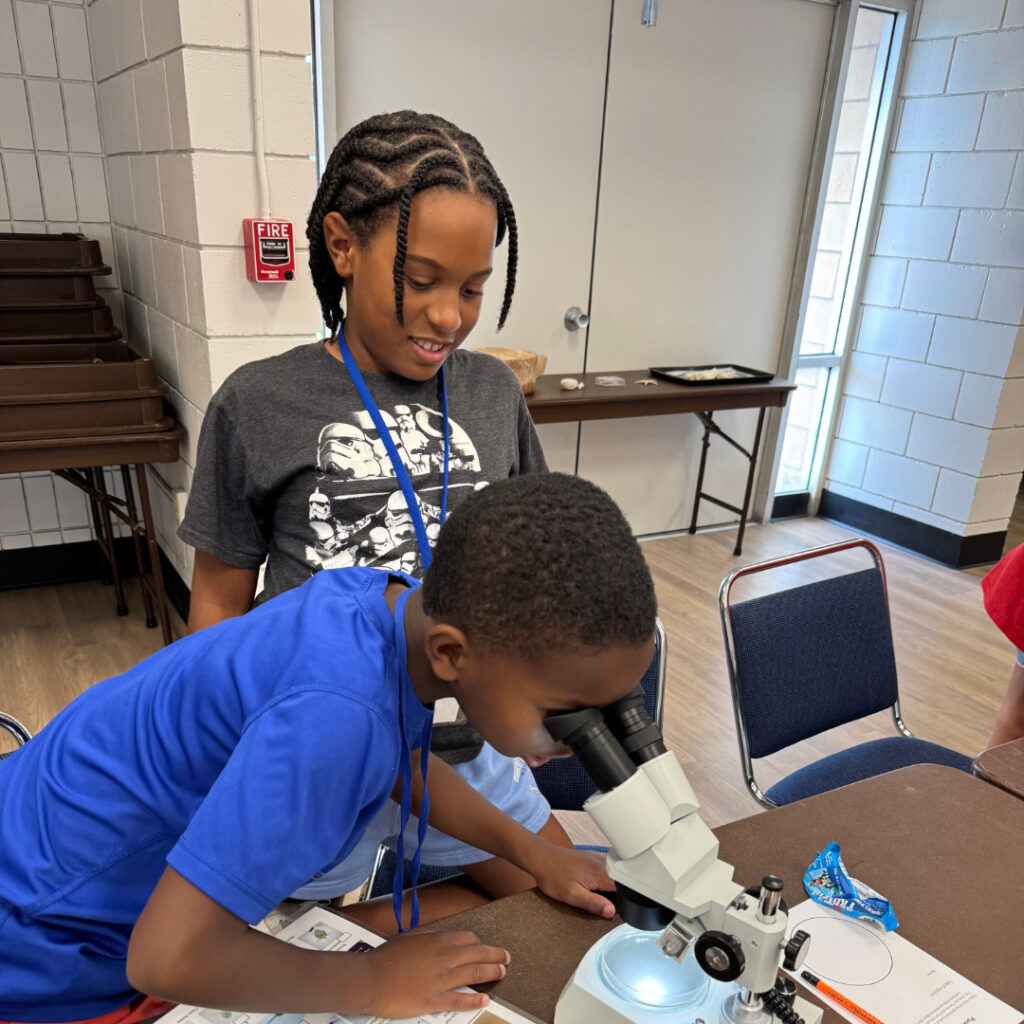
Campers studying for phytoplankton under a microscope. Images by Carolyn Kovacs.
Flagler County campers started out in the estuary, learning how to use various types of nets to collect fish and plankton, then using a microscope to examine the zooplankton and phytoplankton. Over the next two days they received behind-the-scenes tours from scientists at the UF Whitney Laboratory Sea Turtle Hospital and the Welaka National Fish Hatchery, learning both about the animals and science careers. Campers also explored topics like water quality, plastic pollution, and sustainability through hands-on experiments and games.
Marine science education is critical in helping youth develop a sense of environmental stewardship and scientific curiosity. By engaging students early in life, programs like these help foster a lifelong appreciation for the ocean and natural ecosystems. This year’s camps clearly demonstrated that impact. Participants reported a:
- 39% increase in their knowledge of the plants and animals that inhabit estuarine and marine ecosystems.
- 26% increase in knowledge of things they can do to help protect these organisms.
- 36% increase in considering a career in the sciences.
These outcomes highlight the value of marine science education not only for conservation but also for cultivating the next generation of scientists, environmentalists, and informed citizens. In recognition of this outstanding impact, the Flagler and Volusia 4-H Marine Science Camps were honored with the 2024 Outstanding 4-H / Youth Development Program award from the Florida Association of Natural Resource Extension Professionals.
By experiencing these ecosystems through field trips, lab work, and interactive lessons, youth gain a deeper understanding of their importance, and more importantly, the role they can play in protecting them for future generations.