
With over 1 million registered vessels, boating is more than just a pastime in Florida; it’s a deeply rooted part of the state’s culture and identity. This number represents a community of boaters involved in everything from fishing to leisurely cruising. However, given Florida’s unique and fragile coastal ecosystems, balancing recreation with environmental responsibility is a complex challenge, making the state a key case study in the pursuit of sustainable boating practices.
From 2000 to 2008, Florida Sea Grant, the West Coast Inland Navigation District, and the Florida Fish and Wildlife Conservation Commission (FWC) partnered to conduct and publish a series of behavioral studies characterizing recreational boating in Florida. The studies aimed to help counties prioritize and improve waterway access and maintenance, optimize boat facility siting, and manage near-shore resources more effectively.
These map-based studies collected detailed behavioral and spatial data on:
- Favorite boating destinations
- Preferences for trip departure sites and travel routes
- Primary activities during trips
- Activities conducted onboard
- Types of vessels used
- Timing, duration, and frequency of vessel use
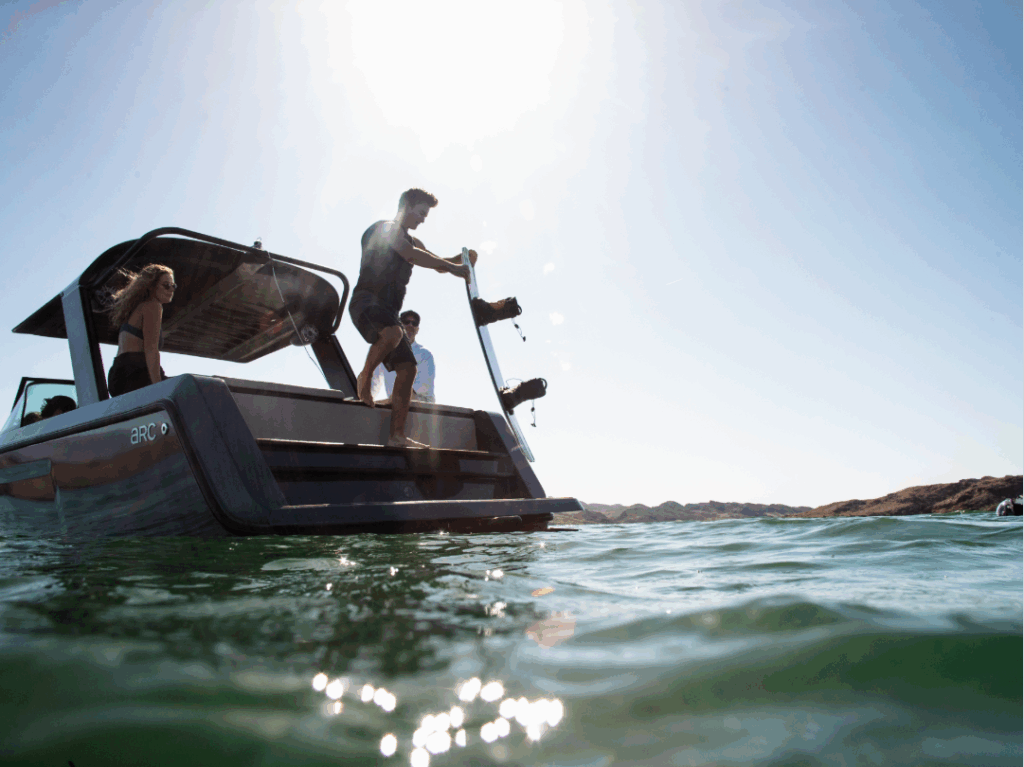
Photo credit to Ashley Clark, Arc.
Fast forward twenty years, and the same data that once guided Florida’s coastal planning is now powering innovation across the marine industry, including Arc Boat Company’s push to bring high-performance electric boats to the water.
Arc’s mission is to electrify marine industry by blending modern aerospace design and manufacturing techniques with traditional marine craftsmanship. Their lineup includes the Arc One, Arc Sport, and Arc Coast — recreational boats built for high performance on the water — alongside its first commercial project, an electric tugboat retrofit.
“Battery technology has become common in the auto world over the last decade and it is just getting powerful and cheap enough to start doing some really compelling things in the marine world,” said Ted Herringshaw, former Head of Product at Arc.
Arc boats deliver meaningful advantages over traditional gas-powered models: significantly lower ownership costs, less maintenance, and stronger performance on the water.
“From annual maintenance and winterization hassles to soaring marina gas prices, boat ownership today is far from glamorous,” says Herringshaw. “In contrast, the fully electric Arc Sport is easier and more affordable to own. According to Arc’s’ website, over a five-year period, owners can expect to save more than $21,000 on fuel and nearly $15,000 on service, compared to similar gas boats.
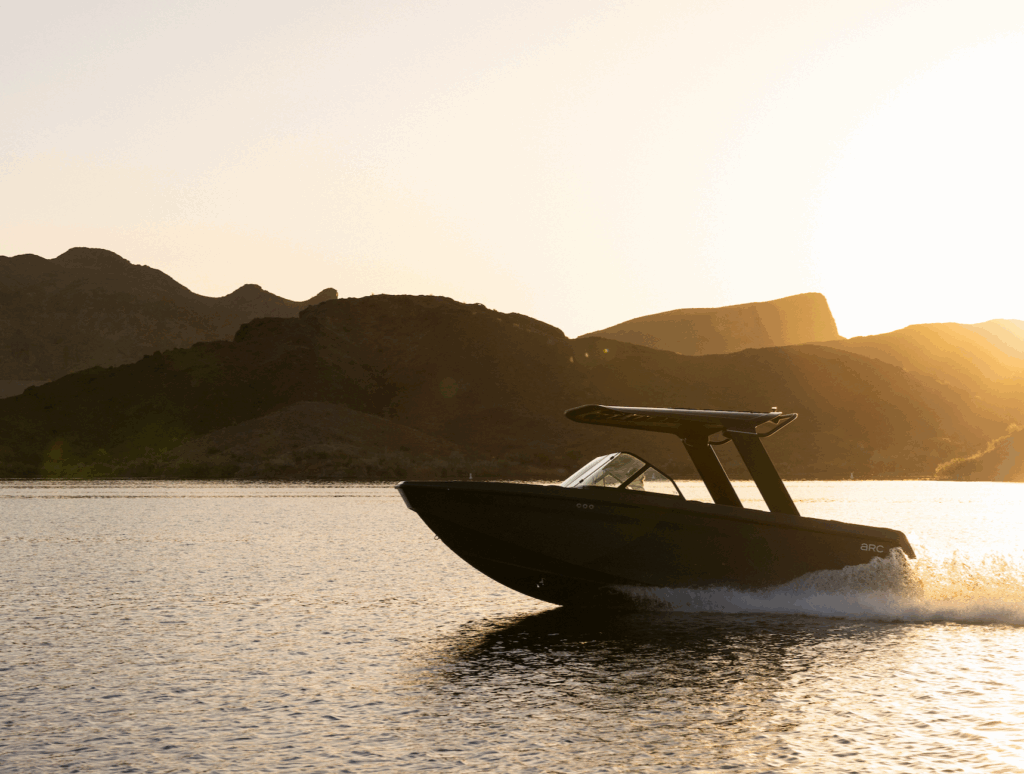
Photo credit to Arc.
Creating a successful electric boat requires more than just technology. It requires an understanding of what customers want. To best align their product with customer needs, Arc consulted Florida Sea Grant’s boater studies to access geographic data on recreational boating routes and activities.
“We wanted to understand real-world usage, and that’s where this data really helped us with analyzing range requirements and battery sizing for our electric boats,” says Herringshaw. “We found that many people take short and medium distance trips (often 5 or 10 miles round trip) so there were plenty of use cases to build for beyond long-distance offshore fishing.”
“The data was invaluable. Florida accounts for about 40% of all center console boat sales in the US and approximately 80% in the greater Southeast region. The data from the recreational boating study helped validate our product design and marketing strategy.”
Looking ahead to environmental concerns, especially in Florida’s shallow bays and estuaries where manatees are at risk from boat propellers, Ted explained how research data and innovative design features could help protect marine habitats, using software to inform boaters about sensitive seagrass areas. Innovative products developed by Arc demonstrate the feasibility of not only sustaining local recreation but also enhancing it, all with sustainability in mind.