
Maylet Perez is an undergraduate student in the School of Forest, Fisheries, and Geomatic Sciences at the University of Florida. She is one of Florida Sea Grant’s 2025 undergraduate interns.
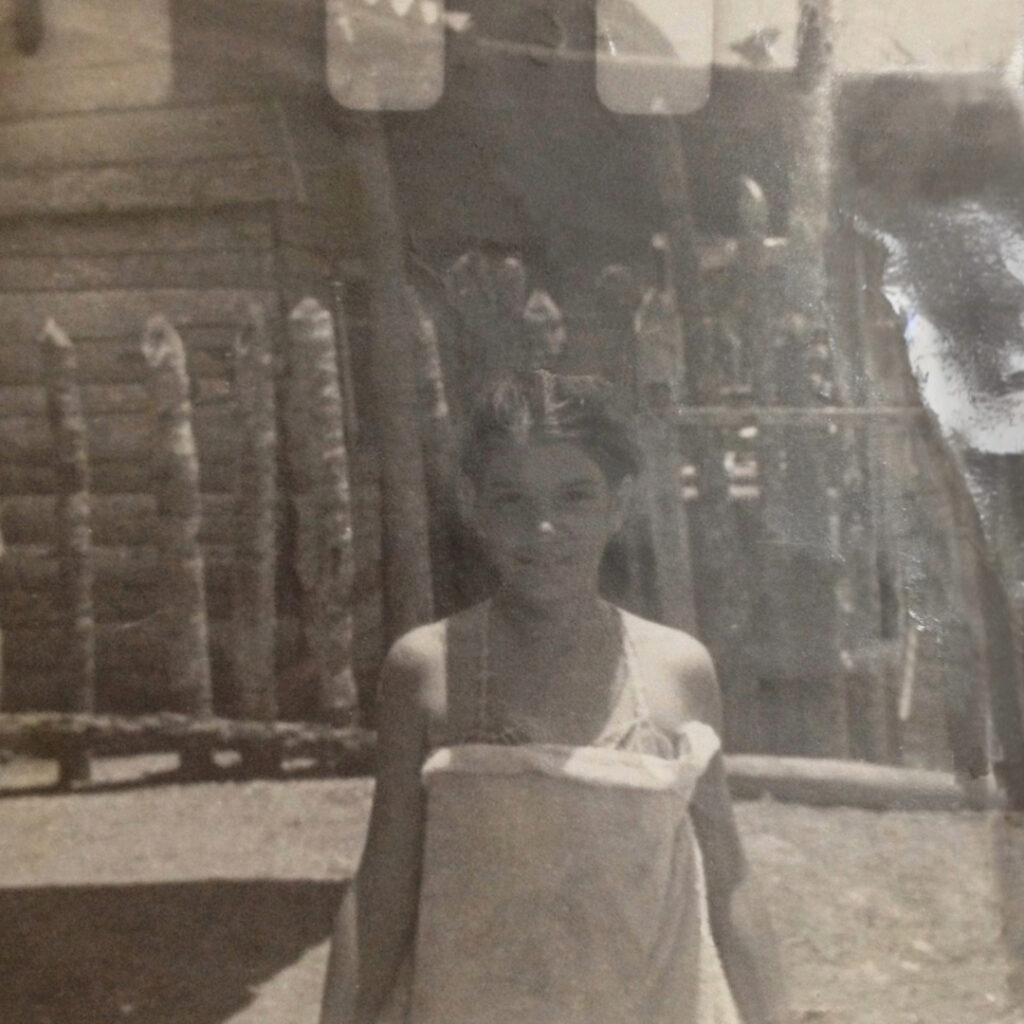
My mother at age 13 in front of her house on Playa Dayanigua, Cuba. 1979.
Many people think of South Florida as a vacation destination with white, sandy beaches. While that may be true in many cases, we are forgetting the muddy and marshy parts that protect us from storm surge. Growing up, my mom would tell me stories about the summers she spent as a kid on the muddy shores of Playa Dayanigua, Cuba. She often said it was ugly, rocky, and full of oysters — not an ideal tourist destination. Her family would sleep in a wooden hut with a roof made of dried palm fronds, called a “casita de guano”. Storms would roll down the coast every year, yet her hut stayed standing.
Now as a Natural Resource Conservation student, I have a better understanding of what went on in Dayanigua. Maybe those unsightly oyster reefs protected my mother’s hut all this time!
After immigrating to the US, my parents did their best to familiarize me with the ocean from their small home in Hialeah, Florida. Trips to Miami Beach, picnics in Oleta River State Park, and summers fishing in Key West trailer parks helped nurture an appreciation for the beauty and mystery of the Florida coast. Despite starting my college career in flatwoods and wetlands, all channels lead back to the ocean.
My research this summer focused on developing a quick assessment guide for monitoring aging oyster reefs, involving a comprehensive assessment of oyster reefs in the Indian River Lagoon and St. Lucie Estuaries. Environmental practitioners in the area can learn from this guide and replicate it in their own sites.
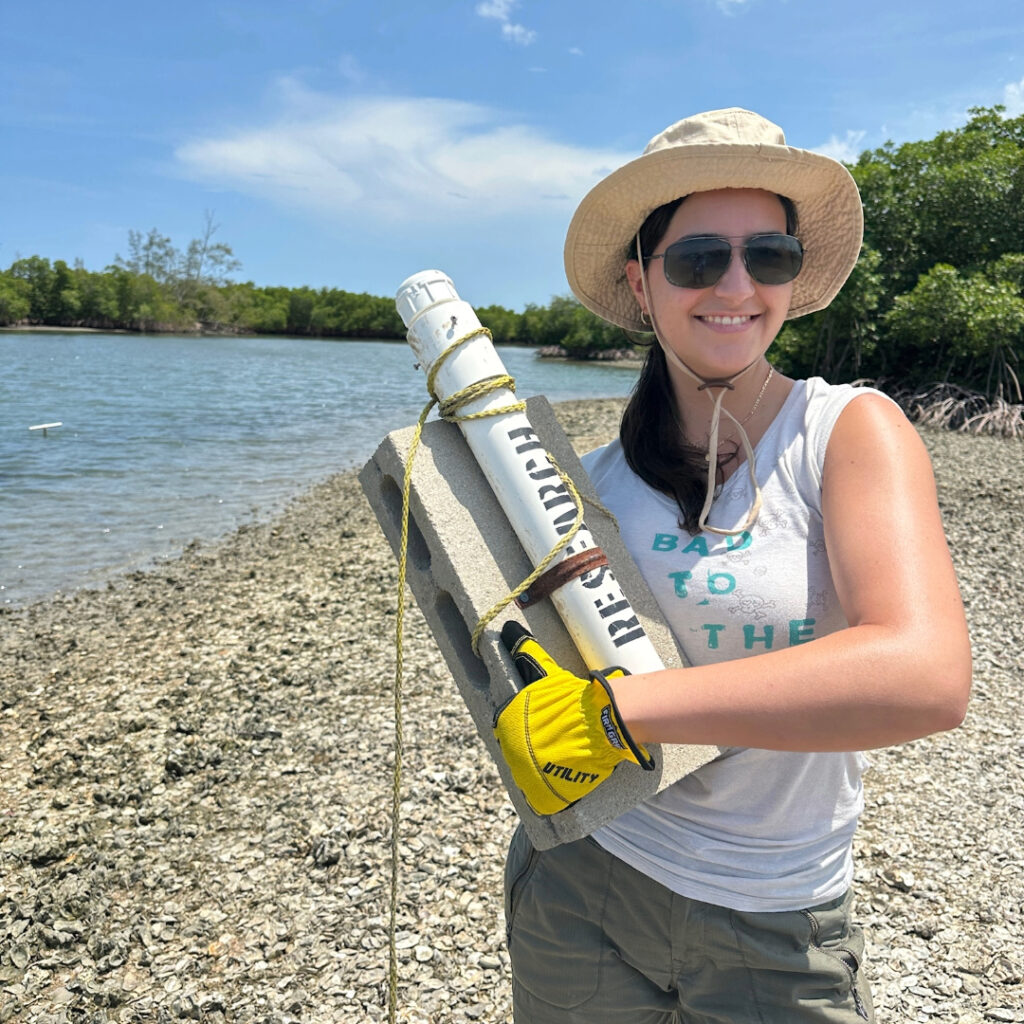
Perez with wave attenuation gauges.
Oysters (primarily the eastern oyster, Crassostrea virginica) are what you call “ecosystem engineers” — a species foundational to developing intertidal habitat and protecting shoreline. Urbanization and development has severely impacted our coastal environment, fragmenting salt marsh habitat and preventing the establishment of oyster reefs. This has resulted in a loss of ecosystem services vital to reducing shoreline erosion and storm surge. In the 2010s, Florida Oceanographic Society installed bags of recycled oysters on multiple sites across the IRL, to encourage oyster recruitment and support reef establishment. As these sites age, there needs to be an accessible, standardized method for assessing reef success in the IRL.
This is where we come in. As part of a Florida Department of Environmental Protection (FLDEP) project and her UF Master’s thesis, Emily Surmont is working with UF Coastal Watersheds and Ecosystems Lab to meet the four main objectives of her research. The first objective is to assess the success of spat (baby oysters!) recruitment and settlement, which will help us understand reef development and health.
The second objective is measuring wave attenuation and sediment accretion provided by the oyster reefs to understand how well the reefs are meeting their intended functions of shoreline protection at different stages of development.
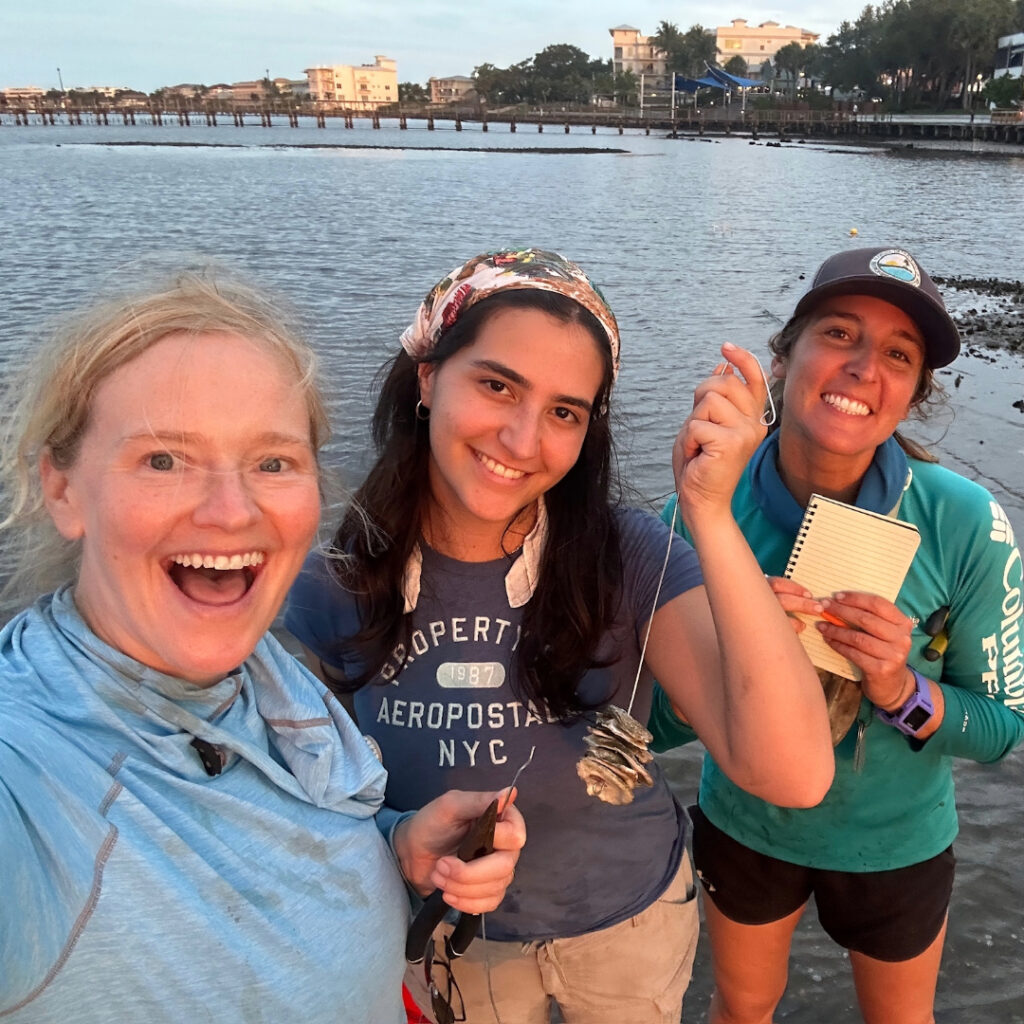
Perez (center) with Dr. Anna Braswell (left) and Emily Surmont of the UF Coastal Watersheds and Ecosystems Lab.
Our third goal is evaluating habitat quality by quantifying benthic diversity, and our final goal is to produce the Quick Assessment Monitoring Guide, which will serve as a valuable tool empowering organizations to continue monitoring and data sharing using sustainable and cost-effective methods.
My research this summer exposed me to both new and familiar places, helping me gain a new perspective on how closely built and natural systems overlap with each other, especially on the coast. Many of our sites were as close as people’s backyards, much like my mom’s casita de guano in Dayanigua.
Learning about our living shorelines has reminded me that resilience often looks a little messy — muddy, rocky, and full of oysters. What may not fit the postcard image of Florida is in fact what keeps our coasts, homes, and memories standing strong.
By developing tools that make oyster reef monitoring more accessible, I hope our work will help communities value and protect these ecosystems for the vital role they play. Just like my mom’s casita de guano stood through the storms, our coastlines can continue to withstand the challenges ahead if we recognize the quiet strength of living shorelines.