
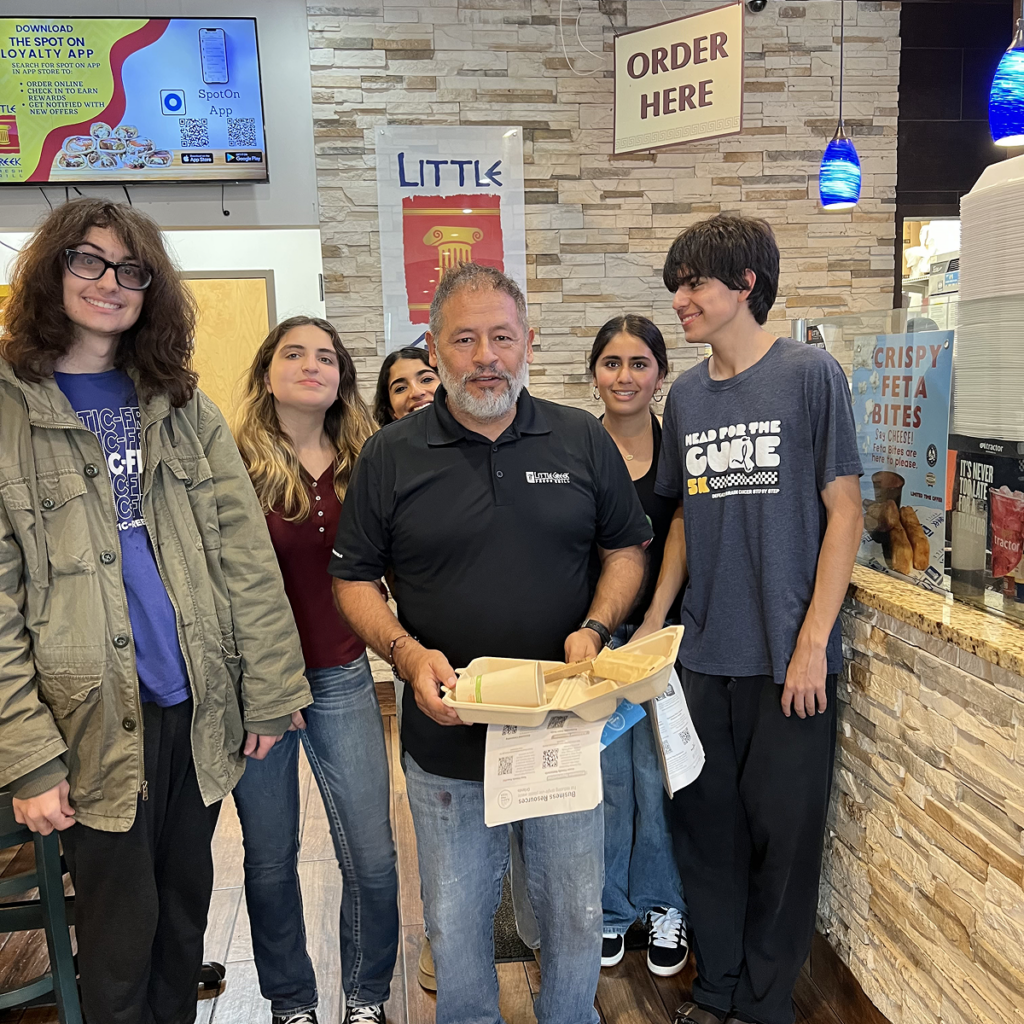
Students canvassing local Orlando businesses with non-plastic products. Image from Georgio Docteur.
Georgio Docteur, a Public Administration and Urban Planning student at the University of Central Florida, is the Plastic-Free Cities Orlando Sea Grant Fellow. Through this fellowship, Florida Sea Grant partnered with Ocean Conservancy and IDEAS For Us to engage local communities in reducing plastic use by collecting data on plastic consumption at neighborhood businesses and providing sustainability recommendations using tools developed by Debris Free Oceans and the City of Orlando.
I was uncertain about the reception my fellow students and I would receive when we canvassed businesses to promote sustainable operations throughout Orlando. I wondered whether business owners might be dismissive to reducing single-use plastic. Instead, we encountered an array of dining establishments that opened the discussion on practical plastic-reduction strategies.
Single-use plastics remain prevalent, particularly for carry-out orders.
Our canvassing indicated that restaurants in Orlando distribute an average of 200 single-use plastic items per day. Although this figure may be lower than in other regions of Florida, it remains significant given the cumulative volume of utensils, cups, and straws that end up in landfills. This realization underscored that despite some progress, substantial work remains.
What stood out most was the openness we encountered. Established businesses demonstrated a sincere interest in reducing plastic use. Many owners expressed confidence that their customers would support sustainable changes; 89% of those surveyed affirmed this directly. Furthermore, 85% indicated a willingness to pay more for plastic-free products, with some prepared to absorb costs up to 30% higher than their current expenditures. This level of commitment reflects the emerging culture of sustainability in Orlando.
However, enthusiasm does not eliminate existing challenges. Owners described several obstacles, including limited budgets, insufficient storage space for bulk orders, and the absence of dishwashers in smaller establishments, which hinder the transition to reusable items.
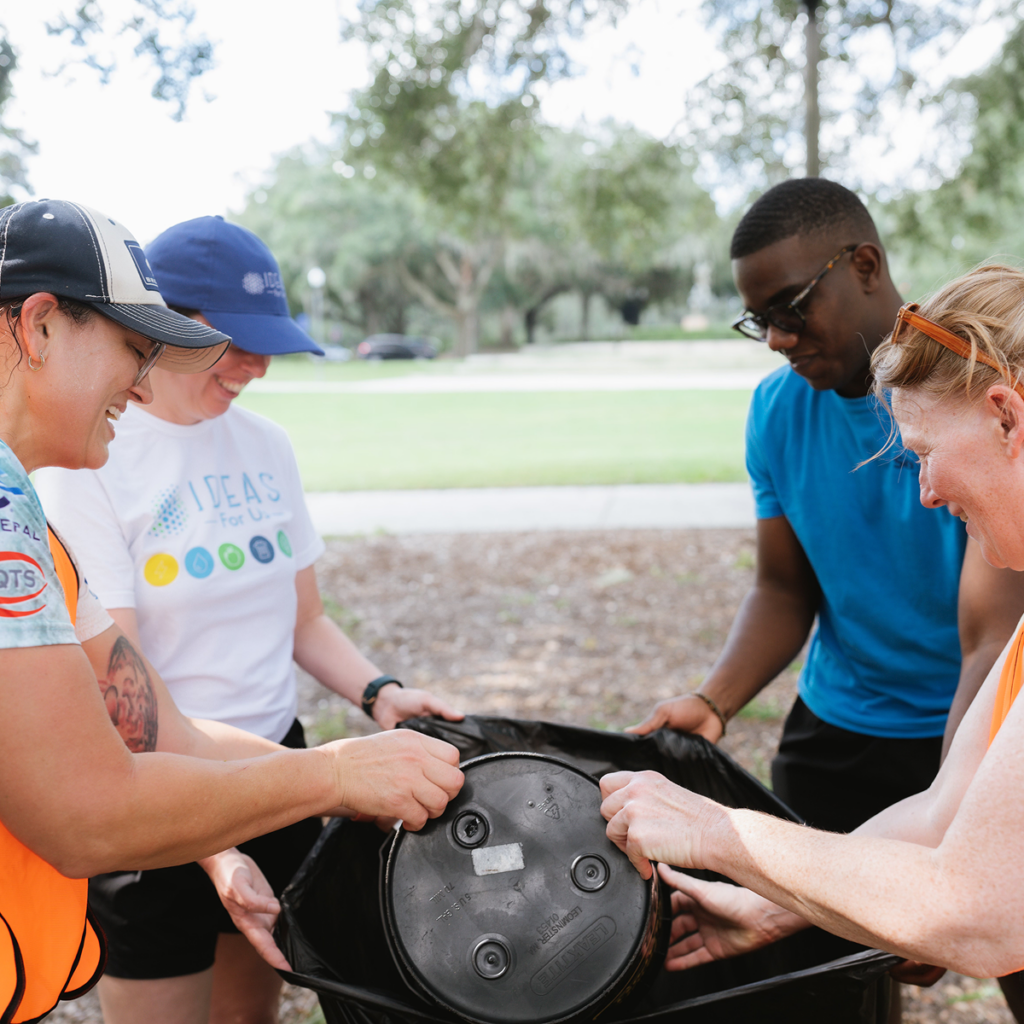
Georgio Doctuer volunteeering with O-Town Compost. Image by Georgio Doctuer.
Some had invested in bioplastics, only to discover that, without industrial composting facilities, which are unavailable in Florida, these products perform no better than conventional plastics. These discussions reinforced that practical solutions must accompany good intentions.
For this reason, the solutions we discussed were particularly significant. Cooperative purchasing could enable small businesses to combine their buying power, making sustainable products more affordable. Providing resources in multiple languages would help owners identify viable alternatives. Most importantly, expanding commercial composting would ensure that compostable products are properly processed rather than sent to landfills. These strategies represent tangible pathways to meaningful change.
I found the canvassing experience deeply rewarding. Sharing guides and resources with my peers, and hearing from speakers with expertise in these issues left me inspired and optimistic. This experience reinforced that advocacy extends beyond data or policy proposals; it involves collaboration, active listening, and the art of building consensus. A notable achievement of the program was composting 42 pounds of food waste and compostable products, with help from O-Town Compost.
What stays with me most is the sense of community. From students to restaurant owners, from panelists to composting partners, and from clean-up to everyone, everyone played a role in shaping the conversation. It reminded me that change doesn’t happen in isolation; it happens when people come together, share ideas, and commit to action.