
Florida Sea Grant’s research projects are awarded on a biennial basis for two years following a rigorous review process in accordance with the National Sea Grant Competition Policy. The competition is designed to help support the program’s applied research and educational responsibilities drawing from fields related to ocean and coastal resources. Supported research can span various disciplines including, natural or social sciences, engineering, planning and design, science communication, policy and legal analysis, architecture, business, education, arts, and humanities.
“Every two years, Florida Sea Grant invests in applied science projects that tackle the most pressing challenges facing Florida’s coasts. These projects bring together researchers, businesses, managers, and communities to develop practical solutions with real-world impact benefiting our environment, economy, and quality of life,” says Dr. Charles Sidman, FSG Associate Director of Research.
This year’s competition awarded funding to eight projects, with individual awards ranging from $179,930 to $200,000 through 2028.
“The current 2026–2027 portfolio features eight projects focused on issues that matter to Floridians, from hurricane resilience and habitat restoration to sustainable aquaculture and managing challenges like red tide and Sargassum. Selected through a rigorous review process, these efforts reflect Florida Sea Grant’s commitment to turning science into solutions that strengthen coastal communities and industries.”
2026-2028 Awarded Research Projects
Dr. Toufiq Reza, Associate Professor at the Florida Institute of Technology, will lead collaborations with Florida Oceanographic Society (FOS), Mote Marine Laboratory, and Florida Sea Grant to test a new “biochar”sediment amendment to help shoal grass grow faster in nurseries and survive better when replanted in the wild. This innovative nature-based solution aims to break the cycle of seagrass loss and support the recovery of vital habitats in the Indian River Lagoon.
Dr. Roy Yanong, Professor at the University of Florida, will lead an initiative to enhance Florida’s coral rescue efforts by developing advanced veterinary and husbandry protocols for land-based coral nurseries in approved Association of Zoos and Aquariums (AZA) facilities. Diseases affecting Caribbean coral species in land-based culture are not well understood, and current treatments rely heavily on “shotgun” approaches that are often ineffective. By improving coral health through science-based disease diagnostics, health management, and fragmentation protocols, the project aims to establish standardized practices at an industry collaborator’s land-based facility, ensuring a robust coral population is ready for future reef restoration.
Dr. Jiayang Li, Assistant Professor at the University of Florida, aims to bridge the gap between innovative coastal infrastructure and community acceptance by documenting and communicating the wide-ranging benefits of living shorelines. Working closely with a team of coastal experts in Tampa Bay and Choctawhatchee Bay, the project will quantify social co-benefits such as aesthetics and recreation, and develop an interactive web-based communication platform to share findings and resources. This platform will equip policymakers, coastal managers, engineers, and community members with the tools needed to support informed decision-making on living shoreline adoption.
Dr. Qian Zhang, Associate Professor at Florida State University, aims to assess the vulnerability of coastal communities, including residential buildings and infrastructure, to hurricane-induced storm surge and wind loading. Using advanced computer simulations, the project bridges the gap between nature and engineering to identify effective measures that enhance community resilience against future hurricanes. The findings will equip local leaders with the technical data needed to implement nature-based solutions that protect homes and infrastructure from storm surges.
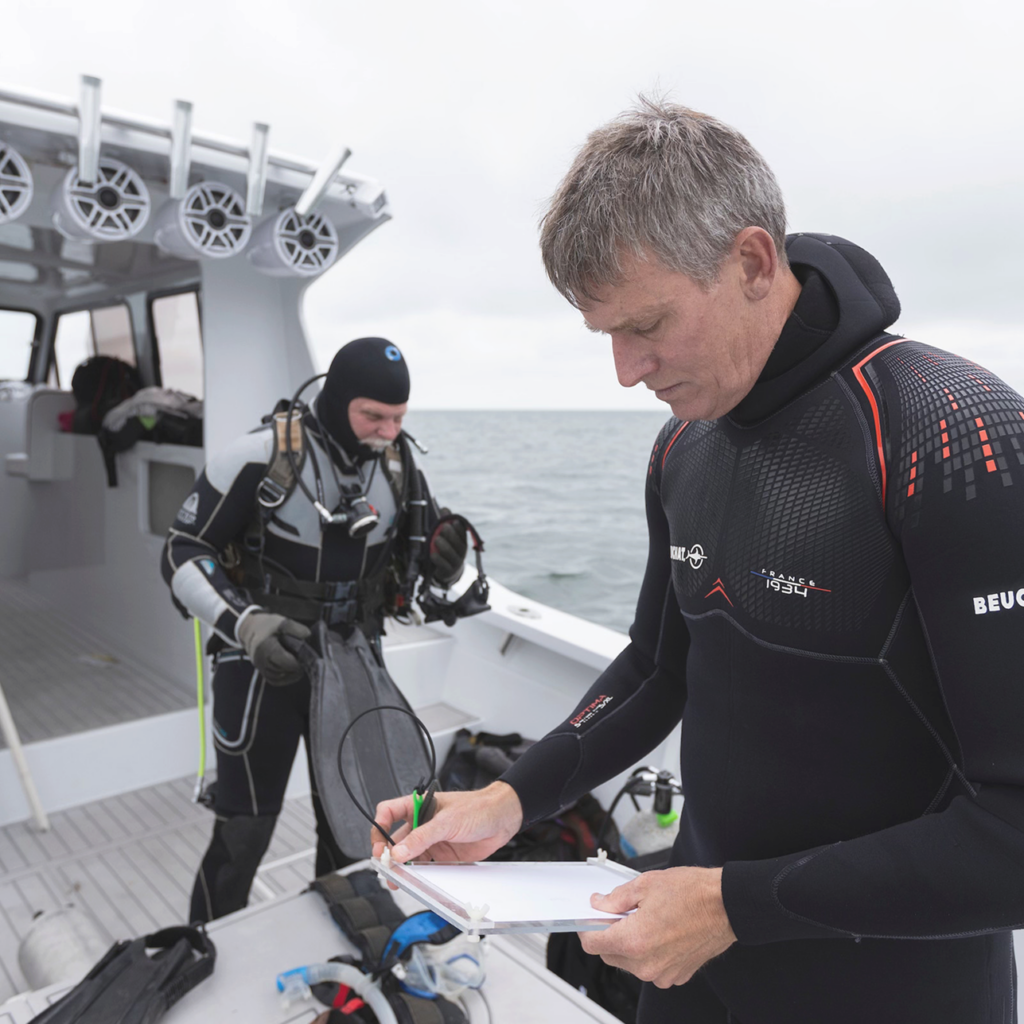
Dr. Donald Behringer, Professor at the University of Florida, is establishing best practices for sponge community restoration to ensure newly planted sponges thrive. By restoring these natural water filters, the project improves water quality and provides essential habitats for Florida’s fisheries. Building on previously identified sponge species and restoration methods, the team will now scale these efforts by testing ecological drivers and developing measurable metrics for success.
Dr. Joshua Patterson, Associate Professor at the University of Florida, aims to address production bottlenecks for the sea urchin Diadema antillarum (nature’s lawnmowers of the coral reef) while conducting economic analysis to support cost-effective scale-up and hands-on workshops for practitioners and resource managers through Florida Sea Grant and the Florida Master Naturalist program. Restoring these urchins is a critical step in reef recovery, as they clear the space needed for new corals to settle and grow.
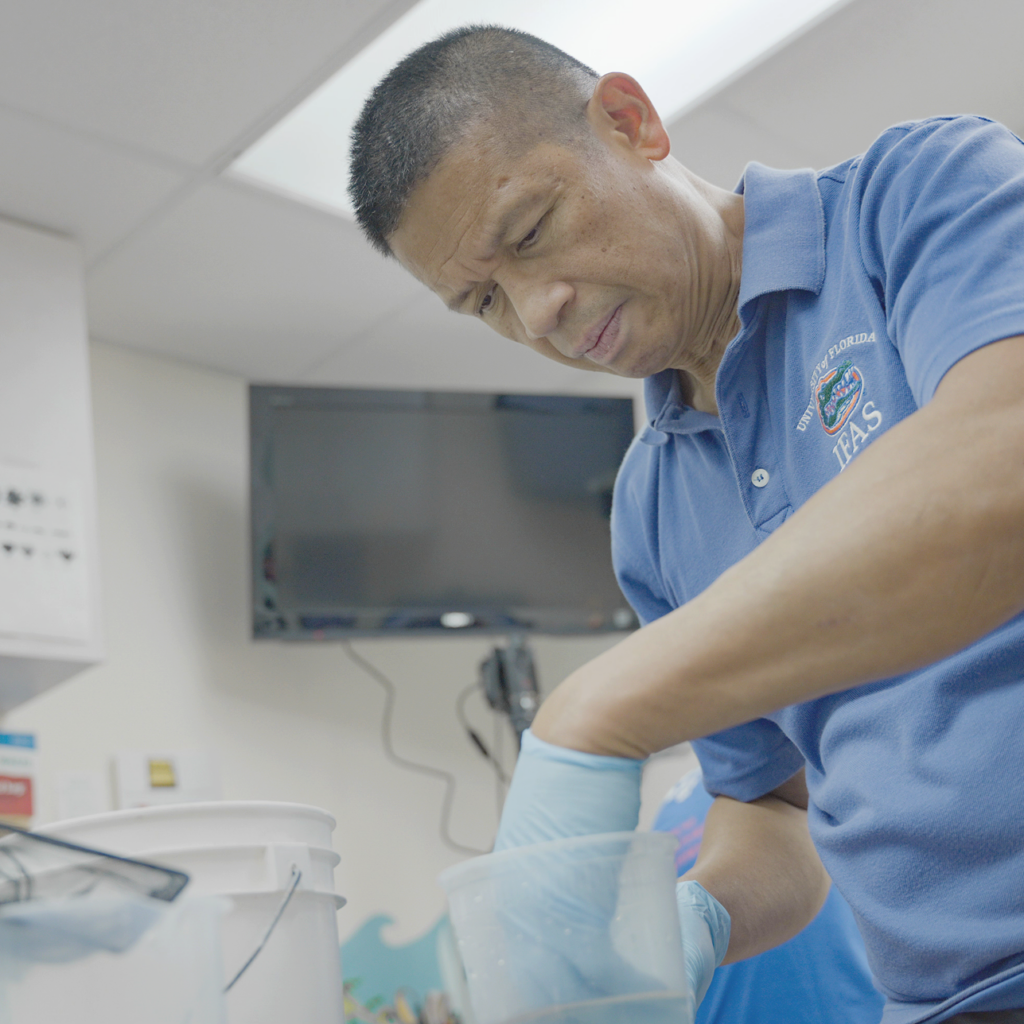
Dr. Prashant Singh, Assistant Professor at Florida State University, is developing new, easy-to-use testing kits to help ensure the shrimp on your plate is exactly what the label says it is. Current species identification methods like DNA barcoding and antibiotic residue testing are costly, time-consuming, and have limited availability. This project aims to develop a faster, more accessible duplex PCR-lateral flow assay to identify Pacific white shrimp and tiger shrimp, while standardizing methods for detecting antibiotic residues across restaurants in 10 major Florida cities. Together, these tools will create a rapid screening system to detect mislabeling and antibiotic residues, protecting both consumers and ethical seafood producers in Florida.
Dr. Dan Benetti, Professor at the University of Miami, is turning the problem of smelly, washed-up Sargassum into something useful. By using Black Soldier Fly Larvae to process the seaweed, his team is creating eco-friendly ingredients for fish feed and fertilizer that reduce waste and support coastal agriculture. Researchers will first run trials to minimize arsenic contamination before scaling up to a bioreactor capable of processing 25 tons of waste. Ultimately, this work aims to support Florida’s coastal resilience by transforming a persistent coastal nuisance into a valuable, environmentally responsible resource.
For more information on these and other ongoing Research and Program Development projects, visit our project explorer tool.