
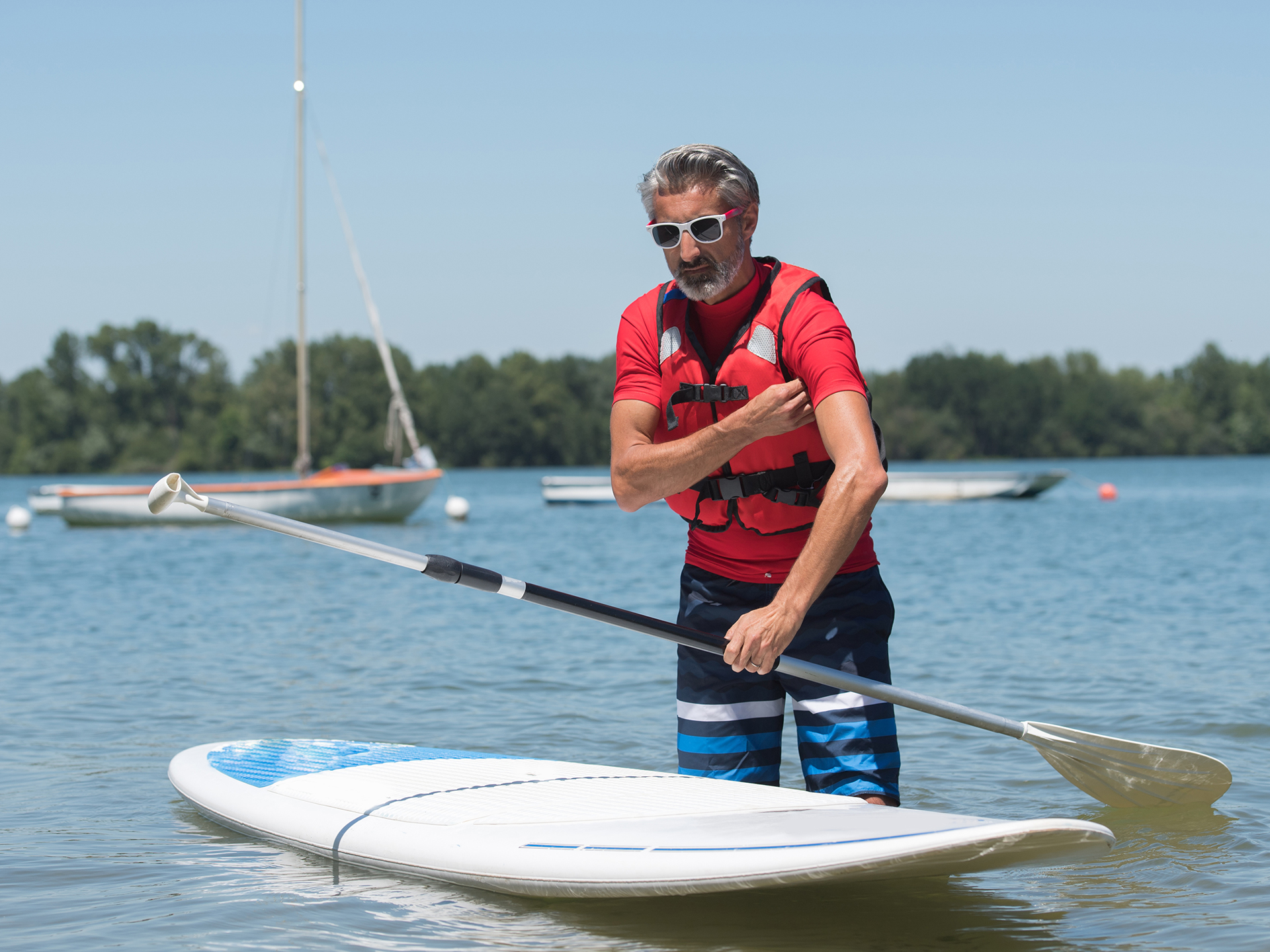
Legal Currents is a series that explores timely topics and trends in Florida marine and coastal law and policy. This blog, co-written by Katherine Pearson, J.D. Candidate at the University of Florida Levin College of Law, examines the complexity of Florida’s vessel laws, where both state and local governments face challenges in clearly defining different vessel types.
Florida has over a million registered recreational vessels plying its waters,1 along with many more commercial vessels, vessels registered in other states, vessels that do not have to be registered, vessels that have not yet been classified for purposes of regulation. And this does not include the myriad “artificial contrivances” that may not even qualify to be vessels under Florida law. Human ingenuity and technology have conspired to create a growing array of craft that can navigate on or in Florida waters, creating conflicts among vessel types and vessel uses, and posing a regulatory challenge for state agencies and local governments tasked with managing the increasing human use of waters in the state. The key to understanding how vessels are regulated in Florida is to understand how they are defined, and for what purpose. Over the years, the Florida Legislature and state agencies have continued to add or amend statutory definitions for the many types of regulated vessels. Local governments have also sought to define vessel types in response to local issues, sometimes in ways that can conflict with state law.
To assist with the understanding of Florida’s complex vessel management system, we scoured the statutes and regulations for terms that define the types of vessels using Florida waters and then classified these into the broader categories we thought they best fit. We then created a comprehensive chart that lists these vessel types by category, then provides their definitions, the legal context in which they are defined and additional commentary where needed.
In this blog we discussed why this definitional probe matters, especially for local governments seeking to regulate vessels within their waters. We then focus on the key definition of the term “vessel” and the Florida-based United States Supreme Court case that brought it to the forefront, and provide a brief overview of another keyset of vessel definitions – found in the so called “Rules of the Road” – the federal Federal Inland Navigation Rules administered by the U.S. Coast Guard.
Why This Matters
How a vessel is defined or described by law determines whether and how it is regulated, and by whom. As a general proposition, Florida waters and the vessels navigate them are governed by the three levels of government, federal, state and local. The federal government maintains primacy in maritime matters. However, federal maritime law will defer to state boating laws where the matter is one that has “great local significance,” and the state law does not threaten the uniformity of federal law. This deference is referred to as the “maritime but local” doctrine.2 There are some notable exceptions, such as preemptive vessel safety and equipment mandates under the Federal Boating Safety Act.3
The State of Florida has two primary statutes devoted to boating regulation, Chapters 327 (Vessel Safety) and 328 (Vessels: Title Certificates; Lien; Registration). Most of the terms discussed here can be found in these statutes, and the rules that implement them. Florida local government authority to regulate vessels is significantly circumscribed by these statutes under the legal doctrine of “preemption.” Generally speaking, preemption means that the local government cannot regulate in an area where the legislature has determined that state law should govern.4
However, local governments with significant boating activity often have whole chapters in their local code devoted to the regulation of the waterways and shoreside support facilities within their jurisdiction.5 To the extent any of these local regulations broaden, narrow or otherwise contravene state law, they may be preempted, resulting in unwanted litigation. “Mismatches” can arise between state statutes and local codes because local governments pay insufficient attention to the state law governing vessels when drafting regulations to address local circumstances, or because local codes become out of sync with state law as state laws are amended and local laws are not kept current.
The threshold question. Is it even a vessel?
An analysis of boating law almost always begins with this seemingly simple question. Is it even a vessel? The answer is mostly yes. Most anything that is or could be propelled through the water by any means is a vessel. But not everything. The starting point for defining vessel is the federal definition found in the United States Code, which compiles and codifies all federal statutes. An indication of its historical importance, the term “vessel” can be found with other foundational definitions in the very first chapter of the Code – Title I – the basic dictionary for all the U.S. law that follows. Section 3 of Title I provides that: “The word “vessel includes every description of watercraft or other artificial contrivance used or capable of being used, as a means of transportation on the water.6
As might be expected, Florida’s vessel definition closely tracks the federal definition. Florida defines vessel to be “…every description of watercraft, barge, and airboat, other than a seaplane on the water, used or capable of being used as a means of transportation on water.”7
It is not clear why Florida chose to specifically list barges and airboats in its definition, nor is it clear why Florida did not include the broad term “artificial contrivance” used in the federal definition, which is also not defined in federal law, and is essentially a catch all to remove any doubt. It may be that barges, which typically have no means of propulsion, were too similar to “floating structures,” which by their own Florida definition do not qualify as vessels.8 And it may be that airboats were considered sufficiently unique in their means of propulsion to justify calling them out specifically.
The term watercraft itself has no relevant federal definition.9 In a bit of circular logic, one State statute that does defines watercraft simply defines it as a vessel – e.g. “vessel or craft designed for navigation on the water.”10
Most importantly, however, both the federal and state definitions share the operative language “used or capable of being used as a means of transportation on the water,” terminology made famous by the United States Supreme Court in Lozman v. City of Riviera Beach, a Florida case involving a floating home.
The Lozman Case
In 2013, the U.S. Supreme Court addressed whether federal admiralty law applied in a case in which the City of Riviera Beach sought to remove a “floating home” moored at one of its public marinas.11 After ongoing disputes between Mr. Lozman, (owner of the floating home), and the City regarding unpaid dockage fees and refusal to leave the marina (among other issues), the City sought relief in federal admiralty court under the theory that the floating home was committing the federal maritime tort of trespass. If the City prevailed, it would be authorized to remove the floating home and seek monetary damages. The key issue in the case was whether Lozman’s floating home met the federal definition of “vessel” because it was “capable of being used…as a means of transportation on the water.”12 If it met that definition, then the City could proceed under admiralty jurisdiction. Taking an expansive view, both the lower courts ruled in favor of the City, deciding that it was at least conceivable that the floating home could be used as a means of transportation.13 Lozman appealed to the U.S. Supreme Court, which took the case.
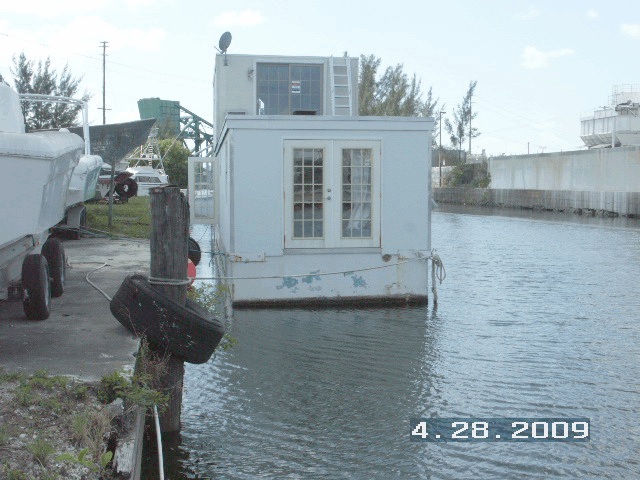
Mr. Lozman argued that his floating home was not “capable being used as a means of transportation on water,” and hence not a vessel and not subject to federal maritime jurisdiction. Lozman argued that his floating home had no means of propulsion and was dependent on shore-side electrical power. The Supreme Court agreed, narrowing the federal meaning of vessel, and establishing a new test to determine what constitutes a vessel. That methodology is now often referred to as the “reasonable observer” test. Justice Breyer colorfully wrote the Supreme Court’s Opinion, explaining:
Not every floating structure is a “vessel.” To state the obvious, a wooden washtub, a plastic dishpan, a swimming platform on pontoons, a large fishing net, a door taken off its hinges, or Pinocchio (when inside the whale) are not “vessels,” even if they are “artificial contrivance[s]” capable of floating, moving under tow, and incidentally carrying even a fair-sized item or two when they do so. Rather, the statute applies to an “artificial contrivance . . . capable of being used . . . as a means of transportation on water.” 1 U.S.C. §3 (emphasis added). “[T]ransportation” involves the “conveyance (of things or persons) from one place to another. And we must apply this definition in a “practical,” not a “theoretical,” way. Consequently, in our view a structure does not fall within the scope of this statutory phrase unless a reasonable observer, looking to the home’s physical characteristics and activities, would consider it designed to a practical degree for carrying people or things over water.
(emphasis added). The Supreme Court then applied its new practicality-premised “reasonable observer” test to Mr. Lozman’s floating home:
But for the fact that it floats, nothing about Lozman’s home suggests that it was designed to any practical degree to transport persons or things over water. It had no rudder or other steering mechanism. Its hull was unraked, and it had a rectangular bottom 10 inches below the water. It had no special capacity to generate or store electricity but could obtain that utility only through ongoing connections with the land. Its small rooms looked like ordinary nonmaritime living quarters. And those inside those rooms looked out upon the world, not through watertight portholes, but through French doors or ordinary windows. Although lack of self-propulsion is not dispositive, e.g., The Robert W. Parsons, 191 U.S. 17, 31, 24 S. Ct. 8, 48 L. Ed. 73 (1903), it may be a relevant physical characteristic.”
The Court concluded, “we can find nothing about the home that could lead a reasonable observer to consider it designed to a practical degree for “transportation on water.”
The Lozman opinion removed one class of objects that occupy space on the water from the ambit of federal law and ensured that recourse for legal actions involving floating homes (as distinguished from house boats), and similar floating platforms incapable of use as a means of transport would remain in state courts. Moreover, given the similarity in definitions, it seems likely that Florida Courts would turn to the practical “reasonable observer test” when confronted with cases involving what constitutes a vessel under Florida law.14 Floating homes without any means of transport are considered within the definition of “Floating structures” found at Section 327.02(14), and in that definition, they are expressly excluded from broader definition of vessel in that same section of the statute, leaving local governments free to regulate them.15
The Rules of the Road: Another Authoritative Source for Vessel Definitions
The federal navigation rules, or “Rules of the Road” as they are commonly referred to, developed over centuries if not millenia, to manage maritime traffic, prevent collisions at sea, and assign liability for those collisions.16 There are 2 similar sets of rules, one for international waters and one for national waters. The international rules, known as the COLREGS were created under the 1972 Convention on the International Regulation of Collisions at Sea. The United States adopted these rules in 1977.17 The Inland Rules, as they are known, were adopted 1980 to reconcile sometimes conflicting state and regional approaches to navigation and establish a coherent set of navigation rules throughout the United States. Originally codified in statute,18 the Inland Rules were moved to the Code of Federal Regulations for ease of revision and placed under the authority of the United States Coast Guard.19 Florida has also incorporated the Inland Rules in Chapter 327 and applies them to assign liability in cases involving the reckless and careless operation of vessels,20 and in the installation and use of lights and shapes on vessels for safety purposes.21 Unlike most vessel definitions in Chapters 327 and 328, the Inland Navigation Rule definitions tend to distinguish vessels by the way they are being used at the time of use. For example, Florida defines a sailboat as a vessel whose sole source of propulsion is wind, ignoring the fact that many, if not most, sailboats also have a motor to assist with propulsion when needed. The Inland Rules recognize this duality in sailboats. Thus, a sailboat is only a sailboat when it is actually sailing, and not motoring.
The Vessel Taxonomy Chart
The vessel definition chart below lists more than 50 unique vessel definitions found in the Florida Statutes and regulations, and in a few cases in federal law as well. These definitions are “taxonomically” classified based on what the author’s believe is the regulatory interest that best suits them. Accurately describing and distinguishing vessels based on their use and the regulation of that use illustrates the difficulty in devising an appropriate, state-wide regulatory and management framework. At the same time, waterfront local governments that often bear the brunt of the disputes that arise both among vessel types and between vessels and shoreside owners. Faced with such disputes they may be quick to enact a local solution without adequate consideration of the statewide framework or fail to keep pace with state regulatory change. Chapter 327 provides little local “home rule” space to regulate vessels. Ensuring that local vessel definitions align with state law represents a key step in avoiding the preemptive effect of state vessel law.
[1] 2024 Recreational Boating Statistics, U.S. Department of Homeland Security, U.S. Coast Guard Office of Auxiliary and Boating Safety, p.72
https://www.uscgboating.org/library/accident-statistics/Recreational-Boating-Statistics-2024.pdf
[2] See Edginton et al., Benedict on Admiralty (7th Rev. ed. 2025). Barber v. State of Hawaii, 42 F.3d 1185 (9th Cir.1994). Burklow & Associates, Inc. v. Belcher, 719 So.2d 31 (1998)
[3] 46 U.S.C. §4306. "Unless
permitted by the Secretary under section 4305 of this title, a State or
political subdivision of a State may not establish, continue in effect, or
enforce a law or regulation establishing a recreational vessel or associated
equipment performance or other safety standard or imposing a requirement for
associated equipment (except insofar as the State or political subdivision may,
in the absence of the Secretary’s disapproval, regulate the carrying or use of
marine safety articles to meet uniquely hazardous conditions or circumstances
within the State) that is not identical to a regulation prescribed under
section 4302 of this title."
[4] Judge James R. Wolf and Sarah Harley Bolinder, The Effectiveness of Home Rule: A Preemption and Conflict Analysis, 83 Florida Bar J. No. 6, 92 (June 2009)
[5] E.g. Title X, Chapter 388 – Boats and Waterways (City of Jacksonville); Ch. 94 – Waterways, Code of Ordinances (St. Pete Beach)
[6]
[7] Fla. Stat. § 327.02(46) (2025).
[8] Fla. Stat. §327.02(3).
[9] https://comitemaritime.org/wp-content/uploads/2018/05/CMI-IWG-Questionnaire-Unmanned-Ships-US.pdf; The question comes up frequently enough that the United States Coast Guard has created a regulatory process to provide “vessel determinations” and detailed policy letters described the application of USCG regulations to particular vessels.
[10] Fla. Stat.327.75(2)(a)(2025).
[12] See 1 U.S.C. § 3 (2019) (“The word “vessel” includes every description of watercraft or other artificial contrivance used, or capable of being used, as a means of transportation on water”).
[13] For detailed discussion of the facts of the case, see the lower court opinion from the U.S. Court of Appeals, 11th Circuit at City of Riviera Beach v. (Fane Lozman) 649 F.3d 1259, Aug. 19, 2011.
[14] See also, Yankowski, Kathryn, “Whatever Floats the “Reasonable Observer’s” Boat: An Examination of Lozman v. City of Riviera Beach, Fla. and the Supreme Court’s Ruling That Floating Homes Are Not Vessels,” University of Miami Law Review, Vol. 67:975; available at
[15] Fla. Stat. §327.60(3). Floating homes also receive special tax treatment. The are considered personal property and not eligible for the benefits of Florida’s homestead laws. Fla. Stat. § 192.001(17) (2025).
[16] R. S. Crenshaw, Jr., Twenty-Five Hundred Years of the Rules of the Road, 81 U.S. Naval Inst. Proc. 1099 (1955).
[17] International Navigational Rules Act of 1977, 33 U.S.C. §§ 1601–1608).
[18] 33 USC 2001 to 2038: Repealed. Pub. L. 108-293, title III, §303(a), (c), Aug. 9, 2004, 118 Stat. 1042
[19] 33 C.F.R. § 83 (2025). See also USCG Amalgamated Navigation Rules: International and U.S. Inland. https://www.navcen.uscg.gov/navigation-rules-amalgamated
[20] Fla Stat. §327.02(33) (2025) .
[21] Fla. Stat. §327.50(2) (2025).
A Taxonomy Of Vessels On Florida Waters
Thomas T. Ankersen, Professor Emeritus
University of Florida College of Law
Florida Sea Grant
Katherine Pearson, J.D. Candidate
University of Florida Levin College of Law
This chart includes definitions for vessel types found within the Florida Statutes (Fla. Stat. or FS) and the Florida Administrative Code (Fla. Admin. Code r. or FAC), organized by categories of vessels assigned by the authors. Where the same term is defined differently in different statutes or code provisions, these are assigned separate rows. Where a statute and the code employ the same wording for the term they are defining, they are listed in the same row. Where there is a definition in the code that is different from or not found in the statute, the definition is assigned its own row. Note that these broad categories are not mutually exclusive. Any vessel may also qualify for another category. The third column (Legal Context) provides the statutory or regulatory purposes for which the term is defined. The final column indicates any judicial or other authoritative interpretations of the term, as well as additional context from the authors. The final category lists definitions included in the Federal Inland Rules of Inland Navigation, which have been incorporated into Florida law. This chart addresses amendments that go back 30 years in the case of statutes, and 20 years in the case of agency rules.
Summary Vessel Taxonomy
Recreational Vessels
- Personal watercraft
- Yacht
- Motorboat
- Airboat
- Sailboat
- Inflatable boat
- Human-powered Vessel
- Canoe
- Racing shell, rowing scull, racing kayak
- Antique vessel
Commercial vessels
- Commercial Vessel
- Commercial Fishing Vessel
- Vessel for Hire
- Charter Vessel
- Headboat
- Gambling Vessel
- Livery Vessel
- Barge
Residential vessels
- Houseboat
- Live-Aboard
Problematic Vessels
- Derelict Vessel
- At-risk Vessel
- Abandoned Vessel
- Unclaimed Vessel
Source of Origin Vessels
- American Vessel
- Non-American Vessel
- Documented Vessel
- Foreign-documented Vessel
- Migrant vessel
Vessel Construction
- Homemade Vessel
- Manufactured Vessel
Vessel Terms Used but Not Defined
- Boat
- Seaplane
- Amphibious Vessel
- Inflatable Boat
- Non-Motor-Powered-Vessel
Comprehensive Chart
| Defined Term & Citation | Definition | Legal Context | Authoritative Interpretations & Author Commentary |
|---|---|---|---|
| Vessel Watercraft Boat | |||
BOAT Florida Constitution |
Used but not defined. “Motor vehicles, boats, airplanes, trailers, trailer coaches and mobile homes, as defined by law, shall be subject to a license tax for their operation in the amounts and for the purposes prescribed by law, but shall not be subject to ad valorem taxes.” (emphasis added). |
– The term "boat" appears in Article VII, Section 1(b) of the Florida Constitution, which exempts boats (along with motor vehicles, airplanes, etc.) from ad valorem taxes and subjects them to a license tax. | – The term appears in various places in the Florida Statutes but is never discretely defined (apart from being characterized as a synonym for vessel. – In State v. Davis, 110 So.3d 27 (Fla. 2nd DCA 2013), the court found that vessel and boat were intended to have “nearly the same meaning.” – In Department of Revenue v. Florida Boaters Ass’n, Inc., 409 So.2d 17 (1981), the court found a statute unconstitutional that excluded live-aboards from the meaning of boat in the Florida Constitution. – A 2005 Florida Attorney General’s Opinion confirmed the constitutionality of the registration exemption for “non-motor-powered vessels.” Op. Att’y Gen. Fla. 51 (2005). |
VESSEL (1) Ch. 327: Florida Vessel
Safety Law Florida Manatee
Sanctuary Act (FAC Implementation) So. Fla. WMD Agency Rule Fla. Admin. Code r. 40E-7.521(29) (2025). |
synonymous with boat as referenced in s. 1(b), Art. VII of the State Constitution and includes every description of watercraft, barge, and airboat, other than a seaplane on the water, used or capable of being used as a means of transportation on water. | – Defines “vessel” for the purposes of Chapters 327 (vessel safety) and 328 (vessel title, lien and registration). FS § 327.02(46). – FAC verbatim recitation of the “vessel” definition in Ch. 327.02(46) for the purpose of implementing the Florida Manatee Sanctuary Act regulations. FAC 68C-22.001-68C-22.029. – FAC verbatim recitation of the “vessel” definition in FS Ch. 327.02(46) for purposes of South Florida Water Management District Rules. FAC 40E-7.521. |
– This definition is stable. There have been no notable amendments to this definition of vessel in either the Florida Statutes in the past thirty years or the FAC in the past twenty years. – In Lozman v. City of Riviera Beach, 568 U.S. 115, 121 (2013), the U.S. Supreme Court interpreted the federal definition of vessel, very similar to Florida’s, and announced “the reasonable observer” test to distinguished floating homes from vessels. |
VESSEL (2) Ch. 328: Florida Vessel Title, Lien and Registration Law – Part I: Uniform Certificate of Title for Vessels Act – Part
II: Vessel Registration |
a watercraft
used or capable of being used as a means of transportation on water, except: 1. A seaplane;
6. Watercraft owned by the United States, a state, or a foreign government or a political subdivision of any of them; and 7. Watercraft used solely as a lifeboat on another watercraft. |
– Defines "vessel" for the purposes of titling and registration. FS §§ 328.001-328.80. – Administered by Dep’t of Highway Safety and Motor Vehicles (DMV). FS § 328.40. – Unless exempted, all vessels must be titled under FS § 328.03 and registered under FS § 328.46. |
– Otherwise similar to FS § 327.02(46), this definition also includes a list of vessel types that are excluded from vessel registration under FS Ch. 328. Over time, this list has grown to reflect new vessel exclusions, small non-motor-powered vessels, and floating homes. |
VESSEL (3)- Federal Chapter 1 U.S. Code: Rules of Construction 1 U.S.C. § 3 |
The word “vessel” includes every description of watercraft or other artificial contrivance used, or capable of being used, as a means of transportation on water. | – The United States Code defines “vessel” for the purposes of its chapter on the rules of construction, which are used to interpret all federal statutes. 1 U.S.C. §§ 1-8. | – In Lozman v. City of Riviera Beach, 568 U.S. 115, 121 (2013), the court found that not every floating structure is a vessel as a vessel must be a means of transportation on water to a “reasonable observer.” |
VESSEL (4)-Federal Federal Inland Navigation Rules 33 C.F.R. § 83.03(a) (2025). |
The word vessel includes every description of water craft, including non-displacement craft, WIG craft and seaplanes, used or capable of being used as a means of transportation on water. | – Defines vessel for the purposes of the Inland Rules of Navigation of 1980. | – Note that FS Ch. 328 excludes seaplanes from its definition for purposes of vessel registration. – WIG means “Wing in Ground” and refers to a vessel that operates on a dynamic air cushion between the craft and the water. |
VESSEL (5) State Agency
Rule FAC Ch68B:
Marine Fisheries |
"Vessel" includes any water craft used or capable of being used as a means of transportation on water. Vessel includes nondisplacement craft and any aircraft designed to maneuver on water. | – Regulates harvesting of recreational and commercial species on the same vessel at the same time. | – Note that this administrative definition includes vessels that could be characterized as “seaplanes,” which are specifically excluded from the statutory definition. – This chapter was adopted into the FAC in 2013. There have been no notable amendments to the definition of vessel since. |
WATERCRAFT (1) Ch. 327: Watercraft
Energy Source Freedom Act |
Means any vessel or craft designed for navigation on water, including boats and personal watercraft. | – Defines “watercraft” for the purposes of the Watercraft Energy Source Freedom Act, which prohibits watercraft discrimination based on energy source. FS § 327.75(2). | – The Watercraft Energy Source Freedom Act was added to the Florida Statutes in 2025. There have been no notable amendments to the definition. Fla. Laws Ch. 2014-195. |
WATERCRAFT (2) State Agency
Rule FAC 51I: Florida
Forest Service |
Any motorized, paddle-propelled or wind-driven means of water-related transportation. | – Prohibits use of watercraft in swimming areas on lands managed by Florida Forest Service. FAC 5I-4.006(2). | – There have been no notable amendments to the definition of watercraft in this rule in the past twenty years. |
| NON-VESSELS | |||
FLOATING STRUCTURE Ch. 327: Florida Vessel Safety Law Fla. Stat. § 327.02(14) (2025). |
means a floating entity, with or without accommodations built thereon, which is not primarily used as a means of transportation on water but which serves purposes or provides services typically associated with a structure or other improvement to real property. The term includes, but is not limited to, an entity used as a residence, place of business or office with public access; a hotel or motel; a restaurant or lounge; a clubhouse; a meeting facility; a storage or parking facility; or a mining platform, dredge, dragline, or similar facility or entity represented as such. Floating structures are expressly excluded from the definition of the term “vessel” provided in this section. Incidental movement upon water or resting partially or entirely on the bottom does not, in and of itself, preclude an entity from classification as a floating structure. | – Authorizes (“does not prohibit”) local government regulation of floating structures. FS § 327.60(3). – Authorizes local governments to require proof of proper sewage disposal. FS § 327.60(4)(a). – Requires “floating structure that has an enclosed living space with berthing facilities, or working space with public access, must be equipped with a permanently installed toilet properly connected to a Type III marine sanitation device or permanently attached via plumbing to shoreside sewage disposal." FS § 327.53. – Prohibits anchoring or mooring of floating structures within specified distances of marinas, boat ramps, and other facilities. FS § 327.4109. – Exempts floating structures without propulsion systems, and that maintain shoreside utility hookups from vessel registration. FS § 328.0015. |
– This definition was added to the Florida Vessel Safety Law in 1994. Fla. Laws Ch. 94-241. Since being added, there have been no notable amendments to the definition. – In Lozman v. City of Riviera Beach, 568 U.S. 115, 121 (2013), the court found that a floating home is a floating structure rather than a vessel unless a reasonable person would consider the structure to be designed for moving people or objects across waters. – FDEP characterizes docks as fixed or floating structures for the purposes of sovereign submerged lands management rules. FAC 18-21.003. |
FLOATING STRUCTURE (2) Taxation and
Finance |
means a floating barge-like entity, with or without accommodations built thereon, which is not primarily used as a means of transportation on water but which serves purposes or provides services typically associated with a structure or other improvement to real property. The term “floating structure” includes, but is not limited to, each entity used as a residence, place of business, office, hotel or motel, restaurant or lounge, clubhouse, meeting facility, storage or parking facility, mining platform, dredge, dragline, or similar facility or entity represented as such. Floating structures are expressly excluded from the definition of the term “vessel” provided in s. 327.02. Incidental movement upon water shall not, in and of itself, preclude an entity from classification as a floating structure. A floating structure is expressly included as a type of tangible personal property. (emphasis added). | – Defines Floating Structure for the purposes classifying it as a “type of tangible personal property.” FS § 192.001(17). | – The highlighted text is the only variance from the definition found in FS Ch. 327.02(46) above. – There have been no notable amendments to this definition of floating structure. |
RECREATIONAL VESSELS It is also declared to be the intent of the Legislature that all vessels be classified as either “commercial” or “recreational” and that all such vessels be registered according to the provisions of FS § 328.72, FS § 328.70(1). Any vessel which is required to be registered and is not used for commercial purposes shall be classified and registered as a “recreational vessel.” FS § 328.70(3). |
|||
RECREATIONAL VESSEL Ch. 327: Florida
Vessel Safety Law |
means a vessel:
|
– Not applied in FS Ch. 327. – Applied in FS Ch. 328 to distinguish recreational vessels from commercial vessels for registration purposes. FS § 328.48(2). – Distinguish from commercial vessels in the distribution of registration fees. §328.72(15). – Authorize fee reduction for possession of personal locater beacon. FS Ch. 328. |
– This term was added to the Florida Vessel Safety Law in 2000. Fla. Laws Ch. 2000-362. – There have been no notable amendments to the definition of recreational vessel in the Florida Statutes since then. |
PERSONAL WATERCRAFT Ch. 327: Florida Vessel Safety Law Fla. Stat. § 327.02(36) (2025). So. Fla. Water
Mgmt. Dist. Agency Rule |
means a vessel less than 16 feet in length which uses an inboard motor powering a water jet pump as its primary source of motive power and which is designed to be operated by a person sitting, standing, or kneeling on the vessel, rather than in the conventional manner of sitting or standing inside the vessel. | – Operational regulations (PFD requirement, lanyard cutoff switch, nighttime operation prohibition, age limits, etc.). FS § 327.39. – Specific boater safety education required. FS §327.395. – Prohibits local governments from “discriminating against personal watercraft.” FS §327.60(2)(d). |
– In State Farm Fire & Cas. Co. v. Johnson, 596 So. 2d 1162, 1163 (Fla. 4th DCA 1992), the court noted that the definition of personal watercraft includes “vessels with an inboard motor powering a water jet pump designed to be operated by a person in a sitting, standing, or kneeling position.” – The statutory definition was amended in 2000 to limit it to vessels “less than 16 feet in length” and to vessels with inboard motors. Fla. Laws Ch. 2000-362. – There have been no notable amendments to the definition of personal watercraft in the FAC in the past twenty years. |
YACHT Ch. 326: Yacht
and Ship Brokers Act |
means any vessel that is propelled by sail or machinery in the water, exceeds 32 feet in length, and is:
|
– Defines "yacht" for the purposes of the Yacht and Ship Brokers’s Act. This definition is used within the chapter governing broker licensing. FS §§ 326.001-326.006. | – The definition was amended in 2024 to remove a weight requirement (300 gross tons), which had the effect increasing the number of vessels that fall under the definition. The amendment also added language requiring that the term only apply to yachts manufactured, operated, or chartered primarily for pleasure. Fla. Laws Ch. 2024-195. |
MOTORBOAT Ch. 327: Florida
Vessel Safety Act |
means a vessel equipped with machinery for propulsion, irrespective of whether the propulsion machinery is in actual operation. | – Establishes right of motorboat owner to demand and receive a satisfaction of the lien for filing with DMV. FS § 328.15(1). | – It is not clear why the term is used here to the exclusion of non-motor vessels. Other provisions in the lien statute refer to vessels broadly. – The statutory definition was amended in 2000 to remove the requirement for actual propulsion. Fla. Laws Ch. 2000-362. – There have been no notable amendments to the definition for motorboat in the Florida Statutes in the past thirty years. |
AIRBOAT (1) Ch. 327: Florida
Vessel Safety Act |
a vessel that is primarily designed for use in shallow waters and powered by an internal combustion engine with an airplane-type propeller mounted above the stern and used to push air across a set of rudders. | – General regulation of airboats (exhaust, flagging, passengers for hire, etc.). FS § 327.391. – Prohibits local governments from discriminating against airboats (for ordinances adopted after July 1, 2006, unless adopted by a 2/3 vote). FS § 327.60 (2)(e). |
– The term was added to FS Ch. 327 in 2006. Fla. Laws Ch. 2006-172. – There have been no notable amendments to this definition since then. |
AIRBOAT (2) Florida Wekiva
River Protection Act |
For the purposes of this section, an airboat is any boat, sled, skiff, or swamp vessel that is pushed, pulled, or propelled by air power generated by a nondetachable motor of more than 10 horsepower. | – Prohibits airboats (as defined in the Wekiva River Protection Act) from operating on the Wekiva River System. FS § 369.309(1). | – The Florida Wekiva River Protection Act was added to the Florida Statutes in 1990. Fla. Laws Ch. 90-81. – There have been no notable amendments to this definition. |
AIRBOAT (3) State Agency
Rule Ch. 68A:
Freshwater Fish and Wildlife |
Any boat, sled, sea skiff or swamp boat pushed, pulled or propelled by airpower generated by a motor of more than 25 horsepower. | – The regulatory definition implements FS Ch. 379 and applies it to the use of airboats in various wildlife management areas under FWC management. | – There have been no notable amendments to this definition in the past twenty years. |
SAILBOAT Ch. 327: Florida Vessel Safety Act Fla. Stat. § 327.02(43) (2025). State Agency
Rule Ch. 68D: Vessel
Registration & Boating Safety |
means a vessel whose sole source of propulsion is the wind. | – This definition is used within the chapter governing vessel safety (FS §§ 327.01-327.804) in the following contexts:
– Applied to rules to identify vessels at risk of becoming derelict (FAC 68D-15.002-68D-15.003), which treat sailboats uniquely due to propulsion distinction. |
– There have been no notable amendments to the definition of sailboat in the Florida Statutes. |
HUMAN-POWERED VESSEL Ch. 327: Florida
Vessel Safety Act |
means a vessel powered only by its occupant or occupants, including, but not limited to, a vessel powered only by the occupants’ hands or feet, oars, or paddles. | – Used to address operation of human-powered vessels in ICW. FS § 327.71. – Exception to prohibition on livery rentals of vessels to persons under 18 years old. FS § 327.54. |
– The definition was added to the Florida Vessel Safety Act in 2021. Fla. Laws Ch. 2021-184. Since being added, there have been no notable amendments to the definition. |
CANOE Ch. 327: Florida
Vessel Safety Act |
a light, narrow vessel with curved sides and with both ends pointed. A canoe-like vessel with a transom may not be excluded from the definition of a canoe if the width of its transom is less than 45 percent of the width of its beam or it has been designated as a canoe by the United States Coast Guard. | – Authorizes municipalities to create boating-restricted areas for canoe trails. FS § 327.46(1)(c)3(a) – Exempts canoes from maximum loading and horsepower notice requirements and restrictions. FS § 327.52(1). – Exempts non-motor canoes from vessel registration. FS § 328.56(4). – Establish fee schedule for canoes with motors. FS § 328.72(1)(a)(1). |
– There have been no notable amendments to the definition of canoe in the Florida Statutes in the past thirty years. |
RACING SHELL/ROWING SCULL/RACING KAYAK Ch. 327: Florida
Vessel Safety Act |
means a manually propelled vessel that is recognized by national or international racing associations for use in competitive racing and in which all occupants, with the exception of a coxswain, if one is provided, row, scull, or paddle and that is not designed to carry and does not carry any equipment not solely for competitive racing. | – exempts a non-motor-powered vessel less than 16 feet in length or a non-motor-powered canoe, kayak, racing shell, or rowing scull, regardless of length, from vessel registration requirements. FS § 328.56(4). | – There have been no notable amendments to the definition of racing shell/rowing scull/racing kayak in the Florida Statutes in the past thirty years. |
ANTIQUE VESSEL Ch. 328: Uniform
Certificate of Title for Vessels Act |
A vessel that is at least 30 years old, used only for recreational purposes, and powered by the vessel’s original-type power plant. | – FS 328.75(2)(a) defines an “antique vessel” for the purposes of the Uniform Certificate of Title for Vessels Act. | – A 2000 amendment replaced the word “noncommercial” with “recreational.” Fla. Laws Ch. 2000-362. |
COMMERCIAL VESSELS It is also declared to be the intent of the Legislature that all vessels be classified as either “commercial” or “recreational” and that all such vessels be registered according to the provisions of s. 328.72. |
|||
COMMERCIAL VESSEL Ch. 327: Florida
Vessel Safety Law |
a vessel used as a place of business or a professional or other commercial enterprise. | – Authorizes local governments to regulate commercial vessels (other than “commercial fishing vessels,” “outside the marked boundaries of a mooring field”). FS § 327.60(2)(f)(2). – Authorizes local governments to regulate commercial vessels, excluding commercial fishing vessels, within their jurisdiction. FS §327.60(3). – Authorizes local governments to enact and enforce sewage pumpout requirements for live-aboard vessels, floating structures and commercial vessels, excluding commercial fishing vessels, within any areas of its jurisdiction. FS § 327.60(4)(d). – Requires a member representing commercial vessel owners and operators to sit on the Boating Advisory Council. FS § 327.803(1). – Vessel registration classification (commercial vs. recreational vessel). § 328.48(2) – Any vessel that is required to be registered and that meets the definition of a commercial fishing vessel or a commercial vessel shall be classified and registered as a commercial vessel. FS §328.70(2). – Additional vessel fees (applies to certain registered vessels including commercial vessels). FS § 328.76 (c)-(d). |
– The term originally included commercial fishing vessels, were separated and given their own definition. See “Commercial Fishing Vessel” below for statutory amendments. – The definition was amended in 2000 (Fla. Laws Ch. 2000-362), and again in 2017 to remove commercial fishing vessels, and insert the current definition. Fla. Laws Ch. 2017-163. – In E. Ins. Co. v. Austin, 369 So. 2d 823, 825 (Fla. 4th DCA 1981), the court noted that incidental sales of fish for the purpose of offsetting costs does not make a vessel “commercial.” |
COMMERCIAL FISHING VESSEL Ch. 327: Florida
Vessel Safety Act |
a vessel primarily engaged in the taking or landing of saltwater fish or saltwater products or freshwater fish or freshwater products, or a vessel licensed pursuant to s. 379.361 from which commercial quantities of saltwater products are harvested, from within and without the waters of this state for sale to the consumer or to a retail or wholesale dealer. | – Exempted from definition of “live-aboard vessel. FS § 327.02(23). – Exempted from anchoring and mooring restrictions if “actively engaged in commercial fishing.” FS § 327.4109(1)(b)(3). – Requires vessels meeting the definition of commercial fishing vessel to be registered as commercial vessels. FS § 328.70(2). – References vessels licensed to harvest commercial quantities of saltwater products. FS § 379.361. – Uses the term when regulating fishing endorsements and vessel-based harvest. FS § 379.3671. – Stone crab fishery. References commercial fishing vessels in licensing and harvest provisions. FS § 379.365, FS § 379.354. |
– The term “commercial fishing vessel” first appeared in its current form in 2017. Fla. Laws Ch. 2017-163. – In E. Ins. Co. v. Austin, 369 So. 2d 823, 825 (Fla. 4th DCA 1981), the court noted that incidental sales of fish for the purpose of offsetting costs does not make a vessel “commercial.” |
VESSEL FOR HIRE No Statutory Definition State Agency Rule Ch. 68B: Marine Fisheries |
means a vessel that is operated by a captain licensed by the United States Coast Guard and pursuant to Section 379.354(7), F.S., to carry passengers for hire and has one or more passengers onboard who are paying a fee (directly or indirectly) to take or pursue an organism regulated by Division 68B, F.A.C. | – There have been no notable amendments to this regulatory definition. – the term “vessel for hire” is used primarily to regulate passenger-carrying operations (charters, tours, liveries). – There is a federal definition for “vessel for hire.” 46 U.S.C. § 2101(42). “Vessel for hire” means a vessel that carries one or more passengers for consideration. This definition is part of the general definitional section of Title 46 (Shipping) and applies broadly across federal maritime safety law.[AT1] |
|
CHARTER VESSEL No Statutory Definition State Agency Rule FAC Ch 68B: Marine Fisheries |
means a vessel operated by a captain licensed by the United States Coast Guard to carry passengers for hire. | – The FAC includes “charter vessel” in a chapter on reef fish within the larger marine fisheries subtitle. FAC 68B-14.001-68B-14.0091. | – In E. Ins. Co. v. Austin, 369 So. 2d 823, 825 (Fla. 4th DCA 1981), the court noted that “charter” typically denotes “a commercial venture with investment in gear and equipment, intent on making a profit.” – Other rules in FAC Ch. 68B reference “charter vessel” or “charter vessel or headboat,” but they typically rely on the definition without restating it. – There have been no notable amendments to the definition of charter vessel in the Florida Statutes in the past twenty years. |
HEADBOAT No Statutory Definition State Agency
Rule Ch.
68B: Marine Fisheries |
a vessel that holds a valid Certificate of Inspection issued from the U.S. Coast Guard to carry passengers for hire when it carries a passenger who pays a fee or when there are more than three persons aboard, including the operator and crew. | – There have been no notable amendments to the definition of headboat in the FAC in the past twenty years. | |
GAMBLING VESSEL Clean Ocean Act State Agency
Rule Ch 62-606:
Releases from Gambling |
means a boat, ship, casino boat, watercraft, or barge that is kept, operated, or maintained for the purpose of gambling and that carries or operates gambling devices for the use of its passengers or otherwise provides facilities for the purpose of gambling, whether within or without the jurisdiction of this state, and whether the vessel is at berth, lying to, or navigating, and the sailing, voyaging, or cruising, or any segment of the sailing, voyaging, or cruising, begins and ends within this state. The term does not include a cruise ship as defined in 33 C.F.R. s. 101.105. | – FAC Chapter requiring gambling vessels to register with DEP and report waste releases into coast waters. FAC 62-600.100. | – There have been no notable amendments to the definition of gambling vessel in the Florida Statutes since it was enacted in 2008, or in the FAC. – Note that cruise ships as defined in federal law are excluded |
| LIVERY VESSEL Ch. 327: Florida Vessel Safety Act Fla. Stat. § 327.02(24) (2025). | means a vessel leased or rented. | – “Livery vessels shall be classified as ‘commercial’ or ‘recreational’ based on the manner in which they are used.” FS § 328.70(4). – FAC Ch. 68D-24 regulates liveries. The term livery vessel is not used in FAC Ch. 68D-24. |
– This term was added to Florida’s Vessel Safety Act in 2000. Fla. Laws Ch. 2000-362. – A 2025 amendment removed the language “or chartered to another for consideration” from the end of the definition, limiting the number of vessels covered by this definition. Fla. Laws Ch. 2025-197. |
BARGE (1) Ch. 327: Florida
Vessel Safety Law State Agency
Rule Ch. 68D: Vessel
Registration & Boating Safety |
A vessel that does not have living quarters, is not propelled by its own power, and is designed to be pushed or pulled by another vessel. | – Creates slow-speed minimum wake zone within 300 feet of a construction vessel or barge displaying an orange flag. FS § 327.463. – Exempts barges from evaluation procedure for establishing that a vessel has an “effective means of propulsion for safe navigation.” FAC 68D-15.002(3). |
– The definition of “barge” was added to Chapter 327 in 2017. Fla. Laws Ch. 2017-163. It has not been amended since. – The term is also employed to address service of process on nonresidents operating aircraft or watercraft in the state. FS § 48.19; and for the crime of shooting into vessels, including barges. FS § 790.19, and obstructing harbors. FS § 861.06. – At the federal level, barge is defined simply as “any non-self-propelled vessel,” 46 U.S.C. §102. There is no mention of living quarters or design considerations. |
BARGE (2) Ch. 328: Florida
Vessel Title, Lien and Registration Law |
A vessel that is not self-propelled or fitted for propulsion by sail, paddle, oar, or similar device. | – An application for a title certificate is not required for a barge. FS § 328.03(c). – Excuses barges from perfection of security interest requirement in titling. FS § 328.12(7)(b). |
– The definition of “barge” was added to Chapter 328 in 2019. Fla. Laws Ch. 2019-76. – At the federal level, barge is defined simply as “any non-self-propelled vessel,” 46 U.S.C. §102. There is no mention of living quarters or design considerations. |
| RESIDENTIAL VESSELS | |||
HOUSEBOAT Ch. 327: Florida
Vessel Safety Law |
means a vessel that is used primarily as a residence for at least 21 days during any 30-day period in a county of this state if such residential use of the vessel is to the preclusion of its use as a means of transportation. | – Creates special marine sanitation requirements (requires permanently installed toilets & valve locking. apparatus, and disposal record maintenance. FS § 327.53(1)-(2). – County designated as a rural area of opportunity may create a no-discharge zone for freshwater water bodies within the county’s jurisdiction to prohibit treated and untreated sewage discharges from floating structures and live-aboard vessels not capable of being used as a means of transportation and from houseboats. FS § 327.60(4)(a)1.(c). – Included within definition of accommodation subject to timeshare and vacation rental regulations. FS § 721.02-05. – Requires livery operators to display safety posters. FAC 68D-34.004. – Includes houseboats on certificate of inspection form for homemade vessels. FAC 15C-15.004. – Exempts houseboats permanently at a fixed location from taxation of transient accommodations. FAC 12A-1.061. – Imposes specific criminal registration & location requirements for sex offenders living on houseboats. FS § 775.21; FS § 775.261; FS § 944.607; FS § 944.4815. |
– The term “houseboat” was added to Chapter 327 in 1994 are part of the “Clean Vessel Act.” Fla. Laws Ch. 94-241. – A 1995 amendment added language requiring the use for residential purposes “if such residential use . . . is to the preclusion of its uses as a means of transportation. Fla. Laws Ch. 95-333. |
LIVE-ABOARD VESSEL Ch. 327: Florida
Vessel Safety Law |
Means:
A commercial fishing vessel is expressly excluded from the term “live-aboard vessel.” |
– Local governments may regulate live-aboards in their jurisdiction (an exception – along with floating platforms and commercial vessels to the general preemption on local vessel regulation). FS § 327.60. – Owners or operators of live-aboard vessels equipped with marine sanitation devices must maintain detailed records of pumpout dates and locations for one year. FS § 327.53. – With EPA approval, a county designated as a rural economic opportunity area may create a no-discharge zone for live-aboards in freshwater bodies. FS § 372.60(3)(c). – Live-aboards may use P.O. Box for vessel registration. – The criminal law also addresses live-aboards in terms of registration requirements for sex offenders. FS Ch. 775 & 985. |
– A 1985 Florida Attorney General’s Opinion explained that a vessel does not need to be a sole residence to qualify as a live-aboard vessel. Op. Att’y Gen. Fla. 45 (1985). – Local government authority to prohibit live-aboard vessels was confirmed in Dozier v. City of Miami, 639 So.2d 167 (1994). – A 2009 amendment added the phrase “and not for navigation,” to subpart (a). The amendment also added language allowing for vessels with a declaration of domicile to be classified as live-aboards. Fla. Laws Ch. 2009-86. – A 2017 amendment added language that a vessel used as a residence without an effective means of propulsion for safe navigation qualified as a live-aboard vessel. The amendment also removed language that a vessel represented as a place of business, or a professional/ commercial enterprise counted as a live-aboard vessel. Fla. Laws Ch. 2017-163. – Note that the term is used differently in sovereign submerged lands leases for marinas. There a “live-aboard” may not exceed six months in a 12-month period or constitute a legal or primary residence. |
| PROBLEMATIC VESSELS | |||
DERELICT VESSEL Public Nuisances |
means a vessel, as defined in s. 327.02, that is:
|
– This definition is used within the chapter governing public nuisances. FS §§ 823.01-823.16. – Authorizes funding mechanisms including grant programs for local governments for derelict vessel removal. FS § 823.11. – Revokes long term anchoring permits if vessels become derelict or “at risk of becoming derelict.” FS § 327.4111. – Liveries prohibited from knowingly leasing or renting derelict vessels or vessels at risk of becoming derelict. § FS 327.54. – FDMV can reject title issuance for vessels deemed derelict. FS § 328.09. – Authorizes a portion of vessel registration fees to derelict vessel removal. FS § 328.72. – Provides specific exemptions from environmental resource permitting requirements for derelict vessel removal by federal, state, and local agencies. FAC 62-330.051. – Creates an FWC Derelict/Migrant/and At-Risk Public Nuisance grant program. FAC 68-1.003 – Creates program for “Small Scale Vessel Removal Projects” under Inland Navigation District rules. FAC 66B-1.015 (FIND); FAC 66A-2.0051 (WCIND) |
– A 2006 Florida Attorney General’s Opinion confirmed the municipal authority to remove derelict vessels. Op. Att’y Gen. Fla. 17 (2006). – The definition was amended in 2006 to include the modern definition with 3 subparts (1. – 3.). Fla. Laws Ch. 2006-309. – The definition was amended in 2021 to remove the requirement that the vessel needed to be in public waters to be considered derelict. This amendment also added language to subpart 1. defining the terms “wrecked,” “junked,” and “substantially dismantled.” Fla. Laws Ch. 2021-184. – The 2021 amendment also replaced “left, stored or abandoned” with “leave” and defined leave to mean leave on state waters for more than 24 hours. Fla. Laws Ch. 2021-184. |
VESSELS AT RISK OF BECOMING DERELICT Ch.327: Florida
Vessel Safety Law |
A vessel is at risk of becoming derelict if, as determined by an officer of the commission or a law enforcement agency, any of the following conditions exist:
|
– Prohibits the anchoring, mooring or occupancy of “At Risk Vessels” on waters of the State. FS §327.4107(1). – Authorizes law enforcement to relocate “At Risk Vessels” away from mangroves upland vegetation and insulates them from liability for the same. FS § 327.4107(4). – Authorizes creation of a derelict vessel prevention program. FS § 327.4107(6). – Authorized long term anchoring permits to be revoked if a vessel is determined to be “At Risk.” FS § 327.4111. – FAC 68D-15.002 implements provision requiring demonstration of “effective means of propulsion.” – FAC 68D-15.003 Creates the “Vessel Turn-In Program.” |
– This definition was added to Chapter 327 in 2016. Fla. Laws 2016-108. – In 2017, Subpart e was added to the definition, though not in its present form. Fla. Laws Ch. 2017-163. – In 2021, Subparts (d) was amended to reflect its current form. Subpart (e) was further amended. Fla. Laws Ch. 2021-184. – In 2022, a new subpart (f) was added and reflects its current form. Fla. Laws Ch. 2022-142 – An amendment in 2025 altered requirements under subsection e by adding language requiring a lack of documentation by the owner. The amendment also changed testing procedures for effective means of propulsion so that if the owner or operator is present, the test can occur immediately, and if the owner or operator is not present, the test must be done within 48 hours of receiving notice. Fla. Laws Ch. 2025-147. |
ABANDONED VESSEL Lost or
Abandoned Property |
Included within the definition of abandoned property. FS § 705.101(1): “The term [abandoned property] includes derelict vessels as defined in s. 823.11 and vessels declared a public nuisance pursuant to s. 327.73(1)(aa).” FS § 705.103. |
– considered abandoned property for purposes of disposition procedures. FS §705.103. – FWC authorized to create program for removal or destruction of abandoned vessel where no owner found, or deceased owner’s heirs uninterested. FS § 327.4107. – Local gov’ts may remove abandoned vessel from docks pursuant to FS § 326.60(5). – Marinas may lien abandoned vessels. FS § 328.17. – Vessel owners must surrender title after abandonment, with consent of any lienholders. FS § 328.03. – Defines "responsible party" for pollutant discharge purposes to include "the persons who would have been responsible parties immediately prior to the abandonment of the vessel or facility." FS § 376.031. – Abandoned vessels of historic or archaeological importance are property of the State. FS § 267.061. – Wrecker operator liens for recovery, towing, or storage of abandoned vessels. FS § 713.78; reduced license fees for wreckers that tow abandoned vessels. FS § 320.08. – Removal of abandoned vessels given preferential treatment in environmental permitting, and Sovereign Submerged Lands Use Authorizations, and public navigation projects. FAC 62-330.051; FAC 18-21.005; FAC 66A-2.0051. |
– Despite not having a definition of its own, inclusion within the definition of abandoned property enables the term to be operationalized throughout the Florida Statutes and regulations. – Confirming local government authority to remove abandoned vessels declared derelict by FWC, or pursuant to a program delegation from FWC. Op. Att’y Gen. Fla. 17 (2006). – In 2002, the Legislature amended FS 705.101(3), defining abandoned property, to specifically include vessels determined to be derelict. Fla. Laws Ch. 2002-46. |
UNCLAIMED VESSEL Ch. 327: Florida
Vessel Safety Act |
Means an undocumented vessel, including its machinery, rigging, and accessories, which is in the physical possession of a marina, garage, or repair shop for repairs, improvements, or other work with the knowledge of the vessel owner and for which the costs of such services have been unpaid for more than 90 days after the date written notice of the completed work is given by the marina, garage, or repair shop to the vessel owner. | – This term is not expressly operationalized in the Florida Statutes. The most relevant statute authorizes non-judicial sale of vessels for unpaid costs, storage charges, or dockage fees, or for failure to pay removal costs under FS § 327.53(7), FS § 328.17. | – There have been no notable amendments to the definition of unclaimed vessel in the Florida Statutes in the past thirty years. |
| SOURCE OF ORIGIN VESSELS | |||
AMERICAN VESSEL The Reemployment
and Assistance Program Law |
Means any vessel documented or numbered under the laws of the United States. The term includes any vessel that is neither documented or numbered under the laws of the United States, nor documented under the laws of any foreign country, if its crew is employed solely by one or more citizens or residents of the United States or corporations organized under the laws of the United States or of any state. | – Used to establish employment coverage and exemptions for maritime workers under Florida’s unemployment compensation system. FS § 443.1216. | – There have been no notable amendments to the definition of American vessel in the Florida Statutes in the past thirty years. |
NON-AMERICAN VESSEL State Agency
Rule 73B: Services
Performed on or in Connection with a Non-American Vessel or Aircraft |
Means any vessel that is not an “American Vessel” as defined in Section 443.036(5). | – Exempts employee services on Non-American Vessels if the services are on the vessel while it is outside the U.S. FAC 73B-10.0251(1). | This rule has not been amended since its adoption in 2015. |
DOCUMENTED VESSEL (1) Ch. 327L Florida
Vessel Safety Law |
a vessel for which a valid certificate of documentation is outstanding pursuant to 46 C.F.R. part 67 (which required a federal certificate of documentation for any vessel of at least five net tons which engages in the fisheries on the navigable waters of the United States or in the Exclusive Economic Zone, or coastwise trade, unless exempt under § 67.9 ( including an endorsement specific the type of trade) | – There are no references to the term in FS Ch. 327. | – There have been no notable amendments to the definition of “documented vessel” in the past thirty years. – “coastwise trade” is concept in U.S. federal navigation law that addresses the domestic transportation of merchandise and passengers by water by qualified, U.S.-flagged vessels. |
DOCUMENTED VESSEL (2) Ch. 328: Florida
Uniform Certificate of Title for Vessels Law |
means a vessel covered by a certificate of documentation issued pursuant to 46 U.S.C. s. 12105. The term does not include a foreign-documented vessel. | – FS 328.0015(1)(i) defines “documented vessel” for the purposes of the Uniform Certificate of Title for Vessels Act. – Establishes that “documented vessels” are exempt from the State’s certificate of title requirements. FS § 328.03. – Requires FDMV to reject applications for title from documented vessels. FS § 328.09. – Unless exempt, documented vessels must still be registered per FS § 328.48(5) and pay a fee per § 328.68(1). – Documented vessels are not issued registration numbers. FS § 328.68(1). |
– There have been no notable amendments to the definition for “documented vessel” in the past thirty years. |
FOREIGN-DOCUMENTED VESSEL Ch. 328: Uniform
Certificate of Title for Vessels Act |
means a vessel the ownership of which is recorded in a registry maintained by a country other than the United States which identifies each person who has an ownership interest in a vessel and includes a unique alphanumeric designation for the vessel. | – exempts foreign-documented vessels from application for a certificate of title. FS § 328.03. | – There have been no notable amendments to the definition of foreign-documented vessel in the Florida Statutes in the past thirty years. |
MIGRANT VESSEL Public Nuisances |
means an irregularly constructed and equipped maritime vessel designed, intended, or used for the purpose of undocumented immigrant transportation which was built or assembled using or combining makeshift or improvised materials or material components and meets at least one of the following criteria:
|
– This definition is used within the chapter governing public nuisances. FS §§ 823.01-823.16. – Prohibits leaving migrant vessels upon the waters of the State (for more than 24 hours). FS § 823.11(2)(a). – Authorizes grant programs to fund removal. FS § 823.11(4)(a)-(c). |
– This definition was added to F.S. § 823.1, the derelict vessel statute, in 2025. Fla. Laws Ch. 2025-34. – A migrant vessel does not need to meet the seaworthiness criteria used to determine whether a vessel is derelict or not, yet it is subject to the same restrictions and removal requirements. |
| CONSTRUCTED VESSELS | |||
HOMEMADE VESSEL Ch.327: Florida
Safety Act |
a vessel built after October 31, 1972, for which a federal hull identification number is not required to be assigned by the manufacturer pursuant to federal law, or a vessel constructed or assembled before November 1, 1972, by an entity other than a licensed manufacturer for its own use or the use of a specific person. A vessel assembled from a manufacturer’s kit or constructed from an unfinished manufactured hull is considered to be a homemade vessel if such a vessel is not required to have a hull identification number assigned by the United States Coast Guard. A rebuilt or reconstructed vessel may not be construed to be a homemade vessel. | – Requires a hull ID to be affixed to the vessel by DMV. FS § 328.07(1)-(2). | – There have been no notable amendments to the definition of homemade vessel in the Florida Statutes in the past thirty years. |
MANUFACTURED VESSEL Ch. 327: Florida
Vessel Safety Law |
means a vessel built after October 31, 1972, for which a federal hull identification number is required pursuant to federal law, or a vessel constructed or assembled before November 1, 1972, by a duly licensed manufacturer. | – The term manufactured vessel is not used other than where it is defined. | – There have been no notable amendments to the definition of manufactured vessel in the Florida Statutes in the past thirty years. |
| VESSELS UNDEFINED AT THE STATE LEVEL | |||
| SEAPLANE | Undefined but used | – Excluded from the definitions of vessels in FS § 327.02(46) and FS § 328.0015(ee)(1). – Excluded from the definition of vessel in Manatee Sanctuary Act Regulations. FAC 68-C22.003. – municipalities may prohibit or regulate the landing of seaplanes in and upon any public waters of the state located within the limits or jurisdiction of, or bordering on, the municipality. FS §330.36. – Seaplane landing areas have distinct safety requirements; distinguished from airport runways. FAC 14-60.007. |
– Federal law tends to treat seaplanes as vessels while afloat and aircraft while in the air. |
| NON-MOTOR-POWERED VESSEL | Undefined but used | – Excepted from FS Ch. 328 vessel definition – for non-motor-powered vessels less than 16 feet. FS § 328.0015(ee)(3). – Excepted from vessel registration requirements. FS § 328.48(2)(d); FS § 328.56(1). – Exempts “non-motor-powered sailing vessels used for non-profit education from registration fee. FS § 328.72(14)(c). |
|
AUTONOMOUS VESSEL UNMANNED SURFACE VESSEL MARINE, SEA OR AQUATIC DRONE |
Undefined and unregulated by their term(s). Likely still qualify as vessels under Chapter 327 & 328. | – Likely subject to titling and registration requirements. – non-motor-powered drones less than 16’ may be exempt from registration. §328.48(2)(d); FS § 328.56(1). – Likely subject to operational requirements (Inland Navigation Rules). – May be subject to some safety requirements. |
– Vessel statutes and rules were drafted assuming a human operator on board and the lack of one may create interpretative ambiguity in some instances. For example, certain safety regulations. |
FLOATING HOME Ch 253: State Lands |
Undefined but used. | – Authorizing the Board of Trustees of the Internal Improvement Trust Fund to adopt rules regulating use of sovereign submerged lands by “floating homes” (as well as other vessels). FS § 253.03(b). | |
PADDLEBOARD STANDUP PADDLEBOARD SUP |
Undefined and not used in statute or regulation Likely falls within the definitions of vessel FS § 327.02(46), Recreational Vessel FS § Human-Powered Vessel, FS §327.02(18), Non-Motor-Powered Vessel, FS § 327.02(4). |
– A 2008 USCG “determination letter” concluded that paddleboards are vessels under 46 USC §2101… “when beyond the narrow limits of a swimming, surfing or bathing area…” Memorandum: Legal Determination on Vessel Status of Paddleboard, US Coast Guard, Boating Safety Division (Oct. 3, 2008). | |
| SURFBOARD | Undefined and not used in statute or regulation | – In Davis v. City of Jacksonville Beach (M.D. Fla. 1965), the federal district court declined to decide whether a surfboard is a vessel for purposes of maritime tort law but found admiralty jurisdiction applied anyway because surfboards can interfere with maritime activity. – In Carter v. Town of Palm Beach, 237 So. 2d 130, the Florida Supreme Court struck down a Municipal Ordinance banning surfing. |
|
| KITEBOARD | Undefined and not used in statute and regulation. | – A 2007 USCG “determination letter” concluded that paddleboards are vessels under 46 USC §2101… “when beyond the narrow limits of a swimming, surfing or bathing area…” Memorandum: Legal Determination on Vessel Status of Kiteboard, US Coast Guard, Boating Safety Division (April 30, 2007). | |
| INFLATABLE BOAT | Used but not defined. | – Exempted from requirement that sale or operations of monohull motorboats less than 20’ manufactured or used primarily for noncommercial use must display maximum capacity requirement. FS § 327.52. | – § 327.52 operationalizes USCG capacity and loading requirements for boats prescribed in 33 CFR part 183 (Boats and Associated Equipment), Subchapter S (Boating Safety). |
| AMPHIBIOUS VEHICLES | Used but not defined. “Vessel means a watercraft used or capable of being used as a means of transportation on water, except: . . . 2. An amphibious vehicle for which a certificate of title is issued pursuant to chapter 319 or a similar statute of another state . . ." Fla. Stat. § 328.0015(ee) (2025). |
– Exempted from title requirements provided the vehicle has been titled as motor vehicle in Florida or another state. | – The titling exemption likely does not remove it from the definition of vessel for purposes of Chapter 327, Florida Vessel Safety Law, including vessel safety regulations, equipment requirements, operator licensing, and operational rules. |
VESSELS DEFINED BY THE FEDERAL RULES OF INLAND NAVIGATION The Inland Rules or “rules of the road,” as they are informally known, were adopted 1980 to reconcile sometimes conflicting state and regional approaches to navigation and establish a coherent set of navigation rules throughout the United States. Originally codified in federal statute (33 USC 2001 to 2038: Repealed. Pub. L. 108-293), the Inland Rules were moved to the Code of Federal Regulations for ease of revision and placed under the authority of the United States Coast Guard (33 C.F.R. § 83 (2025). Florida has incorporated the Inland Rules by reference in Chapter 327 and applies them to assign liability in cases involving the reckless and careless operation of vessels (Fla Stat. §327.02(33) (2025)), and in the installation and use of lights and shapes on vessels for safety purposes (Fla. Stat. §327.50(2) (2025). |
|||
VESSEL 33 C.F.R. § 83.03(a) (2025). |
The word vessel includes every description of water craft, including non-displacement craft, WIG craft and seaplanes, used or capable of being used as a means of transportation on water. | ||
POWER-DRIVEN VESSEL 33 C.F.R. § 83.03(b) (2025). |
The term power-driven vessel means any vessel propelled by machinery. | ||
SAILING VESSEL 33 C.F.R. § 83.03(c) (2025). |
The term sailing vessel means any vessel under sail provided that propelling machinery, if fitted, is not being used. | ||
VESSEL ENGAGED IN FISHING 33 C.F.R. § 83.03(d) (2025). |
The term vessel engaged in fishing means any vessel fishing with nets, lines, trawls, or other fishing apparatus which restricts maneuverability, but does not include a vessel fishing with trolling lines or other fishing apparatus which do not restrict maneuverability. | ||
SEAPLANE 33 C.F.R. § 83.03(e) (2025). |
The word seaplane includes any aircraft designed to maneuver on the water. | ||
VESSEL NOT UNDER COMMAND 33 C.F.R. § 83.03(f) (2025). |
The term vessel not under command means a vessel which, through some exceptional circumstance, is unable to maneuver as required by these Rules and is therefore unable to keep out of the way of another vessel. | ||
VESSEL RESTRICTED IN HER ABILITY TO MANEUVER 33 C.F.R. § 83.03(g) (2025). |
The term vessel restricted in her ability to maneuver means a vessel which, from the nature of her work, is restricted in her ability to maneuver as required by these Rules and is therefore unable to keep out of the way of another vessel. The term vessels restricted in their ability to maneuver include, but are not limited to:
|
||
About The BloggerS

Thomas T. Ankersen is an emeritus professor from the University of Florida Levin College of Law and Director Emeritus of the Florida Sea Grant Legal Program. At the College of law, he founded and directed the Conservation Clinic, an experiential learning program providing students with opportunities to engage in the practice of law and public policy. Much of the Clinic’s work over the years supported the Florida Sea Grant extension community through applied research and policy development. Ankersen remains involved with the Florida Sea Grant community and its constituents across a range of matters, working with non-profit organizations and local governments to address current and looming challenges in the marine and coastal environment.

Katherine Pearson is a third-year law student at the University of Florida Levin College of Law. While in law school, she wrote her Note for the UF Law Journal of Law and Public Policy on vessel navigation and non-state-owned submerged lands. Upon graduation, she will begin work with the Ohio General Assembly as an attorney and policy analyst.