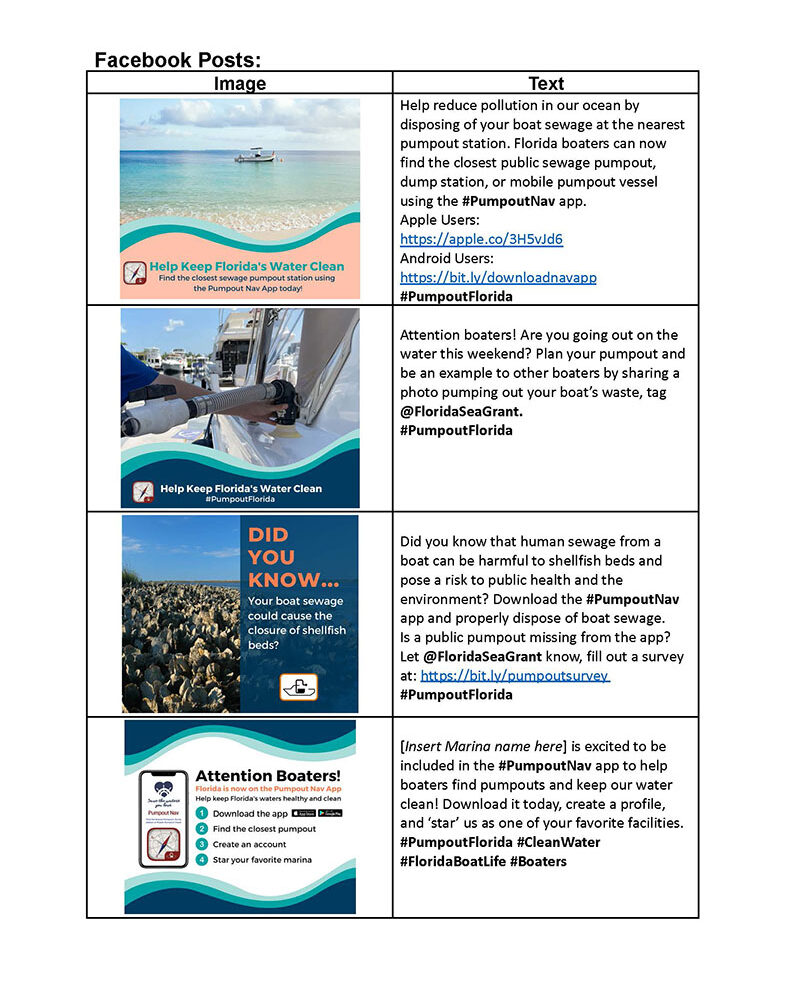
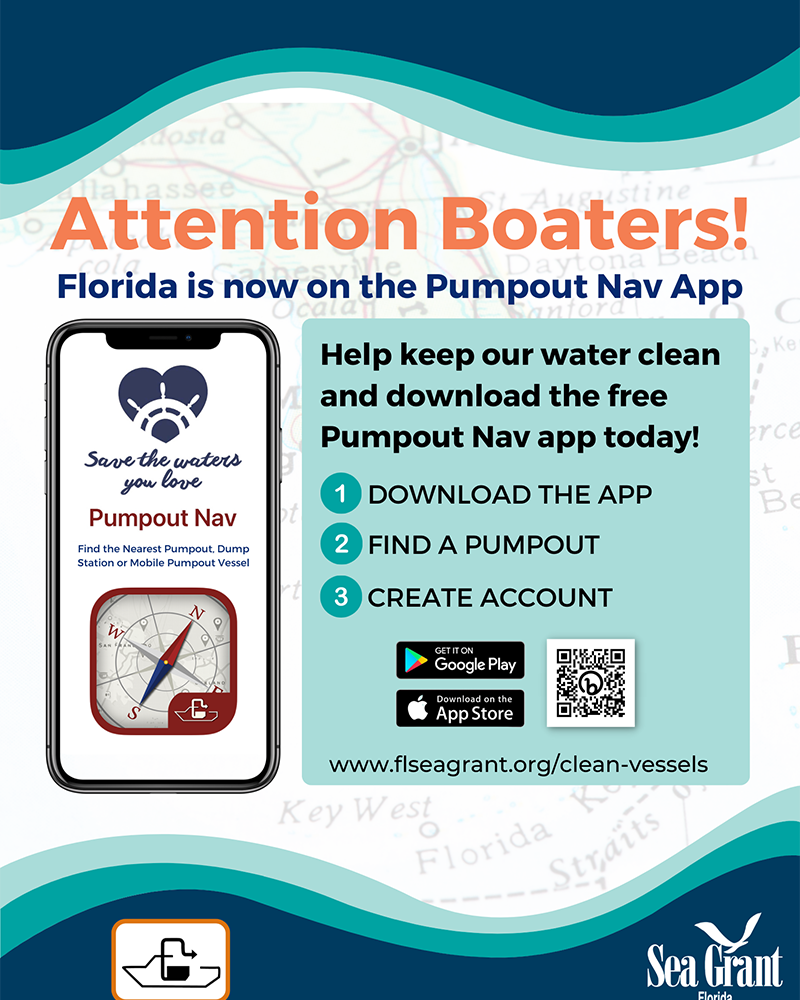
Boating facility operators are one of the top places’ boaters turn to for information like where to find a pumpout. If you haven’t heard, Florida boaters now have access to the free interactive mobile app, Pumpout Nav, available on iOS and Android, to locate over 280 publicly available pumpouts, portable toilet dump stations and mobile pumpout vessels throughout the state.
The free tool is a boaters go-to guide for sewage disposal and a valuable resource every boater and boating facility should know about. Boaters can use the app to:
- Locate public pumpout & dump station services
- Report broken stations
- Keep a log of their pumpouts
- Learn their holding tank capacity to avoid emergency pumpouts
- and more!
Is your facility missing from the Pumpout Nav app? Fill out this survey to be added.
Why Offer a Pumpout or Dump Station?
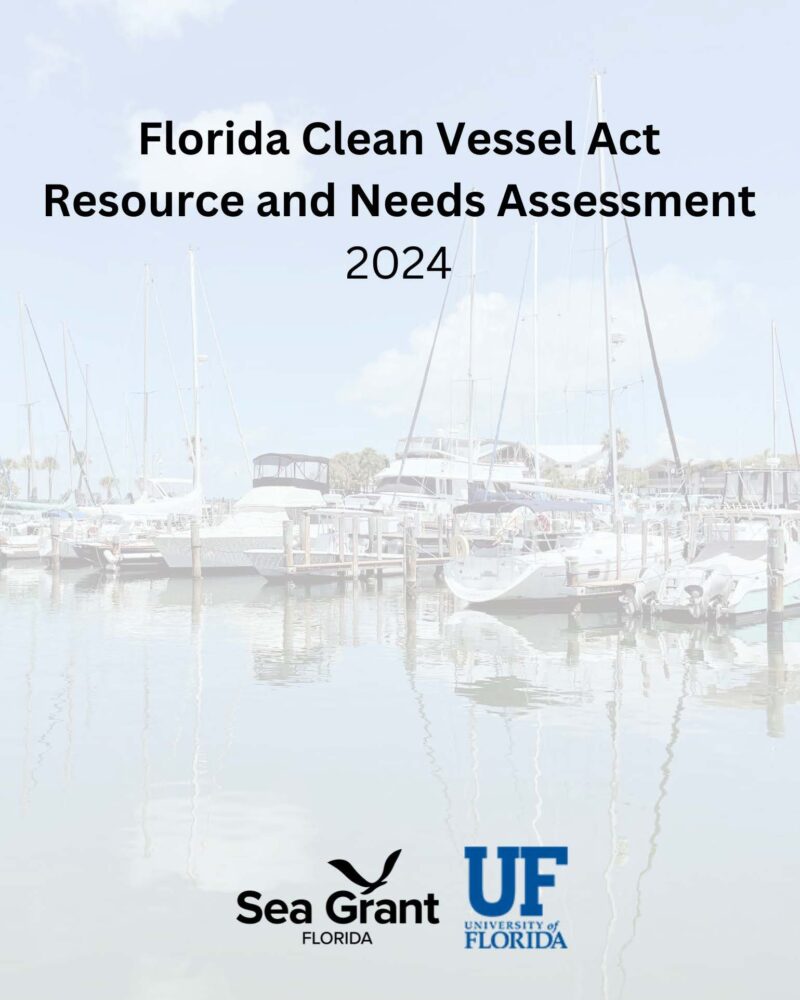
The percentage of boats with a MSD has increased over the years. The 2024 Clean Vessel Act Resource & Needs Assessment found that 69% of boats have an MSD onboard. When looking at MSD type based on boat size, 87% of boats ≥ 26’ have an installed toilet with a holding tank and 46% of boats <26’ have a port-a-potty or bucket for sewage waste. This study also found that boaters want a convenient way to properly dispose of waste. Providing a pumpout and/or dump station can help your clientele properly dispose of waste and keep our waterways clean.
State Programs For Clean Boating
- Pumpout & Dump Station Grants
The Florida Department of Environmental Protection’s Clean Vessel Act Program can fund up to 75% of eligible project costs relating to installation, operation and maintenance of stationary pumpouts, mobile pumpout carts, in-slip pumpout system, pumpout vessels, sewage dump station, connection to sewage lateral and sewage hauling. Grants are reimbursement based and a grant agreement must be executed before any project costs are incurred. If you have received a grant in the past, you may receive another one. - Clean Marina Program
The Florida Department of Environmental Protection’s Clean Marina Program is a voluntary designation program that encourages marine facilities to incorporate environmental best management practices that exceed regulatory requirements. Participating has many benefits, such as a 10% discount on state land lease fees, enhanced public image, reduced pollution and improved water quality, reduction in environmental liability insurance premiums and free publicity through program promotions, newsletters, workshops and Florida Clean Marina marketing.
Florida Sea Grant, in partnership with the Florida Department of Environmental Protection, develops tools and resources that empower the boating community to properly dispose of waste and keep our water clean.

vecteezy.com
Your pumpout breaks down and you call your local plumber or electrician to get it fixed, only to find out they’re unwilling or unable to work on the equipment. Many plumbers and electricians are not familiar with pumpout equipment. So, what do you do now? How do you get your pumpout operational again?
We have compiled a list of contractors that are able and willing to work on pumpouts. Check out the list here. Please note, the listing of contractors does not imply endorsement or recommendation by the University of Florida. The University provides this information as a public service and makes no guarantees about the quality or suitability of any contractor’s services.
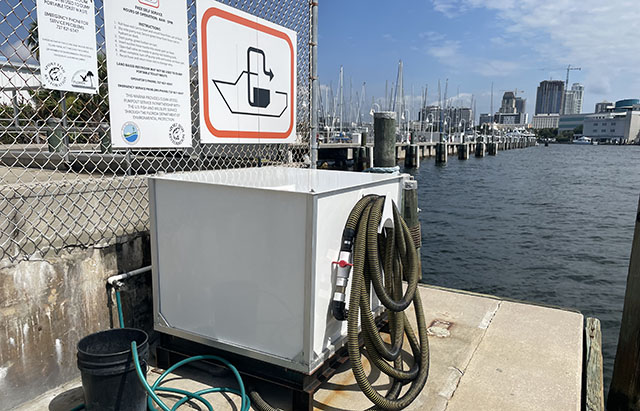
Stationary Pumpout
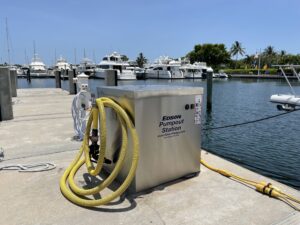 These stand-alone features are located dockside and direct waste into a municipal sewer connection or a landside holding tank to be emptied and disposed of properly by a contractor. There are several configurations for these systems each with their own considerations. However, all configurations require a point of service that will allow sufficient space and water depth for a boater to dock without excess difficulty or disruption.
In-Slip Pumpout System
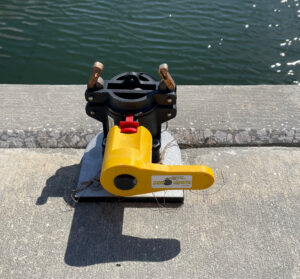 This is a centralized pumpout system with multiple hydrants located throughout the marina. A mobile cart with a hose is then used to connect the boat to the hydrant for proper disposal of sewage. The pump can be located on the cart or elsewhere in the marina. If the pump is located elsewhere, a wireless transmitter is commonly used to allow on/off operation without the need to run back to the pump to turn it on.
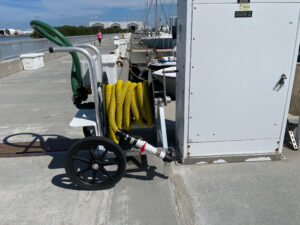 Centralized systems are usually installed when building or re-building docks, as it required the installation of plumbing throughout the marina. These systems are convenient for boaters since they don’t have to move their vessel. This system can be a full-service amenity operated by your staff or with just a little education a self-service resource for your boaters. If this is the right system for your facility, consider designing it to allow shut off valves at strategic locations to isolate an area of plumbing for things like repairs; this will allow continued operation for the remainder of your facility. Additionally, the use of dye-tablets with an extensively plumbed systems like this can save time and money when trying to locate leaks.
Mobile Pumpout Cart with Tank
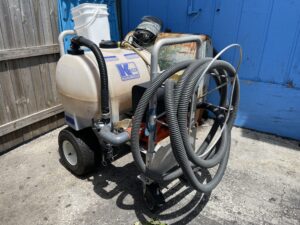 Another sewage disposal option is a mobile cart equipped with a sewage pump, hose, and holding tank. When a pumpout is needed, the cart is wheeled to the boat for service. After the boat is pumped out, the cart, now loaded with sewage, is wheeled to a hydrant (usually located landside) and the pump is used to discharge the sewage for proper disposal.
Like all the systems this one also requires access to connect to the municipal sewer or a landside holding tank to be emptied and disposed of properly by a contractor. Disadvantages of this system include the extra time needed to pump waste, since you are pumping it twice, once from the boat to the cart, then to empty the cart for proper disposal. Additionally, when full the cart can be heavy and difficult to push; some facilities choose to put this equipment on a motorized vehicle like a golfcart to move it more easily, however that will likely limit the docks in which a pumpout can be conducted from. Advantages of this system include no need for extensive plumbing and the ability to store it in a safe area when not in use, reducing wear and tear due to exposure to the elements and storm damage.
Mobile Pumpout Vessel
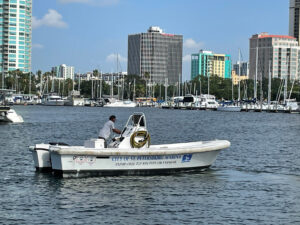 Mobile pumpout vessels are equipped with a pump, hose and, holding tanks for large quantities of sewage. When a pumpout is needed, the pumpout vessel operator travels to the boat in need of a pumpout and conducts the service. Pumpout vessels can typically pump out dozens of vessels before having to empty their holding tank into a stationary pumpout system. The boat owner may or may not be present at the time of service making it a convenient option. This sewage disposal resource is especially useful for mooring fields.
Although convenient for boaters this sewage disposal resource is time and labor intensive. It is a full-service system that requires a boat operator. Although maintenance of all pumpouts is needed this system also requires maintenance of the vessel as well as fuel for regular operation. However, a pumpout vessel is the only option available to service moorings and ensure waste is disposed of properly to protect our waterways. Additionally, mobile pumpout vessels may be hauled out or relocated when storms are coming to reduce or eliminate damage.
Portable Toilet Dump Stations
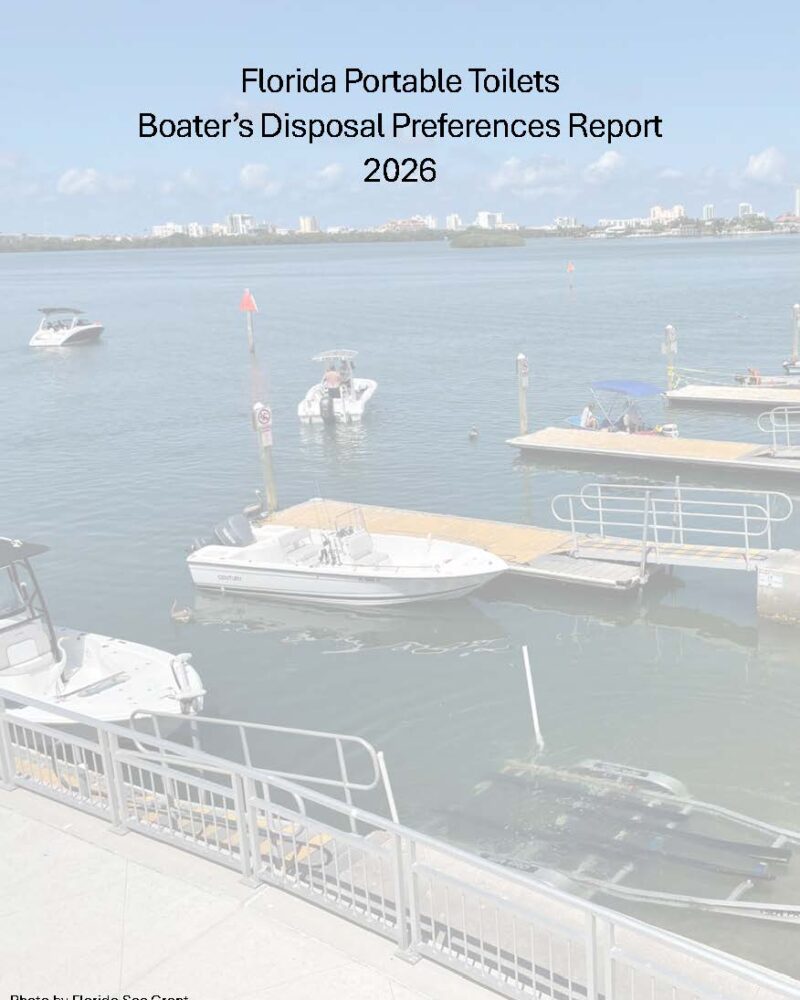
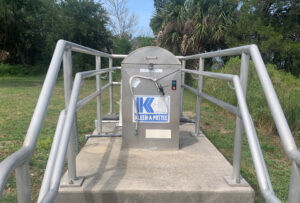 Although not as common, dump stations are the ideal sewage disposal resource for boaters with portable toilets or the ‘emergency’ bucket. There are two system designs of dump stations:
- Dump station connected to a pumpout station with the mechanics to pump waste. This type of system usually has a hose for rinsing the portable toilet tank. The performance of this system is largely dependent on how well the pumpout station is maintained.
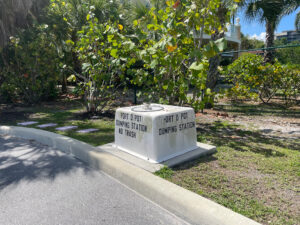 Gravity-fed dump station that drains into a holding tank and has no utility connection. This system may not have a hose for rinsing and is usually found in more remote locations. Since waste is drained into a holding tank, that holding tank will need to be emptied by a contractor for proper disposal.
If your facility’s clientele has smaller boats <26’ they are more likely to utilize a port-a-potty or bucket, compared to larger boats, consider installing a dump station for quick, easy, and sanitary disposal of portable toilet waste. One issue to watch out for after installing a dump station, is improper use, as some individuals may discard trash into the system. To avoid this issue, consider the location in which the unit is installed and consider locking the lid in the closed position during non-business hours.