

Growing up, I was a shy kid. Around close friends, everything felt lighter— safer, more exciting— and I felt more confident. Even walking into a new place and spotting a vaguely familiar face could bring this immediate sense of relief. I became fascinated by a simple question: how much of the way we move through the world is shaped by the individuals around us— friends, family, or even strangers?
I never expected that question to follow me into my career in research. But it did.
When I first started doing fieldwork in the Florida Everglades studying juvenile bull sharks, I began noticing something that did not quite fit the story I had always heard about sharks. Sharks are often portrayed as loners, going about their lives mostly on their own. But sometimes, we would catch certain sharks close together. Other times, the same individuals seemed to turn up in the same places around the same times. These were small observations, but they made me wonder whether young sharks might be interacting with one another in ways we had not fully recognized.
Of course, noticing two sharks in the same place does not automatically mean they are social. They might simply be using the same favorable habitat, following the same prey, or moving with the same tides. The challenge is figuring out whether sharks are together because the environment brings them together, or because certain individuals repeatedly associate with one another. Using social network analysis— a way of mapping and measuring relationships among individuals— I can compare the patterns we observe to what we would expect by chance. If certain sharks are found together again and again more often than expected, that suggests they may be forming repeated social associations rather than simply crossing paths.
In many animals, social relationships can influence how individuals find food, avoid predators, move through habitat, and learn from one another. Sharks play important roles as predators in marine ecosystems, yet we still know surprisingly little about how social behavior fits into their daily lives— especially during early life, when the stakes can be high.
To study these hidden social patterns, I use long-term acoustic telemetry. Acoustic telemetry allows us to detect tagged sharks over time as they move through a network of underwater receivers. From those repeated detections, I can ask which sharks are found together, how often those associations recur, and whether some individuals seem to play especially important roles in the larger network. These tools help me move beyond asking where sharks go and start asking how they experience and interact with their surroundings.
This kind of work is only possible because these patterns are otherwise very hard to see. Sharks move through murky, dynamic habitats where direct observation is rare and encounters can be brief. Some of the most interesting parts of their lives are effectively invisible unless you follow them over long periods of time. That is one reason shark sociality has remained so understudied.
What excites me most is the possibility that juvenile bull sharks may be living in more socially structured worlds than we once assumed. If some young sharks repeatedly associate with certain others, those ties could shape how they navigate risk, use habitat, and respond to environmental change during one of the most vulnerable periods of life.
Juvenile sharks live in a very different world from adults. They are smaller, more vulnerable, and often depend on nursery habitats where threats like predation risk, competition, and environmental change can all be intense. Under those conditions, repeated associations may offer benefits, such as gaining clues about where to find safe habitat, when to move, or where food is more likely to be. Yet, it is also possible that juvenile sharks are still too inexperienced for stable social patterns to emerge. We still do not know enough about shark sociality to know when it matters most, or at what stage of life it becomes important.
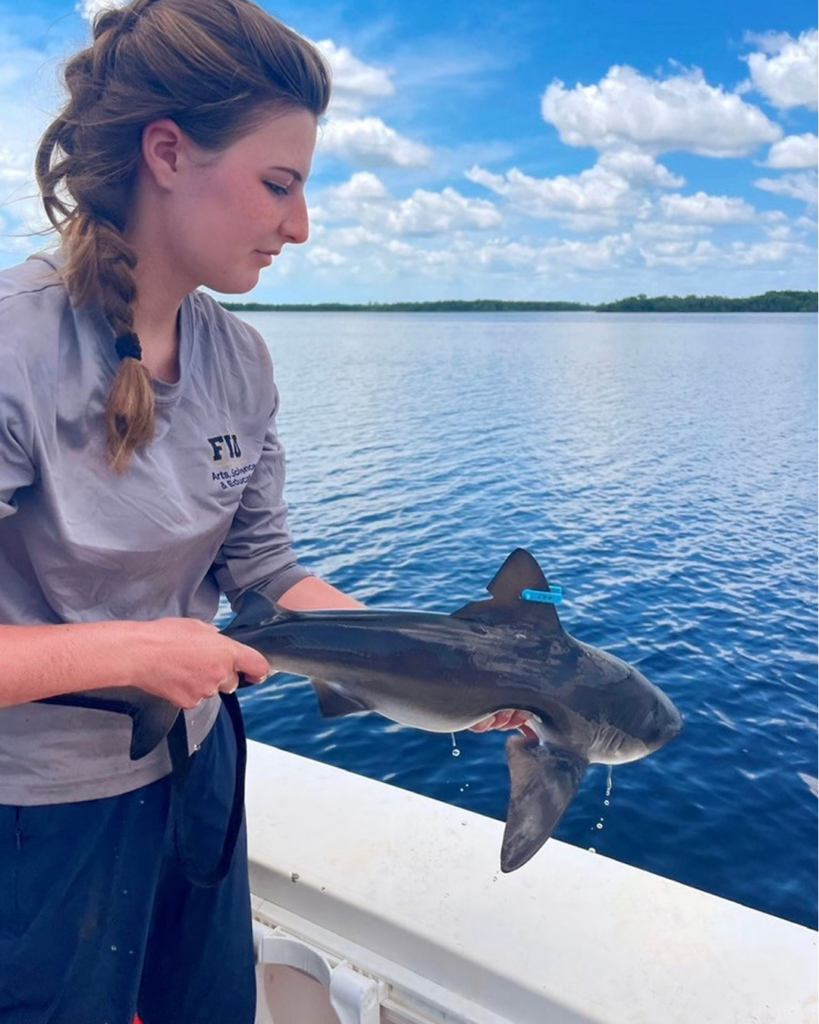
The Florida Everglades is central to my research because it offers something rare: nearly 20 years of acoustic tracking data from a critical bull shark nursery, allowing me to follow juvenile bull sharks over time. Because young bull sharks spend their earliest years in this estuarine nursery before gradually venturing farther out, the Everglades offers a rare opportunity to examine not just whether sharks are social, but how sociality shifts with age and changing habitat use.
To understand whether those patterns reflect something broader about shark sociality, I turned to a very different nursery habitat in Tetiaroa Atoll in French Polynesia to understand how two species that share habitat early in life can follow very different paths as they mature. Sicklefin lemon sharks grow into much larger-bodied predators, while blacktip reef sharks remain relatively small even as adults. That contrast helps me ask whether sociality changes not only across life stages, but also across species with different sizes, ecological roles, and ways of using the same environment.
Together, these projects address a broader question in behavioral ecology: how does sociality emerge, shift, and matter across changing ecological contexts? By comparing shark social systems, my work aims to better understand not just whether sharks are social, but why sociality may matter more in some environments, life stages, or species than in others.
This work also highlights the importance of habitat conservation. Sharks are ecologically important predators, but many populations are under pressure from habitat degradation, fishing, and environmental change. If social structure helps shape how young sharks use nursery habitat or respond to disturbance, then protecting shark populations may also mean protecting the environmental conditions that allow those hidden networks to form and persist.
Sharks are often reduced to stereotypes— fearsome, unpredictable, solitary— but the more we study them, the more we see that they are behaviorally complex animals shaped by the ecosystems around them. Sharing that complexity is part of why I do this work. I want people to come away not only with a better understanding of sharks, but with a deeper appreciation for the habitats that support them and the importance of protecting those systems.
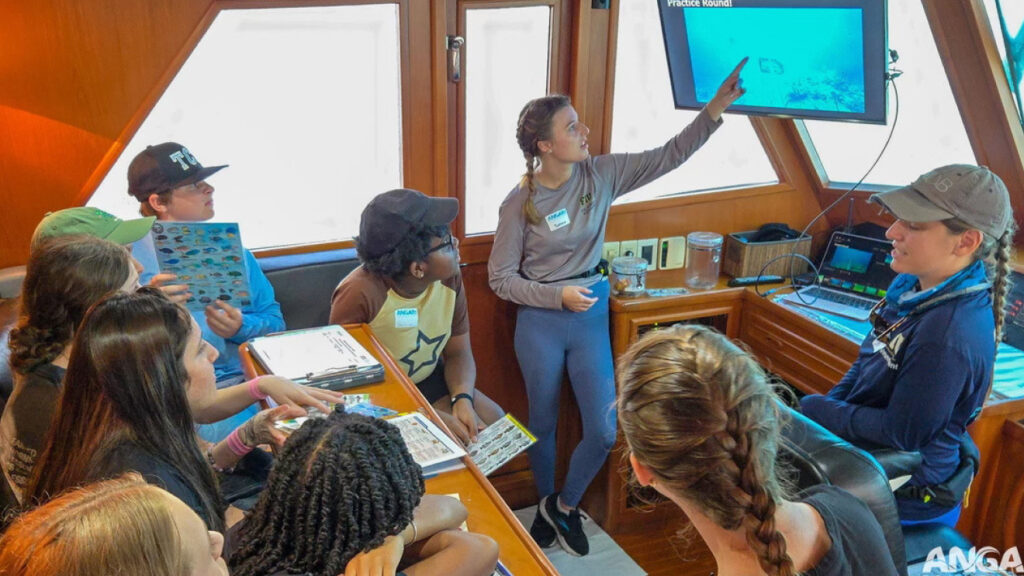
The more I study sharks, the more I return to the question that first drew me in: how much are we shaped by the company we keep? By uncovering these hidden social lives, my research aims to reveal a richer picture of shark behavior— one that can help us better understand, value, and conserve these remarkable animals in a changing world.
I am deeply grateful to Florida Sea Grant and the Guy Harvey Foundation for supporting this work and for investing in research that connects ecology, conservation, and public understanding. This fellowship has helped me take a central part of my Ph.D. from a question I was deeply curious about to a research project I can actively build. Because my research requires specialized tools, long-term monitoring, and the freedom to ask questions that push beyond traditional assumptions, this support has helped me take my dissertation in a direction that would otherwise have remained out of reach.