
Publications
Document Download
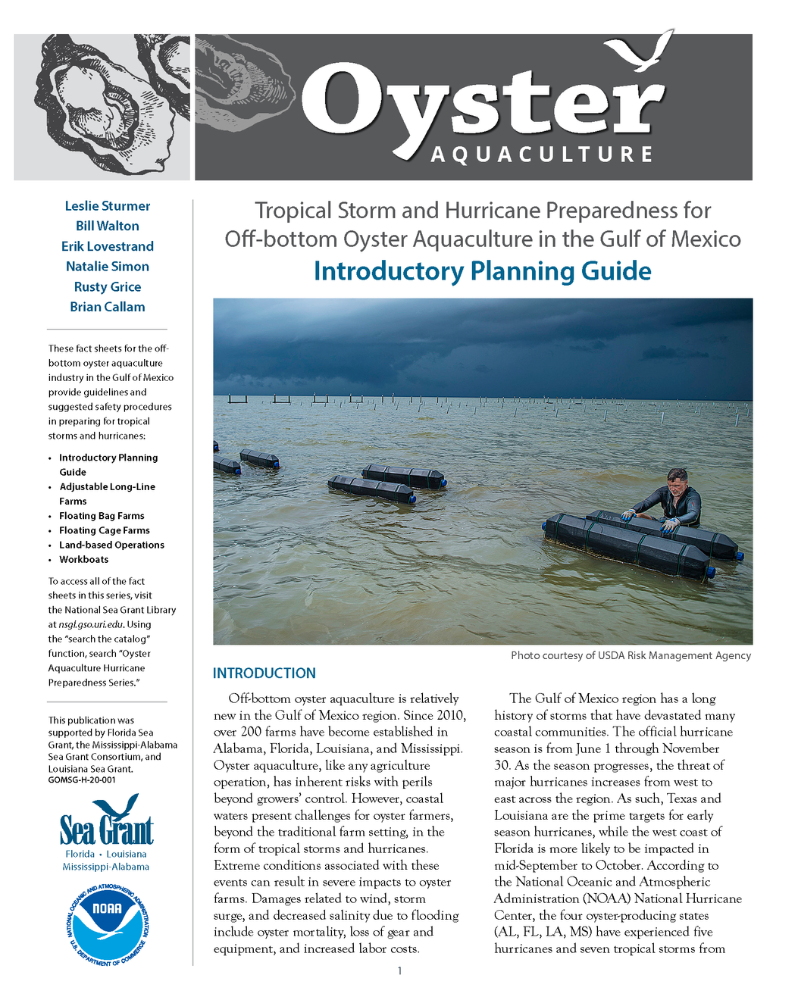
The cover page of an informational guide providing an overview of storm preparedness for oyster aquaculture.
The top header features a dark gray banner with the stylized title “Oyster AQUACULTURE” accompanied by a small graphic of an oyster shell. Below the banner, the main title reads: “Tropical Storm and Hurricane Preparedness for Off-bottom Oyster Aquaculture in the Gulf of Mexico” followed by the blue subtitle “Introductory Planning Guide”.
The center of the page features a prominent wide photograph showing an aquaculture worker in a dark wetsuit standing waist-deep in coastal waters, working amidst long parallel rows of floating oyster cages that stretch across the surface toward a low-lying distant shoreline under a blue sky.
The content is structured into three main areas:
– The narrow left column lists the authors (Leslie Sturmer, Bill Walton, Erik Lovestrand, Natalie Simon, Rusty Grice, Brian Callam) and outlines other fact sheets in the series, including guides for Adjustable Long-Line Farms, Floating Bag Farms, Floating Cage Farms, Land-based Operations, and Workboats. The bottom of the column displays Sea Grant and NOAA logos.
– The lower left text section under the heading “INTRODUCTION” explains that off-bottom oyster aquaculture is relatively new in the Gulf of Mexico region with over 200 farms established since 2010 across Alabama, Florida, Louisiana, and Mississippi. It details how extreme conditions from tropical storms and hurricanes can cause oyster mortality, gear loss, and increased labor costs.
– The lower right text column highlights the long history of devastating storms in the region, noting that the official hurricane season runs from June 1 through November 30. It describes shifting regional threats as the season progresses, stating Texas and Louisiana are early season targets while the west coast of Florida is more likely to be impacted from mid-September to October.