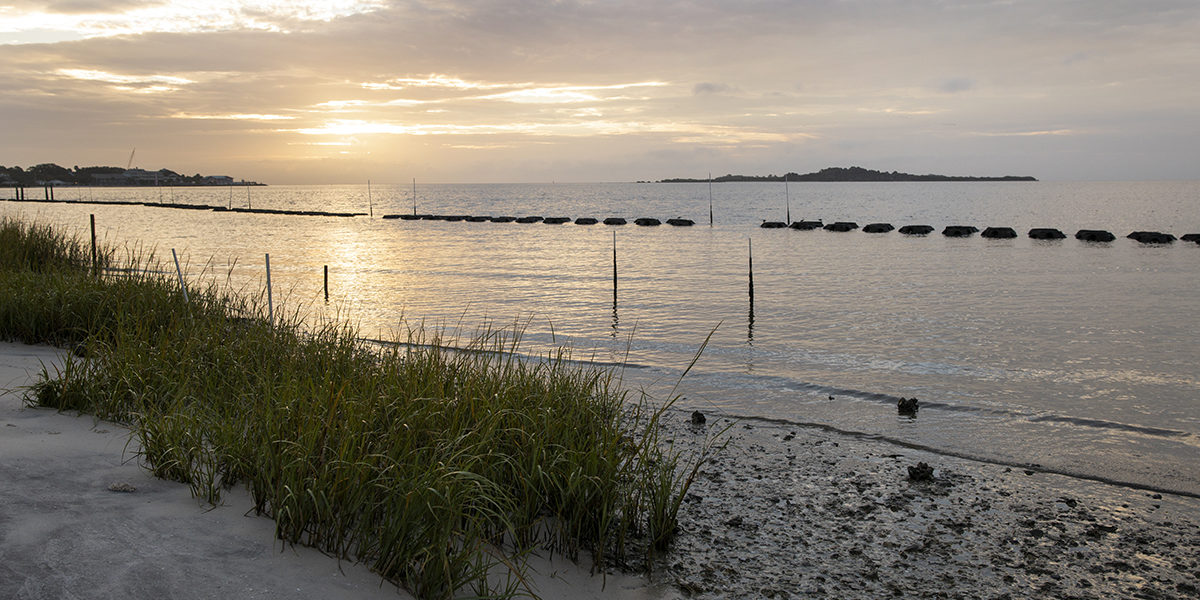
Grass on beach shore with rock barriers in water
Marine ScienceMinute
With Florida Sea Grant
Marine Science Minute

Episode 47 – Living Shorelines


Marine Science Minute with Florida Sea Grant
Episode 47 - Living Shorelines
Loading
/

Today on Marine Science Minute with Florida Sea Grant: Living Shorelines 
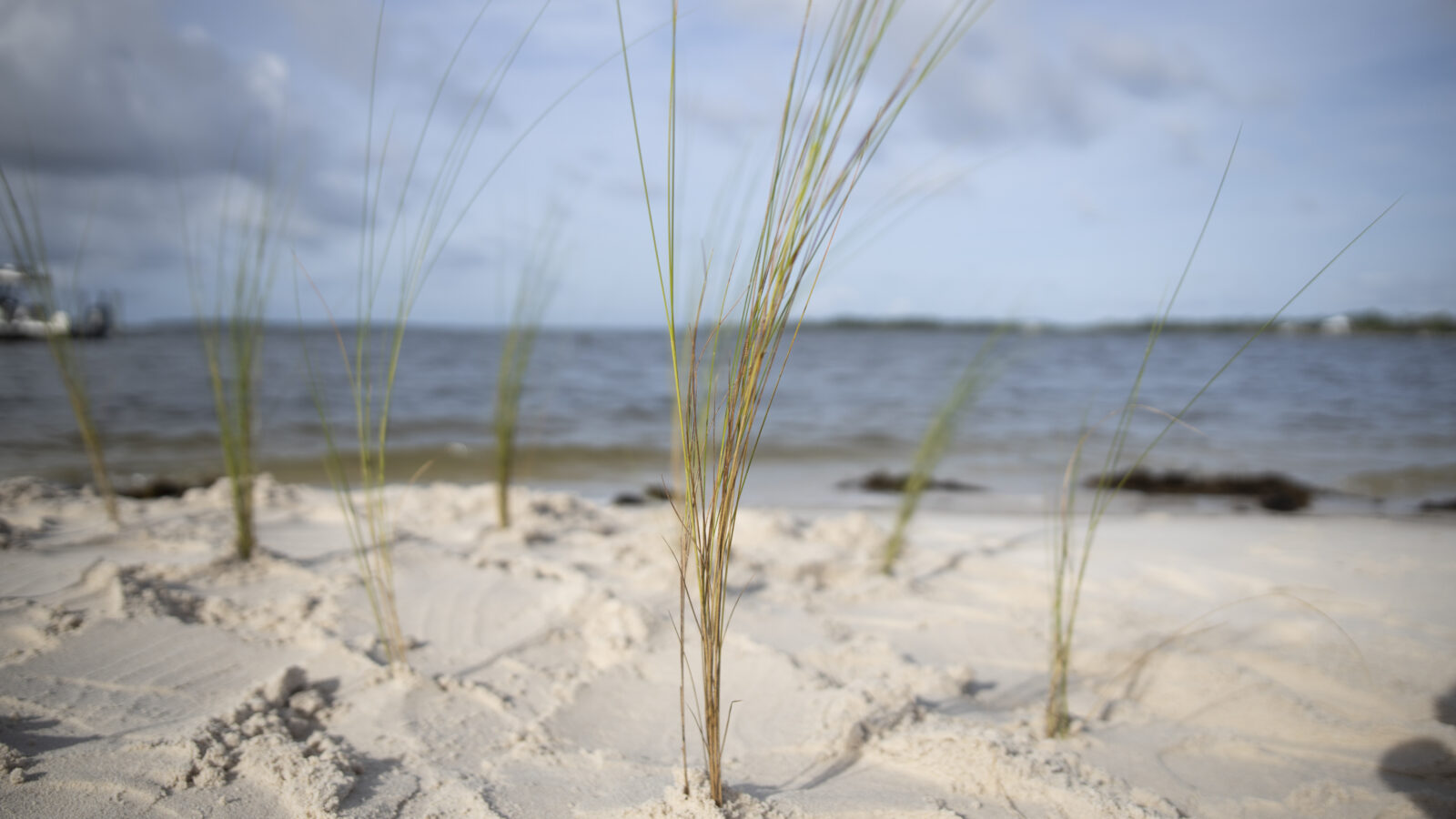
A close-up, low-angle view of sparse beach grass shoots growing in white sand, with a wide body of water and a cloudy blue sky blurred in the background.
Planted saltmeadow cord grass for a Sea Grant Living Shoreline restoration in Cedar Key, Florida. Photo taken 08-28-20.

Seawalls and bulkheads, or gray infrastructure, are traditionally used to stabilize shorelines.  
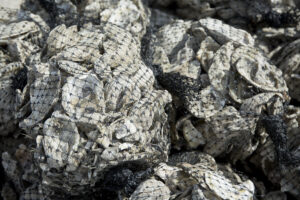
Large bundles of rough, grey oyster shells packed tightly into black mesh netting bags for reef restoration.

While gray infrastructure can protect shorelines, they can enhance erosion, are vulnerable to sea level rise, and displace valuable intertidal habitats.  

Living Shorelines uses nature, or green infrastructure to stabilize shorelines while restoring habitat, biodiversity, and ecological function to our estuaries.  
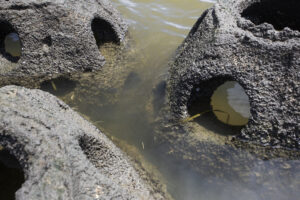
Several dome-shaped concrete reef balls with hollow centers and circular openings sitting partially submerged in shallow, murky coastal water.
Reef balls as part of Sea Grant’s living shoreline restoration in Cedar Key, Florida. Photo taken 08-14-20.

Installing marsh grasses, mangroves, and oyster reefs make shorelines more resilient.  

Florida Sea Grant is training the next generation of professionals on living shoreline practice, fostering a growing green industry.  

For information about this and other coastal topics, contact your county extension office or visit Florida Sea Grant at flseagrant.org. 

Season 1

Explore
Episodes

Learn about all things marine and coastal science by listening to other episodes from this season of Marine Science Minute with Florida Sea Grant.