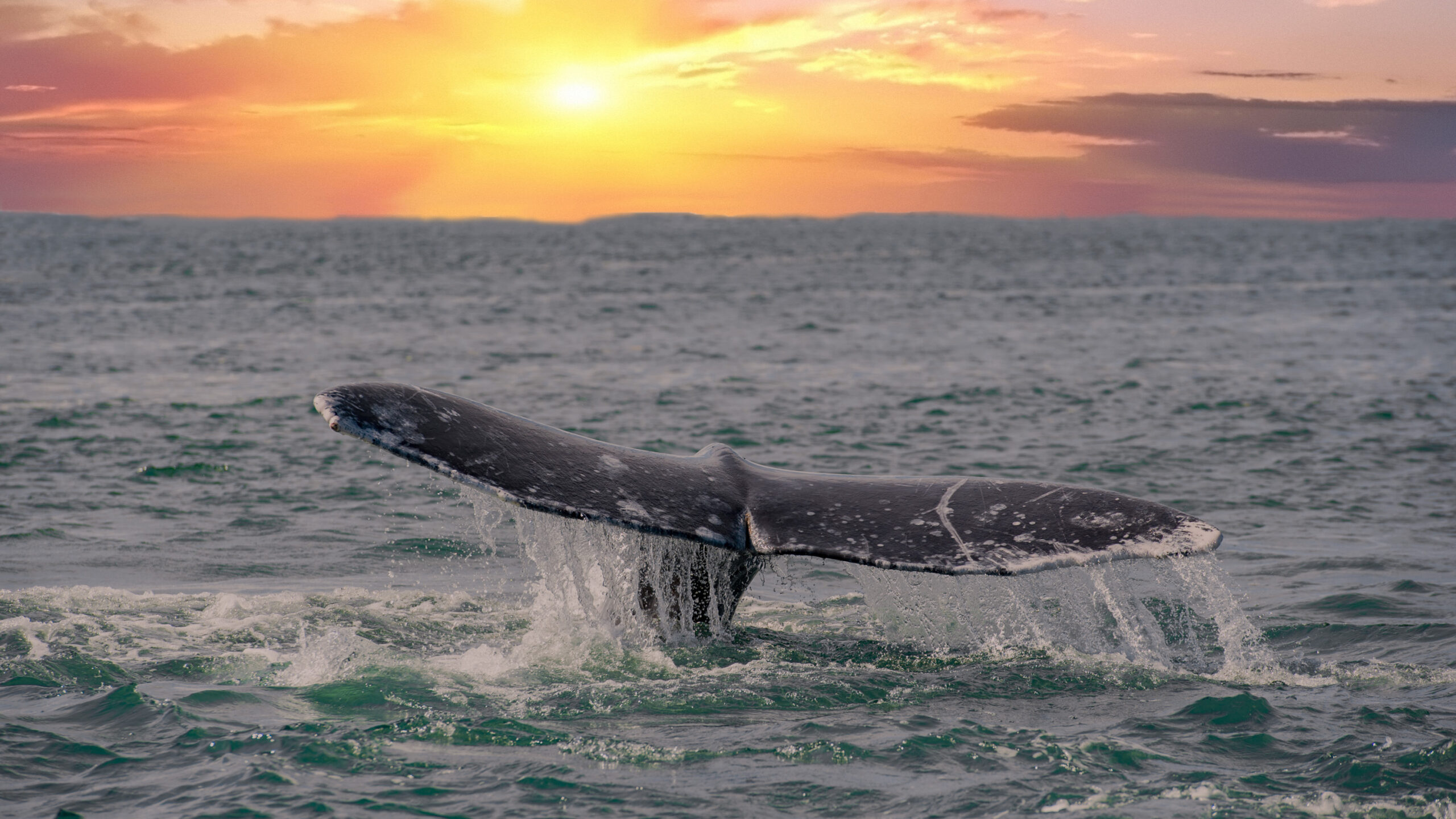

The dark, textured tail fluke of a whale rises out of the ocean, dripping streams of water as it prepares to dive. The surrounding sea ripples with white foam and wake from the animal's movement. In the background, a vibrant sunset glows with bright yellow, orange, and soft pink hues across the cloudy sky above the horizon.
Marine ScienceMinute
With Florida Sea Grant
Marine Science Minute

Episode 43 – Right Whales


Marine Science Minute with Florida Sea Grant
Episode 43 - Right Whales
Loading
/

Today on Marine Science Minute with Florida Sea Grant: Right Whales 
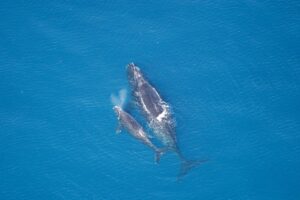
An aerial, top-down view shows a North Atlantic right whale mother and her much smaller calf swimming side-by-side through deep, vibrant blue ocean water. Both dark, smooth-skinned whales create faint ripples and a light-colored wake on the surface as they glide closely together.

The North Atlantic Right Whale is one of the world’s most endangered large whale species. They were historically hunted by commercial whalers.  

Though they are a protected species, right whales are still endangered due to death and injury from fishing gear entanglement and vessel strikes. The coastal waters off Florida and Georgia are the only known calving areas for these whales. Pregnant whales come every year between November and April to give birth.  

How can you help the right whale?

  • You can report sightings to 877-WHALE-HELP.
  • Practice safe boating Stay alert and know what whales look like on the surface.
  • Slow down and keep your distance. Approaching whales is against the law, and you must stay at least 500 yards or 5 football fields away. 

For information about this and other coastal topics, contact your county extension office or visit Florida Sea Grant at flseagrant.org. 

Season 1

Explore
Episodes

Learn about all things marine and coastal science by listening to other episodes from this season of Marine Science Minute with Florida Sea Grant.