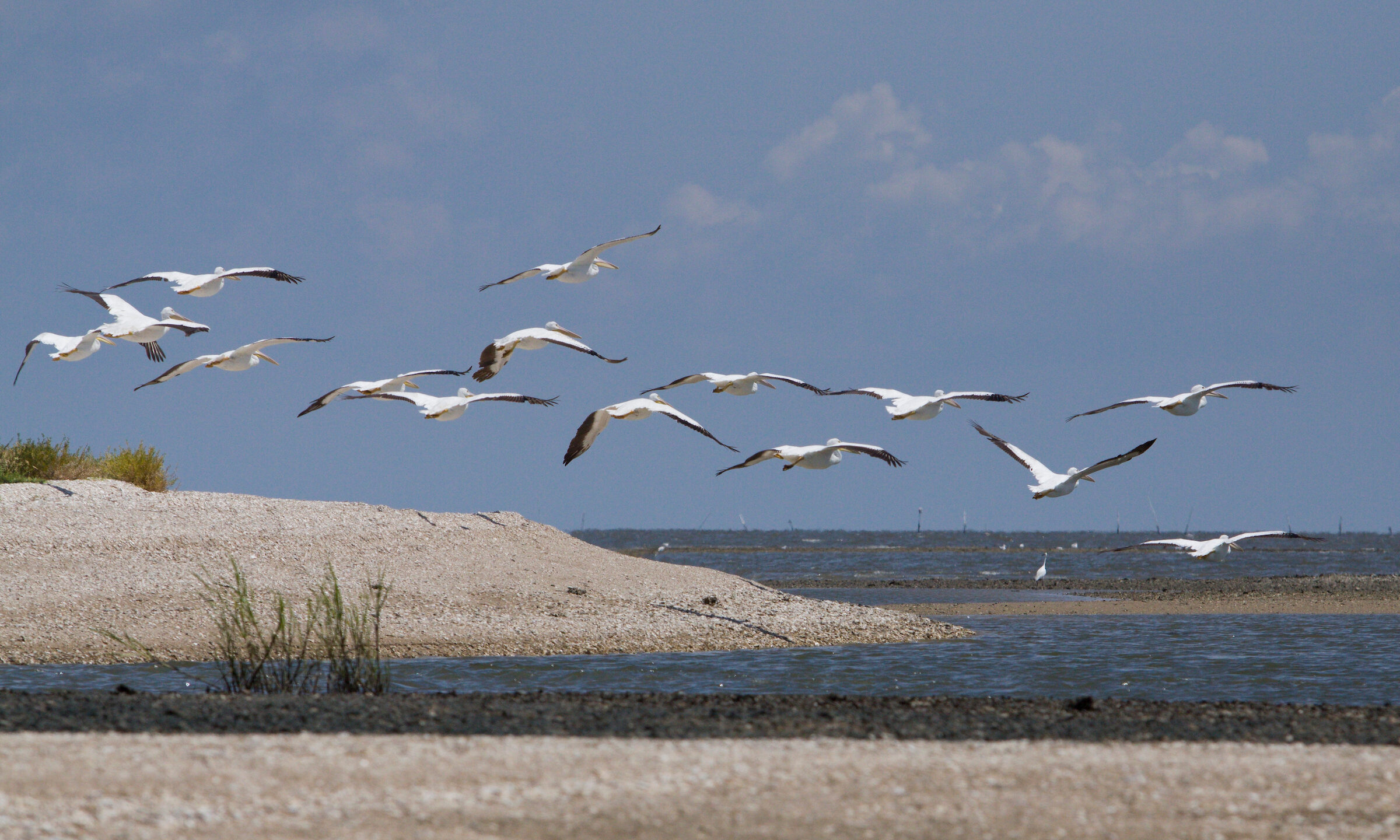

A flock of American white pelicans with white feathers and black-tipped wings flies in formation over a coastal shell bank and calm blue water under a partly cloudy sky
Marine ScienceMinute
With Florida Sea Grant
Marine Science Minute

Episode 20 – Bird Disturbance & Feeding Issues


Marine Science Minute with Florida Sea Grant
Episode 20 - Bird Disturbance & Feeding Issues
Loading
/

Today on Marine Science Minute with Florida Sea Grant: Bird-friendly fishing! 
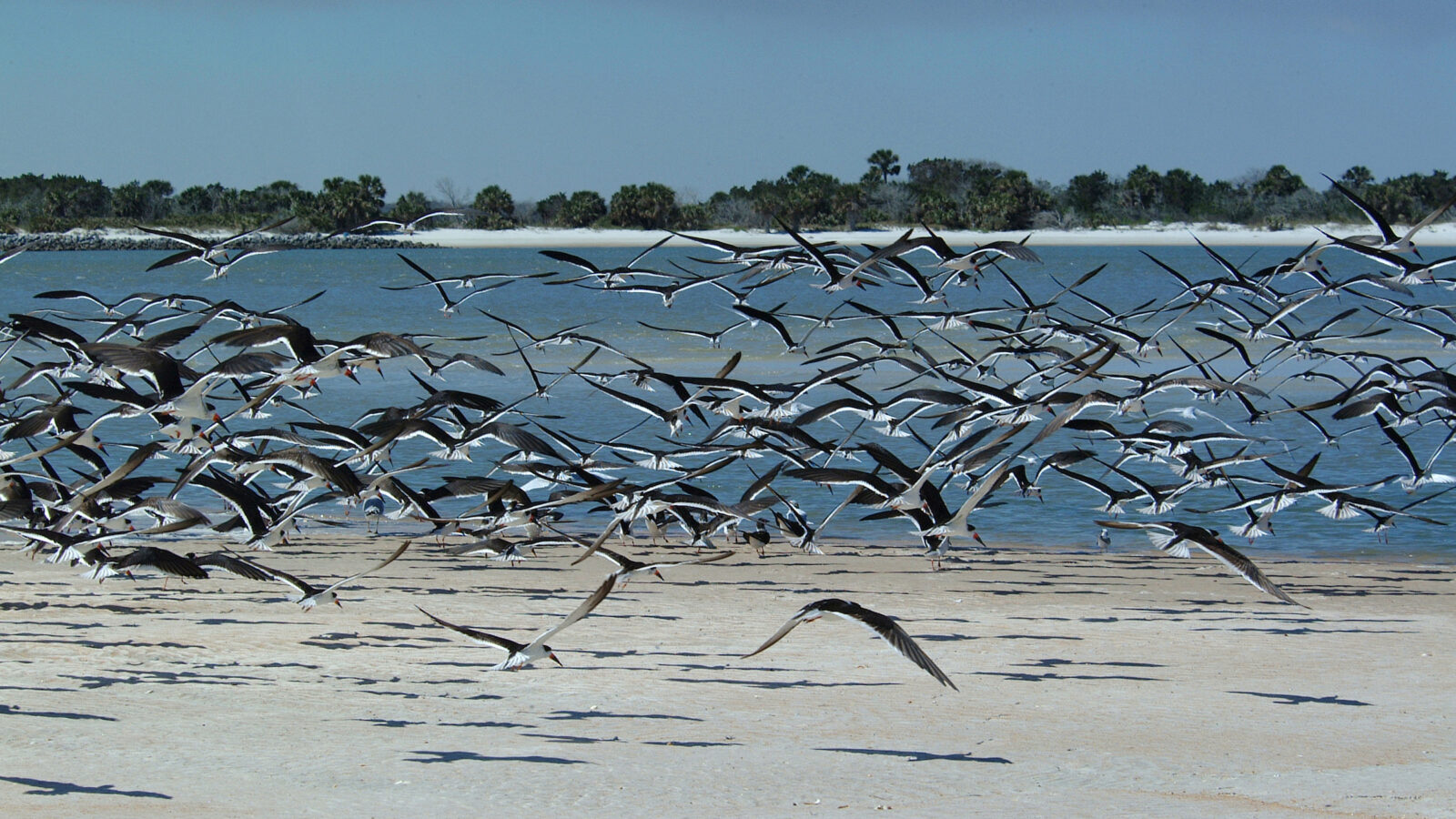
A large flock of black skimmers takes flight from a sandy beach, their black-and-white wings and orange-and-black bills visible as they fly over blue water toward a tree-lined shoreline

Birds in flight are a beautiful sight, but disturbance by boaters threatens the nesting success and survival of coastal birds. If birds fly away as you approach, you are too close. Aim to stay at least 300 feet away from nesting or resting birds. 
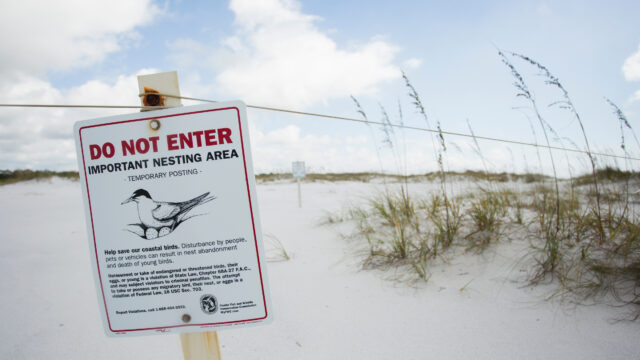
A white rectangular sign with red lettering reads DO NOT ENTER IMPORTANT NESTING AREA and features an illustration of a coastal bird nesting on eggs. The sign is attached to a string fence blocking off a sandy beach dune area where sea oats grow under a cloudy blue sky.

What’s more, it’s best to keep bait and fish carcasses away from birds. Feeding pelicans and other birds might seem harmless, but it can lead to injury, malnutrition, aggressive behaviors, and messy droppings around marinas and piers.  

Bird-friendly fishing means watching from a respectful distance and letting birds find their own food. Learn more about ethical fishing by taking the free Florida Friendly Angler online course offered by Florida Sea Grant. 

For information about this and other coastal topics, contact your county extension office or visit Florida Sea Grant at flseagrant.org. 

Season 1

Explore
Episodes

Learn about all things marine and coastal science by listening to other episodes from this season of Marine Science Minute with Florida Sea Grant.