
Thomas T. Ankersen | Byron Flagg | Kaci Poor | Jennifer Saviano
University of Florida Levin College of Law Legal Studies Research Paper Series Paper No. 19-10
Fifth Edition
Conservation Clinic
University of Florida Levin College of Law Gainesville, FL 32611-7629
Spring 2019
This publication was supported by the National Sea Grant College Program of the U.S. Department of Commerce’s National Oceanic and Atmospheric Administration (NOAA) and Florida Sea Grant. The views expressed are those of the authors and do not necessarily reflect the views of these organizations.
Disclaimer:
This publication provides an informational overview of federal, state, and local government law associated with navigation of vessels on Florida’s waterways. It is not guaranteed to be complete or up-to-date after this edition’s publication date. This publication does not provide legal advice and it is not a substitute for consulting an attorney about your specific situation. The online version of this publication may contain hyperlinks to other resources on the Internet. Such links are provided to assist you in locating additional resources. These links do not imply that the National Sea Grant College Program, Florida Sea Grant nor this publication’s authors sponsor, endorse, or are affiliated or associated with the linked-to websites and information included therein.
Note from Authors1
This publication represents the fifth edition of analysis of the federal, state, and local government law associated with the practice of navigating on the waters of the State of Florida. When the first edition was released in 1999, we focused largely on legal issues involving anchoring, often considered part and parcel of the right of navigation. The second and third editions continued with this focus. The fourth edition omitted the term Anchoring Away from the title and we expanded the substantive scope of analysis to more broadly address the legal aspects of waterborne navigation in Florida, including anchoring and mooring. This fifth edition continues to expand on the substantive scope of waterborne navigation issues in Florida, includes updates on changes to Florida Statutes that have been enacted since the fourth edition’s publication, and continues to keep the title, Boating, Waterways, and the Rights of Navigation in Florida.
- Introduction
- Federal Authority: Concurrent State and Local Jurisdiction and the Reservation of Federal Navigation Rights
- Federal Constitutional Authority over Navigable Waters
- Federal Statutory Authority over Navigation, Including Anchoring
- Federal Limits on State and Local Authority to Regulate Navigation and Anchoring
- Actual Conflict with Federal Laws
- Preemption: Barber v. State of Hawaii and Local Anchoring Regulations
- Dormant Commerce Clause Impact on State Regulation of Navigation and Anchoring
- Navigation Rules (a.k.a
The Rules of the Road
) andCOLREGs
- U.S. Coast Guard Authority and Federal Regulations .
- Federal Channels & Ports (including the Intracoastal Waterway)
- Approaches to Local Boating Regulation in Other States
- State and Local Authority over Navigation and Anchoring in Florida
- The Proprietary and Regulatory Source of State Authority
- Statutory Basis for Regulating Navigation in Florida
- Chapter 253, Florida Statutes : State Authority to Regulate Navigation and Anchoring and to Manage Anchorages
- State Authority to Allow Local Regulation of Navigation and Anchoring
- Chapter 327, Florida Statutes :
Florida Vessel Safety Law
and State Preemption of Local Regulation of Navigation and Anchoring - Other State and Local Government Regulations in Florida Addressing Navigation & Anchoring
- The Inland Navigation Districts
- Approaches to Anchorage Management in Florida
- Conclusion
- Introduction
It’s official! The U.S. Coast Guard’s recommended equipment list has been revised. Now, in addition to anchors, fire extinguishers, emergency signals and personal flotation devices, American boaters are advised to pack a lawyer.2
Florida boasts one of the most complex and ecologically productive systems of coastal bays, bights, sounds, passes, inlets, cuts, canals and harbors in the United States, as well as an extensive network of maintained inland waterways. In 2017, Florida led the nation in numbers of registered vessels with 944,162 (up from 931,450 in 2016, and up from 915,713 in 2015) which all share the state’s waterways with an estimated one million more non-registered vessels.3 A 2007 study found that the number of Florida registered vessels alone logged 21.7 million boating trips.4 This same study, prepared for the Florida Fish and Wildlife Conservation Commission (FWC), concluded that these boating trips and their related commercial activities contributed $17.6 billion dollars to Florida’s economy in 2007.5 Although the Great Recession hit U.S. recreational boating hard, the industry has since entered into a robust recovery. In fact, the National Marine Manufacturer’s Association (NMMA) reported in 2014 that direct sales of products and services increased, and had nearly reached the pre-recession high of $39.5 billion by 2006.6 Moreover, the NMMA found that Florida led all states in total expenditures for new marine products,7 and that the total economic impact of recreational boating in the state by 2014 exceeded $10 billion annually, with a $10.3 billion impact in 2016.8
As commercial and recreational uses of the Florida waterway system continue to expand with population growth, new coastal development, and a healthy marine industry, the potential for conflicts among boaters, natural resources, and different user groups will also increase.9 Faced with these competing pressures, state and local governments are forced to reconcile conflicting demands for use of the same limited geographic space and natural resources. As a result, the right to freely navigate on Florida waters (which can involve the act of anchoring), continues to engender considerable controversy, including complex litigation in state and federal courts. (Florida is not the only state experiencing such conflicts).10 This Florida Sea Grant publication intends to provide a free public resource to anyone seeking concise information about these types of complex issues faced by vessel operators, citizens, local government officials, and regulators in Florida.
We begin our analysis by offering a taxonomy of vessels on the water, followed by a brief discussion of the often-confused distinction between Florida boating law—the focus of this report—versus maritime law (also referred to as admiralty law), which is doctrinally a distinct body of law. We then turn to the federal interest in navigation, including the federal navigation servitude, preemption and federal supremacy considerations, as well as relevant federal statutes and the congressionally adopted international COLREGs—known by mariners and boaters as the
Rules of the Road.
Next, state and local efforts to address navigation, including anchoring in Florida, are examined along with the small number of judicial opinions construing such efforts. As explained in our analysis, the Florida Legislature continues to limit the authority of local governments to regulate navigation. However, despite substantial amendments, the statutes limiting local regulation still contain some ambiguity when it comes to the meaning of the termin navigation,
which has yet to be defined anywhere in Florida Statutes.In addition to its police powers, we consider the state’s proprietary authority over the lands underlying navigable waters, including the still unresolved question of the scope of that authority when such submerged lands have been transferred from the sovereign. We also address the effect of riparian rights of adjacent landowners on boating law and new Florida state-wide anchoring and mooring statutes that were enacted after FWC completed an eight yearlong anchoring and mooring Pilot program to develop recommendations for addressing governmental regulation of anchoring and mooring. We conclude by noting that recent amendments to Florida’s boating law include: restrictions on local government regulation, guidelines for the creation of boating restricted areas, legal requirements for mooring fields, no anchor zones in proximity to marine infrastructure, statutorily created limited anchoring areas, and greater law enforcement authority to deal with derelict vessels and vessels
at-risk
of becoming derelict – all of which can make a difference in promoting statewide consistency for the use of Florida’s waterways.11- Taxonomy of Vessels on Florida Waters
Florida has over a million registered recreational vessels plying its waters,IA1 along with many more commercial vessels, vessels registered in other states, vessels that do not have to be registered, vessels that have not yet been classified for purposes of regulation. And this does not include the myriad
artificial contrivances
that may not even qualify to be vessels under Florida law. Human ingenuity and technology have conspired to create a growing array of craft that can navigate on or in Florida waters, creating conflicts among vessel types and vessel uses, and posing a regulatory challenge for state agencies and local governments tasked with managing the increasing human use of waters in the state. The key to understanding how vessels are regulated in Florida is to understand how they are defined, and for what purpose. Over the years, the Florida Legislature and state agencies have continued to add or amend statutory definitions for the many types of regulated vessels. Local governments have also sought to define vessel types in response to local issues, sometimes in ways that can conflict with state law.To assist with the understanding of Florida’s complex vessel management system, we scoured the statutes and regulations for terms that define the types of vessels using Florida waters and then classified these into the broader categories we thought they best fit. We then created a comprehensive chart that lists these vessel types by category, then provides their definitions, the legal context in which they are defined and additional commentary where needed.
In this blog we discussed why this definitional probe matters, especially for local governments seeking to regulate vessels within their waters. We then focus on the key definition of the term
vessel
and the Florida-based United States Supreme Court case that brought it to the forefront, and provide a brief overview of another keyset of vessel definitions – found in the so calledRules of the Road
– the federal Federal Inland Navigation Rules administered by the U.S. Coast Guard.Why This Matters
How a vessel is defined or described by law determines whether and how it is regulated, and by whom. As a general proposition, Florida waters and the vessels navigate them are governed by the three levels of government, federal, state and local. The federal government maintains primacy in maritime matters. However, federal maritime law will defer to state boating laws where the matter is one that has
great local significance,
and the state law does not threaten the uniformity of federal law. This deference is referred to as themaritime but local
doctrine.IA2 There are some notable exceptions, such as preemptive vessel safety and equipment mandates under the Federal Boating Safety Act.IA3The State of Florida has two primary statutes devoted to boating regulation, Chapters 327 (Vessel Safety) and 328 (Vessels: Title Certificates; Lien; Registration). Most of the terms discussed here can be found in these statutes, and the rules that implement them. Florida local government authority to regulate vessels is significantly circumscribed by these statutes under the legal doctrine of
preemption.
Generally speaking, preemption means that the local government cannot regulate in an area where the legislature has determined that state law should govern.IA4However, local governments with significant boating activity often have whole chapters in their local code devoted to the regulation of the waterways and shoreside support facilities within their jurisdiction.IA5 To the extent any of these local regulations broaden, narrow or otherwise contravene state law, they may be preempted, resulting in unwanted litigation.
Mismatches
can arise between state statutes and local codes because local governments pay insufficient attention to the state law governing vessels when drafting regulations to address local circumstances, or because local codes become out of sync with state law as state laws are amended and local laws are not kept current.The threshold question. Is it even a vessel?
An analysis of boating law almost always begins with this seemingly simple question. Is it even a vessel? The answer is mostly yes. Most anything that is or could be propelled through the water by any means is a vessel. But not everything. The starting point for defining vessel is the federal definition found in the United States Code, which compiles and codifies all federal statutes. An indication of its historical importance, the term
vessel
can be found with other foundational definitions in the very first chapter of the Code – Title I – the basic dictionary for all the U.S. law that follows. Section 3 of Title I provides that: “The word “vessel includes every description of watercraft or other artificial contrivance used or capable of being used, as a means of transportation on the water.IA6As might be expected, Florida’s vessel definition closely tracks the federal definition. Florida defines vessel to be
…every description of watercraft, barge, and airboat, other than a seaplane on the water, used or capable of being used as a means of transportation on water.
IA7It is not clear why Florida chose to specifically list barges and airboats in its definition, nor is it clear why Florida did not include the broad term
artificial contrivance
used in the federal definition, which is also not defined in federal law, and is essentially a catch all to remove any doubt. It may be that barges, which typically have no means of propulsion, were too similar tofloating structures,
which by their own Florida definition do not qualify as vessels.IA8 And it may be that airboats were considered sufficiently unique in their means of propulsion to justify calling them out specifically.The term watercraft itself has no relevant federal definition.IA9 In a bit of circular logic, one State statute that does defines watercraft simply defines it as a vessel – e.g.
vessel or craft designed for navigation on the water.
IA10Most importantly, however, both the federal and state definitions share the operative language
used or capable of being used as a means of transportation on the water,
terminology made famous by the United States Supreme Court in Lozman v. City of Riviera Beach, a Florida case involving a floating home.The Lozman Case
In 2013, the U.S. Supreme Court addressed whether federal admiralty law applied in a case in which the City of Riviera Beach sought to remove a
floating home
moored at one of its public marinas.IA11 After ongoing disputes between Mr. Lozman, (owner of the floating home), and the City regarding unpaid dockage fees and refusal to leave the marina (among other issues), the City sought relief in federal admiralty court under the theory that the floating home was committing the federal maritime tort of trespass. If the City prevailed, it would be authorized to remove the floating home and seek monetary damages. The key issue in the case was whether Lozman’s floating home met the federal definition ofvessel
because it wascapable of being used…as a means of transportation on the water.
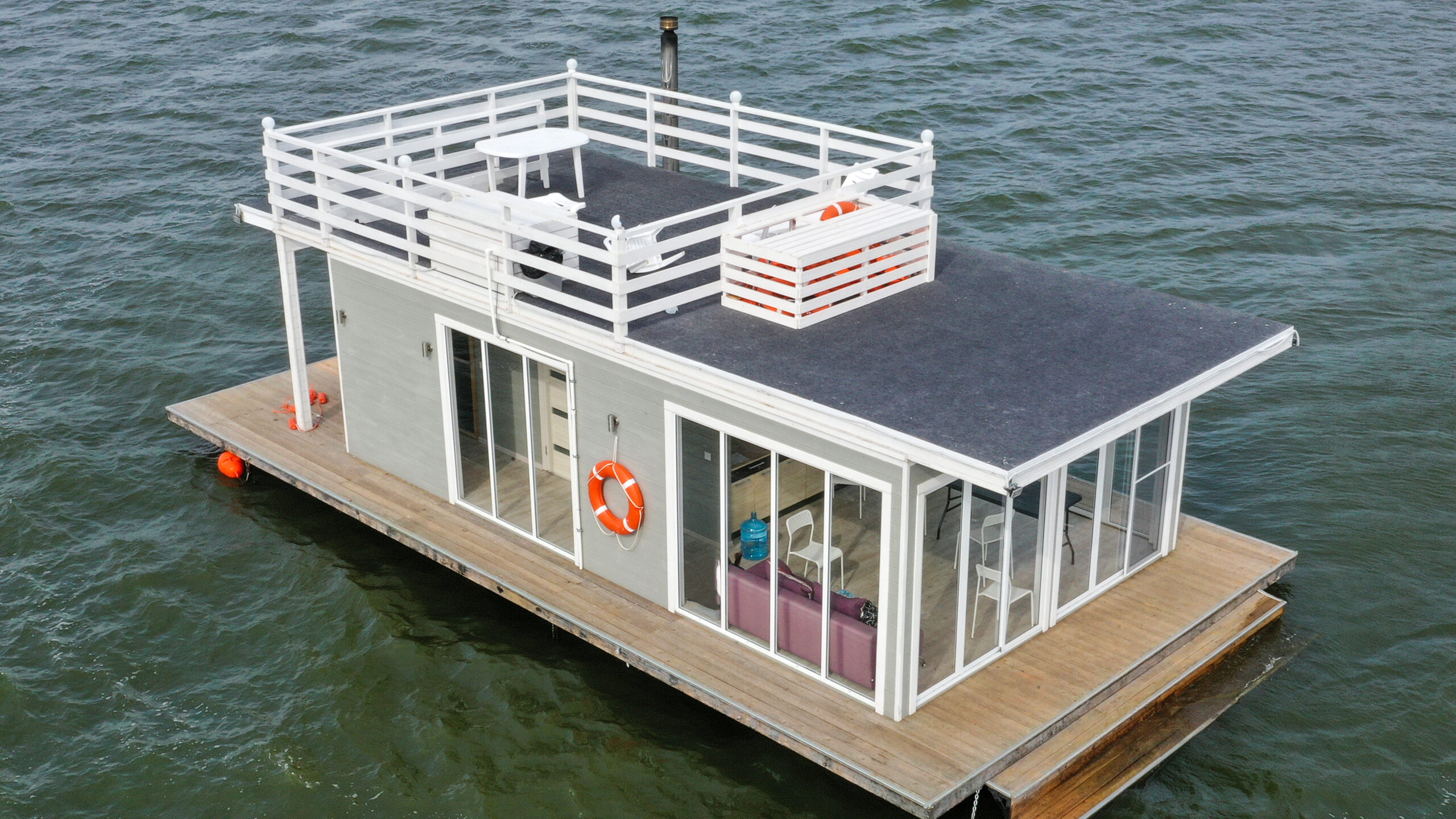
IA12 If it met that definition, then the City could proceed under admiralty jurisdiction. Taking an expansive view, both the lower courts ruled in favor of the City, deciding that it was at least conceivable that the floating home could be used as a means of transportation.IA13 Lozman appealed to the U.S. Supreme Court, which took the case.
Mr. Lozman argued that his floating home was not
capable being used as a means of transportation on water,
and hence not a vessel and not subject to federal maritime jurisdiction. Lozman argued that his floating home had no means of propulsion and was dependent on shore-side electrical power. The Supreme Court agreed, narrowing the federal meaning of vessel, and establishing a new test to determine what constitutes a vessel. That methodology is now often referred to as thereasonable observer
test. Justice Breyer colorfully wrote the Supreme Court’s Opinion, explaining:Not every floating structure is a
vessel.
To state the obvious, a wooden washtub, a plastic dishpan, a swimming platform on pontoons, a large fishing net, a door taken off its hinges, or Pinocchio (when inside the whale) are notvessels,
even if they areartificial contrivance[s]
capable of floating, moving under tow, and incidentally carrying even a fair-sized item or two when they do so. Rather, the statute applies to anartificial contrivance . . . capable of being used . . . as a means of transportation on water.
1 U.S.C. §3 (emphasis added).[T]ransportation
involves the “conveyance (of things or persons) from one place to another. And we must apply this definition in apractical,
not atheoretical,
way. Consequently, in our view a structure does not fall within the scope of this statutory phrase unless a reasonable observer, looking to the home’s physical characteristics and activities, would consider it designed to a practical degree for carrying people or things over water.(emphasis added). The Supreme Court then applied its new practicality-premised
reasonable observer
test to Mr. Lozman’s floating home:But for the fact that it floats, nothing about Lozman’s home suggests that it was designed to any practical degree to transport persons or things over water. It had no rudder or other steering mechanism. Its hull was unraked, and it had a rectangular bottom 10 inches below the water. It had no special capacity to generate or store electricity but could obtain that utility only through ongoing connections with the land. Its small rooms looked like ordinary nonmaritime living quarters. And those inside those rooms looked out upon the world, not through watertight portholes, but through French doors or ordinary windows. Although lack of self-propulsion is not dispositive, e.g., The Robert W. Parsons, 191 U.S. 17, 31, 24 S. Ct. 8, 48 L. Ed. 73 (1903), it may be a relevant physical characteristic.
The Court concluded, “we can find nothing about the home that could lead a reasonable observer to consider it designed to a practical degree for
transportation on water.
The Lozman opinion removed one class of objects that occupy space on the water from the ambit of federal law and ensured that recourse for legal actions involving floating homes (as distinguished from house boats), and similar floating platforms incapable of use as a means of transport would remain in state courts. Moreover, given the similarity in definitions, it seems likely that Florida Courts would turn to the practical
reasonable observer test
when confronted with cases involving what constitutes a vessel under Florida law.IA14 Floating homes without any means of transport are considered within the definition ofFloating structures
found at Section 327.02(14), and in that definition, they are expressly excluded from broader definition of vessel in that same section of the statute, leaving local governments free to regulate them.IA15The Rules of the Road: Another Authoritative Source for Vessel Definitions
The federal navigation rules, or
Rules of the Road
as they are commonly referred to, developed over centuries if not millenia, to manage maritime traffic, prevent collisions at sea, and assign liability for those collisions.IA16 There are 2 similar sets of rules, one for international waters and one for national waters. The international rules, known as the COLREGS were created under the 1972 Convention on the International Regulation of Collisions at Sea. The United States adopted these rules in 1977.IA17 The Inland Rules, as they are known, were adopted 1980 to reconcile sometimes conflicting state and regional approaches to navigation and establish a coherent set of navigation rules throughout the United States. Originally codified in statute,IA18 the Inland Rules were moved to the Code of Federal Regulations for ease of revision and placed under the authority of the United States Coast Guard.IA19 Florida has also incorporated the Inland Rules in Chapter 327 and applies them to assign liability in cases involving the reckless and careless operation of vessels,IA20 and in the installation and use of lights and shapes on vessels for safety purposes.IA21 Unlike most vessel definitions in Chapters 327 and 328, the Inland Navigation Rule definitions tend to distinguish vessels by the way they are being used at the time of use. For example, Florida defines a sailboat as a vessel whose sole source of propulsion is wind, ignoring the fact that many, if not most, sailboats also have a motor to assist with propulsion when needed. The Inland Rules recognize this duality in sailboats. Thus, a sailboat is only a sailboat when it is actually sailing, and not motoring.The Vessel Taxonomy Chart
The vessel definition chart linked here lists more than 50 unique vessel definitions found in the Florida Statutes and regulations, and in a few cases in federal law as well. These definitions are
taxonomically
classified based on what the author’s believe is the regulatory interest that best suits them. Accurately describing and distinguishing vessels based on their use and the regulation of that use illustrates the difficulty in devising an appropriate, state-wide regulatory and management framework. At the same time, waterfront local governments that often bear the brunt of the disputes that arise both among vessel types and between vessels and shoreside owners. Faced with such disputes they may be quick to enact a local solution without adequate consideration of the statewide framework or fail to keep pace with state regulatory change. Chapter 327 provides little localhome rule
space to regulate vessels. Ensuring that local vessel definitions align with state law represents a key step in avoiding the preemptive effect of state vessel law. - The United Nations Convention on the Law of the Sea (UNCLOS)
With 14 deep-water seaports and favorable proximity to cruise ship destinations, Florida hosts foreign-flagged vessels every day.49 As a result, it is important to consider Florida’s connection to maritime commerce through the United States’ relationship with the international treaty known as the United Nations Convention on the Law of the Sea (UNCLOS) – sometimes referred to simply as
The Law of the Sea.
50Although the United States has not ratified this treaty,51 it does recognize UNCLOS’s role in international relations and abides by much of its framework.52 Rooted in some of the oldest concepts of international law and customs, UNCLOS was adopted in 1982 and was substantially amended in 1994. Currently, 167 nations have ratified the Convention, which both establishes a regime of rights and imposes a series of duties upon the parties to the agreement.53 It also defines maritime boundaries and legal jurisdictions, addresses rights of access to ocean resources, includes provisions for environmental protection, and sets rules governing the behavior of vessels.
With regards to the navigational rights of vessels, the treaty includes Part II,
Territorial Sea & Contiguous Zone,
Subsection ARules Applicable to All Ships,
Article 17, theRight of Innocent Passage.
This Article states thatships of all States, whether coastal or landlocked, enjoy the right of innocent passage . . .
54 Article 18 goes on to explain what this means:Article 18: Meaning of Passage
- Passage means navigation through the territorial sea for the purpose of:
- traversing that sea without entering internal waters or calling at a roadstead or port facility outside internal waters; or
- proceeding to or from internal waters or a call at such roadstead or port facility.
- Passage shall be continuous and expeditious. However, passage includes stopping and anchoring, but only insofar as the same are incidental to ordinary navigation or are rendered necessary by force majeure or distress or for the purpose of rendering assistance to persons, ships or aircraft in danger or distress.55
Article 19 of UNCLOS explains the
Meaning of Innocent passage
and enumerates acts of foreign vessels that could violate true innocent passage. Passage is consideredinnocent
so long as it is not prejudicial to the peace, good order, or security of the coastal State.
56 After9-11
, the import of the termsecurity of the coastal state
has taken on a more intense meaning. In addition, to the extent that harm to a coastal state’s natural resources are linked to national security, the UNCLOS could provide stronger international enforcement of domestic environmental protection laws.However, for foreign vessels operating pursuant to Innocent Passage on the waters of coastal States, like the United States, the right to stop and anchor is a limited right under UNCLOS. In other words, as described in Article 18, a foreign-flagged vessel that stops and anchors in a coastal State’s waters may do so only
in so far as [stopping and anchoring] are incidental to ordinary navigation or are rendered necessary . . .
Beyond this limitation, UNCLOS also specifically requires foreign-flagged vessels to adhere to the laws of coastal States regulating the use of waters. For example, as stated by Article 21 of UNCLOS,
[f]oreign ships exercising the right of innocent passage through the territorial sea shall comply with all such laws and regulations and all generally accepted international regulations relating to the prevention of collisions at sea.
57 Article 21 also provides that coastal States may adopt laws and regulations relating to theright of innocent passage
with respect to the following:- the safety of navigation and the regulation of maritime traffic;
- the protection of navigational aids and facilities and other facilities or installations;
- the protection of cables and pipelines;
- the conservation of the living resources of the sea;
- the prevention of infringement of the fisheries laws and regulations of the coastal State;
- the preservation of the environment of the coastal State and the prevention, reduction and control of pollution thereof;
- marine scientific research and hydrographic surveys; and
- the prevention of infringement of the customs, fiscal, immigration or sanitary laws and regulations of the coastal State.58
The significance of this limitation is that it indicates a consensus, even at the international level, that certain state interests must take precedence over the
freedom of the seas
concept, including the related freedom to navigate or anchor at will. Further advancing this point, although UNCLOS identifies the principle of thefreedom of the high seas
in Article 87 (which includes thefreedom of navigation
),59 it restricts thehigh seas
to only include areas of the world’s oceans that remain outside of the various maritime jurisdictions claimed by coastal States.60 So, despite this freedom under UNCLOS, foreign-flagged vessels arriving in territorial waters of a coastal State must nonetheless comply with local laws regarding navigation and anchoring.61There has been steady U.S. Presidential support over the last two decades urging the Senate to ratify UNLCOS, yet to no avail.62 If the United States ever becomes a signatory to and ratifies UNCLOS, many states, including Florida, will need to examine current regulations to ensure concurrency with U.S. Federal Law, as well as with UNCLOS’ provisions. However, where federal authority does not preempt state regulation, and where state regulation would not conflict with UNCLOS (if ratified by the United States), Florida will continue to have the authority to regulate a significant degree of vessel activity within its jurisdiction.
- Passage means navigation through the territorial sea for the purpose of:
- Federal, State, and Local
Territorial
WatersThe geopolitical concept of federal, state, and local
territorial waters
drives the legal doctrines that attempt to sort out the rights of navigation in Florida. These different levels of government all enjoy certain rights to determine what happens on the submerged lands and overlying water column within their political boundaries. The termterritorial waters
orterritorial sea
is used in international law to describe the area within 12 nautical miles of the shoreline over which nation-states have full sovereignty.63 However, the term is also useful in describing the geographic basis of relative political power in domestic law. As sovereigns, nations have plenary authority to delegate attributes of sovereignty to political sub-units (e.g. states), and those sub-units (e.g. counties and municipalities) may do the same. In the United States, this has been accomplished through federal statutes, state constitutions, enactment of state statutes, local government ordinances and court decisions.In the case of Florida, when the U.S. Congress approved the Florida Constitution, the state’s boundaries were defined to extend three leagues (nine nautical miles) along the south and west coasts, and to the edge of the Gulf Stream along the east coast.64 In 1962, the Florida Constitution was amended to fix the eastern coastal boundary at three geographic miles.65 Finally, the State Constitution was again revised in 1968, effectively combining the two prior constitutions by establishing a three geographic mile limit except where the edge of the Gulf Stream is found beyond three geographic miles, in which case it is the location of the Gulf Stream that controls.66
Disagreement over the meaning and extent of the delegation of sovereign powers to states within the federal territorial sea led to the federal Submerged Lands Act of 1953, which confirmed the maritime boundaries described in state constitutions, and the ownership of the submerged lands within those boundaries.67 The U.S. Supreme Court subsequently confirmed Florida’s boundaries.68 At least one Florida court has been required to evaluate the east coast’s ambulatory Gulf Stream boundary, where the event prompting the case occurred more than three geographical miles off the east coast of Florida, but not quite to the edge of the Gulf Stream.69 In that case, the fact that the State’s boundary may change according to the fluctuating position of the Gulf Stream was challenged, but the court found nothing inherently wrong with such a boundary.70
In Florida, county territorial waters are legislatively established, while municipal boundaries, including water boundaries, are established by municipal charter, and approved by the Florida legislature. Chapter 7 of the Florida Statutes provides legal descriptions of each of Florida’s 67 counties.71 For coastal counties, the statute simply extends the county boundary to offshore waters
within the jurisdiction of the State of Florida,
72 effectively deferring to the State Constitution. Inland water boundaries are more complicated. In some cases, county boundaries are set along thethread
(centerline) of rivers and streams, and there are a number of instances where lakes can be found in two or more counties.73 Municipal boundaries can be even more complicated. In many cases, municipal boundaries end at the water’s edge. However, there are also many instances where municipal boundaries extend into adjacent waters, sometimes even to the limits of the state’s jurisdiction.74 To make things more complicated in Florida, many coastal communities were developed by dredging andchannelizing
low lying areas for the purpose of creating waterfront homes on canals. Whether or not the ownership of the submerged lands in these canals was transferred by dedication in a recorded plat, retained by the original developer, or reverted to the State, can sometimes be a question that can cause considerable confusion. Physically distinguishing between the territorial waters of counties and municipalities greatly confounds efforts to address regulatory and management conflicts and can be confusing to navigators and resource users. Moreover, there is no central geographic database depicting the territorial boundaries of Florida’s municipalities.The establishment of county and municipal boundaries creates the presumptive authority to exercise the state’s police powers over local territorial waters under a legal doctrine referred to as
home rule,
sometimes described as the state-local analogy to federalism.75 The Florida Constitution provides for two types of counties, charter and non-charter, and for the creation of municipalities. The Florida Constitution states that charter countiesshall have all powers of local self-government not inconsistent with general law. . .,
76 and that non-charter countiesshall have the power of self-government as is provided by general or special law.
77 Thus, while charter counties are afforded constitutionalhome rule authority,
non-charter counties must rely on a statute to obtain the same authority. Despite the constitutional distinction, the Florida Legislature has provided much of that home rule authority to non-charter counties.78 The Constitution also directly confers home rule authority on municipalities, providing that theymay exercise any power for municipal purposes except as otherwise provided by law.
79 A further distinction between charter and non-charter counties bears on their relationship to municipalities. Charter counties may preempt municipal regulations and prevail where a conflict between ordinances exist, whereas non-charter counties may not preempt municipal regulations and are deemed not effective where a conflict in ordinances exist.80 For a charter county to exercise this function through an amendment, it requiresdual elector approval both countywide and within the affected municipal areas under the constitutional transfer of powers limitations.
81 These distinctions enable charter counties to address navigation related conflicts that extend into municipal territorial waters, should they choose to do so. On the other hand, a municipality in a non-charter county may enact local laws covering their territorial waters regardless of inconsistency with county law. - Relationship to Federal Maritime and Admiralty Law
It is beyond the scope of this publication to provide an in-depth discussion about U.S. Admiralty and Maritime law and jurisdiction, however, it is important to highlight the relationship of that body of law (
Admiralty Law
andMaritime Law
are often used interchangeably) with Florida’s state law and local government regulation of navigation.Founded on ancient maritime customs, many of which are still applicable today, admiralty law involves both important procedural rules that apply to cases in federal court under admiralty jurisdiction and special substantive rules. If one desired to delve into the history of the ancient principles and customs dating back to the
Laws of Oleron
and King Henry I that evolved into modern day maritime law, then one could start by reading one of the first U.S. cases that interpreted the source of U.S. admiralty law and jurisdiction. The DeLovio v. Boit case82, decided in 1815 in the Circuit Court, District of Massachusetts, was an influential opinion regarding the Constitutional jurisdiction of U.S. maritime law and admiralty courts at the time. The opinion, written by Justice Joseph Story, was important because it was considered a scholarly analysis of maritime law history, newly formed U.S. Constitutional powers of the U.S. admiralty courts, and set the course forU.S. maritime law’s jurisprudence to evolve away from mother England’s admiralty law and customs. Article III, Section 2 of the U.S. Constitution establishes the jurisdiction of the federal courts to determine certain types of cases including,
...all cases of admiralty and maritime jurisdiction;…
. In the DeLovio opinion, Justice Story interpreted this phrase as follows:What is the true interpretation of the clause ‘all cases of admiralty and maritime jurisdiction? ‘If we examine the etymology, or received use, of the words ‘admiralty’ and ‘maritime jurisdiction,’ we shall find, that they include jurisdiction of all things done upon and relating to the sea, or, in other words, all transactions and proceedings relative to commerce and navigation, and to damages or injuries upon the sea.
Thus, the main objectives of modern admiralty law and jurisdiction, which is a jurisdiction normally conferred to federal courts sitting in admiralty, include facilitating maritime commerce, protecting workers engaged in such commerce, resolving legal disputes involving maritime issues occurring on navigable waters, and establishing a specialized forum in federal court for such matters. Title 28 U.S.C. Section 1333 confers admiralty jurisdiction to the U.S. District Courts but reserves concurrent jurisdiction in state courts for certain types of cases in which state law may also apply to a case (for example personal injury or negligence cases).83
Determining whether or not a legal issue falls under federal maritime law jurisdiction, normally depends on whether the matter occurred on the
navigable waters
of the United States and whether or not the legal issue involved a vessel. The legal definition ofnavigable waters
for purposes of maritime jurisdiction has evolved over time but first included the ocean and any coastal waters affected by theebb and flow of the tide.
Since early U.S. commerce depended heavily on transportation of goods and people over rivers, streams, and lakes, earlyU.S. case law and Congressional regulatory authority expanded the reach of the term
navigable waters
to include more than just coastal waters. Specifically, in 1870, the U.S. Supreme Court ruled in The Daniel Ball84 case that:Some of our rivers are as navigable for many hundreds of miles above as they are below the limits of tidewater, and some of them are navigable for great distances by large vessels which are not even affected by the tide at any point during their entire length. A different test must therefore be applied to determine the navigability of our rivers, and that is found in their navigable capacity. Those rivers must be regarded as public navigable rivers in law which are navigable in fact. And they are navigable in fact when they are used or are susceptible of being used in their ordinary condition as highways for commerce… . And they constitute navigable waters of the United States within the meaning of the acts of Congress, in contradistinction from the navigable waters of the states, when they form in their ordinary condition by themselves, or by uniting with other waters, a continued highway over which commerce is or may be carried on with other states or foreign countries in the customary modes in which such commerce is conducted by water.
The name of the vessel involved in this case was The Daniel Ball. The case was brought by the U.S. Government which filed an action against the owners of The Daniel Ball for operating on the Grand River in Michigan without receiving the proper commercial license for transporting people and goods. The owners of The Daniel Ball argued the federal government’s power to regulate interstate commerce did not apply to their activities because they operated only within the confines of the State of Michigan on portions of the river. But as a result of the
U.S. Supreme Court’s ruling against The Daniel Ball, the term
navigable waters
expanded to any waters that arenavigable in fact
or susceptible to being used for commerce for purposes of federal admiralty jurisdiction and U.S Commerce Clause jurisdictionToday, the definition of
navigable waters
has become more nuanced and asserting federal maritime jurisdiction requires a showing not only of a matter occurring onnavigable waters,
but also a nexus or connection with traditional maritime activity. As discussed later in this publication, the termnavigable waters
has also taken on different meanings for different regulatory purposes under federal law – for instance defining applicability of the Clean Water Act as well as regulatory authority of the U.S. Environmental Protection Agency and the U.S. Army Corp of Engineers. Determining whether an activity or a legal dispute has a connection to traditional maritime activity sometimes hinges on the definition ofvessel.
For instance, sometimes a legal question may arise over an incident or contractual situation involving a structure connected to a wharf, or dock, or some contrivance of a floating object on navigable waters.The federal definition of vessel as codified at Title 1, Section 3 of the United States Code states,
The word
(July 30, 1947, ch. 388, 61 Stat. 633). Such a broad definition fails to provide much guidance for determining whether a floating object is a vessel under federal law, and has led to a wide variety of interpretations in federal case law.85 But in 2005, the U.S. Supreme Court determined thatvessel
includes every description of watercraft or other artificial contrivance used, or capable of being used, as a means of transportation on water.use
of avessel
as a means of transportation must be apractical possibility
rather thanmerely a theoretical one
when analyzing the attributes of a floating object to determine if it is a vessel subject to admiralty jurisdiction.86 For example, a vessel that has sat idle for an extended period of time and lacks the proper equipment or integrity to serve as a means of transportation on water may be deemed to be adead ship
orwithdrawn from navigation.
87Whether an apparent vessel is
in navigation
for purposes of asserting federal maritime law against it has influenced Florida’s local government regulation of navigation in state waters. When Florida entered statehood in 1845, it was granted ownership of the submerged lands by way of the Equal Footing Doctrine which included not only submerged lands beneath navigable rivers, streams, and lakes, but also the submerged lands along the coastline to its jurisdictional limits offshore. This ownership gave the state authority to regulate navigation on state waters. Today, Florida’s jurisdiction extends to three nautical miles off the east coast and in some places to the boundary of the gulf stream and nine nautical miles into the Gulf of Mexico. As a result, Florida state jurisdiction to regulate navigation within its own territorial jurisdiction coexists in the samenavigable waters
where federal admiralty jurisdiction may exist. And to the extent the State of Florida grants local governments authority to regulate some aspects of navigation (i.e., speed zones, vessel restricted or excluded areas, mooring fields, and anchoring ordinances), those regulations also coexist on the samenavigable waters
where federal admiralty jurisdiction may exist. As a result, when a vessel is cruising Florida’s territorial waters, it is literally navigating through multiple layers of federal, state, and local jurisdictions; federal, state, and local laws – all coexisting to regulate different aspects of a vessel’s activity on the water. One federal admiralty case in particular which occurred at a municipally owned marina, located in the territorial waters of Florida, actually tackled the long-standing broad definition ofvessel
under federal law and affected the entire U.S. commercial marine industry as a result.In 2013, the U.S. Supreme Court case, Lozman v. City of Riviera Beach, Fla., addressed whether admiralty jurisdiction, applied to a case in which the City of Riviera Beach brought an in rem case against a
floating home
moored at one of its public marinas.88 After ongoing disputes between Mr. Lozman, (owner of the floating home), and the City regarding unpaid dockage fees and refusal to leave the marina among other issues,89 the City sought relief in federal admiralty court under the legal theory that the floating home was committing the maritime tort of trespass. If the City prevailed in admiralty court, it would be authorized to remove the floating home and seek monetary damages.The key phrase at issue in the case was whether or not Lozman’s floating home was
capable of being used…as a means of transportation on the water.
90 Prior to the U.S. Supreme Court hearing the case, both the lower federal District Court and Circuit Court of Appeals ruled in favor of the City, deciding that the floating home was indeed a vessel subject to federal admiralty jurisdiction. the lower courts essentially determined that the federal definition of vessel was after all very broad and it was conceivable that the floating home could be used as a means of transportation. But Mr. Lozman appealed to the U.S. Supreme Court. As a result, the central question for the Supreme Court to decide when it accepted the case was whether or not the floating home met the federal definition of avessel.
If yes, admiralty jurisdiction would apply to the City’s case, because the alleged maritime trespass had occurred onnavigable in fact waters
and because thefloating home
met the legal definition of a vesselcapable of being used
in a way that gave it a connection to traditional maritime activities.Relying on the broad definition of
vessel
as well as conflicting interpretations between the Federal Circuit Courts of Appeal regarding that key phrase within the definition ofvessel,
Mr. Lozman argued that his floating home was not a vessel subject to federal maritime jurisdiction whatsoever. Lozeman argued that his floating home had no means of propulsion and was dependent on shore-side electrical power. In other words, it was notcapable of being used as a means of transportation on the water.
Answering this question resulted in theU.S. Supreme Court establishing a new methodology in federal maritime law for determining if a floating object can be considered a vessel as defined by the federal code. That methodology is now often referred to as the
reasonable observer
test. In what was documented as Chief Justice Roberts’ favorite case of the 2013 term, Justice Breyer wrote the Supreme Court’s Opinion. His opinion explained the floating home was not a vessel subject to admiralty jurisdiction and described why thereasonable observer
test should be applied to questions regarding whether a floating object is a vessel (citations omitted):Not every floating structure is a
vessel.
To state the obvious, a wooden washtub, a plastic dishpan, a swimming platform on pontoons, a large fishing net, a door taken off its hinges, or Pinocchio (when inside the whale) are notvessels,
even if they areartificial contrivance[s]
capable of floating, moving under tow, and incidentally carrying even a fair-sized item or two when they do so. Rather, the statute applies to anartificial contrivance . . . capable of being used . . . as a means of transportation on water.
1 U.S.C. §3 (emphasis added).[T]ransportation
involves theconveyance (of things or persons) from one place to another.
And we must apply this definition in apractical,
not atheoretical,
way. Consequently, in our view a structure does not fall within the scope of this statutory phrase unless a reasonable observer, looking to the home’s physical characteristics and activities, would consider it designed to a practical degree for carrying people or things over water.The Supreme Court’s Opinion further clarified its ruling by describing the attributes of the floating home (citations omitted):
Though our criterion is general, the facts of this case illustrate more specifically what we have in mind. But for the fact that it floats, nothing about Lozman’s home suggests that it was designed to any practical degree to transport persons or things over water. It had no rudder or other steering mechanism. Its hull was unraked, and it had a rectangular bottom 10 inches below the water. It had no special capacity to generate or store electricity but could obtain that utility only through ongoing connections with the land. Its small rooms looked like ordinary nonmaritime living quarters. And those inside those rooms looked out upon the world, not through watertight portholes, but through French doors or ordinary windows. Although lack of self-propulsion is not dispositive, e.g., The Robert W. Parsons, 191 U.S. 17, 31, 24 S. Ct. 8, 48 L. Ed. 73 (1903), it may be a relevant physical characteristic. And Lozman’s home differs significantly from an ordinary houseboat in that it has no ability to propel itself. Cf. 33 CFR §173.3 (2012) (
Houseboat means a motorized vessel . . . designed primarily for multi-purpose accommodation spaces with low freeboard and little or no foredeck or cockpit
(emphasis added)). Lozman’s home was able to travel over water only by being towed.. . . .
The home has no other feature that might suggest a design to transport over water anything other than its own furnishings and related personal effects. In a word, we can find nothing about the home that could lead a reasonable observer to consider it designed to a practical degree for
transportation on water.
As a result of the Lozman opinion, the Supreme Court has continued to decrease the potential for a wide variety of subjective interpretations by narrowing the range of objects on water falling under admiralty jurisdiction as
vessels.
Furthermore, the Court noted that an object is avessel
where a reasonable observer, looking to its characteristics and activities, would consider it practically designed for transportation.91 The ramifications for Florida’s regulatory scheme mean that wherefloating homes
are found around the state, they may be in a class all their own, subject to state and local regulations, but outside the realm of federal maritime law. But only areasonable observer
will know whether a floating home is a vessel or not!Floating structures
,live-aboard vessels
, andhouseboats
are all now defined terms under the Florida Statutes (See Section I.A).
1 Authors; Thomas T. Ankersen ([email protected]) is a Legal Skills Professor and Director of the University of Florida, Levin College of Law’s Conservation Clinic. Ankersen is also Florida Sea Grant’s Statewide Legal Specialist. Byron Flagg ([email protected]) practices law throughout Florida, holds an LL.M in Environmental and Land Use Law from the University of Florida Levin College of Law and participated in its Conservation Clinic. He also served in the U.S. Coast Guard. Jennifer S. Saviano ([email protected]) is a graduate of the University of Florida Levin College of Law and holds a Certificate in Environmental and Land Use Law. Saviano has served in the U.S. Coast Guard in aids to navigation and waterways management assignments. Kaci Poor is a J.D. candidate at the University of Florida Levin College of Law and is pursuing a Certificate in Environmental and Land Use Law.
2 See William K. Terrill, Note, LCM Enterprises v. Town of Dartmouth: Can Recreational Mariners Protect Their Right to Navigate? 2 Ocean & Coastal L.J. 167 (1996) (quoting Bob Weimer, Boaters New Problem: No Parking Zones, Newsday (Nassau and Suffolk ed.), Feb. 15, 1993, at 32),https://digitalcommons.mainelaw.maine.edu/cgi/viewcontent.cgi?referer=https://www.google.co m/&httpsredir=1&article=1266&context=oclj [hereinafter Terrill].
3 See Florida Fish and Wildlife Conservation Commission’s 2017 Boating Accidents Statistical Report, https://myfwc.com/boating/safety-education/accidents/ (last visited Dec. 30, 2018).
4 See Florida Boating Access Facilities Inventory and Economic Study, 2009, https://web.archive.org/web/20170710021636/http://myfwc.com/media/1162720/About_Econ_BAFI_ Full_09.pdf (last visited Dec. 30, 2018).
5 See id. (report including a breakdown of economic contribution to regional economies of boating trips and related activities).
6 See 2014 Recreational Boating Statistical Abstract, National Marine Manufacturers Association (2014),http://ww.nmma.net/assets/cabinets/Cabinet453/2013-US-Recreational-Boating-Statistical-Abstract-Preview.pdf.
7Id.
8 See Recreational Boating in Florida: An American Pastime & Economic Engine, National Marine Manufacturers Association (2016), https://www.nmma.org/statistics/publications/economic-impact-infographics (select
Florida
from state list for drop-down menu, then clickFlorida Boating Industry Statistics
to download graphic) (last visited Dec. 30, 2018).9 See Robertson, Linda, As rowers and boaters clash, Miami rethinks future of marine stadium lagoon, Miami Herald (March 9, 2018, 9:27 PM), https://www.miamiherald.com/news/local/article204238204.html. See also Jim Turner, South Florida trying to regulate where live-aboard boaters can anchor, SunSentinal (Oct. 8, 2015, 2:28 PM), http://www.sun-sentinel.com/local/broward/fl-homeowners-boaters-bill-20151008-story.html; Mark Collins, Ghost yacht adrift for days in St. Johns River, News4JAX.com (March 15, 2018, 2:10 PM), https://www.news4jax.com/weather/ghost-boat-drifts-for-days-in-st-johns-river.
10 Florida is not the only state experiencing such conflicts. See Barbara A. Vestal, Dueling with Oars, Dragging Through Mooring Lines: Time for More Formal Resolution of Use Conflicts in States’ Coastal Waters? 4 Ocean & Coastal L. J. 1 (1999), https://digitalcommons.mainelaw.maine.edu/cgi/viewcontent.cgi?article=1251&context=oclj (recognizing the general increase in use conflicts). See also Exec. Order No. 13547, 75 C.F.R. § 43023 (Jul. 19, 2010), http://www.gpo.gov/fdsys/pkg/FR-2010-07-22/pdf/2010-18169.pdf (establishing a national policy for the purpose of addressing the effects of multiple uses on the ocean, coastal, and Great Lakes ecosystems and resources).
11 FLA. STAT. § 327.02(47) (2018), (defining
Waters of this state
asany navigable waters of the United States within the territorial limits of this state, the marginal sea adjacent to this state and the high seas when navigated as part of a journey or ride to or from the shore of this state, and all the inland lakes, rivers, and canals under the jurisdiction of this state
).IA1 2024 Recreational Boating Statistics, U.S. Department of Homeland Security, U.S. Coast Guard Office of Auxiliary and Boating Safety, p.72 https://www.uscgboating.org/library/accident-statistics/Recreational-Boating-Statistics-2024.pdf
IA2 See Edginton et al., Benedict on Admiralty (7th Rev. ed. 2025). Barber v. State of Hawaii, 42 F.3d 1185 (9th Cir.1994). Burklow & Associates, Inc. v. Belcher, 719 So.2d 31 (1998)
IA3 46 U.S.C. §4306.
“Unless permitted by the Secretary under section 4305 of this title, a State or political subdivision of a State may not establish, continue in effect, or enforce a law or regulation establishing a recreational vessel or associated equipment performance or other safety standard or imposing a requirement for associated equipment (except insofar as the State or political subdivision may, in the absence of the Secretary’s disapproval, regulate the carrying or use of marine safety articles to meet uniquely hazardous conditions or circumstances within the State) that is not identical to a regulation prescribed under section 4302 of this title.”
IA4 Judge James R. Wolf and Sarah Harley Bolinder, The Effectiveness of Home Rule: A Preemption and Conflict Analysis, 83 Florida Bar J. No. 6, 92 (June 2009)
IA5 E.g. Title X, Chapter 388 – Boats and Waterways (City of Jacksonville); Ch. 94 – Waterways, Code of Ordinances (St. Pete Beach)
IA6
IA7 Fla. Stat. § 327.02(46) (2025).
IA8 Fla. Stat. §327.02(3).
IA9 https://comitemaritime.org/wp-content/uploads/2018/05/CMI-IWG-Questionnaire-Unmanned-Ships-US.pdf; The question comes up frequently enough that the United States Coast Guard has created a regulatory process to provide
“vessel determinations”
and detailed policy letters described the application of USCG regulations to particular vessels.IA10 Fla. Stat.327.75(2)(a)(2025).
IA11Lozman v. City of Riviera Beach Fla., 133 S. Ct. 735 (2013).
IA12 See 1 U.S.C. § 3 (2019) (
“The word
).“vessel”
includes every description of watercraft or other artificial contrivance used, or capable of being used, as a means of transportation on water”IA13 For detailed discussion of the facts of the case, see the lower court opinion from the U.S. Court of Appeals, 11th Circuit at City of Riviera Beach v. (Fane Lozman) 649 F.3d 1259, Aug. 19, 2011.
IA14 See also, Yankowski, Kathryn, “Whatever Floats the
“Reasonable Observer’s”
Boat: An Examination of Lozman v. City of Riviera Beach, Fla. and the Supreme Court’s Ruling That Floating Homes Are Not Vessels,” University of Miami Law Review, Vol. 67:975; available at https://lawreview.law.miami.edu/wp-content/uploads/2011/12/Whatever-Floats-the-Reasonable-Observers-Boat.pdfIA15 Fla. Stat. §327.60(3). Floating homes also receive special tax treatment. The are considered personal property and not eligible for the benefits of Florida’s homestead laws. Fla. Stat. § 192.001(17) (2025).
IA16 R. S. Crenshaw, Jr., Twenty-Five Hundred Years of the Rules of the Road, 81 U.S. Naval Inst. Proc. 1099 (1955).
IA17 International Navigational Rules Act of 1977, 33 U.S.C. §§ 1601–1608).
IA18 33 USC 2001 to 2038: Repealed. Pub. L. 108-293, title III, §303(a), (c), Aug. 9, 2004, 118 Stat. 1042
IA19 33 C.F.R. § 83 (2025). See also USCG Amalgamated Navigation Rules: International and U.S. Inland. https://www.navcen.uscg.gov/navigation-rules-amalgamated
IA20 Fla Stat. §327.02(33) (2025).
IA21 Fla. Stat. §327.50(2) (2025).
49 See Seaport System Map, Florida Department of Transportation, http://www.dot.state.fl.us/seaport/seamap.shtm (last visited Dec. 29, 2018).
50 United Nations Convention on the Law of the Sea, Dec. 10, 1982, 1833 U.N.T.S. 397 (herein after
UNCLOS
). See also, United Nations Convention on the Law of the Sea of 10 December 1982 – Overview and Full Text, United Nations Division for Ocean Affairs and the Law of the Sea website with links to the various parts of the text of UNCLOS andAgreement relating to the Implementation of Part XI of the Convention.
(last visited Jan. 28, 2019) available at; http://www.un.org/Depts/los/convention_agreements/convention_overview_convention.htm See also, Candace L. Bates, U.S. Ratification of the U.N. Convention on the Law of the Sea: Passive Acceptance is Not Enough to Protect U.S. Property Interests, 31 N.C. J. Int’l L. & Com. Reg. 745 (2005). Available at: http://scholarship.law.unc.edu/ncilj/vol31/iss3/4 (last visited Jan. 28, 2019).51 See
Table recapitulating the status of the Convention and of the related Agreements,
prepared by the United Nations Division for Ocean Affairs and the Law of the Sea, Office of the Legal Affairs, available at http://www.un.org/Depts/los/reference_files/status2018.pdf (last visited Jan. 28, 2019).52 See Law of the Sea Convention, United States Department of State, https://www.state.gov/e/oes/lawofthesea/ last visited Jan. 29, 2018) (links documenting efforts of the United States relating to UNCLOS maintained by the Department of State). See also, e.g., U.S. v. Alaska, 503 U.S. 569 (1992) and U.S. v. Royal Caribbean Cruises, Ltd., 11 F. Supp. 2d 1358, 1998 A.M.C. 1817 (S.D. Fla. 1998) (concluding that, although the United States has not ratified UNCLOS, it still reflects customary international law). See also, Proclamation No. 5928, 54 Fed. Reg. 777 (Jan. 9, 1989), https://www.govinfo.gov/content/pkg/STATUTE-103/pdf/STATUTE-103-Pg2981.pdf.
54 See Part II, Subsection A, Articles 17 through 26, UNCLOS; supra note 50. (Note: under international law, the term
State
refers to nations).55 Id.
56 Id.
57 Id. at 406.
58 Id. at 405
59 Id. at 432.
60 Id. at 432.
61 Id. at 406.
62 See Yann-Huei Song & N. Elias Blood-Patterson, Likelihood of U.S. Becoming a Party to the Law of the Sea Convention During the 112th Congress, 43 J. Mar. L. & Com. 447, 452 (2012) (noting that the Clinton, Bush, and Obama administrations have urged approval of UNCLOS).
63 See UNCLOS, supra note 53, at 400 (providing that
[t]he sovereignty of a coastal State extends, beyond its land territory and internal waters and, in the case of an archipelagic State, its archipelagic waters, to an adjacent belt of sea, described as the territorial sea
). See also Id. at Art. 3 (providing that[e]very State has the right to establish the breadth of its territorial sea up to a limit not exceeding 12 nautical miles, measured from baselines determined in accordance with this Convention
).64 See United States v. Florida, 363 U.S. 121 (1960).
65 See Fla. HJR 1965 (1961) (proposed amendment to Art. I, Fla. Const.), http://fall.fsulawrc.com/crc/conhist/1962amen.html) (last visited Dec. 29, 2019) (providing the language of the successful 1962 amendment).
I.66Art. II, § 1, Fla. Const. See also
Legal Issues and State Authority Related to Territorial Waters, Interim Project Report to the Florida Senate (October 2007)
, available at; http://archive.flsenate.gov/data/Publications/2008/Senate/reports/interim_reports/pdf/2008-142ju.pdf (last visited Jan. 28, 2019) (providing overview of the history and implications of Florida’s maritime boundaries).67 See 43 U.S.C. § 1312 (2018) (providing that
[a]ny claim heretofore or hereafter asserted either by constitutional provision, statute, or otherwise, indicating the intent of a State so to extend its boundaries is approved and confirmed, without prejudice to its claim, if any it has, that its boundaries extend beyond that line. Nothing in this section is to be construed as questioning or in any manner prejudicing the existence of any State’s seaward boundary beyond three geographical miles if it was so provided by its constitution or laws prior to or at the time such State became a member of the Union, or if it has been heretofore approved by Congress
).68 See United States v. Florida, 363 U.S. 121 (1960).
69 See Benson v. Norwegian Cruise Line Ltd., 859 So. 2d 1213 (Fla. 3d DCA 2003).
II.70Id. See also Robert M. Jarvis, Case Note, Territorial Waters: Florida’s Eastern Coastal Boundary is the Greater of the Edge of the Gulf Stream or Three Geographic Miles – Benson v. Norwegian Cruise Line Ltd., 834 So. 2d 915 (Fla. Dist. Ct. App. 2003), 34 J. Mar. L. & Com. 351 (April 2003).
71 FLA. STAT.Ch. 7, Fla. Stat. (2018).
72 See, e.g., FLA. STAT. § 7.36 (2018) (establishing the boundaries of Lee County, a county bordering the Gulf of Mexico); FLA. STAT. § 7.46 (2018) (establishing the boundaries of Okaloosa County, a county bordering the Gulf of Mexico); FLA. STAT. § 7.45 (2018) (establishing the boundaries of Nassau County, a county bordering the Atlantic Ocean); FLA. STAT. § 7.59 (2018) (establishing the boundaries of St. Lucie County, a county bordering the Atlantic Ocean).
73 See, e.g., FLA. STAT. § 7.42 (2018) (establishing the boundaries of Marion County, which begin
in the thread of the Withlacoochee River
). See also, e.g., FLA. STAT. § 7.01 (2018) (establishing the boundaries of Alachua County, part of which include a line thatrun[s] north following the east margin of said Santa Fe Lake to its westernmost intersection
).74 See Municipal Charter for City of St. Pete Beach, Florida, Code of Ordinances, Art. II, § 2.01 (2018) (demonstrating that St. Pete Beach’s boundary line runs approximately 10 miles into the Gulf of Mexico).
75 FLA. STAT. Ch. 166 (2018). See also, e.g., Judge James R. Wolf, Sarah Harley Bolinder, The Effectiveness of Home Rule: A Preemption and Conflict Analysis, 83-JUN Fla. B.J. 92 (June 2009) (providing a helpful explanation of the home rule powers of local governments in Florida), https://www.floridabar.org/news/tfb-journal/?durl=%2Fdivcom%2Fjn%2Fjnjournal01.nsf%2FAuthor%2F2D1A62818F4C4796852575C50 04B3C64) (last visited Jan, 28, 2019).
76 Art. VIII, § 1(g), Fla. Const. (emphasis added).
77 Art. VIII, § 1(f), Fla. Const. (emphasis added).
78 FLA. STAT. § 125.01 (2018) (stating that
the legislative and governing body of a county shall have the power to carry on county government [, and that, t]o the extent not inconsistent with general or special law, this power includes, but is not restricted to, the power to . . .
) (emphasis added).79 Art. VIII, § 2(b), Fla. Const. (emphasis added).
80 Robert L. Nabors, Florida Home Rule Green Book 61 (2d ed. 2014). See, e.g., Judge James R. Wolf, Sarah Harley Bolinder, The Effectiveness of Home Rule: A Preemption and Conflict Analysis, 83-JUN Fla. B.J. 92 (June 2009) (providing an explanation of the home rule powers of local governments in Florida).
81 NABORS, supra note 80, at 61.
82 See DeLovio v. Boit, 7 Fed.Cas. 418, 1997 AMC 550 (C.C.D. Mass. 1815) (No. 3,776).
83 See 28 U.S.C. § 1333(1) (
The District Courts shall have original jurisdiction, exclusive of the courts of the States, of: (1) Any civil case of admiralty or maritime jurisdiction, saving to suitors in all cases all other remedies to which they are otherwise entitled
).84 See The Daniel Ball, 77 U.S. 557 (1870).
85 See Raul Chacon Jr. & Adam Ferguson, All that Floats is Not a Boat: The Supreme Court’s Lozman Decision Makes Waves Impacting Multiple Areas, 32 No. 3 Trial Advoc. Q. 11 (2013); Davis v. Jacksonville Beach, 251 F. Supp. 327 (M.D. Fla. 1965) (holding that admiralty law should be used in situations occurring on the high seas or navigable waters and should apply to the instant case regarding a surfboarder’s liability in colliding with a swimmer; however, not specifying whether the surfboard was a
vessel
); Memorandum from Chief, Boating Safety Division, U.S. Coast Guard on Legal Determination on Vessel Status of Paddleboard (Oct. 3, 2008) (on file with authors) (establishing that the U.S. Coast Guard reviewed 1 U.S.C. § 3 and determined that when beyond aswimming, surfing or bathing area
a paddleboard is considered a vessel under 46 U.S.C. § 2101); Memorandum from Chief, Boating Safety Division, U.S. Coast Guard on Parameters for Determining Whether aPaddleboard
is a Vessel (Oct. 3, 2008) (on file with authors); Gonzalez v. United States Shipping Board Emergency Fleet Corp., 3 F.2d 168 (E.D.N.Y. 1924) (a plaintiff claimed himself aseaman
while injured on a vessel that was part of alaid-up fleet
for the purpose of asserting admiralty jurisdiction yet the court held that the vessels in the fleet were only capable of navigation and not in navigation and therefore were not considered vessels for the purposes of defining the plaintiff as a seaman. However, the court further noted thatnavigation
can include a period when a vessel is at anchor); United States v. Monstad et al., 134 F.2d 986, 987 (9th Cir. 1943) (the court held that a vessel that had been converted to an anchored fishing vessel for more than two years can be deemedin navigation
for purposes of admiralty jurisdiction).86 Stewart v. Dutra Constr. Co., 543 U.S. 481, 496 (2005).
87 George Rutherglen, Dead Ships, 30 J. Mar. L. & Com 677 (1999).
88 Lozman v. City of Riviera Beach Fla., 133 S. Ct. 735 (2013).
89 For detailed discussion regarding the facts of the Lozman case, refer to the lower court opinion from the U.S. Court of Appeals, 11th Circuit at City of Riviera Beach v. (Fane Lozman) 649 F.3d 1259, Aug. 19, 2011. See also, Yankowski, Kathryn,
Whatever Floats the
University of Miami Law Review, Vol. 67:975; available at https://lawreview.law.miami.edu/wp-content/uploads/2011/12/Whatever-Floats-the-Reasonable-Observers-Boat.pdfReasonable Observer’s
Boat: An Examination of Lozman v. City of Riviera Beach, Fla. and the Supreme Court’s Ruling That Floating Homes Are Not Vessels,90 See 1 U.S.C. § 3 (2018) (
The word
).vessel
includes every description of watercraft or other artificial contrivance used, or capable of being used, as a means of transportation on water - Taxonomy of Vessels on Florida Waters
- Federal Authority: Concurrent State and Local Jurisdiction and the Reservation of Federal Navigation Rights
This section discusses the provisions in federal constitutional and statutory law that serve as the basis for federal jurisdiction over navigation. Additionally, this section addresses federal limits on state and local authority to regulate anchorages.
- Federal Constitutional Authority over Navigable Waters
Under the Commerce Clause of the United States Constitution,92 the federal government has authority to control the navigable waters of the nation.93 There are two related aspects to this authority. First, there is a federal power to regulate activities affecting navigable waters because of their relationship to interstate commerce. Second, there is a federal navigational servitude, which was recognized in some of the earliest decisions examining the scope of Congressional authority under the Commerce Clause. The navigational servitude encompasses the power of Congress to regulate navigation, prohibit or remove obstructions to navigation, and improve or destroy the navigable capacity of the nation’s waters.94 When Congress acts within the scope of the navigational servitude, state regulatory power and private riparian rights must give way.95
One purpose of the navigational servitude is to protect the public’s rights of access and use of navigable waters.96 In this sense, access and use constitute rights of navigation. Congress can protect these rights, but the extent to which private parties can independently assert a right of access and use pursuant to the navigation servitude is not as clear.97
Even if private parties could bring an action to assert rights to navigate under the federal navigational servitude, they may still be subject to reasonable regulation because the right to navigate, moor, or anchor a vessel has never been recognized as a
fundamental right.
98 If it werefundamental,
constitutional principles would require any regulation curtailing the right to withstand a high level of judicial review, and would only be upheld in limited circumstances (i.e., where it passed the stringent standard ofstrict scrutiny
).99 Under the lowerrational basis
standard of review, a regulation limiting the exercise of the right of navigation will be upheld as valid unless the regulation lacks a rational relation to a legitimate government purpose.100A navigational servitude case arose in Crystal River, Florida in the 1980’s when the owner of land surrounding a spring known as Three Sisters Springs attempted to prevent public access to the spring and its run (channel) by claiming ownership of the submerged land.101 The case was heard at the U.S. District Court, Middle District of Florida. The main question the court focused on was whether the spring and its run, (which connected to Kings Bay, Crystal River, and ultimately the Gulf of Mexico), were considered navigable waters and therefore subject to the navigational servitude.102 If subject to the navigational servitude, the spring would be legally considered open to public navigation. The land owner attempting to exclude public navigation into the spring placed much emphasis on the U.S. Supreme Court’s holding in Kaiser Aetna v. United States. That case found that a historically privately owned pond in Hawaii that had been dredged and newly connected to existing navigable waters of the Pacific Ocean was subject to regulation by the Army Corps of Engineers – but that the pond’s
owners could not be required to open [the pond] to the public without compensation.
103 The U.S. District Court, Middle District of Florida disagreed that the Kaiser case applied to the Three Sisters Springs case and explained that Kaiser was a unique case where the body of water in question was undeniably historically private and that the private pond was dredged and connected to navigable waters by means of private funding.104 The District Court found that Three Sisters Spring and run, on the other hand, had been navigable waters since at least the 1920’s, was accessed and used by the public and commercial entities, and showed evidence of being affected by the tide.105 The court ultimately concluded that the spring and its run were navigable watersat all material times
and hence subject to the navigation servitude.106 - Federal Statutory Authority over Navigation, Including Anchoring
Numerous federal statutes affect the use and management of the navigable waters of the United States. With regards to government authority over navigation, the two most significant are the Submerged Lands Act and the Rivers and Harbors Act. The Submerged Lands Act (SLA) transferred title to the states of land underlying navigable waters,107 but it reserved certain federal interests, including navigation.108 The Rivers and Harbors Act established the authority of the United States to regulate navigation and vested that authority in the Department of the Army (Corps of Engineers).109 In addition to these Acts, the Coastal Zone Management Act (CZMA) serves as another significant federal law affecting the use and management of waters in coastal areas.
The U.S. Coast Guard is charged with regulating and enforcing various aspects of the right of navigation.110 The U.S. Army Corps of Engineers and the Environmental Protection Agency regulate dredging, filling, and placement of structures in navigable waters,111 and the U.S. Fish and Wildlife Service and the National Marine Fisheries Service have jurisdiction over endangered and threatened species, including marine mammals.112 Finally, federal lands, including those beneath navigable waters, are administered by several agencies, including but not limited to: the National Park Service (national parks and monuments),113 the U.S. Fish and Wildlife Service (national wildlife refuges),114 the Bureau of Ocean Energy Management (
renewable energy-related management functions
),115 and the National Oceanic and Atmospheric Administration (national marine sanctuaries).116- The Submerged Lands Act (SLA)
Under the Submerged Lands Act (SLA),117 Congress confirmed both state ownership of submerged lands and control of the overlying waters, although it reserved significant power to the federal government.118 The SLA recognized, and established each state’s claim of title and ownership119 as well as management and administrative responsibility120 over submerged lands beneath navigable waters within the respective state boundaries. In addition, the U.S. Supreme Court has characterized the SLA as a transfer to the states of rights to
submerged lands and waters.
121 Congress’ goal in passing the SLA was to decentralize management of coastal areas and foster greater local control to better meet the needs of the state and boaters.122 Congress stated that because management of submerged lands is directly tied to local activities,any conflict of interest arising from the use of the submerged lands should be and can best be solved by local authorities.
123 The SLA, however, expressly reserved in the federal government the power to regulate these lands for the purposes ofcommerce, navigation, national defense, and international affairs.
124 The statutes discussed below implement this authority. - The Rivers and Harbors Act
Pursuant to the Rivers and Harbors Act, the federal government exercises control over activities relating to maritime commerce and navigation. The Act is composed of a series of appropriations statutes authorizing federal public works projects on navigable waters. Due to provisions prohibiting discharge of refuse into the navigable waters, it has also been described as the country’s oldest environmental statute.125
- Obstructions to Navigation.
The U.S. Army Corps of Engineers exercises jurisdiction under the Rivers and Harbors Act.126 Under the Act, the Corps has authority to regulate the creation of
any obstruction . . . to the navigable capacity of any of the waters of the United States,
including the building of anystructure.
127 Corps regulations definepermanent mooring structures
and apermanently moored floating vessel
as structures subject to regulation.128 Although the limits for defining when a moored vessel becomes permanently moored have not been established, several judicial decisions have upheld the regulation of moored structures, including houseboats.129The Corps regulates activities under Sections 9 and 10 of the Rivers and Harbors Act of 1899 by requiring permits.130 In recognition that some activities may have minimal obstructive impact, the Corps has established
Nationwide Permits
for installation of some types of moorings.131 Permanent moorings and moored vessels that do not qualify for Nationwide Permits must be individually permitted.132 In determining whether to issue permits, the Corps may be required to consult with certain entities for wildlife conservation purposes. For example, the Fish and Wildlife Coordination Act requires that the Corps consult with the U.S. Fish and Wildlife Service, in the Department of the Interior, as well as applicable state entities when issuing permits under the Rivers and Harbors Act.133 In certain circumstances, the Corps may also need to consult the U.S. Fish and Wildlife Service and/or the National Marine Fisheries Service in order to address impacts to endangered and threatened species.134 From a navigational perspective, the Corps also reaches out to the U.S. Coast Guard for guidance. In a Memorandum of Agreement between the Corps and the Coast Guard, both parties have agreed that the Coast Guard will be informed and will provide the Corps feedback regarding permits the Corps receives relating to fixed and floating structures upon the navigable waters of the United States.135 - Anchorage Grounds and Special Anchorage Areas.
The Secretary of the Department of Homeland Security is authorized to establish
anchorage grounds
through the Rivers and Harbors Act of 1915,136 andspecial anchorage areas
may also be established by rule.137 The Secretary has further delegated this authority to the Coast Guard.Anchorage grounds may be established on navigable waters of the United States wherever
the maritime or commercial interests of the United States require such anchorage grounds for safe navigation.
138 In addition, the Secretary is granted the authority to adoptsuitable rules and regulations
governing the use of such anchorage grounds.139 The Coast Guard has established nine anchorage ground regulations in Florida, primarily for large commercial vessels using major ports.140Of greater significance to recreational boaters, special anchorage areas afford vessels less than 65 feet in length exemption from displaying anchorage lights, otherwise required by the Inland Navigation Rules, while anchored in the designated area.141 Like anchorage grounds, special anchorage areas may also contain additional area specific rules.142 The Coast Guard has designated a number of special anchorage areas in Florida.143 There is potential value in identifying special anchorage areas because their designation at the federal level establishes an area presumptively preserved for navigation (anchoring) that may be protected from incompatible uses. Beyond designating anchorage grounds and special anchorage areas, however, the Coast Guard has construed its jurisdiction relatively narrowly under the Rivers and Harbors Act and has deferred to local law with regard to the regulation of anchoring in Florida.144
For more details and a list of Florida’s anchorage grounds and special anchorage areas, see Section (II(C)(5)(e) discussing the authority of the Coast Guard.
- Obstructions to Navigation.
- Coastal Zone Management Act
The Coastal Zone Management Act (CZMA)145 encourages states to take an active role in the management and control of the submerged lands and coastal waters within the territorial boundaries of the state.
The Act authorizes states to develop Coastal Zone Management Plans and provides incentives for states with approved plans.146A significant feature of the Act is its consistency requirement. Once the federal government approves a state coastal management plan, 147 this requirement acts as an incentive for states because it forces federal agencies to ensure the consistency of their activities with the state’s plan. Where federal agency action will cause certain reasonably foreseeable coastal effects, the federal agency must submit the proposed action to the relevant state agency for a consistency review148 evaluating whether the activity is
consistent to the maximum extent practicable
with the policies in the state’s coastal management plan.149 The state may then decide whether to object to the activity. Where a federal agency is issuing permits or licenses, a slightly different process applies, but the state is similarly provided the opportunity to object.150 The significance of the consistency requirement lies largely in its potential to invert the supremacy of federal regulatory authority, such as the authority to regulate aspects of navigation, to a position that is inferior to state regulation.The State of Florida has successfully argued in one federal district court case involving anchoring that the CZMA authorizes local regulations such as prohibitions on anchoring.151 In Murphy v. Dept. of Natural Resources, residents of an area known as
houseboat row
in Key West filed a suit seeking a declaratory judgment that Florida Statutes sections 253.67 through 253.71152 were unconstitutional because theState’s control over the water column is narrowly circumscribed by federal law.
153 The state maintained that it had authority to regulate anchoring because, although the federal government reserves the right under the Submerged Lands Act to use the water column above submerged lands for navigation, this does not prohibit the state from regulating anchoring in the absence of affirmative action by the federal government.154 The court agreed with the state, finding that the state’s exercise of control over the water column as an incident to its ownership of sovereign submerged lands was specifically sanctioned in the CZMA.155The court noted that the CZMA encourages
the states to exercise effectively their responsibilities in the coastal zone through the development and implementation of [federally approved] management programs.
156 The court found that Congress considered navigation, as one of the areas the States should include in their management plans.157 The court reasoned that because the state’s Coastal Zone Management Plan was approved by the U.S. Secretary of Commerce, the plan did not encroach on any federal power over navigation.158Florida has an adopted and federally approved Coastal Management Program, which largely consists of 24 statutes designed to protect the state’s natural, cultural, historic, and economic coastal resources.159 The Florida Department of Environmental Protection, along with other partner agencies, is charged with administering the Program, which must be updated as the laws that comprise the Program are amended.160 Interestingly, Florida’s Program does not include Chapter 327 as an enforceable policy despite it being Florida’s primary boating law and a key statute conferring navigation rights in the state.161 The rationale for excluding Chapter 327, which creates enforceable policies concerning navigation and other matters of apparent coastal zone importance is unclear. Because of the
reverse federalism
policy that undergirds the CZMA, if Chapter 327 were included in the Program, the State would presumably be in a better position to argue that inconsistent federal regulations would be impermissible.
- The Submerged Lands Act (SLA)
- Federal Limits on State and Local Authority to Regulate Navigation and Anchoring
This section addresses potential federal limitations on the state’s authority to regulate navigation and anchoring. While we focus on anchoring, these principles generally hold true for other attributes of navigation. To understand these limitations, it is necessary to review the basis for federal supremacy in this area of law. As previously noted, Congress has authority to regulate matters affecting interstate commerce, and the federal navigational servitude is constitutionally derived from the Commerce Clause.162 Under the Supremacy Clause of the U.S. Constitution, federal law governs over conflicting state law,163 and Congress may preempt local laws pursuant to this authority.164
Three distinct limits on state regulatory authority are derived from these principles. First, where a state law, such as a law regulating navigation and anchoring, actually conflicts with a federal law, the state law will be void.165 Second, where Congress has
spoken
so as to preclude state regulation in a given area of law, state regulation is preempted.166 Third, even when state regulation is neither in conflict nor preempted, the doctrine known as the Dormant Commerce Clause prohibits states from unduly burdening interstate commerce.167 The following sections address the potential impact of these limits on state and local efforts to regulate navigation and anchoring.- Actual Conflict with Federal Laws
The Supremacy Clause of the U.S. Constitution places federal law above state law when conflicts arise between the two separate bodies of law. Therefore, any state law regulating navigation and anchoring that conflict with validly exercised federal law will be invalid. A state law conflicts with federal law either when it is not possible to comply with both the state and federal law at the same time,168 or when the state law prevents implementation of the federal law.169
Currently, there are few federal anchoring regulations with which state laws and regulations might conflict. In a legal opinion, the Coast Guard asserted that neither the Rivers and Harbors Act nor its implementing regulation provide any substantive anchoring regulation, and characterized its own authority to regulate as merely
the authority to establish general and special anchorage areas where and when needed.
170 In Murphy v. Department of Natural Resources, the court accepted the Coast Guard’s position as meaning thatno Federal law exists in the area of anchorage and mooring.
171The circumstances considered in Graf v. San Diego Unified Port District,172 a California case, provide an example of how the Coast Guard has worked with local governments to deal with potentially conflicting anchorage regulations. In that case, the San Diego Unified Port District sought to update its Port District Master Plan by incorporating a new small craft anchorage plan for an area of the San Diego Bay.173 The California Coastal Commission certified the plan, and the Port District thereafter made the plan part of the District’s coastal plan by accepting the certification.174 Before this plan was established, however, the Coast Guard had already designated the entire San Diego Bay a federal anchorage area.175 To avoid conflict between state regulations (i.e., the Port District’s certified plan) and federal regulations (i.e., the Coast Guard’s designation), the Port District requested that the Coast Guard actually modify its regulation of the Bay to allow the state and federal regulations to co-exist.176 The Coast Guard willingly complied and made the appropriate changes through the Federal rule-making process. 177
The Port District’s governing board (the Port Commissioners) then adopted local ordinances creating smaller anchorages in Central San Diego Bay and made it a crime to remain anchored beyond a certain date in South San Diego Bay.178 Graf, who owned a boat anchored in Fort Emory Cove, located in South San Diego Bay, and also founded the Fort Emory Cove Boat Owners Association, received notice from the harbor police (by a posting on his boat) that he was in violation of the new ordinance, and that failure to weigh anchor and vacate the area could result in both impoundment of his vessel and a criminal misdemeanor offense charge.179 Graf challenged the new ordinances as unconstitutional on several grounds, but the court dismissed all of his arguments.180 Finding the ordinances constitutional, the court further stated,
[t]hus the jurisdiction to establish and enforce the anchorage and nonanchorage areas in San Diego Harbor is concurrent. The Coast Guard recognizes the right of the San Diego Port District to establish these anchorages and enforce the provisions of the anchorages by ordinance and to punish violators by enforcing criminal laws against them.
181 - Preemption: Barber v. State of Hawaii and Local Anchoring Regulations
The Doctrine of Preemption is also founded on the supremacy of federal regulatory authority.182 Preemption occurs where Congress has demonstrated intent to exclusively occupy an area of law.183 If such intent is contained in the language of the federal law at issue, the preemption is said to be express.184 If, however, instead of existing within the language of the law itself, such intent is inferred from a pervasive legislative scheme dominating (i.e., leaving no room for state law to supplement) an entire field of law, then the preemption is considered implied.185 In either case, preemption will not occur unless it is determined to be
the clear and manifest purpose of Congress.
186The relatively sparse body of federal law concerning anchoring contains no provision expressly preempting state authority. Several analysts have extensively surveyed federal law and concluded that Congress never intended to preempt state authority to regulate anchorages.187 The Coastal Zone Management Act of 1972,188 and the general principles set forth in Executive Order 13132 of August 4, 1999 support that conclusion.189
State authority to regulate anchorages was upheld against a preemption challenge in a landmark case originating in the Hawaiian Islands.190 In Barber v. State of Hawaii, a citizens’ group known as the Hawaiian Navigable Waters Preservation Society (Preservation Society), acting on behalf of boaters, brought suit challenging the constitutionality of state regulations affecting their rights of navigation, including anchoring in state waters.191 The state’s Department of Transportation had promulgated rules requiring boaters to obtain a permit to moor only in designated locations at established moorings if the vessel were to remain for longer than 72 hours.192 The rules were adopted to provide for the safety of boaters and other recreational users of the area.193 The lower court granted summary judgment in favor of the state, and the Preservation Society appealed.194
On appeal, the Preservation Society argued that Hawaii’s regulations were in conflict with federal regulations, and that even absent conflict, federal regulation was so extensive that Congress intended to preempt state action in terms of regulating navigation and anchoring in state waters.195 The United States Court of Appeals, Ninth Circuit, found these arguments unpersuasive.196 The court noted that the Submerged Lands Act was not intended to reserve exclusive federal jurisdiction over waters above submerged lands, but to confer concurrent jurisdiction on the state.197 The court was also unwilling to find implicit preemption based on what it deemed the
far from extensive
body of federal law affecting anchorages.198 The court indicated that the Secretary of Transportation and the Coast Guard had discretionary authority andmay act to affect all navigational issues, but they need not and they have not.
199As discussed above, it seems clear that federal law does not expressly preempt local anchorage regulations. However, the existence of an implied intent to preempt may not be as clear. While the Ninth Circuit found no implied preemption in Barber, it is unclear how other federal circuits or the U.S. Supreme Court might rule on the issue, especially if faced with facts different than those considered by the court in Barber. For example, if the anchorage at issue is a Coast Guard designated
special anchorage area
oranchorage grounds,
a court may be more inclined to find that preemption exists. Recalling the facts considered by the California court in the above-discussed case of Graf v. San Diego Unified Port District, this very issue might have become a problem for the Port District if the Coast Guard decided not to change its regulations to allow concurrency between the federal and local regulations that applied in San Diego Bay. - Dormant Commerce Clause Impact on State Regulation of Navigation and Anchoring
Even in the absence of direct conflict with federal law or express or implied preemption by Congress, the U.S. Constitution’s Commerce Clause may still restrict state laws where such laws operate either to directly discriminate against interstate commerce or to excessively burden interstate commerce.200 This restriction results from interpretation of the Constitution that has developed into the legal doctrine known as the dormant Commerce Clause. Under this doctrine, the Commerce Clause is said to be
dormant
because Congress has not made active use of its power. Thus, even where Congress has not acted, courts interpret the dormant Commerce Clause to limit states’ ability to adopt and implement regulation that either directly discriminates against interstate commerce or, if it does not directly discriminate, regulation that excessively burdens interstate commerce.201State regulation directly discriminates against interstate commerce when it treats out of state commercial interests different than commercial interests within the state. If a court finds that a regulation directly discriminates, the regulation is likely to be deemed unconstitutional as a violation of the dormant Commerce Clause.202 However, when evaluating state regulations indirectly burdening interstate commerce, courts follow a fact-based balancing test that weighs the local (i.e., intrastate, not interstate) benefits of the state regulation against the burden on interstate commerce.203 Under this test, courts will uphold the regulation,
unless the burden imposed on [interstate] commerce is clearly excessive in relation to the [alleged] local benefits.
204In addition to rejecting the preemption arguments based on direct conflict with federal law and express or implied preemption by federal law, the Ninth Circuit in Barber, discussed above, also refused to use the dormant Commerce Clause to invalidate the state regulation.205 The court determined that the state’s interest in regulating the particular activity it was attempting to regulate was substantial, while the burden on interstate commerce was indirect and minor.206 The court was swayed by evidence indicating that the conduct the state regulation was designed to protect against posed a substantial threat to public safety.207 The court also evaluated the direct and indirect impact Hawaii’s anchoring and mooring regulations imposed on interstate commerce208 and determined that the state was not directly regulating interstate commerce because the state’s anchoring and mooring regulation did not specifically target interstate vessels.209 The court made this finding despite the fact that the state regulation imposed a higher mooring fee on nonresidents than on residents. The court recognized past judicial decisions refusing to find this sort of disparate fee structure discriminatory because state residents already pay state taxes, whereas nonresidents do not. Thus, to summarize the dormant Commerce Clause analysis in Barber, the court found that Hawaii’s public safety interest in regulating
the conflicting uses between recreational ocean users and vessels conducting passive mooring activities
outweighed any small burden on interstate commerce,210 and therefore the mooring regulation was not a violation of the Commerce Clause.211Overall, the result of this case indicates that federal law does not preempt local/state regulation of anchoring. Judicial decisions addressing various federal laws have consistently indicated that Congress has not occupied the field in this aspect of navigation, thereby refusing to find an implied intent to preempt state regulation.212 The Coast Guard takes the position that,
[u]p to this point, Congress has not demonstrated an express or implied intent to preempt state regulation of anchorages.
213 Regarding other aspects of maritime regulation, there are various cases in which courts have held that federal law trumps local/state legislation.214 However, there have also been a series of cases in which courts have found that federal law does not preempt local/state legislation.215 - Navigation Rules (a.k.a
The Rules of the Road
) andCOLREGs
No discussion of the interaction between federal, state and local government law on navigational issues in Florida would be complete without addressing the role of the
Navigation Rules
otherwise known by the boating community as:The Rules of the Road.
There are two sets of Navigation Rules that vessels moving in, across, and out of Florida waters, into U.S. waters and international waters are required to follow.216 One set of rules is often referred to as the
International Rules
orCOLREGS
and the other set of rules is often referred to as theInland Rules.
217 There is minimal difference between the two sets of rules, which establish, among other things, lighting on vessels at night and the order and hierarchy upon which vessels have the right of way under various meeting scenarios. In essence, these rules are very similar to the way that highway traffic rules govern the movement of land-based vehicles. The primary intent of the rules is to prevent collisions between vessels at sea and to ensure the safe operation of vessels in navigable waters.Which set of rules a vessel should follow depends on what side of a
line of demarcation
the vessel is located.218 The Secretary of Homeland Security, is delegated the authority to identify the lines of demarcation separating the high seas from inland waters. As the name implies, Inland Rules are followed when vessels are on the ‘inland’ side of a line of demarcation, whereas the International Rules are followed once the vessel crosses over the line and is transiting outside the inland area.219- The International Rules or COLREGS.
The
International Rules
or COLREGS were created out of the Convention on the International Regulations for Preventing Collisions at Sea in 1972.220 Many of the worlds’ countries are parties to the Convention and as a result, vessels flying the flags of countries that have ratified the treaty, including the United States, are required to follow the International Rules.221 Congress officially adopted the COLREGS under the name of the International Navigational Rules Act of 1977, thus giving them the force of law within U.S. territorial waters.222 - The Inland Rules.
For many decades, the rules of navigation for vessels operating in the United States were different across the country. There were distinct navigation rules ranging from local rules to the Western Rivers rules, the Great Lakes rules and the Motorboat Act of 1940.223 In the early 1960’s, as the international convention began efforts to draft international rules, the United States simultaneously made efforts to unify the country’s internal conglomerate of rules.224 The nation’s rule unification efforts; however, were temporarily placed on hold while the International Rules were finalized and ultimately accepted and signed into law in 1977. 225 Upon acceptance of the International Rules, the Secretary of Transportation created the Rules of the Road Advisory Committee, whose efforts led to the formal standardization of the Inland Rules in 1980.226
The Inland Navigation Rules are now encompassed in the Code of Federal Regulations – 33 C.F.R. parts 83 – 90. Rules 1 through 38 are the heart of the Rules, governing vessel behavior, movement across the water, signaling, and determining what vessel is the
give-way
vessel in any situation.227 There are also five annexes contained in the Rules, which proscribe technical lighting and signal requirements, distress signals, and additional special rules for fishing vessels and pilots.228 - Preemption and Concurrency with State and Local Law.
Previously in this publication we have discussed the Doctrine of Preemption in which superior Federal law essentially trumps State or local laws. The Inland Navigation Rules provide an example of express preemption. In 2004, upon passage of the federal Maritime Transportation Act, the U.S. Coast Guard received delegated authority to issue inland navigation regulations.229 After a regulatory change in 2010, the Inland Navigation Rules were transferred from the United States Code to the Code of Federal Regulations enabling the Coast Guard to more easily modify the Rules.230 In 2012, the Coast Guard amended the Inland Navigation Rules based on a 2009
Preemption
memorandum issued by President Obama.231 The memorandum directedagencies to include preemption provisions in the codified regulations when regulatory preambles discussed its intention to preempt State law through the regulation.
232 The language in the Rules was amended to specifically and expressly make the Rules supreme over State and local law by adding the following sentence to Inland Rule 1:The regulations in this subchapter (subchapter E, 33 CFR parts 83 through 90) have preemptive effect over State or local regulation within the same field.
233Florida had previously incorporated the Navigation Rules by including the term in the definitions section of Chapter 327, Florida Statutes. But keeping in line with the superior federal law when it was amended to expressly preempt State law, Florida amended its definition of Navigation Rules to make sure to reference the most recent Congressional amendments including the preemption language.234 The ultimate meaning of the interplay between Florida’s incorporation of the Code of Federal Regulations (C.F.R.’s) codifying the Navigation Rules is that not only is Florida law preempted by federal law, but federal law is also specifically incorporated into Florida law. Thus, Florida law and Federal law are essentially one and the same with regards to the
Rules of the Road.
As a result, where Section 327.33 (
Reckless or careless operation of a vessel
) of the Florida Statutes states in subsection (3) that[e]ach person operating a vessel upon the waters of this state shall comply with the navigation rules,
this is specifically referring to theRules of the Road
as codified in Title 33 of theU.S. Code. Florida law also prescribes civil and criminal penalties for those boaters who violate the Navigation Rules while operating a vessel on waters within Florida’s jurisdiction.235 But in addition to the
Rules of the Road,
Florida Statutes and local government ordinances also impose other regulations on navigation in state waters such as vessel speed, no-entry areas to protect wildlife and the environment, boating restricted areas, vessel exclusion zones, and criminal laws forboating under the influence,
reckless or careless operation of a vessel,
andvessel homicide.
- The International Rules or COLREGS.
- U.S. Coast Guard Authority and Federal Regulations
- General Authority.
The U.S. Coast Guard is the nation’s lead maritime service executing a variety of maritime safety and security missions inland, along the coasts, and in international waters. The organization’s foundation dates back to 1790 when then Secretary of the Treasury Alexander Hamilton envisioned and Congress authorized the creation of the Revenue-Cutter Service – a fleet of ships built to protect the country’s revenue.236 In 1915, the term
Coast Guard
was officially implemented when the Revenue-Cutter Service and the Life-Saving Service merged.237 As the country has grown, so has the Coast Guard. Other maritime services have become incorporated into the Coast Guard, such as the Steamboat Inspection Service, the Lighthouse Service, and the Bureau of Marine Inspection and Navigation, and new missions have formed as threats and priorities facing the nation have changed.238Today, the Coast Guard has 11 primary missions: search and rescue, aids to navigation, drug interdiction, living marine resources, marine safety, defense readiness, migrant interdiction, marine environmental protection, ice operations, law enforcement, and ports, waterways and coastal security. The expansiveness of these missions is partially due to the Coast Guard’s structural organization and delegated authority.
While the Coast Guard is considered one of the nation’s five armed services, it is unique in that it resides under the Department of Homeland Security versus the Department of Defense. As a result of this unique position and diverse mission set, members of the Coast Guard have been given domestic law enforcement authority not instilled in the other armed services.239 Specifically, the Coast Guard through its members
may make inquiries, examinations, inspections, searches, seizures, and arrests upon the high seas and waters over which the United States has jurisdiction, for the prevention, detection, and suppression of violations of laws of the United States.
240 - Authority to Regulate Vessel Navigation.
The Ports and Waterways Safety Act of 1972, in addition to various other statutes, provides the Coast Guard with authority to protect vessel safety, the environment, the waterways, and their surrounding infrastructure.241 The Coast Guard can control vessel traffic independently or holistically through the creation of vessel traffic systems, restricted navigation areas, safety zones, security zones, and anchorage areas. The Coast Guard’s authority to regulate navigation expands from the nation’s inland waters to the coastal waters and high seas, concurrently with State and local regulations where applicable and not otherwise preempted.
- Aids to Navigation System.
The Coast Guard administers the nation’s Aids to Navigation System which
consists of Federal aids to navigation operated by the Coast Guard, aids to navigation operated by the other armed services, and private aids to navigation operated by other persons.
242 The Aids to Navigation System encompasses a variety of fixed and floating markers with varying lights, colors, shapes, sound signals, and electronic signals utilized in conjunction to best mark navigation routes for vessels and draw attention to hazards to navigation. Along the coast and in international waters surrounding the nation, the National Oceanic and Atmospheric Administration (NOAA) charts the waters depicting the location of markers, hazards, and channels using information from the Coast Guard and the Army Corps of Engineers. The Coast Guard primarily maintains all aids to navigation that mark federal channels, including the Intracoastal Waterway, and relies on routine inspections, and reports of discrepancies from the Coast Guard Auxiliary, members of the maritime industry, and the boating public to ensure that aids are continuouslywatching properly.
- Regulated Navigation Areas (RNA’s) and Limited Access Areas.
The Coast Guard is authorized to create Regulated Navigation Areas (RNA) to ensure the safe and secure movement of vessel traffic within U.S. waters. RNAs are created with a specific intent to address a certain area of concern along the waterway and allows the Coast Guard to control the movement or function of vessels based upon certain requirements such as size, speed, or draft.243 RNAs are created and disestablished as needed, yet they are generally permanent in nature with regulations being published in 33 CFR part 165 subpart F. There are currently five RNA regulations published for Florida.244
Safety Zones. Safety zones are created to limit access into a certain area of water or shoreline to protect the public.245 A safety zone may be fixed to a certain area, such as a set of coordinates or geographic references, or may be mobile based on the circumstances of the situation. Safety zones differ from RNAs in that they completely restrict entry into a designated area unless specific authorization has been given.246 While there are a variety of safety zones established and denoted in 33 CFR part 165 subpart F, the majority of the Coast Guard’s issued safety zones are temporary in nature and are not published in the Code of Federal Regulations. There are a variety of reasons that a Coast Guard unit may establish a permanent or temporary safety zone. There are less than 10 permanent safety zones published for Florida, including a recurring zone around a fireworks event and a zone to restrict traffic in a channel during periods of restricted visibility.247 On some occasions, a Coast Guard unit must create a quick and/or short-term safety zone, which cannot be published due the nature of the circumstances. Situations that require last minute and/or short-term safety zones can include an adrift mine or for search and rescue/recovery/salvage needs arising from a boat accident.
Security Zones. Security zones are created to restrict access into a certain area of water or shoreline in order to protect an entity (person, vessel, or facility) from harm. 248 There are a handful of permanent security zones in Florida, including zones around cruise ships as the ships enter and depart port and while they are moored.249 Like safety zones, security zones can be fixed to a certain location, can be mobile, and can be temporary in nature.250 A presidential visit to a waterfront property often triggers the need for a temporary and last minute security zone. As with safety zones, a list of permanent security zones can be found in 33 CFR part 165 subpart F.
- Regulation of Anchoring.
The Coast Guard plays an important, albeit limited regulatory role regarding the anchorage of vessels in coastal waters. As previously mentioned, Congress has delegated authority to the Coast Guard to create two main types of anchorage areas—anchorage grounds and special anchorage areas.251 For more information regarding historical authority of anchorage grounds and special anchorage areas (See Section II.B.2.b of this publication).
Anchorage Grounds. Every anchorage ground is unique and the regulations establishing each area contain specific requirements for anchoring within the designated grounds.252 Florida has nine designated anchorage ground regulations that can be found in 33 CFR part 110 subpart B: Fort George Inlet (near Mayport), St. Johns River, Port of Palm Beach, Port Everglades, Miami, Key West, Tampa Bay, St. Joseph Bay, and the Tortugas Harbor, in vicinity of Garden Key, Dry Tortugas. While several of these regulations establish a single anchorage ground area, others establish multiple anchorage ground areas. Additionally, some of the anchorage grounds are designated for specific uses such as vessels carrying explosives or areas for aircraft carriers and deep draft vessels.253
Special Anchorage Areas. Special anchorage areas are designed to establish anchorage areas for small vessels away from main channels and fairways.254 A vessel less than 65 feet in length, when at anchor in a special anchorage area, is exempt from having to display anchorage lights at night.255 Special anchorage areas in Florida can be found in 33 CFR part 110 subpart A and include the following areas: St. Johns River, Indian River at Sebastian, Indian River at Vero Beach, Okeechobee Waterway along the St. Lucie River in Stuart, Marco Island Manatee River in Bradenton and Apollo Beach.
- Rulemaking Process.
Authority to establish anchorage grounds, special anchorage areas, and RNA’s has been delegated to Coast Guard District Commanders and authority to establish safety zones and security zones has been further delegated to Coast Guard Captains of the Ports.256 In order to establish or modify one of the above-mentioned federal regulations, the Coast Guard follows a formal rule-making process. This process consists of the applicable Coast Guard unit discovering an area of concern, discussing the concern with applicable stakeholders, drafting the proposed rule, and then publishing the proposed rule in the Federal Register for comment and public notice.257 After a specified period of time, the Coast Guard then reviews any comments or concerns received and if no further outreach is required, a Final Rule is created and published in the Federal Register.258 The creation of each regulation is unique despite following the formal rule-making process and at times, a significantly abbreviated process is completed in order to expedite the regulation for emergent safety or security reasons.259 Outreach seeking public comment regarding a regulation may also be published in the
Local Notice to Mariners
.260 Additionally, notification of enforcement may also be published in the Local Notice to Mariners, and for short term or emergency zones, notification will generally include on scene law enforcement presence and a Broadcast Notice to Mariners over Channel 16, VHF marine radio.
- General Authority.
- Federal Channels & Ports (including the Intracoastal Waterway)
The Rivers and Harbors Appropriation Act of 1899, vested authority in the Army Corps of Engineers to create and maintain the nation’s federal channels.261 Several years later Congress expanded this authority allowing individuals and municipalities to make improvements to waterways at their own expense with the caveat that any such effort would be contingent upon approval by the Chief of Engineers.262 In 1913, Congress further addressed waterway improvement concerns by establishing procedures in order to determine which proposed waterway projects were deserving of federal funding support.263 Competition between major port cities for federal funding continues more than a century later.
- Florida’s Ports and deep draft channels.
There are approximately 12,000 miles of inland waterways and approximately 13,000 miles of deep and shallow draft channels throughout the nation.264 Florida contains a multitude of waterways including: deep draft channels, shallow draft inlets, inland channels transecting the state and the Florida Keys, and a large portion of the Intracoastal Waterway system. Florida’s deep draft channels connect the high seas to various ports including Port Miami, Port Everglades, Port of Jacksonville, and Port Tampa Bay (Florida has 14 statutory deep-water ports).265 These deep draft channels have controlling depths ranging from over 30 feet to over 40 feet, some of which have already been dredged deeper, primarily to accommodate the world’s largest ships transiting the newly widened Panama Canal.266
In response to the Panama Canal expansion project (as well the construction of larger, deeper draft cargo vessels seeking access to Florida), Florida’s deep-water ports competed for state and federal funding to dredge federal shipping channels deeper. In addition, more funding was needed for ports to construct new capital infrastructure improvements necessary to receive the new massive ships. In 2012, even the Obama Administration announced support through an initiative titled
We Can’t Wait,
for the modernization and expansion of several major East Coast ports including PortMiami and the Port of Jacksonville.267 Port Everglades and Port Canaveral also embarked on major port expansion projects including the deepening and widening of federal channels, terminals and berthing improvements.268By June 2016, the Panama Canal expansion project was complete, allowing
New Panamax
vessels to transit the canal. The first of these giant cargo ships to transit the widened and deepened canal was a Chinese cargo ship named Cosco Shipping Panama loaded with 9,472 shipping containers.269 PortMiami was the first Florida port to host one of these mega ships transiting the Canal – with the firstNeopanamax
ship arriving on July 9, 2016. This was only possible after PortMiami completed its dredging project makingGovernment Cut
(the port’s federal channel) 50-52 feet deep (from its previous depth of 44 feet). 270 Soon after, PortMiami made Florida maritime history by hosting the largest cargo ship ever to visit a Florida port in June 2017. (However, that vessel, the Maersk Shanghai, transited the Suez Canal after leaving Xiamen, China).271 In May 2018, The Florida Department of Transportation published an excellent in-depth study on the expansion of the Panama Canal, its impact to Florida’s seaports, and its impact to Florida’s economy. The report is calledPanama Canal Expansion and Florida Seaports; A Preliminary Study of Post Panamax Vessel Calls and Pacific Region Container Volumes.
272 - Channels, Inlets, and the ICW.
Shallower channels and inlets also line Florida’s coastline, some connecting the high seas to smaller commercial ports, some passing through various Keys, and others connecting the high seas to smaller towns predominately used for recreational and local level commercial endeavors, such as fishing and tourism. Furthermore, a unique series of shallow channels transect the state and connect the Atlantic portion of the Intracoastal Waterway (
ICW
) to the Gulf of Mexico portion of the Intracoastal Waterway. These series of channels include the St. Lucie Canal along the eastern side of the state that stretches west into Lake Okeechobee. Lake Okeechobee includes two channel routes, which then connect to the Caloosahatchee Canal along the western portion of the Lake. The Caloosahatchee Canal then connects the Lake to the western side of the state ending in Fort Myers.The Intracoastal Waterway is a unique channel system that stretches and interconnects Norfolk, Virginia to the Florida Keys, and also connects the Caloosahatchee River near Fort Myers to Brownsville, Texas by outlining the Gulf of Mexico.273 The Intracoastal Waterway enables shallow draft vessels to transit in the shelter of barrier islands or in channels near to the coastline. The depths of the Intracoastal Waterway are generally maintained at nine feet but can range from seven feet to 12 feet depending on the area.274
Various federal and state regulations impact vessel traffic along Florida’s waterways including federal channels, non-federal channels, and along the coastline. Federal regulations that can impact federal channels include the Coast Guard’s establishment of regulated navigation areas and safety and security zones to control traffic for safety and security reasons. Additionally, the Florida Fish and Wildlife Conservation Commission (FWC) has established certain waterway restrictions along federal channels including boating restricted areas and manatee protection rules. These state regulations include speed restrictions and limitations to activities in certain areas.275
- Locks and Bridges.
There are a series of locks and fixed and movable bridges impacting various channels throughout Florida’s waterway system. While the locks are located upon inland waters, bridges can be encountered while entering port, or traversing through inland channels or the Intracoastal Waterway. The Army Corps of Engineers manages the holistic operation of the lock systems and maintains applicable lock information in 33 CFR part 207. Actual operation of the locks may be conducted directly by the Corps or operated by another agency or contractor.
The U.S. Coast Guard oversees the management and overarching operation of bridges that span across navigable channels to ensure the public right of navigation.276 This authority stems from a variety of Acts including but not limited to the Rivers and Harbors Appropriation Act of 1899, the Act of March 23, 1906, and the General Bridge Act of 1946.277 The majority of bridges in Florida are owned and operated by state and local municipalities. The Coast Guard’s Seventh District Bridge Administration Branch located in Miami, Florida reviews and permits all bridge construction operations, as well as oversees the operating schedule of all moveable bridges in Florida. Bridge information can be found in 33 CFR Chapter 1 Subchapter J, with specific Florida related drawbridge operation regulations located in 33 CFR parts 117.258 – 117.341.
- Florida’s Ports and deep draft channels.
- Actual Conflict with Federal Laws
91 See id. at 740-41.
92 U.S. Const. art. I § 8, cl. 3.
93 Gibbons v. Ogden, 22 U.S. (9 Wheat.) 1 (1824); United States v. Twin City Power Coop., 350 U.S. 222, 224 (1956); Kaiser Aetna v. U.S., 444 U.S. 164, 173 (1979). See generally 4 Robert E. Beck (Ed.), Waters and Water Rights §§ 35.01-02 (1996).
94 See United States v. Willow River Power Co., 324 U.S. 499 (1945); United States v. Chandler-Dunbar Water Power Co., 229 U.S. 53 (1913). See also Gilman v. Philadelphia, 70 U.S. 713, 724-725 (1865) (declaring that the
power to regulate commerce comprehends the control . . . of all navigable waters of the United States which are accessible from a State[, and f]or this purpose they are the public property of the nation, and subject to all the requisite legislation by Congress.
95 See id.
96 See Kaiser Aetna v. United States, 444 U.S. 164 (1979); United States v. Rands, 389 U.S. 121 (1967). See generally Eva H. Morreale, Federal Power in Western Waters: The Navigation Power and the Rule of No Compensation, 3 Natural Resources J. 1 (1963).
97 Terrill, supra note 2, at 174. (providing a student commentator’s interpretation of a California case involving the scope of the state public trust doctrine—Marks v. Whitney, 491 P.2d 374, 381 (Cal. 1971)—as giving a mariner
facing an obstruction to navigation . . . standing to assert the navigational servitude
). But see generally, David C. Slade, Putting the Public Trust Doctrine to Work 295 (1998) (explaining that, as opposed to the federal navigational servitude, Marks involved the public trust doctrine).98 See Murphy v. Department of Natural Resources, 837 F. Supp. 1217, 1220-21 (S.D. Fla. 1993) (determining that navigation is not a fundamental right). Note that fundamental rights are among those rights explicitly or implicitly guaranteed by the Federal Constitution, such as the right of free speech.
99 Erwin Chemerinsky, Constitutional Law 933, (Vicki Been et al. Eds, 4th ed. 2013).
100 See Barber v. State of Hawaii, 42 F.3d 1185, 1196-97 (9th Cir. 1994). See also generally Romer v. Evans, 517 U.S. 620, 631 (1996).
101 Goodman v. Crystal River, 669 F. Supp. 394 (M.D. Fla. 1987).
102 Id. at 398.
103 Pisarski, Genevieve; Testing the Limits of the Federal Navigational Servitude, 2 Ocean & Coastal L.J. 313, 319 (1997). See also Kaiser Aetna v. United States, 444 U.S. 164 (1979).
104 Goodman, 669 F. Supp. at 400.
105 Id. at 399-400.
106 Id. at 402.
107 See 43 U.S.C. §§ 1301 et seq. (2018).
108 See 43 U.S.C. § 1311(d) (2018).
109 See 33 U.S.C. § 1 (2018) (providing that
[i]t shall be the duty of the Secretary of the Army to prescribe such regulations for the use, administration, and navigation of the navigable waters of the United States as in his judgment the public necessity may require for the protection of life and property, or of operations of the United States in channel improvement, covering all matters not specifically delegated by law to some other executive department
).110 See 14 U.S.C. § 81 (2018) (relating to aids to navigation and other signage); 33 U.S.C. § 471 (2018) (relating to U.S. Coast Guard enforcement of anchorage grounds and harbor regulations); 6 U.S.C. § 468 (2018) (relating to preservation of Coast Guard functions in the Department of Homeland Security).
111 See 33 U.S.C. § 403 (2018); 33 U.S.C. § 1344 (2018).
112 See 16 U.S.C. §§ 1531 et seq. (2018); 50 C.F.R. § 402.01(b) (2018) (designating which endangered and threatened species fall under the jurisdiction of the U.S. Fish and Wildlife Service and the National Marine Fisheries Service).
113 See 54 U.S.C. § 100751 (2018). Since the last edition of this publication, the United States Code provisions for the National Park Service and its related programs were amended and moved from Title 16 to Title 54. An explanation of the legislative changes are detailed here at the U.S. House of Representatives’ Office of Law Revision Counsel (available at) http://uscode.house.gov/codification/t54/index.html (last visited Jan 28, 2019).
114 See 16 U.S.C. § 668dd (2018).
115 See U.S. Dep’t of Interior, Bureau of Ocean Energy Management, the Bureau of Safety and Environmental Enforcement, and the Office of Natural Resources Revenue; https://www.boem.gov/About-BOEM
116 See 16 U.S.C. § 1433 (2018) (providing authority to designate and regulate marine sanctuaries to the Secretary of Commerce, and the Secretary has, in turn, delegated this authority to the National Oceanic and Atmospheric Administration’s Office of National Marine Sanctuaries).
117 See 43 U.S.C. §§ 1301, et seq. (2018).
118 See 43 U.S.C. §§ 1311 & 1314 (2018).
119 See 43 U.S.C. § 1311(a)(1) (2018). See also Phillips Petroleum Company v. Mississippi, 484 U.S. 469, 489-90 (1988) (explaining that the legislative history of the Submerged Lands Act indicates Congress’ endorsement of states’ ownership rights, and also recognizing that the states likely already owned the submerged lands at issue by virtue of the public trust and equal footing doctrines); Shively v. Bowlby, 152 U.S. 1, 57 (1894) (finding that, under the
equal footing doctrine,
the states, upon entering the Union, obtained rights in their submerged lands equal to those possessed by the original thirteen states).120 See 43 U.S.C. § 1311(a)(2) (2018).
121 See United States v. California, 436 U.S. 32, 37 (1978); Murphy v. Department of Natural Resources, 837 F. Supp. 1217, 1221 (S.D. Fla. 1993) (recognizing the U.S. Supreme Court’s characterization of the SLA).
122 See id.
123 H.R. Rep. No. 215, 83d Cong., 1st Sess. (1953), reprinted in 1953 U.S.C.C.A.N. 1385,
1436-37.
124 See 43 U.S.C. § 1314(a) (2018).
125 See David M. Uhlmann, Environmental Crime Comes of Age: The Evolution of Criminal Enforcement in the Environmental Regulatory Scheme, 2009 Utah L. Rev. 1223 (2009). See also 33
U.S.C. § 403 (2018) (describing what is prohibited under the Act).
126 See 33 U.S.C. § 403 (2018). See also 33 C.F.R. § 320.2(b) (2018).
127 See 33 U.S.C. § 403 (2018).
128 See 33 C.F.R. § 322.2 (2018).
129 See, e.g., United States v. Estate of Boothby, 16 F.3d 19 (1st Cir. 1994) (relating to a houseboat); United States v. Boyden, 696 F.2d 685 (9th Cir. 1983) (relating to houseboats). See also United States v. Oak Beach Inn Corp., 744 F. Supp. 439 (S.D.N.Y 1990) (finding a permanently moored barge and ferry subject to regulation under the Rivers and Harbors Act). Numerous cases have concluded that sunken vessels may also constitute obstructions. See, e.g., Agri-Trans Corp. v. Gladders Barge Line, Inc., 721 F.2d 1005 (5th Cir. 1983); U.S. v. Raven, 500 F.2d 728 (5th Cir. (Fla.) 1974), cert. denied, 419 U.S. 1124 (1975); U.S. v. Cargill, Inc., 367 F.2d 971 (5th Cir. 1966); aff. Wyandotte Trans. Co. v. United States 389 U.S. 191 (1967).
130 See 33 U.S.C. § 401 (2018) (Section 9); 33 U.S.C. § 403 (2018) (Section 10).
131 See 61 Fed. Reg. 65874-01 (Dec. 13, 1996), https://www.govinfo.gov/content/pkg/FR-1996-12-13/pdf/96-31645.pdf (providing the rule on Nationwide Permits, which includes authorizations of both
non-commercial, single-boat, mooring buoys
under Nationwide Permit 10 and[s]tructures, buoys, floats and other devices placed within [Coast Guard established] anchorage or fleeting areas
under Nationwide Permit 9). See also 33 C.F.R. § 330.1(b) (2018) (explaining that Nationwide Permits are a type of general permit intended to require less time and paperwork than other permits).132 See 33 C.F.R. § 322.3 (2018).
133 See 16 U.S.C. §§ 661 & 662 (2018).
134 See, e.g., 16 U.S.C. § 1536 (2018) (containing Endangered Species Act’s Section 7 requirements).
135 See Memorandum of Agreement between the United States Army Corps of Engineers and the United States Coast Guard (Jun. 02, 2000) (on file with authors).
136 See 33 U.S.C. § 471 (2018).
137 See 33 C.F.R. § 109.10 (2018) (relating to Special Anchorage Areas).
138 See 33 U.S.C. § 471 (2018).
139 Id. See also 33 C.F.R. § 110 (2018) (containing the rules).
140 See 33 C.F.R. §§ 110.182-93a (2018). Anchorage grounds are established for a variety of reasons. See, 60 Fed. Reg. 14220-01 (Mar. 16, 1995) (explaining that the St. Johns River Anchorage Grounds were established
to disestablish grounds with poor bottom holding capabilities and to disestablish the portions of anchorage grounds which currently extend to the federal channel
); 51 Fed. Reg. 11726-01 (Apr. 7, 1986) (providing that establishing the anchorage grounds at the Port of Palm Beach was necessaryto provide defined anchorage areas to protect local environmentally sensitive reefs presently being subjected to damage by ships’ anchors and chains
); 73 Fed. Reg. 6607 (Feb. 5, 2008) (stating that[t]his rule is needed to strengthen existing anchoring requirements and guidelines in order to provide a higher degree of protection to the coastal area and sensitive benthic coral reef ecosystems, as well as to provide a safer anchorage for mariners
).141 See 33 C.F.R. §109.10 (2018). For more information on the Inland Navigation Rules see Section II.C.4.b.
142 See, e.g., 33 C.F.R. § 110.73b(c) (2018) (providing that, within the Indian River Special Anchorage Area at Vero Beach, Florida,
[v]essels shall be so anchored so that no part of the vessel obstructs the turning basin or channels adjacent to the special anchorage areas.
) Other rules containnotes.
See, e.g., 33 C.F.R. §110.74 (2018) (including the following note within the rule that designates the Marco Island, Florida, Special Anchorage Area:The area is principally for use by yachts and other recreational craft. Fore and aft moorings will be allowed. Temporary floats or buoys for marking anchors in place will be allowed. Fixed mooring piles or stakes are prohibited. All moorings shall be so placed that no vessel, when anchored, shall at any time extend beyond the limits of the area
).143 See 33 C.F.R. § 110.73-74b (2018) (designating seven special anchorage areas regulations in Florida).
144 Memorandum from the Chief, Maritime and International Law Division, U.S. Coast Guard on Federal vs. State Regulation (Dec. 30, 1992) (on file with the authors).
145 See 16 U.S.C 1451 et seq. (2018).
146 See 16 U.S.C. § 1452 (2018) (declaring a national policy under the Coastal Zone Management Act to, among other things, encourage states
to achieve wise use of the land and water resources of the coastal zone
). See also, e.g., 16 U.S.C. §§ 1455-55a (2018) (giving the Secretary of Commerce authority to provide certain grants in connection to states’ approved plans). See also generally Ronald J. Rychlak, Coastal Zone Management and the Search for Integration, 40 DePaul L. Rev. 981 (1991), https://via.library.depaul.edu/law-review/vol40/iss4/4/ (discussing the process of the effort to integrate government coastal activities through the CZMA); Daniel W. O’Connell, Florida’s Struggle for Approval Under the Coastal Zone Management Act, 25 Nat. Resources J. 61, 65-68 (1985), https://digitalrepository.unm.edu/cgi/viewcontent.cgi?article=2311&context=nrj (criticizing the federal approval process of state plans pursuant to the CZMA).147 The National Oceanic and Atmospheric Administration (NOAA) approves the state plans.
148 See 16 U.S.C. § 1456(c)(1)(C) (2018).
149 See 16 U.S.C. § 1456(c)(1)(A) (2018); 15 C.F.R. § 930.39(a) (2018).
150 See 16 U.S.C. § 1456(c)(3)(A) (2018).
151 See Murphy v. Dept. of Natural Resources, 837 F. Supp. 1217 (S.D. Fla. 1993).
152 FLA. STAT. Ch. 253 (2018) (relating to all state lands held under the name of the Board of Trustees, and containing Sections 253.67 through 235.71, which authorize the Board of Trustees to issue leases for certain uses of submerged lands and the associated water column).
153 Murphy, 837 F. Supp. at 1219.
154 Id. at 1220.
155 Id. at 1223. See also Barber v. State of Hawaii, 42 F.3d 1185, 1190-91 (9th Cir. 1994) (involving a similar finding).
156 Murphy, 837 F. Supp. at 1223 (citing a section of the CZMA).
157 Id. at 1223-24 (citing Commerce Committee, Coastal Zone Management Act, S. Rep. No. 753, 92d Cong., 2d Sess. (1972), reprinted in 1972 U.S.C.C.A.N. 4776, 4786).
158 Id. at 1223. See also FLA. STAT. § 380.21(2) & (3)(b) (2018) (wherein the Florida’s Coastal Management Act simply references existing environmental statutes and rules, and has been incorporated into the State’s comprehensive plan).
159 Florida Department of Environmental Protection, Florida Coastal Management Program Guide: A Guide to the Federally Approved Florida Coastal Management Program (2018).
160 Id.
161 See id. at 13 (FLA. STAT. Ch. 327 is absent from the list of Enforceable Policies).
162 See Section II.A.
163 See U.S. Const. Art. VI, cl. 2.
164 See Sections II.C.2 – II.C.4.
165 See Florida Lime and Avocado Growers, Inc. v. Paul, 373 U.S. 132 (1963); Hines v. Davidowitz, 312 U.S. 52 (1941); Pacific Gas and Electric Co. v. State Energy Commission, 461 U.S. 190 (1983).
167 See, e.g., Pike v. Bruce Church, Inc., 397 U.S. 137 (1970); Bibb v. Navajo Freight Lines, Inc., 359 U.S. 520 (1959); Southern Pac. Co. v. State of Arizona ex rel. Sullivan, 325 U.S. 761 (1945).
168 Florida Lime and Avocado Growers, Inc. v. Paul, 373 U.S. 132 (1963).
169 Hines v. Davidowitz, 312 U.S. 52 (1941); Pacific Gas and Electric Co. v. State Energy Resources Conservation & Development Commission, 461 U.S. 190 (1983).
170 Memorandum from the Chief, Maritime and International Law Division, U.S. Coast Guard on Federal v. State Regulations (Dec. 30, 1992).
171 Murphy v. Dept. of Natural Resources, 837 F. Supp. 1217, 1224 (S.D. Fla. 1993).
172 Graf v. San Diego Unified Port District, 205 Cal. App. 3d 1189 (1988).
173 Id. at 1192.
174 Id. at 1192-93.
175 Id. at 1193.
176 Id.
177 Id.
178 Id. at 1192-93.
179 Id. at 1191-92.
180 Id. at 1192.
181 Id. at 1193.
182 Several sources discuss state regulations that
actually conflict
with federal regulation as beingpreempted.
While the result (invalid state regulation) is the same in either case, the two concepts will be treated separately to minimize any confusion.183 Silkwood v. Kerr-McGee Corp., 464 U.S. 238, 248 (1984).
184 See Jones v. Rath Packing Co., 430 U.S. 519 (1977).
185 See, e.g., id.; See also, e.g., Fid. Fed. Sav. & Loan Ass’n v. de la Cuesta, 458 U.S. 141 (1982).
186 City of Burbank v. Lockheed Air Terminal, Inc., 411 U.S. 624, 633 (1973) (quoting Rice v. Santa Fe Elevator Corp., 331 U.S. 218, 230 (1947)). See also Goodlin v. Medtronic, Inc., 167 F.3d 1367, 1371 (11th Cir. 1999).
187 Memorandum from the Chief, Maritime and International Law Division, U.S. Coast Guard on Federal v. State Regulation (Dec. 30, 1992) (reviewing an
extensive scheme of federal regulations over navigable waterways, maritime safety, and the marine environment,
including 14 U.S.C. §§ 81-91; 33 U.S.C. § 471 (2018), 33 U.S.C. § 4421 et seq.; Title 46, U.S.C.; Title 33, C.F.R); see alsogenerally The Florida Bar, Maritime Law and Practice § 14.17 (4th ed., 2004).
188 See 16 U.S.C. § 1451 et seq. (2018) (containing the Act’s provisions and encouraging states to take an active role in managing their coastal zones through the development of extensive land and water use programs). See also Section II.B.3.
189 See Exec. Order No. 13132, 64 Fed. Reg. 43255 (Aug. 4 1999), http://www.gpo.gov/fdsys/pkg/FR-2010-07-22/pdf/2010-18169.pdf (providing general principles and criteria for federal agencies to follow when making policy that has
federalism implications,
and providing for these principles and criteria by directing federal agencies to essentially avoid preemption of state action, except where state regulation clearly conflicts with authority under which the agency may act).190 Barber v. State of Hawaii, 42 F.3d 1185 (9th Cir. 1994).
191 Id. at 1189.
192 Id.
193 Id.
194 Id.
195 Id. at 1189-90.
196 Id. at 1190-91, 1193.
197 Id. at 1190-91.
198 Id. at 1193.
199 Id.
200 See Dep’t of Revenue of Ky. v. Davis, 553 U.S. 328, 338-39 (2008); Oregon Waste Sys., Inc. v. Dep’t of Envtl. Quality of State of Or., 511 U.S. 93, 99 (1994).
201 See Davis, 533 U.S. at 338-39; Oregon Waste Sys., Inc., 511 U.S. at 99.
202 Erwin Chemerinsky, Constitutional Law 456 (Vicki Been et al. Eds, 4th ed. 2013).
203 See Pike v. Bruce Church, Inc., 397 U.S. 137, 142-46 (1970) (note that the state interest that the regulation in question is aimed at benefiting must also amount to a
legitimate
interest).204 Id. at 142.
205 See Barber v. State of Hawaii, 42 F.3d 1185, 1194-95 (9th Cir. 1994).
206 Id. at 1195.
207 See id. (explaining that these threats included
conflicting uses between recreational ocean users and vessels conducting passive mooring activities . . . on heavily traveled seaways).
208 Id. at 1194-95.
209 Id. at 1194.
210 Id. at 1195.
211 Id.
212 See also Beveridge v. Lewis, 939 F.2d 859 (9th Cir. 1991) (addressing the Ports and Waterways Safety Act); Murphy v. Department of Natural Resources, 837 F.Supp. 1217 (S.D.Fla. 1993) (addressing the Submerged Lands Act); Hawaiian Navigable Waters Preservation Soc. v. State of Hawaii, 823 F.Supp. 766 (D. Haw. 1993), aff’d 42 F.3d 1185 (9th Cir. 1994) (addressing the Submerged Lands Act).
213 Memorandum from the Chief, Maritime and International Law Division, U.S. Coast Guard on Federal v. State Regulation (Dec. 30, 1992); see also generally Memorandum from the Commandant, U.S. Coast Guard on Anchorage Policy (Jan. 19, 1993).
214 See United States v. Locke, 529 U.S. 89, 115-16 (2000) (addressing that federal regulation should be the
sole source of a vessel’s reporting obligation
trumping Washington’s marine casualty reporting requirement regulation). See Ray v. Atl. Richfield Co., 435 U.S. 151, 168, 178 (1978) (addressing federal regulations trumping state regulations for tank vessel design and size limitations with respect to transiting through Puget Sound).215 See Bass River Associates v. Mayor of Bass River Township, 743 F.2d 159 (3d Cir. 1984) (addressing that federal legislation on ship licenses and the Water Pollution Control Act do not preempt the state from using its police power to prohibit floating homes); Chevron U.S.A., Inc. v. Hammond, 726 F.2d 483 (9th Cir. 1984) (addressing the Ports and Waterways Safety Act, as amended by the Ports and Tanker Safety Act, and holding that
Congress did not intend to preclude all state regulation of the discharge of pollutants from tankers within three miles of shore
).216 See 33 C.F.R. § 80.01 (2018).
217 Id.
218 See Id. § 80.01.
219 Id.
220 See 33 C.F.R. Ch. 1, Subchapter D Special Note (2018).
221 See Id.
222 International Navigational Rules Act of 1977, Pub. L. No. 95-75, 91 Stat. 308, https://www.govinfo.gov/content/pkg/STATUTE-91/pdf/STATUTE-91-Pg308.pdf (last visited Dec. 30, 2018).
223 Mark A. Tilford & William D. Kline, Mariner’s Guide to the Inland and International Rules 1 (2008).
224 Id.
225 Id. at 16-17.
226 Id. at 17-18.
227 See 33 C.F.R. § 83 (2018).
228 See 33 C.F.R. §§ 84-88 (2018).
229 Changes to the Inland Navigation Rules, 77 Fed. Reg. 52176 (Aug. 28, 2012).
230 Id.
231 See 33 C.F.R. § 83.01(a) (2018). See Changes to the Inland Navigation Rules, 77 Fed. Reg. 52176 (Aug. 28, 2012).
232 Changes to the Inland Navigation Rules, 77 Fed. Reg. 52176 (Aug. 28, 2012).
233 See 33 C.F.R. § 83.01(a) (2018). See Changes to the Inland Navigation Rules, 77 Fed. Reg. 52176 (Aug. 28, 2012).
234 See Ch. 2013-194, Laws of Florida (2013) (updating the definition of
navigation rules
to reference 33 C.F.R. §§ 83-90). See Ch. 2014-70, Laws of Fla. (2014) (making minor changes to the definition ofnavigation rules
).235 FLA. STAT. § 327.33(3)(a) (2018). See also FLA. STAT. § 327.33(3)(b) (2018).
236 Alexander Hamilton, the first Secretary of the Treasury, Federalist No. 12, Nov. 27, 1787, https://www.congress.gov/resources/display/content/The+Federalist+Papers#TheFederalistPapers-12 (stating that
[t]he relative situation of these States; the number of rivers with which they are intersected, and of bays that wash their shores; the facility of communication in every direction; the affinity of language and manners; the familiar habits of intercourse; — all these are circumstances that would conspire to render an illicit trade between them a matter of little difficulty, and would insure frequent evasions of the commercial regulations of each other A few armed vessels, judiciously stationed at the entrances of our ports, might at a small expense be made useful sentinels of the laws
). See Robert Erwin Johnson, Guardians of the Sea, p.1 (1987).237 See Robert Erwin Johnson, Guardians of the Sea 32 (1987). See also 14 U.S.C. § 2 (2018).
238 See Robert Erwin Johnson, Guardians of the Sea 162 (1987). See also 14 U.S.C. § 2 (2018).
239 See 14 U.S.C. § 89(a) (2018).
240 Id.
241 See 33 U.S.C. §1221 et seq. (2018). See also 14 U.S.C. § 2 (2018).
242 See 33 C.F.R. § 62.1 (2018).
243 See 33 C.F.R. § 165.10 (2018).
244 See 33 C.F.R. § 165.726 (2018) (RNA restricting the width and arrangement of vessels mooring and rafting along the Miami River in Miami, Florida to ensure a navigable channel exists for transiting traffic); see 33 C.F.R. § 165.752 (2018) (RNA limiting the draft of vessels allowed to transit Sparkman Channel near Tampa Bay, Florida due to limited water depth from an underwater pipeline); see 33 C.F.R. § 165.753 (2018) (RNA requiring vessels greater than 50 meters in the Tampa Bay area to give Navigational Advisory Broadcasts); see 33 C.F.R. § 165.765 (2018) (RNA establishing a slow speed area near Port Everglades for vessels less than 150 meters in length); see 33 C.F.R. § 165.779 (2018) (RNA establishing a slow speed zone through part of Biscayne Bay during Columbus Day weekend to facilitate a seasonal increase of traffic).
245 See 33 C.F.R. § 165.20 (2018).
246 See 33 C.F.R. § 165.20 (2018).
247 See 33 C.F.R. § 165.721 (2018) (restricting access to waters around a barge used for a fireworks display in the St. Johns River in Jacksonville, Florida). See 33 C.F.R. § 165.782 (2018) (restricting vessel traffic movement into certain waterways in the Tampa Bay area zone due to restricted visibility).
248 See 33 C.F.R. § 165.30 (2018).
249 See 33 C.F.R. § 165.761 (2018) (establishing fixed and moving security zones around passenger vessels in and around Port Miami, Port Everglades, and the Port of Palm Beach).
250 See 33 C.F.R. § 165 Subpart F (2018).
251 See also 33 C.F.R. § 166.200 (2018) (the Coast Guard has also established several anchorage areas near various ports lining the Gulf of Mexico
to control the erection of structures
and to provide safe navigation in the vicinity of the ports).252 See 33 C.F.R. § 110 Subpart B (2018).
253 See 33 C.F.R. § 110.186 (2018) (establishing a single anchorage ground area near Port Everglades, Florida). See 33 C.F.R. § 110.182 (2015) (establishing multiple anchorage ground areas near Mayport, Florida, including areas for aircraft carriers and deep draft vessels, an area for destroyer sized vessels, and a designated area for vessels with explosives).
254 See 33 C.F.R. § 109.10 (2018).
255 Id.
256 See 33 C.F.R. § 1.05 (2018).
257 See 33 C.F.R. 1.05-35 (2018).
258 See 33 C.F.R. 1.05-40 (2018).
259 See 33 C.F.R. 1.05-55 (2018).
260 The Local Notice to Mariners (LNM) is a weekly publication created by Coast Guard Districts to advise mariners and waterway stakeholders of waterway hazards, bridge and aids to navigation discrepancies, and upcoming events and waterway restrictions. Available at http://www.navcen.uscg.gov/?pageName=lnmMain.
261 See 33 U.S.C. § 403 (2018). See also Propeller Club of the United States, River and Harbor Improvements: How They Are Initiated, Authorized and Completed 17 (Thomas A. Scott, 1938).
262 Id.
263 Id.
264 U.S. Gov’t Accountability Office, GAO-13-80, Maritime Infrastructure: Opportunities Exist to Improve the Effectiveness of Federal Efforts to Support the Marine Transportation System (2012), https://www.gao.gov/assets/650/649961.pdf (last visited Dec. 30, 2018).
265 See Florida Ports Council, http://flaports.org/seaports/ (last visited Sept. 18, 2018).
266 See U.S. Dep’t of Commerce, NOAA, United States Coast Pilot 4 at 256, 325 and 330 (46th ed. 2014). See U.S. Dep’t of Commerce, NOAA, United States Coast Pilot 5 at 256 (43rd ed. 2015).
267 See Press Release, The White House Office of the Press Secretary, We Can’t Wait: Obama Administration Announces 5 Major Port Projects to Be Expedited (Jul. 19, 2012), https://obamawhitehouse.archives.gov/the-press-office/2012/07/19/we-can-t-wait-obama-administration-announces-5-major-port-projects-be-ex.
268 See Port Everglades Master/Vision Plan, archived version, available at; http://www.porteverglades.net/construction/master-vision-plan/
269 See Mufson, Steven, An Expanded Panama Canal Opens For Giant Ships, Washington Post (June 26, 2016), https://www.washingtonpost.com/world/the_americas/an-expanded-panama-canal-opens-for-giant-ships/2016/06/26/11a93574-37d1-11e6-af02-1df55f0c77ff_story.html?utm_term=.ceb42bf58836
270 See Whitfield, Mimi, PortMiami enters big-ship era, Miami Herald (July 9, 2016), https://www.miamiherald.com/news/local/community/miami-dade/article88674172.html. See also, Florida Dept. of Transportation document,
Florida Seaports Are Handling Larger Ships,
available at; https://fdotwww.blob.core.windows.net/sitefinity/docs/default-source/content/seaport/pdfs/fdot-(04-25-2018)-florida-seaports-are-handling-larger-ships–two-pager.pdf?sfvrsn=73839b1_0271 See Whitfield, Mimi, Biggest container ship ever to call at a Florida port arrives at PortMiami, Miami Herald (June 14, 2017), https://www.miamiherald.com/news/business/international-business/article156132924.html.
272 See Panama Canal Expansion And Florida Seaports; A Preliminary Study of Post Panamax Vessel Calls and Pacific Region Container Volumes, Florida Department of Transportation (May, 2018), available at; https://fdotwww.blob.core.windows.net/sitefinity/docs/default-source/content/seaport/pdfs/fdot-(05-2018)-panama-canal-expansion-and-florida-seaports–a-preliminary-study.pdf?sfvrsn=4f716e49_0
273 See U.S. Dep’t of Commerce, NOAA, United States Coast Pilot 4 at 353 (46th ed. 2014). See U.S. Dep’t of Commerce, NOAA, United States Coast Pilot 5 at 449 (43rd ed. 2015). See also William G. Crawford Jr., Florida’s Big Dig: The Atlantic Intracoastal Waterway from Jacksonville to Miami 1881 to 1935 (2006). See also William G. Crawford Jr., A History of Florida’s East Coast Canal: The Atlantic Intracoastal Waterway From Jacksonville to Miami, Broward Legacy 2 (Summer/Fall 1997).
274 See U.S. Dep’t of Commerce, NOAA, United States Coast Pilot 4 at 353 (46th ed. 2014). See U.S. Dep’t of Commerce, NOAA, United States Coast Pilot 5 at 449 (43rd ed. 2015).
275 See FWC Manatee Protection Zones and/or FWC Boating Restricted Areas, https://myfwc.com/wildlifehabitats/wildlife/manatee/data-and-maps/. See Section IV.B.4.a.
276 See U.S. Coast Guard, Bridge Administration Manual (2004), http://www.uscgaan.com/cd/bridge/NS-BP06-Bridge%20Administration%20Manual%20COMDTINST%20M16590.5C.pdf (last visited Dec. 30, 2018).
277 Id. at Ch. 4(1).
- Federal Constitutional Authority over Navigable Waters
- Approaches to Local Boating Regulation in Other States
Coastal and Great Lakes states vary markedly in their approach to local regulation of vessel navigation, but most seek to balance state and local interests to some extent. The approaches of these states range on a continuum from allowing considerable local regulatory discretion to completely preempting local authority. In the most common approach, the state preempts local regulatory authority and then, usually after review for policy consistency by the state agency charged with boating management, returns it upon petition by the local government. The following paragraphs contain examples from across the continuum.
Maine gives local governments broad authority to regulate mooring in harbors within their jurisdiction,278 but does not otherwise allow for local authority over boating regulation. Minnesota gives considerable authority to local governments to regulate many aspects of boating as long as the provisions do not conflict with state law,279 and local water surface use ordinances must also be approved by the state’s Commissioner of Natural Resources prior to adoption.280 In Connecticut, local governments can pass any local regulation dealing with the operation of boats within its territorial limits upon submission to the Commissioner of Environmental Protection, and such regulation will take effect in 60 days as long as it is not disapproved by the Commissioner.281 California also allows local governments to pass provisions regulating boating, but only provisions pertaining to
time of day restrictions, speed zones, special-use areas, and sanitation and pollution control.
282 Moreover, local governments in California must submit these types of local provisions—which cannot conflict with applicable state laws or regulations—to the state’s Department of Boating and Waterways 30 days prior to the local provision going into effect.283Wisconsin allows local governments to enact ordinances that are not contrary to existing state law and that relate to the equipment, use, or operation of boats or to any other activity regulated by the Wisconsin boating law;284 however, when it comes to certain inland lakes, these ordinances must be submitted to the state (i.e., the Wisconsin Department of Natural Resources) for review as to uniformity, enforcement, and
the local situation
prior to final adoption.285 Based on this review, the state issues an advisory report that includes any suggested changes prior to adoption.286 Moreover, for most ordinances in Wisconsin, the state and certain organizations have a right to object to the ordinance and initiate a hearing process.287 Wisconsin also explicitly allows local regulation that protects natural resource values.288 Both Connecticut and Wisconsin consider the consistency among local regulations of water bodies over which two or more local governments share jurisdiction.289 Delaware, Rhode Island, Mississippi, and Georgia allow local governments to petition the state to allow local regulations, but often require the local government to demonstrate why the special regulation is necessary, and often delineate criteria for state review of proposed ordinances.290Some states simply prohibit, with very limited exception, the authority of local government to regulate boating. Louisiana prohibits local boating regulations except for certain speed restrictions,291 and Maryland allows no regulations inconsistent with state regulations.292 Texas grants no authority to local government to regulate navigation.293
278 See Me. Rev. Stat. Ann. tit. 38, § 7 (2018).
279 See Minn. Stat. § 86B-201 (2018).
280 See Minn. Stat. § 86B-205 (2018).
281 See Conn. Gen. Stat. § 15-136 (2016).
282 See Cal. Harb. & Nav. Code § 660 (2017).
283 See id. But see also 74 Cal. Op. Att’y Gen. 174 (1991) (providing a California Attorney General’s opinion stating that local governments need not supply the state with justification for such proposed ordinances).
284 See Wis. Stat. § 30.77(3)(a) (2017).
285 See Wis. Stat. § 30.77(3)(d) (2017).
286 See id.
- State and Local Authority over Navigation and Anchoring in Florida
This section discusses the sources of state jurisdiction over activities on lands underlying navigable waters as well as Florida’s state and local laws relevant to boating and waterway management.
- The Proprietary and Regulatory Source of State Authority
Florida’s authority to regulate activities on navigable waters has two fundamental foundations – proprietary and regulatory. As discussed in Section II.B.1., the Submerged Lands Act confirmed the state’s ownership of the beds (submerged lands) of all navigable waters. This proprietary authority is limited by the
public trust doctrine, which imposes on the state a special duty to protect the trust resources (i.e., submerged lands and overlying water) for the benefit of the public. In certain circumstances, the state has transferred title of these beds to private entities or local governments, therefore potentially giving rise to conflicts between public use and private ownership. Additionally, riparian rights associated with the private ownership of land adjacent to water might also give rise to this type of conflict. The second foundation, the state’s inherent police power, provides authority to the state to regulate a broad range of activities for the protection of its citizens. To the extent that the state also delegates this power to local governments, local governments may also have concurrent regulatory authority over waters within their jurisdiction.
- The Public Trust Doctrine and Sovereign Submerged Lands
The public trust doctrine traces its lineage to ancient Roman law, which essentially stated that the ocean, the seashore areas affected by the ebb and flow of the tides, and running rivers or streams were for the common usage of all.294 The doctrine survived through the centuries and emerged as part of the common law of England, and thereafter in the original American Colonies.295 After the United States acquired the territory known as East and West Florida by treaty of cession from Spain, this territory was held subject to the Constitution and laws of the United States. Moreover,
[t]he lands under navigable waters, including the shores, were held by the United States for the benefit of the whole people, to go to the future state for the use of the whole people of the state.
296 Under the Equal Footing Doctrine, the state of Florida gained and continues to hold title to the beds of all waters in the state that were navigable at the time it entered the Union, and these beds are known assovereign submerged lands.
297Today, the public trust doctrine remains part of the modern law of the United States and is specifically recognized in Florida law – through Florida Supreme Court decisions and through incorporation in the Florida Constitution at Article X, Section 11
Sovereignty Lands.
The Florida Supreme Court has repeatedly and unquestionably continued to uphold the Public Trust Doctrine throughout the last century.298 As stated by the Florida Supreme Court in 1957:…[I]t is well settled in Florida that the State holds title to lands under tidal navigable waters and the foreshore thereof (land between high and low water marks). As at common law, this title is held in trust for the people for purposes of navigation, fishing, bathing and similar uses.
Such title is not held primarily for purposes of sale or conversion into money. Basically, it is trust property and should be devoted to the fulfillment of the purposes of the trust, to wit: the service of the people.299
However, consonant with the common law rule, the State may dispose of submerged lands under tidal waters to the extent that such disposition will not interfere with the public’s right of navigation, swimming and like uses. Moreover, any person acquiring any such lands from the State must so use the land as not to interfere with the recognized common law riparian rights of upland owners (an unobstructed view, ingress and egress over the foreshore from and to the water). Upland owners have been granted additional statutory riparian rights which must be recognized.300Article X, Section 11
of the Florida Constitution now provides the following legally binding language incorporating the Public Trust Doctrine:
SECTION 11. Sovereignty lands.—The title to lands under navigable waters, within the boundaries of the state, which have not been alienated, including beaches below mean high water lines, is held by the state, by virtue of its sovereignty, in trust for all the people. Sale of such lands may be authorized by law, but only when in the public interest. Private use of portions of such lands may be authorized by law, but only when not contrary to the public interest. History.—Am. H.J.R. 792, 1970; adopted 1970.
The public trust doctrine requires that the state manage submerged lands for the use and benefit of the public.301 The management responsibility for submerged lands has been delegated by the state legislature to the government cabinet, sitting as the Board of Trustees of the Internal Improvement Trust Fund (Board of Trustees).302 Because the state is acting in a proprietary capacity as a landowner, it has greater authority to restrict the use of both the submerged lands and overlying waters than would be the case for private lands where only regulatory authority would apply.303 However, because the public trust doctrine imposes a duty on the state to use and manage the lands for the benefit of the public it also serves as a limitation on the power of the Board of Trustees.304 Navigation, commerce, fishing, and swimming are generally accepted as the public rights protected by the public trust doctrine.305
It should be noted that there are many instances throughout Florida where the State has conveyed ownership of submerged lands to private entities or local governments. For example, all of St. Augustine Harbor is owned by the City of St. Augustine.306
Efforts by the state or local governments to unduly restrict navigation and associated anchoring may amount to a breach of the state’s obligations under the public trust doctrine because the Florida Supreme Court has explicitly identified navigation as a trust purpose.307 Yet, we find no cases in Florida – and only limited case law elsewhere – that articulate the public trust doctrine as a limitation on state or local authority to regulate navigation. 308 Nevertheless, when considering the right to navigate, the state must balance the right against other rights protected for trust purposes.309 Furthermore, the Board of Trustees enjoys considerable discretion in their decisions concerning the management of trust lands.310
- Privately Owned Submerged Lands and Public Navigation Rights
Despite the presumption that the State owns and manages submerged land subject to the public trust doctrine, there are examples where title to submerged lands in Florida have been converted to private ownership. This circumstance gives rise to questions regarding the manner in which private ownership of submerged land affects the public right to navigate over those submerged lands, in addition to other public rights protected by the public trust doctrine.
The state, as holder of title to submerged land, may sell, lease, or otherwise divest itself of submerged land. However, when divesting such land, the state is strictly limited by the Florida Constitution’s requirement that a transfer of title of submerged land to a private person or entity be in the public interest.311 The Florida Supreme Court has also determined that the state has the authority to transfer title of submerged land under navigable waters to a private entity, but may only do so subject to the Florida Constitution’s requirement that
the rights of the people of the state are not invaded or impaired.
312 Normally, in real estate transfers, a title that isfee simple
means it contains all the rights enjoyed by complete ownership—sometimes referred to as thewhole bundle of sticks
in real estate law jargon. Although fee simple title normally includes the right to exclude others, in the case of sovereign submerged lands, it may be that the public’s right to navigation on waters covering submerged lands survives the transfer of submerged lands into private ownership.As far back as 1931, this question was raised in a lawsuit in the U.S. District Court of the Southern District of Florida. The District Court’s ruling was reversed on appeal by the U.S. Circuit Court of Appeals, Fifth Circuit, demonstrating the complexity and often misunderstood aspects of private ownership of submerged land where the navigable waters above submerged lands remain subject to the public right of navigation.
In the case of Silver Springs Paradise Co. v. Ray,313 two contending glass-bottom boat operators were competing for the thriving eco-tourism business at the now famous Silver Springs near Ocala, Florida. Ray argued that by virtue of owning title to several large tracts of land (over which the Silver Springs Run flowed), that were purchased by his predecessor in interest prior to Florida becoming a State, the title to his property also included title to the submerged lands of Silver Springs and Silver Springs Run.314 Ray further asserted that such private ownership of the submerged land granted him the right to exclude the use of the navigable waters by others—hoping to exclude his competitor from transporting tourists to see the head springs,
underwater sights and creatures.
315 The competitor business, Silver Springs Paradise Co., owned upland property further downstream along the run, and contended that the public right of navigation existed for the entire length of the Silver Springs Run and all the way to the head springs because the waterbodies were navigable waterways protected by the Public Trust Doctrine.316The Court found no need to examine the title history or actual title ownership of the submerged lands and ruled that even if Ray was deemed to hold the submerged land in private ownership, such ownership did not trump the public’s right of navigation. The Court explained:
The public right of navigation entitles the public generally to the reasonable use of navigable waters for all legitimate purposes of travel or transportation, for boating or sailing for pleasure, as well as for carrying persons or property gratuitously or for hire, and in any kind of water craft the use of which is consistent with others also enjoying the right possessed in common. As to that right a riparian owner, though he also has a qualified or bare technical title to the soil covered by the navigable water opposite his upland, is entitled to no preference or priority, his right in that regard being only concurrent with that of other members of the public, and to be exercised in a way not inconsistent with the enjoyment of the same right by others. He cannot, any more than can one who has no title to riparian or submerged land, acquire an exclusive right to use navigable water opposite his upland for travel or navigation for purposes of business or of pleasure or diversion.317
However, over the years Florida has passed special legislation intended to encourage the development of coastal areas. For instance, the Riparian Act of 1856,318 the Butler Act of 1921,319 and the Bulkhead Act of 1957320 were legislative efforts that allowed riparian or coastal landowners to obtain title to submerged lands if they captured and filled-in the submerged lands by constructing bulkheads or other improvements. The
newly
filled-in land would essentially become new dry land, and the improver could then apply to the State to receivetitle. In these situations, the ability of vessels to navigate over submerged lands was obviously practically extinguished by virtue of filling in once navigable water.
Sarasota County Anglers Club, Inc. v Burns highlights this circumstance and illustrates that the
in the public interest
requirement might not always align with the rights of navigation protected by the public trust doctrine.321 In that 1967 case, a local fishing club filed suit against the Town of Longboat Key and the Board of Trustees seeking declaratory action and an injunction to stop the filling of submerged land that had been transferred to private ownership.322 The area in question, the fishing club argued, had previously been fished by both members of the club and members of the general public, and that allowing the filling of the submerged lands would be to the detriment of the public’s fishing, boating and bathing rights.The lower court rendered an extensive opinion approving the fill project. The First District affirmed the lower court’s finding that the plaintiffs were not in a position to maintain the action, having failed to show the manner in which their harm as private citizens differed from the general public. The court concluded that the plaintiffs had asserted
no allegation that the statutes under which the Trustees and the Town of Longboat Key have acted are invalid in any respect, nor is there any allegation that either of these public bodies, charged with the duty to protect the public interest in this area of government, has acted in bad faith, or has in any way abused or exceeded its statutory powers.
In reaching this conclusion, the appellate court cited with approval the following excerpt from the lower court:The title to public bottoms is vested in the State as a public trust to be held for the benefit of all the people. The trust, however, does not go to the extent of requiring that every part of public bottoms must be forever maintained in a state of nature for use in that condition by any citizen who would prefer that no change be made. If this were true no docks could be built, no piers constructed and no bridges (except suspension bridges) erected over any public bottoms. The economic development of the state public health and safe navigation often require the draining of marshes, the dredging of channels and the filling of some areas to produce firm land. It is quite obvious that the public interest demands that there be some impairment of the individual citizen’s right to enjoy absolute freedom in the use of public bottoms.323
The reach of the public trust doctrine in relation to submerged land in private ownership was further expounded upon in a case before the Florida Second District Court of Appeals in 2014. In 5F, LLC v. Dressing, the appeals court considered whether riparian owners have a common law right to construct wharves and piers upon privately-owned submerged lands.324 The court answered this question in the affirmative, holding:
[T]here is a common law qualified riparian right . . . to construct piers or wharves from the riparian owner’s land onto submerged land to the point of navigability but not beyond the low water line, subject to the superior and concurrent rights of the public and to applicable regulations. This is true regardless of whether the submerged lands are held in trust by the State or privately held.325
In this case, waterfront property owners obtained the necessary permits to build a pier extending from their property onto the privately-owned submerged land of 5F, LLC.326 The submerged land had originally been owned by the state but was passed to 5F, LLC in 2011 through a series of conveyances. Seven months after the pier was constructed, 5F raised an objection to the pier and sued the riparian property owners. The lower court found that the riparian owners had a common law right to build the pier.327
The appellate court affirmed, citing extensive authority for the right of riparian property owners to wharf out to the low water line, subject only to the public trust. The court noted that while 5F owned the submerged land, it had not argued that the constructed pier interfered with the public’s superior right to the land, and therefore the property owners were within their riparian rights to construct the pier. The court further stated that even if the submerged lands were privately owned, such a conveyance would not entirely extinguish the State’s right to oversee their use.328
Two years later, however, the First District reached an apparently conflicting conclusion about the State’s responsibility over formerly held submerged lands. In Herbits v. Board of Trustees of Internal Improvement Trust Fund,329 a condominium group in Miami challenged a 2004 decision by the Board of Trustees of the Internal Improvement Trust Fund to approve a City of Miami request for a partial modification of deed restrictions on former sovereign submerged lands. At the time of conveyance to the city in 1949, the deed required that the city use the property for public and municipal purposes only.330 The modification allowed the city to lease the submerged land for a proposed state-of-the-art yacht marina and mixed-use development. The condominium group specifically alleged that in approving the modification, the Board had disclaimed its obligation to consider the public interest and had invented a new legal standard that would exempt this SSL (sovereign submerged land) from the requirements of the Florida Constitution.331 The appellate court disagreed, stating that the land ceased to be sovereignty submerged land upon conveyance to the city of Miami. Therefore, the Board was not bound by regulatory obligations to consider the public’s interest when making proprietary decisions concerning activities on sovereignty lands. In so holding, the court stated,
[t]he property in question is no longer ‘sovereign’ submerged land and is no longer owned by the State of Florida. The Board’s only interest is a distant proprietary role completely separate and disconnected from any rulemaking or other action subject to the jurisdiction of the APA.
332Thus, the extent to which private ownership of submerged lands may impact the rights of navigation and the applicability of the public trust doctrine to former state sovereignty submerged lands remains an open question and appears to be determined on a case-by-case basis.333
- Landowner Rights and Riparian Waters
With a considerable amount of waterfront property in Florida, any discussion relating to the regulation of navigation should acknowledge certain rights called
riparian
rights, which are private rights enjoyed by owners of land abutting navigable waterways.334 In connection with their ownership of land, riparian landowners hold certain rights related to the use of riparian waters, and these rights are distinct from the rights of the general public. American courts first recognized riparian rights in the early-nineteenth century.335 A substantial body of law has developed in the United States to govern the rights of riparian landowners.Similarly, Florida courts have also established a significant body of law related to riparian rights.336
Despite the fact that riparian landowners enjoy distinct rights, these rights are restricted (or
qualified
) in certain ways. The public’s rights pursuant to the previously discussed public trust doctrine, the federal government’s power to regulate under the federal navigational servitude, and state and local government police powers all restrict the rights of riparian landowners. The Florida Legislature has also adopted statutes codifying, or otherwise affecting, the common law’s riparian rights principles,337 and these statutes can also operate to restrict the enjoyment of riparian rights. Furthermore, it is important to point out that riparian ownership gives rise to rights pertaining to the use of water, and not the right to actually own the water resource itself.338 When it comes to navigation, the way that private riparian rights interact with the rights of the public (and vice-versa) can result in disputes between boaters and private landowners,339The most fundamental element for enjoying riparian rights is ownership of land contiguous to water—not land merely near or in close proximity to water.340 Ownership of such land confers legally-protected property rights with constitutional protection from government
takings
of the land.341 As mentioned above, however, significant interest also exists in preserving the public’s use of navigable water under the public trust doctrine, ensuring the general welfare of the public through police powers, and safeguarding the federal government’s interest in safety and efficiency.Because private property does not ordinarily extend to the land beneath navigable waters, the boundary between private property and navigable public water is an important consideration when defining private riparian rights. Florida’s courts and the Florida Constitution define this boundary as the
mean high water line
for the boundary associated with navigable tidal waters.342 This line is described as theaverage reach of the high tide over the preceding 19 years.
343 Courts have also established theordinary high-water line
as the boundary for navigable freshwater. Theordinary high-water line
is determined by looking to the physical characteristics associated with the boundary and is described asthe point up to which the presence and action of the water is so continuous as to destroy the value of the land for agricultural purposes…[it] is not the highest point to which the stream rises….
344Specific riparian rights recognized by courts consist of the right to access the water, the right to
wharf out
(i.e., build a dock or a pier), the right to an unobstructed view of the water, the right to reasonably use the surface water, and the right to title to land created by accretion or reliction.345 Although characterizing the rights to access, unobstructed view, and reasonable use can be difficult when applied to a particular conflict or landowner, the concepts expressed in these rights are relatively simple. On the other hand, accretion and reliction is not as simple.Accretion
is a gradual and imperceptible accumulation of sediment along a shoreline, andreliction
is an increase in sediment along a shoreline due to the gradual and imperceptible withdrawal of water. Contrast both accretion and reliction with avulsion, which occurs suddenly. When an avulsive event adds new sediment, the riparian owner does not have a claim to title to that land, and in theory would lose the riparian rights that accrue to a landowner whose property line is the mean or ordinary high waterline. Similarly, when an avulsive event removes sediment, the riparian owner retains title to the newly submerged land, and would seem to retain the riparian rights, which presumably extend beyond the avulsed property.The U.S. Supreme Court recently considered whether a Florida law fixing the shoreline boundary for erosion control purposes, and thus effectively taking away riparian landowners’ right to accretion, constituted a taking. This case, Stop the Beach Renourishment, Inc. v.
Florida Dept. of Environmental Protection,346 gives an example of an occasion where a court must balance the interests of private riparian owners with those of the greater public. In Stop the Beach Renourishment, Inc., the Court found that the state law establishing the shoreline boundary was not a
taking
in violation of private riparian property rights because any future private riparian interests in accretions were inferior to those of the state’s interest in filling its own seabed, and because a statutory scheme guaranteed the right even after the property no longer reached the mean high water line. 347 - The State’s Inherent Police Power and Navigation
States have an inherent power to protect the public’s health, safety, and welfare through regulation, often referred to as the
police power.
348 As political subdivisions of the state,349 local governments in Florida share the state’s police power because the state delegates the power to the local governments.350 Courts have a long history of upholding local regulations affecting navigation.351 The U.S. Supreme Court in 1858 addressed whether a local government could either prohibit vessels from remaining in aharbor thoroughfare
or require those vessels to display a light after dark.352 The Court found such regulationsnecessary and indispensable in every commercial port, for the convenience and safety of commerce.
353 The Court also noted thatlocal authorities have a right to prescribe at what wharf a vessel may lie, and how long she may remain there, . . . where she may anchor in the harbor, and for what time.
354Although local governments may invoke their police power to regulate navigation, they may only do so if the regulation is necessary to protect the public health, safety and welfare. Yet, anyone challenging such a regulation on these grounds must show that the adoption of the regulation is arbitrary and unreasonable, and thus not reasonably related to the protection of the public’s health, safety, and welfare. Courts have developed what is known as the
fairly debatable
test to determine whether a regulation is arbitrary and unreasonable.355 This test is intended to give significant deference to the legislative judgment of local governments, and requires a determination that nofairly debatable
grounds exist for finding that the regulation at issue protects the health, safety, and welfare of the public.356Challenges to the exercise of police power under this standard are rarely successful. In Dennis v. Key West, however, the Florida Third District Court of Appeal struck down a local regulation that prohibited
live-aboard
vessels not moored or docked within a local yacht club or public dock.357 The Court ruled that the regulation was an abuse of police power because there wasno discernible relationship between [the] regulation and the health, welfare, or safety of the general populace.
358 No other courts have reached this conclusion, and in a subsequent decision, the same Third District Court of Appeal upheld a ban onlive-aboard
vessels in the City of Miami.359 In this decision, Dozier v. City of Miami, the Court found that both testimony before the City Commission as well as the language of the ordinance established that the ordinance was designed to address problems of water pollution, navigational hazards and visual intrusion, thus justifying regulation under the police power.360 - Geographic Limitations to Municipal Police Powers
At least two examples exist in Florida where municipalities lacing regulatory authority over waterways actually expanded their political boundaries to encompass waterways located outside of the municipal jurisdiction. These two examples, involving the Cities of Fernandina Beach and Bradenton Beach, illustrate two of the different approaches cities might consider when seeking to regulate activities on waters located outside of their municipal jurisdiction but within the boundaries of the surrounding county. In both Fernandina Beach and Bradenton Beach, the municipal governments wanted to create mooring fields and needed political control of the submerged lands where the mooring fields were proposed to be located.361
The two legal methods for municipal boundary changes are through annexation or special legislation. More particularly, municipalities can either annex the submerged land underneath the adjacent water (like in Fernandina Beach),362 or seek special legislation from the Florida Legislature modifying the local boundaries to include the adjacent waterways (like in Bradenton Beach). 363 In theory, annexation occurs either where a city sees a need in the surrounding, unincorporated area for the city’s services, or where the residents in the unincorporated area want such services.364 Since municipalities are governmental entities created by statute, they may also seek special legislation modifying their jurisdictional boundaries.
Transferring power is another potential way to address the need to regulate over extra-jurisdictional waters. Pursuant to Article VIII, Sect. 4 of the Florida Constitution, powers exercised by the various local governments may be transferred among the local governments. This may be accomplished either by local resolution approved by voters in both the transferring government and the government receiving the powers or by state legislation. 365 Examples of legislation providing for the transfer or joint exercise of power include the Florida Interlocal Service Boundary Agreement Act.366 The legislature adopted this Act as an alternative to the annexation procedures under the Municipal Annexation or Contraction Act.367 Essentially, this Act makes it easier for municipalities and counties to cooperate to determine where a boundary should be established in order to most efficiently and effectively provide services.
In addition to power transfers that involve boundary modifications, various provisions in Florida law also allow local governments to enter into agreements to jointly exercise power with other local governments or public entities. Thus, where a county or municipality seeks to exercise its police powers over waters outside its jurisdiction, it might be able to do so without modifying boundaries. Interlocal agreements authorized by the Florida Interlocal Cooperation Act368 are principle examples of such joint exercise of power.
- The Public Trust Doctrine and Sovereign Submerged Lands
- Statutory Basis for Regulating Navigation in Florida
- Chapter 253, Florida Statutes: State Authority to Regulate Navigation and Anchoring and to Manage Anchorages
Under Chapter 253, Florida Statutes, the Governor and Cabinet, sitting as the Board of Trustees of the Internal Improvement Trust Fund (Board of Trustees),369 holds sovereignty submerged lands in trust for the public.370 To the extent activities are conducted in navigable waters over sovereignty submerged lands, the Board of Trustees is vested with general authority to regulate, subject perhaps to the caveat that the right of navigation is protected by the public trust doctrine, which serves as a limitation on state authority,371 and by the federal interest in navigation discussed previously. Chapter 253, however, provides more specific and limited regulatory authority.
Section 253.03(7)(b), Florida Statutes, authorizes the Board of Trustees to:
… adopt rules governing all uses of sovereignty submerged lands by vessels, floating homes, or any other watercraft, which shall be limited to regulations for anchoring, mooring, or otherwise attaching to the bottom; the establishment of anchorages; and the discharge of sewage, pumpout requirements, and facilities associated with anchorages. The regulations must not interfere with commerce or the transitory operation of vessels through navigable water, but shall control the use of sovereignty submerged lands as a place of business or residence.372
The Board of Trustees has not exercised this statutory authority to adopt rules regulating anchoring. The Department of Environmental Protection (DEP), which acts as staff for the Board of Trustees,373 began a rule-making process in 1994. However, that process was held in abeyance pending implementation of an administrative effort in Southwest Florida to develop a non-regulatory solution to anchorage management. This regulatory effort was never resumed.
Section 253.035, Florida Statutes, entitled
Coastal anchorage areas,
provides for special anchoring restrictions applicable only to commercial fishing vessels, stating that:On or after January 1, 1993, if an anchorage area at a deep-water port has been formally designated by the United States Coast Guard, it shall be unlawful for commercial vessels waiting to enter the port to anchor outside the anchorage area.374
- State Authority to Allow Local Regulation of Navigation and Anchoring
While it has not promulgated administrative rules specifically regulating anchoring or anchorages, the Board of Trustees does require some form of approval for any
activity
on sovereignty submerged lands.375 The termactivity
is defined to include…any use of sovereignty lands which requires board approval for consent of use, lease, easement, sale, or transfer of interest in such sovereignty lands or materials. Activity includes, but is not limited to, the construction of docks, piers, boat ramps, boardwalks, mooring pilings, dredging of channels, filling, removal of logs, sand, silt, clay, gravel or shell, and the removal or planting of vegetation on sovereignty lands.
376 The term
dock
is defined to meana fixed or floating structure, including . . . mooring pilings, lifts, davits and other associated water-dependent structures used for mooring and accessing vessels.
377The Board of Trustees’ Florida Administrative Code Rule 18-21 provides a framework for various forms of consent required in order for a party to conduct activities on sovereignty submerged lands.378 The relevant forms of consent include consent by rule,379 letter of consent,380 and a lease,381 each being applicable under different circumstances. Consent by rule allows use of sovereignty submerged lands for relatively small-scale activities, for example the installation of mooring pilings associated with private docking facilities or the construction of a single, small dock for a private home.382 A letter of consent is required for docks too large to qualify for consent by rule and for certain minimum-size piers,383 certain boat ramps, and certain channels.384 A lease is required for
all revenue-generating activities,
open-water mooring fields,
and for structures that don’t qualify for the consent by rule or letter of consent.385 Thus, a mooring field established in waters over sovereignty lands would require a lease from the state.386 - Chapter 327, Florida Statutes:
Florida Vessel Safety Law
and State Preemption of Local Regulation of Navigation and AnchoringThe Florida Fish and Wildlife Commission (FWC) administers Chapter 327 of the Florida Statutes, which is known as the
Florida Vessel Safety Law.
387 This law primarily relates to various safety considerations, such as accident procedures, the safe operation of vessels, personal watercraft requirements, and uniform waterway markings. However, Chapter 327 also includes restrictions on local government regulation of boating-related activities, including navigation and anchoring restrictions.- A Short History of Chapter 327, Florida Statutes.
The predecessor to the current version of Florida’s Vessel Safety Law was enacted in 1959388 at a time when surface water use, resource demand, and the number of vessels were minimal. That statute was originally enacted as the
Florida motorboat registration and certification act,
389 and was prompted by the federal Boating Act of 1958. Originally codified as Chapter 371, Florida Statutes, it was later re-codified in 1981 as Chapter 327. In 1999, laws dealing with boat registration were moved from Chapter 327 to Chapter 328 (which was renamed toVessels: Title Certificates; Liens; Registration
) and the title of Chapter 327 was changed to what we now recognize asFlorida Vessel Safety Law.390
Prior to 2009, Chapter 327 contained two sections that both preserved and limited the regulatory authority of local governments with regards to vessels and the act of anchoring or mooring a vessel. Those sections were 327.22 and 327.60.391 Section 327.22(1) regulated the operation and equipment of vessels.392 This section preserved a local government’s authority to regulate
resident vessels
where the local government spends money on boating-related activities such as the patrol and maintenance of water bodies.393 A case dating back to 1980 explained that aresident vessel
is one that is normally stored within the city or county imposing the regulation, and not one that is merely being operated on waters within that jurisdiction.394 Section 327.22(1), which was repealed in 2009, gave local governments the following authority:Nothing in this chapter shall be construed to prohibit any municipality or county that expends money for the patrol, regulation, and maintenance of any lakes, rivers or waters, and for other boating-related activities in such municipality or county, from regulating vessels resident in such municipality or county. Any county or municipality may adopt ordinances which provide for enforcement of non-criminal violations of restricted areas which result in the endangering or damaging of property, by citation mailed to the registered owner of the vessel. Any such ordinance shall apply only in legally established restricted areas which are properly marked as permitted pursuant to SS. 327.40 and 327.41. Any county and the municipalities located within the county may jointly regulate vessels.
The import of this provision for local regulation of anchoring was unclear. One interpretation was that it could be read to approve local government regulation of resident vessels, including limitations on navigation and anchoring. Regardless of whether the provision was interpreted this way, it would have required local enforcement authorities to distinguish resident from non-resident vessels.
Previous editions of this publication noted that despite the history of changes to Florida’s boating law, Chapter 327 continued to retain vestiges of repealed provisions and some obtuse terminology that resulted in general policy confusion, especially with regard to the term
… in navigation
as used at the end of Section 327.60(2) up until 2009.In 2007, the City of Marco Island, found itself in court litigating the very question of what
in navigation
means under the pre-2009 version of Section 327.60(2) while defending its own anchoring ordinance that applied tonon-live-aboard
vessels.395 The City’s ordinance specifically prohibited vessels from anchoring within 300 feet of shore for more than twelve consecutive hours. The owner of a 42-foot motor yacht intentionally violated the ordinance to challenge its constitutionality.396 In subsequent legal proceedings the City defended its ordinance, arguing that the termin navigation
as stated in Section 327.60(2) (prior to the 2009 amendments) did not include the act of anchoring. The City claimed any vessel at anchor anywhere in its jurisdiction was subject to local government regulation, and that the City was free to determine at what point a vessel at anchor could be considered no longerin navigation.
The yacht owner argued the ordinance was unconstitutional on ten grounds.The Collier County Court Judge agreed with four of the ten arguments challenging the constitutionality of the City’s ordinance. For one, the court found that the ordinance violated the express prohibition of Section 327.60(2) (prior to the 2009 amendment). The court also found the ordinance was an invalid exercise of the City’s police powers because of the express prohibition in Section 327.60(2), and that the ordinance violated Article VIII, Section 2 of the Florida Constitution because it directly conflicted with State law. The court’s final basis for finding the ordinance invalid focused on the meaning of
in navigation.
After noting that 327.60(2) prohibited local regulation ofnon-live-aboard
vessels in navigation, the Court’s Order stated:However, the parties dispute the meaning of the phrase
in navigation.
Plaintiff [City] suggests that ‘in navigation’ refers to vessels actually traversing the waterways, not to anchoring. Therefore, Plaintiff [City] argues, the provisions in the ordinance that regulate anchoring do not violate state law because ‘in navigation’ does not include anchoring.Rather than search for a legal meaning of
in navigation
or for legal authority supporting the proposition that anchoring can be construed as an aspect of navigation incidental to the right of navigation, the Court simply exercised principles of statutory interpretation to determine what the phrasein navigation
means. The Court stated the following:It is a cardinal rule of statutory interpretation that courts should avoid readings that would render part of a statute meaningless. [Citations omitted] To accept Plaintiff’s [City’s] interpretation of
in navigation
is to render this statute meaningless. If a vessel in navigation, by definition, cannot be anchored, then there would be nothing to regulate, and the prohibition would be unnecessary. [Citations omitted] A reasonable construction of this statute, and the only construction that gives it meaning, is thatin navigation
includes anchoring.397In a round-about way the Collier County Court actually concluded that the act of anchoring is, in fact, a necessary element of being engaged
in navigation.
Although the City appealed the County Court ruling above, the City ultimately abandoned its appeal when Chapter 327 was amended in 2009 resulting in changes to Section 327.60(2) which more clearly preempted local government authority to regulate anchoring.However, this Collier County Court case is still worth examining because the County Court’s Order in the case illustrates the legal ambiguity of the term
in navigation
under Florida law and whether the act of anchoring confers special status to a vessel as being engagedin navigation.
For many years prior to 2006, Section 327.60(2) used the phrase
engaged in the exercise of rights of navigation
in the same context.398 When this phrase was in effect, it was neither defined judicially nor statutorily. However, a 1985 Florida Attorney General opinion did state that the right of navigation includes the right to anchor or moor.399 The same Attorney General opinion also noted that such a right does not include the right to anchor indefinitely.400 In addition, the Coast Guard has stated:While a right to remain aboard the vessel for a reasonable period appurtenant to transit, anchoring and navigation is part of the navigational servitude, this does not extend to utilizing a vessel as a residence. Such usage may be regulated by the City as long as reasonable provision is made for those individuals who reside aboard vessels appurtenant to navigation.401
As part of a 2010 Florida House of Representatives House Staff Analysis report for proposed Bill 1361,402 comments from FWC regarding the term
in navigation
were included. These comments explained that the term is not defined within Florida Statutes but that Federal admiralty law definesin navigation
so broadly that it would include all vessels except fora vessel rendered practically incapable of transportation or movement.
403 The comments go on to explain that under existing statutes, local governments already have the authority to regulate floating structures being used as living space if those structures are incapable of transport on the water.The validity of local ordinances regulating navigation and anchoring may depend on whether a local ordinance defines
live-aboard
vessel more broadly than the statutory definition provided in Section 327.02(22)Live-aboard vessel.
If the ordinance defines it more broadly, it may be consideredpreempted
by Chapter 327. Several local ordinances attempt to definelive-aboard
differently from the state statute. One local government, for example, defineson-board
living aseating, sleeping and carrying on other living activities for a period in excess of 48 hours aboard any vessel while it is moored or docked on the waters within the city.
404 This definition could be interpreted as broader than the residency test established by Chapter 327, and thus sweep nonlive-aboards
under its ambit. If so, a court might strike down the ordinance on the basis of it conflicting with Chapter 327.405In addition to the City of Marco Island case described above, two Florida trial courts have addressed local restrictions on anchoring in the context of the statute prior to the 2009 amendments.406 In State v. Hager,407 the court upheld a 72-hour length-of-stay restriction, giving deference to the City of Clearwater’s determination that a vessel anchored for greater than 72 hours during any 30-day period was no longer engaged in navigation. After determining that the vessel was a non
live-aboard,
the court examined whether the language in the 1990 version of Section 327.60(2), which statedanchorage . . . in the exercise of the rights of navigation,
included anchoring for more than 72 hours. The court found that[n]o authority ha[d] been cited which establishes a legal time frame within which to determine when, if ever, an anchored vessel is under navigation,
and concluded that, while 72 hoursmay appear unnecessarily restrictive,
the city’s ordinance was valid.408A trial court in a 1991 case, State v. Frick,409 reached the opposite conclusion, refusing to define the rights of navigation in terms of an
arbitrary time period of 72 hours.
This court noted that[t]he length of time that a boat remains anchored may be only one criteria determining whether it is involved in navigation.
In finding the Riviera Beach ordinance invalid, the court determined that innocent boaters either genuinely exercising the rights of navigation or forcedout of necessity, weather, or unforeseen conditions
to stop for longer than 72 hours would violate the ordinance.Although not resolving the
length-of-stay
issue, these cases seem to suggest that length-of-stay restrictions are more likely to be upheld if they permit vessels to remain for a longer time frame and make adequate provision for contingencies such as safe harbor during storms. New statutes enacted in 2017 that impose state-wide anchoring restrictions in Florida waters do just that and are discussed in detail later in this publication. - The 2009 and 2017 Amendments to Chapter 327, Florida Statutes.
Prior to 2009, Sections 327.22 and 327.60 were treated as the two main statutes dealing with authority of local governments to regulate anchoring. In 2009, the legislature repealed Section 327.22, and transferred the section’s core concept of local government regulation of vessels to the newly amended Section 327.60. This revised version of Section 327.60 specifically listed certain prohibitions against local government regulations dealing with the operation of vessels, including anchoring regulations. The 2009 amendments clearly preempted Florida’s local governments from
[r]egulating the anchoring of vessels other than live-aboard vessels outside the marked boundaries of mooring fields permitted as provided in s. 327.40.
The same statute was again slightly amended in 2017 to clarify that although local governments are preempted from regulating the anchoring of vessels outside the marked boundaries of mooring fields (except for regulating the anchoring of live-aboards, commercial vessels, and floating structures), local governments absolutely possess authority to adopt local regulations relating to theoperation of vessels.
410 However, whileBoating restricted areas,
vessel exclusion zones,
and signage relating to vessel operation may all be created by a local government ordinance, such ordinance must first be approved by FWC prior to adoption. The 2017 amendments also added an important new subsection that clarifies local governments may adopt regulations to deal with lost or abandoned vessels. Other aspects of state preemption over local government regulation of vessels remained in Chapter 327.But what is increasingly clear regarding the history of legislative changes to Chapter 327, is that the State of Florida has preempted local governments from regulating the anchoring for vessels outside of mooring fields (while carving out an exception to allow local government anchoring regulations concerning
live-aboard
vessels, floating structures, and commercial vessels (that are not commercial fishing vessels).Presented in its entirety below, Section 327.60 as of 2018 now reads:
327.60. Local regulations; limitations411
- The provisions of this chapter and chapter 328 shall govern the operation, equipment, and all other matters relating thereto whenever any vessel shall be operated upon the waters of this state or when any activity regulated hereby shall take place thereon.
- This chapter and chapter 328 do not prevent the adoption of any ordinance or local regulation relating to operation of vessels, except that a county or municipality may not enact, continue in effect, or enforce any ordinance or local regulation:
- Establishing a vessel or associated equipment performance or other safety standard, imposing a requirement for associated equipment, or regulating the carrying or use of marine safety articles;
- Relating to the design, manufacture, or installation of any marine sanitation device on any vessel, except as authorized in subsection (4);
- Regulating any vessel upon the Florida Intracoastal Waterway;
- Discriminating against personal watercraft;
- Discriminating against airboats, for ordinances adopted after July 1, 2006, unless adopted by a two-thirds vote of the governing body enacting such ordinance;
- Regulating the anchoring of vessels outside the marked boundaries of mooring fields permitted as provided in s. 327.40, except for:
- Live-aboard vessels; and
- Commercial vessels, excluding commercial fishing vessels;
- Regulating engine or exhaust noise, except as provided in s. 327.65; or
- That conflicts with any provisions of this chapter or any amendments thereto or rules adopted thereunder.
- This section does not prohibit local government authorities from the enactment or enforcement of regulations that prohibit or restrict the mooring or anchoring of floating structures, live-aboard vessels, or commercial vessels, excluding commercial fishing vessels, within their jurisdictions or of any vessels within the marked boundaries of mooring fields permitted as provided in s. 327.40. (emphasis added)
- A local government may enact and enforce regulations that require owners or operators of vessels or floating structures subject to the marine requirements of s. 327.53 to provide proof of proper sewage disposal by means of an approved sewage pumpout service, approved sewage pumpout facility, or approved waste reception facility when anchored or moored for more than 10 consecutive days within the following areas:
- Marked boundaries of a permitted mooring field under the jurisdiction of the local government;
- No-discharge zones as published in Volume 53, No. 13 of the Federal Register, page 1678 (1988); Volume 64, No. 164 of the Federal Register, pages 46390-46391 (1999); and Volume 67, No. 98 of the Federal Register, pages 35735-35743 (2002); or
- No-discharge zones established pursuant to 40 C.F.R. s. 1700.10.
- Before a local government may adopt an ordinance to enact and enforce such regulations, the local government must ensure that there are approved sewage pumpout services, approved sewage pumpout facilities, or approved waste reception facilities available within its jurisdiction. Any ordinance adopted pursuant to this subsection may not take effect until reviewed and approved as consistent with this subsection by the commission (FWC).
- This subsection does not prohibit a local government from enacting or enforcing such sewage pumpout requirements for live-aboard vessels, floating structures, and commercial vessels, excluding commercial fishing vessels, within any areas of its jurisdiction.
- The commission may adopt rules to implement this subsection.
- A local government may enact and enforce regulations that require owners or operators of vessels or floating structures subject to the marine requirements of s. 327.53 to provide proof of proper sewage disposal by means of an approved sewage pumpout service, approved sewage pumpout facility, or approved waste reception facility when anchored or moored for more than 10 consecutive days within the following areas:
- A local government may enact and enforce regulations to implement the procedures for abandoned or lost property that allow the local law enforcement agency to remove a vessel affixed to a public dock within its jurisdiction that is abandoned or lost property pursuant to s. 705.103(1). Such regulation must require the local law enforcement agency to post a written notice at least 24 hours before removing the vessel.
Much of the language of this statute originated from the repealed Section 327.22. However, the 2009 and 2017 amendments have structured the statute in a way that specifically lists each area where the legislature has determined local governments shall have no authority, or limited authority to regulate certain boating activities and anchoring.
Any local regulations and ordinances conflicting with Section 327.60 would likely be deemed preempted by this state law and therefore invalid.
As a result, the only valid local ordinances imposing anchoring restrictions will be those that pertain to
live-aboard
vessels,floating structures,
andcommercial vessels
that are not commercial fishing vessels, and vessels attempting to anchor within the boundaries of legally established mooring fields. Another recent amendment also created ano anchoring buffer
of 100 feet outward from the boundaries of permitted mooring fields.412413However, where a vessel is situated outside a mooring field and its 100-foot buffer, the key question concerning local government enforcement of anchoring ordinances is whether or not the vessel is a
live-aboard
vessel, afloating structure,
or acommercial vessel
that is not a fishing vessel. If the answer is that the vessel is one of these types, then the vessel may be subject to a local anchoring ordinance.
- Defining Live-Aboard Vessels Under Chapter 327, Florida Statutes.
As previously discussed in Section I A of this publication, Section 327.02(22), Florida Statutes currently defines
live-aboard
vessels. But the definition has been tweaked several times over the years by the Legislature to clarify exactly how to identify (and therefore regulate)live-aboard
vessels. Prior to 2009,live-aboard
vessels were simply defined as:Live-aboard vessel
means:- Any vessel used solely as a residence; or
- Any vessel represented as a place of business, a professional or other commercial enterprise, or a legal residence.
A commercial fishing boat is expressly excluded from the term
live-aboard vessel.
As may be apparent to some readers, this definition raised questions about whether or not a vessel was being used
solely
as a residence and generated some ambiguity in exactly how to determine which vessels fit within this definition.
For instance, a 1985 opinion by the Florida Attorney General concluded that a vessel may qualify as a
live-aboard
if it can be proven by a combination of the operator’s subjective intent and objective facts that the operator intends to use the vessel as a legal residence.414 Such a foggy analysis was hard to have any practical application for local governments.But in 2009, the definition of
live-aboard
vessel was amended by the Florida Legislature to read (additions emphasized):Live-aboard vessel: means:
- any vessel used solely as a residence and not for navigation; or
- any vessel represented as a place of business, or a professional or other commercial enterprise; or
- any vessel for which a declaration of domicile has been filed pursuant to s. 222.17.
A commercial fishing boat is expressly excluded from the term
live-aboard vessel.
415The phrase
… and not for navigation
was added to help clarify how to identifylive-aboard vessels.
That new phrase, (…and not for navigation
) made determining whether or not a vessel is engaged in navigation one of the key considerations in defining a vessel’s status for the purposes of local regulation. In other words, if what appears to be alive-aboard
vessel is being used as a residence, but is also engaged in navigation, then local governments may not regulate the anchoring of such vessel. If anchoring is considered a right incidental to ordinary navigation, and therefore also protected by the public trust doctrine, then the legal question remains whether or not a vessel at anchor, even a live-aboard vessel, isin navigation.
The term…and not for navigation
arguably had the legal effect of making live-aboard vessels that were used as a residence while also occasionally used for navigation, potentially exempt from being defined as alive-aboard.
But in 2017, the definition oflive-aboard vessel
was once again amended in an apparent attempt to burn the fog off of this ambiguity.The 2017 amendment added yet another phrase to further narrow the legal definition of live-aboard to include that live-aboard vessels also lack an effective means of propulsion for safe navigation. As a result, the definition of live-aboard vessel now includes subsection (c) and reads as follows (2017 additions emphasized):
Live-aboard vessel means:
- A vessel used solely as a residence and not for navigation;
- A vessel for which a declaration of domicile has been filed pursuant to s. 222.17; or
- A vessel used as a residence that does not have an effective means of propulsion for save navigation.
A commercial fishing vessel is expressly excluded from the term
live-aboard vessel.
A new trend emerging in Florida that this publication’s authors predict will present new regulatory challenges to local governments will be what, if any, regulations should apply to moored vessels that are advertised for rent as
floating
hotel rooms on a nightly or weekly basis. Examples of moored vessels being rented on short-term vacation rental websites are increasingly more common. Some short-term vacation rental websites maintain webpages devoted specifically to vessel rentals. Monroe County has already taken legal action against an owner of such a vessel for violating itstransient rental license
ordinance.416
- A Short History of Chapter 327, Florida Statutes.
- Other State and Local Government Regulations in Florida Addressing Navigation & Anchoring
- Florida Statutes § 327.4107, Vessels at risk of becoming derelict on waters of this state.
The public price tag for the identification and removal of derelict vessels in the wake of major hurricanes is staggering. Following Hurricane Irma in 2017, the Florida Fish and Wildlife Conservation Commission (FWC) and the United States Coast Guard spent approximately $35 million to assess and remove from state waters 2,680 vessels affected by the storm.417 While the majority of the assessed vessels were pulled from state waters by responsible parties or insurance companies, 945 were not immediately claimed and had to be removed by the United States Coast Guard. The FWC arranged for temporary storage facilities to house the storm-damaged vessels while attempts were made to reach the vessel owners. Fewer than 20 percent of the stored boats were ultimately claimed. The remainder were destroyed at an additional cost to the public. As of November 2018, 291 vessels were awaiting a $3 million grant for final removal and disposal in 2019.418 Hurricane Michael, in October 2018, wrecked further havoc. The FWC and United States Coast Guard are working to remove between 390 and 450 vessels deposited in the waters of Bay, Gulf, and Wakulla counties by the storm. These numbers are in addition to the approximately 350 derelict vessels occurring from other sources around the state.419
Due to Florida’s large boating community, it was inevitable that the state would face deteriorated and abandoned vessels with unidentifiable owners. Hundreds of these vessels, largely the product of owner neglect or natural disasters like hurricanes, are littered across the coastline.
These vessels pose navigational and environmental hazards to state waterways and their removal and disposal is a drain on public resources. Removal costs run between $350 to $450 per foot of vessel length, with costs varying considerably depending on a vessel’s condition.420 Florida’s local governments spend anywhere from $500,000 to $1 million each year removing orphaned vessels from state waters.421 In 2014, for example, local governments removed 166 derelict vessels from state waters at an approximate cost of $665,500.422
The Florida Fish and Wildlife Conservation Commission (FWC) has taken the lead on combating this statewide issue and has made great strides over the years by collaborating with local law enforcement, and county environmental, boating, and waterway entities. Recent state legislation has strengthened this effort by improving the identification and removal process.
In 2016, the Legislature passed a proactive law prohibiting vessels
at risk of becoming derelict
to anchor on, moor on, or occupy the waters of the state.423 Importantly, the new legislative language includes mechanisms for law enforcement to formally identify vessels before they enter a severely deteriorated state. Prior to the law’s enactment, the FWC had no authority under Florida law to regulate the condition of vessels on state waters or to require vessel owners to maintain their vessels unless the vessel was actually a hazard to navigation, discharging contaminates, derelict (in a wrecked, junked, or substantially dismantled state), or in violation of some other vessel safety law.FWC officers or law enforcement agencies now have the authority to make a determination that a vessel is at risk of becoming derelict and issue a uniform boating citation by mail to the registered owner. A vessel is considered on the verge of being derelict and
at risk
under the following conditions: 1) The vessel is taking on or has taken on water without an effective means to dewater; 2) Spaces on the vessel that are designed to be enclosed are incapable of being sealed off or remain open to the elements for extended periods of time; 3) The vessel has broken loose or is in danger of breaking loose from its anchor: 4) The vessel is left or stored aground unattended in such a state that would prevent the vessel from getting underway, is listing due to water intrusion, or is sunk or partially sunk.424 A violation is considered a noncriminal infraction in which civil penalties may be assessed.Penalties range from $50 for a first offense; $100 for a second offense occurring 30 days after the previous offense; and $250 for a third or subsequent offense occurring 30 days or more after a previous offense.
In addition to the legislative improvements in the derelict vessel management system, the FWC also continues to maintain a statewide vessel tracking database that depicts the location of identified derelict vessels. As of September 2018, there were approximately 363 identified derelict vessels in state waters logged into the database.425 Given the extensive manpower required to identify these vessels, FWC estimates that this number represents approximately 70 percent of the actual derelict vessels that exist in state waters.426 For the last three years, the Legislature has allocated funds to a FWC administered grant program to help local governments cover the cost of removing derelict vessels.427
- Florida Statutes § 823.11
Florida Statutes § 823.11 defines
derelict vessel
and outlines procedures for handling these hazards to navigation. As noted in Section I.A., a derelict vessel isa vessel . . . that is left, stored, or abandoned . . . in a wrecked, junked, or substantially dismantled condition upon any public waters.
428 While law enforcement officers are given authority to remove derelict vessels from public waters, there are many caveats that impact each case including trying to identify an owner, minimizing potential environmental impacts during removal, and securing funding for the removal process.429 - Florida Statutes, Chapter 705, Lost or Abandoned Property.
In addition to specific derelict vessel statutes, FWC and local law enforcement may also use
abandoned property
statutes to help combat the growing problem of derelict and abandoned vessels. Florida Statute Section 705.101(3) definesabandoned property
to specifically include the termderelict vessel.
430 FWC maintains a webpage devoted specifically to answering frequently asked questions about derelict or abandoned vessels and the legal process for seeking to obtain title to an abandoned vessel.431 Florida law currently does not allow anyone who attempts to salvage or actually salvages an abandoned vessel to claim title to it. Doing so without actually obtaining title through the statutory and local law enforcement claims process could constitute criminal theft. And persons who intentionally abandon or scuttle a vessel in Florida waters as a means of cheaply disposing of it could be committing a felonydumping
crime, in violation of Section 403.413, Florida Statute. In fact, Subsection 403.413(1)(i), Florida Statutes also defines a vessel asa boat, barge, or airboat or any other vehicle used for transportation on water.
Section 403.413(4)(b), Florida Statutes makes it a crime todump
orlitter
…in or on any freshwater lake, river, canal, or stream or tidal or coastal water of the state, including canals. When any litter is thrown or discarded from a boat, the operator or owner of the boat, or both, shall be deemed in violation of this section.
Dumping
litter overboard that weighs less than 500 pounds or intentionally abandoning a vessel in Florida waters that weighs less than 500 pounds will get a person charged with a misdemeanor. Anything over 500 pounds (think any motorized vessel) and the violator can be charged with a felony!While the aforementioned statutes and legislative efforts have been beneficial in combating the rising tide of derelict vessels, the FWC and other boating stakeholders continue to search for ways to improve the system, allocate funding to address the derelict/abandoned vessel problem, and deal with what often times becomes a local blight problem.
- Florida Statutes § 327.4108, Anchoring of vessels in anchoring limitation areas.
First enacted in 2016 through House Bill 1051, this statute represents a new method of regulating anchoring in state waters. The statute identifies specific locations in Florida that are considered to be
…densely populated urban areas, which have narrow state waterways, residential docking facilities, and significant recreational boating traffic…
.432 Subsection 327.4108(2) states,To promote the public’s use and enjoyment of the designated waterway, except as provided in subsections (3) and (4), a person may not anchor a vessel at any time during the period between one-half hour after sunset and one-half hour before sunrise in an anchoring limitation area.
This new statutorynight-time
anchoring prohibition was amended in 2017 to add more locations, and now the current statute (as of 2018) designates the following areas asanchoring limitation areas
:- The section of Middle River lying between Northeast 21st Court and the Intracoastal Waterway in Broward County.
- Sunset Lake in Miami-Dade County.
- The sections of Biscayne Bay in Miami-Dade County lying between:
- Rivo Alto Island and Di Lido Island.
- San Marino Island and San Marco Island.
- San Marco Island and Biscayne Island.
Thus, rather than carve out an exception in Section 327.60, Florida Statutes to permit Broward or Miami-Dade Counties the freedom to regulate and enforce anchoring restrictions in local waterways through their own anchoring ordinances, or delegate to the FWC rule-making authority to enact lawful anchoring restrictions in these areas, the state has used its own law-making power to pinpoint a few places that it believed needed such a
night-time
anchoring prohibition. The targeted areas apparently have been popular locations to anchor and have generated concern about overuse and congestion. As a result, the legislative effort to take atop-down
approach using state legislation to address a local boating conflict was undertaken and became a newsworthy topic.433The statute also provides methods to enforce the anchoring restrictions (including removal and impoundment of the vessel violating the statute for up to 48 hours by law enforcement) and establishes non-criminal monetary penalties that may be assessed by local law enforcement to violators. Operators of vessels who are cited with a violation for anchoring in an
anchoring limitation area
are also responsible for storage fees if their vessel is removed and impounded under this new statute.The statue does provide for three exceptions when a vessel may anchor in these areas regardless of the new restrictions. Those are: (1) Mechanical issues – if the vessel suffers a mechanical failure such that
unreasonable harm
to the vessel or persons on board would occur if the vessel did not anchor (however, this exception gives a 3-day limit as to how long the disabled vessel may remain),434 (2) Weather issues – ifimminent or existing weather conditions in the vicinity
pose an unreasonable risk of harm to the vessel or persons on board requiring the vessel to anchor (this exception lasts untilweather conditions no longer pose such a risk
or, during a hurricane or tropical storm, weather conditions are deemed to no longer pose an unreasonable risk of harm when the hurricane or tropical storm warning have expired),435(3) Special local marine events – if regattas, races, marine parades, tournaments, exhibitions or other special public events including
local government waterfront activities, or fireworks displays
are taking place in the vicinity, then a vessel may anchor in these areas. This exception lasts…for the lesser of the duration of the special event or 3 days.
436Notably, the statute appears to lack defined jurisdictional boundaries for exactly where the boundaries of these
anchoring limitations
lie.General descriptions of areas or
sections
lying between identified bodies of land may present problems in defining exactly where the outlying boundaries of these anchoring limitation areas exist. It also remains to be seen if other local governments around Florida will begin their own lobbying efforts to amend this statute to include their own congested waterways and problem anchor areas. Section 327.4107 concludes by statingThis section shall remain in effect notwithstanding the Legislature’s adoption of the commission’s recommendations for the regulation of mooring vessels outside of public mooring fields pursuant to 327.4105.
Thus, it appears this new method of state regulation of anchoring in local waters may be here to stay. - Florida Statute § 327.4109, Anchoring or mooring prohibited; exceptions; penalties.
This statute, signed into law in 2017, establishes new, state-wide prohibitions against anchoring or mooring in generic locations that are typically found within a certain distance of marinas, boat ramps, vessel launching or loading facilities, and near repair facilities. The statute also specifically prohibits vessels and floating structures from anchoring with, mooring to, or tying off to an
unpermitted, unauthorized, or otherwise unlawful object that is on or affixed to the bottom of the waters of this state.
Summarized below, the statewide, generic locations where vessels or floating structures are now prohibited from anchoring or mooring anywhere in Florida include areas:- Within 150 feet of any marina, boat ramp, boatyard, or other vessel launching or loading facility;
- Within 300 feet of a superyacht repair facility. For purposes of this subparagraph, the term
superyacht repair facility
means a facility that services or repairs a yacht with a water line of 120 feet or more in length; or - Within 100 feet outward from the marked boundary of a public mooring field, or a lesser distance if approved by FWC upon request of a local government within which the mooring field is located. FWC may adopt rules to implement this subparagraph.
Because the statute mandates that vessels may not anchor or moor within 100 feet outward from the marked boundary of public mooring fields, the new statute has the effect of creating a 100-foot
no anchor
buffer zone around public mooring fields which previously had not existed under Florida law. As a result, this additional 100-footno anchor
buffer zone surrounding mooring fields will have to be a new consideration by local governments when planning and identifying suitable locations to establish a public mooring field.This new statute, however, does ensure that certain types of vessels are exempt from having to comply with its anchoring and mooring prohibitions, and those are the following:
- Vessels owned or operated by a governmental entity.
- Construction or dredging vessels on an active job site.
- Commercial fishing vessels actively engaged in commercial fishing.
- Vessels actively engaged in recreational fishing if the persons onboard are actively tending hook and line fishing gear or nets.
Similar to Section 327.4108, Florida Statutes discussed above, Section 327.4109 also carves out certain exceptions when any vessel may anchor or moor in these prohibited areas regardless of the prohibitions. Those exceptions are: (1) Mechanical – If a vessel suffers a mechanical failure that poses an unreasonable risk of harm to the vessel or the persons onboard such vessel. The owner or operator of the vessel may anchor or moor for 5 business days or until the vessel is repaired, whichever occurs first. (2) Weather issues – If imminent or existing weather conditions in the vicinity of the vessel pose an unreasonable risk of harm to the vessel or the persons onboard such vessel. The owner or operator of the vessel may anchor or moor until weather conditions no longer pose such risk. During a hurricane or tropical storm, weather conditions are deemed to no longer pose an unreasonable risk of harm when the hurricane or tropical storm warning affecting the area has expired.
Unlike Section 327.4108, there is no exception for special local events.
Any vessel operator found to be in violation of the anchoring and mooring prohibitions of this new law, can be cited by local law enforcement with a non-criminal infraction, punishable as provided in Section 327.73(1)(bb), Florida Statutes, which means a fine up to $50 for a first offense, a fine up to $100 for a second offense, and a fine up to $250 for a third offense. Any person cited with an infraction of these anchoring or mooring prohibitions is required to appear in county court. Failing to appear in county court for a noticed court date as required, can subject the violator to a subsequent criminal misdemeanor offense!
- Florida Statutes § 327.46, Boating-Restricted Areas and Vessel Exclusion Zones.
This section grants authority to the FWC and local governments to establish rules and ordinances for
any purpose necessary to protect the safety of the public
but only if such restrictionsare necessary based on boating accidents, visibility, hazardous currents or water levels, vessel traffic congestion, or other navigational hazards or to protect seagrasses on privately owned submerged lands.
437 While the FWC may establish boating restricted areas via the rule-making process afforded to state agencies under the Florida Administrative Procedure Act (Chapter 120, Florida Statutes), local governments also have the authority to establish boating-restricted areas by ordinance.438However, Section 327.46(1)(c) requires that some types of boating-restricted areas adopted by counties or cities
shall not take effect until the [FWC] has reviewed the ordinance and determined by substantial competent evidence that the ordinance is necessary to protect public safety pursuant to this paragraph.
439 Those would include ordinances establishing an idle speed, no wake boating-restricted area within 300 feet of a confluence of water bodies creating a blind corner, a bend in a narrow channel, or other area where visibility is obscured; ordinances establishing slow speed, minimum wake, or numerical speed limit boating-restricted areas within 300 feet of the same kind of visibility-obscured areas, high traffic areas, hazardous conditions, or known dangerous areas; and ordinances establishing vessel exclusion zones if the areas are reserved exclusively for a canoe trail, or limited to vessels under oars or under sail. Section 327.46(1)(c) also creates a procedure with applicable time frames for local governments to seek the required FWC approval.440 Another important aspect of Section 327.46(1)(c) requires each proposedboating-restricted area
orvessel exclusion zone
to be developed in consultation and coordination with the applicable governing body of the local government, and if the proposed
boating-restricted area
is to be on navigable waters of the United States, then the U.S. Coast Guard and the U.S. Army Corp of Engineers must also be consulted.441 Thus, although local governments do have authority to enact local ordinances addressing the above type of safety issues within their jurisdictions, that authority is limited by Section 27.46 and requires oversight by FWC.It is important to note, however, that Section 327.46 requires
boating-restricted areas,
and the restrictions which apply therein, to benecessary based on boating accidents, visibility, hazardous currents or water levels, vessel traffic congestion, or other navigational hazards.
442 Therefore, local ordinance proposals relating toboating-restricted areas
must be supported by some kind of statistical, factual, or testimonial evidence sufficient to justify why aboating-restricted area
is necessary.Section 327.46(1)(b) does grant local governments some authority to enact ordinances without FWC approval related to establishing idle speed, no wake boating-restricted areas so long as they apply to generically designated areas described in subsection 327.46 (1)(b)(1), (1)(b)(2), and (1)(b)(3). Below are excerpts taken directly from Section 327.46(1)(b) that describe the generic locations on Florida waterways where the Legislature expressly permits local governments to establish
boating-restricted areas
without FWC approval or consultation:Boating-restricted areas . . . [designating] an idle speed, no wake [zone may be established in the following areas]:443
Within 500 feet of any boat ramp, hoist, marine railway, or other launching or landing facility available for use by the general boating public on waterways more than 300 feet in width or within 300 feet of any boat ramp, hoist, marine railway, or other launching or landing facility available for use by the general boating public on waterways not exceeding 300 feet in width.
Within 500 feet of fuel pumps or dispensers at any marine fueling facility that sells motor fuel to the general boating public on waterways more than 300 feet in width or within 300 feet of the fuel pumps or dispensers at any licensed terminal facility that sells motor fuel to the general boating public on waterways not exceeding 300 feet in width.
Inside or within 300 feet of any lock structure.
Boating-restricted areas . . . [designating] a slow speed, minimum wake [zone may be established in the following areas]:444
Within 300 feet of any bridge fender system.
Within 300 feet of any bridge span presenting a vertical clearance of less than 25 feet or a horizontal clearance of less than 100 feet.
On a creek, stream, canal, or similar linear waterway if the waterway is less than 75 feet in width from shoreline to shoreline.
On a lake or pond of less than 10 acres in total surface area.
Boating-restricted areas . . . [designating] a vessel exclusion [zone may be established in the following areas]:
If the area is designated as a public bathing beach or swim area.
Within 300 feet of a dam, spillway, or flood control structure.445
- Florida Statutes § 327.41, Uniform Waterway Regulatory Markers.
A necessary component of
boating-restricted areas
is the need for local governments to properly mark the types of zones they create.Section 327.41,
Uniform Waterway Regulatory Markers,
requires local governments to apply for a permit through the FWC to install waterway markers.446 This ensures that all waterway markers are uniform throughout the state and are also in compliance with U.S. Coast Guard requirements.447 - Florida Statutes § 327.44, Interference with Navigation; Relocation or Removal; Recovery of Costs.
Even though
boating-restricted areas
do not specifically address anchoring, acatch-all
statute indicates that enforcement authorities may prevent anchoring wherever it presents certain dangers to the public. Subsection 327.44(2) states:A person may not anchor, moor, or allow to be anchored or moored, except in case of emergency, or operate a vessel or carry on any prohibited activity in a manner which unreasonably or unnecessarily constitutes a navigational hazard or interference with another vessel.
Anchoring or mooring under bridges or in or adjacent to heavily traveled channels constitutes interference if unreasonable under the prevailing circumstances.448
In addition to the general power to both remove non-compliant vessels449 and issue non-criminal citations (which can become a second-degree misdemeanor if the vessel operator who is cited fails to respond within 30 days to the citation),450 the statute now also provides more specific and robust enforcement power. Section 327.44 now specifically protects FWC and local law enforcement from liability for damage they might cause to a vessel while exercising their power to remove or relocate, unless the damage results from
willful misconduct
orgross negligence.
451 Furthermore, the statute also allows enforcement authorities to recover from vessel owners any costs incurred while removing or relocating such vessels.452
- Florida Statutes § 327.4107, Vessels at risk of becoming derelict on waters of this state.
- The Inland Navigation Districts
The Legislature has granted nonregulatory waterway management authority to the state’s inland navigation districts. The Florida Inland Navigation District (FIND) and the West Coast Inland Navigation District (WCIND) serve as the local sponsors for the Atlantic Intracoastal Waterway and the Gulf Intracoastal Waterway.453 This authority consists primarily of financing channel maintenance to maintain navigation but can also include waterway access amenities such as boat ramps and waterfront facilities.
The FIND is an independent special taxing district that covers an area extending along Florida’s east coast from Duval to Dade counties.454 FIND is governed by a twelve-member board with one representative from each county within the district.455 Florida’s governor appoints the board members to staggered four-year terms.456 The WCIND is also a special taxing district, covering four counties: Manatee, Sarasota, Charlotte and Lee.457 The WCIND is governed by a four-member board comprised of one county commissioner from each of the four counties within its jurisdiction.458
In 1998, the Legislature added anchorage management to the list of activities for which the FIND and the WCIND are permitted to aid and cooperate with the federal government, state, member counties and local governments.459
- Regional Waterway Management Systems.
In association with WCIND, DEP, and the four counties in its jurisdiction, Florida Sea Grant developed a tool called Regional Waterway Management Systems (RWMS) to address waterway management issues. This tool involves the application of science and geospatial technology to evaluate how to best balance the health of coastal ecosystems with the maintenance of safe navigation in coastal communities. The RWMS tool essentially uses a geospatial framework to map channel depths, produce a census of actual boating populations, and evaluate the spatial extent of natural resources at a regional level to determine which channels are most appropriate for navigation improvements (i.e., dredging) and how to implement related regulatory policy.460 In issuing certain general permits to WCIND for dredging channels in Manatee, Sarasota, and Lee Counties, DEP has incorporated this system into its regulations.461
- Regional Waterway Management Systems.
- Chapter 253, Florida Statutes: State Authority to Regulate Navigation and Anchoring and to Manage Anchorages
288 See Wis. Stat. § 30.77(3)(a), (am), & (b) (2017).
289 See Conn. Gen. Stat. § 15-136(b) (2016); Wis. Stat. § 30.77(3) (2017).
290 Del. Code Ann. tit. 23, § 2121 (2018); R.I. Gen. Laws § 46-22-14 (2017). Miss. Code Ann. § 59-21-129 (2017). Ga. Code Ann. § 52-7-21 (2017).
291 La. Rev. Stat. Ann. § 34:851.27 (2017).
292 Md. Code Ann., Nat. Res. § 8-704(f) (2017).
293 Tex. Parks & Wild. Code Ann. § 31.091 (2017).
294 The Institutes of Justinian 2.1.1 (Thomas Cooper trans. & ed. 1841).
295 See James M. Kehoe, Note, The Next Wave In Public Beach Access: Removal of States as Trustees of Public Trust Properties, 63 Fordham L. Rev. 1913, 1924 (1995), https://ir.lawnet.fordham.edu/cgi/viewcontent.cgi?article=3167&context=flr (last visited Dec. 31, 2018).
296 State ex rel. Ellis v. Gerbing, 56 Fla. 603, 609 (1908).
297 Phillips Petroleum v. Mississippi, 484 U.S. 469, 476 (1988); Coastal Petroleum Co. v. American Cyanamid Co., 492 So. 2d 339, 342 (Fla. 1986). See also Art. X, §11, Fla. Const. (codifying the common law public trust doctrine in Florida as a constitutional provision); 43 U.S.C. § 1311 (2018) (confirming state ownership of lands under navigable water in the respective states); see Section II.B.1.
298State ex rel. Ellis v. Gerbing, 56 Fla. at 609.
299 See Hayes v. Bowman, 91 So. 2d 795, 799 (Fla. 1957).
300 See id. at 799-800 (Fla. 1957).
301 See Art. X, §11, Fla. Const.; Coastal Petroleum Co. v. American Cyanamid Co., 492 So. 2d at 342.
302 FLA. STAT. § 253.03(1) (2018).
303 See, e.g., FLA. STAT. § 373.422 (2018) (providing that Florida Department of Environmental Protection (DEP) or Water Management District permits authorizing activities on submerged lands generally must be conditioned on those approvals and authorizations that the Board of Trustees requires); Fla. Admin. Code R. 18-21.005 (2014) (providing the rules guiding the manner in which the Board of Trustees gives authorizations for activities on submerged lands); But See, Fla. Admin Code R. 18-21.0051 (2014) (delegating certain authority of the Board of Trustees to the Florida Department of Environmental Protection and/or the water management districts).
304 Coastal Petroleum Co. v. American Cyanamid Co., 492 So. 2d 339 (Fla. 1986).
305 Illinois Cent. R.R. Co. v. Illinois, 146 U.S. 387, 452 (1892); Brickell v. Trammell, 77 Fla. 544, 559 (1919).
306 See Ch. 6769, at 942, Laws of Florida (1913) (providing that the title of the Act states it is
An Act Granting Unto the City of St. Augustine, a Municipal Corporation Under the Laws of the State of Florida, All Unsurveyed, marsh or Submerged Lands, Within and Adjacent to Said City of St. Augustine, Lying in and Bordering Along the Matanzas River, Maria Sanchez Creek and St. Sebastian River, and Not Now owned by Private Parties.
); See also, Fish Island Development, LLC v. City of St. Augustine, Petition for Writ of Certiorari (2007 WL 7267003) at FN 11 (stating that:In 1913, the Florida Legislature granted title to the submerged lands within the City boundaries to the City…In January 1996, the City enacted Article IV, Code of Ordinances, to ‘provide for the implementation of the administration and management of submerged lands that are owned by the City of St. Augustine ’ Code § 7-81(a). Article IV established the exclusive procedure by which the City leases City-owned submerged lands for use in ‘all revenue-generating or income-related activities.’ Id. § 7-81(b). According to Article IV, neither the Board nor the Commission contributes to the negotiations for a submerged land lease between the City and the applicant; rather, the ‘city manager shall have the authority to enter into negotiations with and enter into leases with applicants and shall have the authority to execute such leases in the name of the city.’ Id. § 7-85(f).
).307 See Hayes v. Bowman, 91 So. 2d 795, 799 (Fla. 1957); Broward v. Mabry, 50 So. 826, 829 (Fla. 1909); State ex rel. Ellis v. Gerbing, 47 So. 353 (Fla. 1908); State v. Black River Phosphate Co., 13 So. 640, 646 (Fla. 1893).
308 See, e.g., Kuramoto v. Hamada, 30 Haw. 841, 844 (1929); Pierson v. Coffey, 706 S.W.2d 409, 412 (1985) (the
public right of navigation
includes the right to navigate the waterways in the strictest sense, that is, for travel and for transportation…The right also includes the right to use the public waterways for recreational purposes such as boating, swimming, and fishing… Moreover, thepublic right of navigation,
whether for commercial or recreational purposes, necessarily includes the right of temporary anchorage and the right of incidental use of the riverbed); Munninghoff v. Wisconsin Conservation Comm’n, 255 Wis. 252, 260 (1949).309 See State v. Gerbing, 47 So. 353, 355 (Fla. 1908) (finding that, in addition to navigation, trust purposes include
commerce, fishing and other useful purposes afforded by the waters [over the lands held in trust]
); Coastal Petroleum Co. v. American Cyanamid Co., 492 So. 2d 339, 346-47 (Fla. 1986) (pointing totransport, fishing, floating, and swimming
as trust purposes); See also Marks v. Whitney, 491 P.2d 374 (Cal. 1971) (providing an example of more recent instances where the public trust doctrine has been viewed as protective of environmental values of trust lands); Kelly Lowry, Note, Zoning the Water: Using the Public Trust Doctrine as a Basis for a Comprehensive Water-Use Plan in Coastal South Carolina, 5 S.C. Envtl. L.J. 79, 91 (Spring 1996) (providing an example of an argument in favor of balancing navigation with other trust purposes). See also St.Croix Waterway Ass’n v. Meyer, 178 F.3d 515 (8th Cir. 1999) (finding that navigation can be regulated under the public trust doctrine to protect public waters and the public).
310 See Hayes v. Bowman, 91 So. 2d 795, (Fla. 1957).
311 See Art. X, §11, Fla. Const. (providing that the
[s]ale of such lands may be authorized by law, but only when in the public interest . . .
).312See Pembroke v. Peninsular Terminal Co., 108 Fla. 46, 61 (1933).
III.313See Silver Springs Paradise Co. v. Ray, 50 F.2d 356, 357 (5th Cir. 1931).
314 Id. at 358.
315Id.
316 Id. at 358-59.
317 Id. at 359 (citations omitted).
318 Ch. 791, Laws of Fla. (1856).
319 Ch. 8537, §1, Laws of Fla. (1921).
320 Ch. 57-362, § 9, Laws of Fla. (1957); codified at FLA. STAT. § 253.12 (2018).
321 Sarasota Anglers Club v. Burns, 193 So. 2d 691 (Fla. 1st DCA 1967).
322 Id. at 692.
323 Id. at 693.
324 5F, LLC v. Dresing, et. al., 142 So. 3d 936 (2014).
325 Id. at 947.
326Id.
327Id.
328Id.
329 Herbits 1000 v. Board of Trustees of Internal Improvement Trust Fund, 195 So.3d 1149 (2016).
330 Id. at 1150.
331 Id. at 1153.
332Id.
333 See Jesse Reiblich, Private Property Rights Versus Florida’s Public Trust Doctrine: Do any Uses Survive a Transfer of Sovereign Submerged Lands from the Public to Private Domain?, The Environmental and Land Use Law Section Reporter, Vol. XXXV, No. 1 (September 2013), available at http://eluls.org/wp-content/uploads/2012/01/The-Environmental-and-Land-Use-Law- Section-Reporter-September-2013.pdf (last visited Jan. 28, 2019).
334 Technically,
riparian
land is the term used for land abutting a river or stream, whilelittoral
land is used for land abutting a lake or ocean. However, these terms are often used interchangeably.335 Joseph W. Dellapenna, Symposium, Changing Conceptions of Water in the Law: The Evolution of Riparianism in the United States, 95 Marq. L. Rev. 53, 64-65 (2011), https://scholarship.law.marquette.edu/cgi/viewcontent.cgi?referer=https://www.google.com/&httpsredir=1&article=5093&context=mulr (last visited Dec. 31, 2018).
336 See Theresa Bixler Proctor, Erosion of Riparian Rights Along Florida’s Coast, 20 J. Land Use & Envtl, Law 117 (2004).
337 See, e.g., FLA. STAT. § 253.141 (2018); FLA. STAT. § 177.27(14) (2018); FLA. STAT. § 161.191 (2018).
338 This right to use water is sometimes deemed a
usufructory
rights. See Christine A. Klein et al., Modernizing Water Law: The Example of Florida, 61 Fla. L. Rev. 403, 407 (2009).339 Note that, in addition to the potential for riparian rights to conflict with the public’s rights, private riparian rights can also result in conflicts with other private riparian rights (e.g., two private landowners with land along the same waterway). Additionally, riparian rights can involve rights relating to the consumptive or non-consumptive use of water. However, neither conflicting private riparian rights nor consumptive water use, which is not necessarily implicated by navigation and is governed by a different regulatory scheme, will be discussed here.
340 See Johnson v. McCowen, 348 So. 2d 357 (Fla. 1st DCA 1977); Illinois Cent. R. Co. v. State of Illinois, 146 U.S. 387 (1892).
341 See Broward v. Mabry, 50 So. 826 (Fla. 1909); Pounds v. Darling, 77 So. 666 (Fla. 1918). But see also FLA. STAT. § 253.141(1) (2018) (despite courts finding certain riparian rights protected as property rights, there is slight confusion between the common law and statutory law because this statutory section provides that such rights are not
owned
by riparian landowners and arenot of a proprietary nature
).342 See Stop the Beach Renourishment, Inc. v. Florida Dep’t of Envtl. Prot., 560 U.S. 702 (2010); Art. X, § 11, Fla. Const.
343 Stop the Beach Renourishment, Inc., 560 U.S. at 707-08. See also FLA. STAT. § 177.27(14) and (15) (2018).
344 Tilden v. Smith, 113 So. 708, 712 (Fla. 1927). See also Richard Hamann & Jeff Wade, Ordinary High Water Line Determination: Legal Issues, 42 FLA. L. REV. 323 (1990).
345 See Frank E. Maloney Et. al., Water Law and Administration: The Florida Experience 31-32, 118 (1968). See generally Proctor, supra note 291, at 124.
347 Id. at 731.
348 See Florida East Coast Ry. Co. v. City of Miami, 79 So. 682, 689 (Fla. 1918). See also 16A Am. Jur. 2d Constitutional Law § 332 (2009).
349 Art. VIII, § 1(a), Fla. Const. (establishing counties as political subdivisions of the state); City of Miami v. Lewis, 104 So. 2d 70 (1958) (explaining that, although not established by the Constitution as subdivisions of the state, municipalities are nevertheless political subdivisions of the state).
350 See Duval Lumber Co. v. Slade, 2 So. 2d 371, 372 (Fla. 1941) (explaining that local governments acquire the
right to exercise the sovereign police power by statute[,] and [that] it is elementary that the State Legislature may delegate to, or withhold from, the municipality the exercise of such sovereign power as it may deem wise and expedient
); Ferguson v. McDonald, 63 So. 915 (Fla. 1913) (providing that[m]unicipalities can lawfully exercise only such taxing, police, and other powers as are conferred by express or implied provisions of statutes within the limitations imposed by organic law
).351 See, e.g., Mobile County v. Kimball, 102 U.S. 691 (1881); Huse v. Glover, 119 U.S. 543 (1886).
352 See The James Gray v. The John Fraser, 62 U.S. 184, 187 (1858). A reasonable fee may also be levied. Clyde Mallory Lines v. Alabama, 296 U.S. 261 (1935).
353 See The James Gray, 62 U.S. at 187.
354 See id. (providing that the Court upheld the regulations only after concluding that the regulations were not in conflict with any federal laws).
355 See Dade County v. United Resources, Inc., 374 So. 2d 1046 (Fla. 3d DCA 1979).
356 See United Resources, Inc., 374 So. 2d at 1049-50; Nance v. Town of Indialantic, 419 So. 2d 1041 (Fla. 1982).
357 See Dennis v. Key West, 381 So. 2d 312, 315 (Fla. 3d DCA 1980).
358 See id. at 315.
359 See Dozier v. City of Miami, 639 So. 2d 167 (Fla. 3d DCA 1994).
360 See id. at 169.
361 See Samantha Culp et al., The Tiff over TIF: Extending Tax Increment Financing to Municipal Maritime Infrastructure, The Environmental and Land Use Law Section Reporter, Vol. XXXIV, No. 3 (April 2013), http://eluls.org/wp-content/uploads/2012/01/ELULS-Section-Reporter-April-2013.pdf (last visited Dec. 31, 2018) (discussing the actions of Bradenton Beach and Fernandina in the context of the use of funds designated for
redevelopment districts
by local governments to revitalize or otherwise maintain waterfront areas lying outside either localredevelopment district
boundaries and/or outside the broader local government boundaries).362 In Fernandina, the annexation was voluntary but somewhat unique because the owner of the continuous submerged land was the state. Thus the state, as opposed a group of residents, petitioned Fernandina to annex the submerged land.
363 See Art. VIII, § 2(a), Fla. Const. See also H.B. 1217, 2006 Leg. (Fla. 2006), http://www.myfloridahouse.gov/Sections/Documents/loaddoc.aspx?FileName=_h1217er.docx&DocumentType=Bill&BillNumber=1217&Session=2006 (providing the language to modify the boundaries of Bradenton Beach) (last visited Dec. 31, 2018).
364 FLA. STAT. § 171.021 (2018) (essentially stating that the provision of such municipal services is actually one of the purposes of the Act).
365 See Art. VIII, § 4, Fla. Const. (providing that
[b]y law or by resolution of the governing bodies of each of the governments affected, any function or power of a county, municipality or special district may be transferred to or contracted to be performed by another county, municipality or special district, after approval by vote of the electors of the transferor and approval by vote of the electors of the transferee, or as otherwise provided by law
).366 FLA. STAT. § 171.20 et seq., (2018) (codifying the Interlocal Service Boundary Agreement Act).
367 FLA. STAT. § 171.201 (2018).
368 FLA. STAT. § 163.01 (2018).
369 FLA. STAT. § 253.02(1) (2018) (providing that the Board of Trustees is comprised of the Governor, the Attorney General, the Commissioner of Agriculture, and the Chief Financial Officer).
370 FLA. STAT. § 253.03(1) (2018). For a discussion of the
public trust doctrine,
see Section IV.A.1.371 In some instances, submerged lands may have been alienated, or artificially created, and they may be subject to non-state ownership.
372 FLA. STAT. § 253.03(7)(b) (2018).
373 FLA. STAT. § 253.002 (2018) (giving the Florida Department of Environmental Protection (DEP), Florida’s water management districts, and the Florida Department of Agriculture and Consumer Services (DACS) various staff duties related to regulation of sovereignty submerged lands; Fla. Admin. Code R. 18-21.002(1) (2018) (giving staff duties to DEP and DACS); FLA. STAT. § 373.414 (2018) (providing that DEP and the water management districts are responsible for environmental permitting and water quality protection on sovereign lands).
374 FLA. STAT. § 253.035 (2018).
375 Fla. Admin. Code R. 18-21.005(1) (2018).
376 Fla. Admin. Code R. 18-21.003(2) (2018).
377 Fla. Admin. Code R. 18-21.003(20) (2018).
378 Fla. Admin. Code R. 18-21.005(1) (2018). For activities conducted in an aquatic preserve, Rule 18-20 is also applicable.
379 Fla. Admin. Code R. 18-21.005(1)(b) (2018).
380 Fla. Admin. Code R. 18-21.005(1)(c) (2018).
381 Fla. Admin. Code R. 18-21.005(1)(d) (2018).
382 Fla. Admin. Code R. 18-21.005(1)(b) (2018).
383 Fla. Admin. Code R. 18-21.003(39) (defining the term
minimum-size dock or pier
).384 Fla. Admin. Code R. 18-21.005(1)(c) (2018).
385 Fla. Admin. Code R. 18-21.005(1)(d) (2018).
386 See id. See also FLA. STAT. § 373.413 (2018) (whereby mooring fields are further subject to regulation by DEP or a water management district under the state’s Environmental Resource Permit (ERP) system); FLA. STAT. § 373.118(4) (2018) (authorizing general ERP permits for
local governments to construct, operate, and maintain public mooring fields, public boat ramps, including associated courtesy docks, and associated parking facilities located in uplands,
but restricting general permits to mooring fields of 100 vessels or less.Marina
was removed by 2013 legislation, and the type of mooring field that may come under general permit was also changed to a mooring field of 100 vessels or less. Also, the Department is now authorized to have delegated authority from the Board of Trustees to issue leases for mooring that come under general permits).387 FLA. STAT. § 327.01 (2018).
388 See Ch. 59-399, at 1356, Laws of Florida (1959) (providing the Legislature’s predecessor to Ch. 327, Florida Statutes, which was originally codified as Ch. 371).
389 Ch. 59-399 § 1, at 1357, Laws of Florida (1959).
390 See Ch. 99-289, § 5, at 3191, Laws of Fla. (1999) (amending FLA. STAT. § 327.01, to read:
[t]his chapter shall be known as the
Florida Vessel
); Ch. 99-289, § 1, at 3190, Laws of Fla. (1999) (creatingRegistration andSafety Law.Ch. 328, Florida Statutes, consisting of [§§] 328.01 through 328.30, Florida Statutes, is designated as part I of said chapter and entitled ‘Vessels; title certificates; liens’
).391 See (former) FLA. STAT. § 327.22, (Repealed by Laws 2009), c.2009-86, §61, eff. Oct. 1, 2009; FLA. STAT. § 327.60, Amended by Laws 2009, c.2009-86, eff. Oct. 1, 2009.
392 See (former) FLA. STAT. § 327.22 (Repealed 2009).
393 See (former) FLA. STAT. § 327.22(1) (Repealed 2009).
394 See City of Winter Park v. Jones, 392 So. 2d 568, 572 (1980).
395 See City of Marco Island v. Dumas, 13 So. 3d 108 (Fla. 2d DCA 2009). After the City’s ordinance was found unconstitutional in Collier County Court, the City appealed the trial court’s order to the 20th Judicial Circuit Court for Collier County. Brief litigation ensued at that level regarding whether or not the City had timely filed its Notice of Appeal, but not regarding the constitutionality of the ordinance. The Circuit Court ruled the City had failed to file the notice in a timely manner. The City appealed that ruling to the Second District Court of Appeal, and that court resolved the issue related to the Notice of Appeal in the City’s favor in May of 2009. However, the City chose not to continue its appeal in light of the 2009 amendments to Ch. 327, Florida Statutes (discussed above), which would eventually preempt the City’s ordinance.
396 Kelly Farrell, Marco Island appeals to higher court on city’s anchor ordinance dismissal, Naples Daily News, Marco Eagle (posted Feb. 12, 2009, 2:19 PM, updated Feb. 13, 2009, 1:36 PM), archived version available at http://archive.naplesnews.com/community/marco-island-appeals-to-higher-court-on-citys-anchor-ordinance-dismissal-ep-399759130-332669931.html/ (last visited Dec. 30, 2018).
397 See, Order on Defendant’s Motion To Declare Ordinance Unconstitutional; City of Marco Island v. Dumas; In the County Court of the 20th Judicial Circuit in and for Collier County; Case No: 07-81-MOA-RC; (October 25th, 2007).
398 See (former) FLA. STAT. § 327.60(2) (2005) stating,
Nothing contained in the provisions of this section shall be construed to prohibit local governmental authorities from the enactment or enforcement of regulations which prohibit or restrict the mooring or anchoring of floating structures or live-aboard vessels within their jurisdictions. However, local governmental authorities are prohibited from regulating the anchorage of non-live-aboard vessels engaged in the exercise of rights of navigation.
399 See Op. Att’y Gen. Fla. 85-45 (1985), http://www.myfloridalegal.com/ago.nsf/Opinions/4C88011AC2A977978525657600624D60 (last visited Dec. 30, 2018).
400 See id. (citing Hall v. Wantz, 57 N.W.2d 462 (Mich. 1953)). See also Art. 18, UNCLOS, Dec. 10, 1982, https://scholarship.law.unc.edu/cgi/viewcontent.cgi?referer=https://www.google.com/&httpsredir=1&article=1817&context=ncilj (last visited Dec. 31, 2018) (incorporating a similar concept into the Law of the Sea by defining the
right of innocent passage
enjoyed by ships of all nations when navigating through another nation’s territorial waters to include the restriction that theright of innocent passage
becontinuous and expeditious
). See also Art. 18, UNCLOS (explaining that this rightincludes stopping and anchoring, but only in so far as the same are incidental to ordinary navigation or are rendered necessary by force majeure or distress or for the purposes of rendering assistance to persons, ships or aircraft in danger or distress
).401 Memorandum from the District Legal Officer, U.S. Coast Guard to the Chief, Marine Safety Division, U.S. Coast Guard on Florida
Bottom Lands
Jurisdiction (Apr. 16, 1982).402 See Florida House of Representatives Staff Analysis; Bill No. 1361, March 3rd, 2010, Page 5; (Section 1C. Drafting Issues or Other Comments: FWC offered the following comments).
403 See Florida House of Representatives Staff Analysis; Bill No. 1361, March 3rd, 2010, Page 5; (Section 1C. Drafting Issues or Other Comments: FWC offered the following comments).
404 Sanibel, Florida, City Code of Ordinances, § 74-136, https://library.municode.com/FL/Sanibel/codes/code_of_ordinances?nodeId=SPAGEOR_CH74WA_ARTIINGE (last visited Dec. 30, 2019).
405 See Art. VIII, §2(b), Fla. Const. (providing that local governments may exercise any power for local purposes
except as otherwise provided by law
). Florida’s test establishing the supremacy of state law over local law is similar to the federal test vis-a-vis a state. In this instance, however, a statute specifically describes the ambit of local government authority, and it is unnecessary to engage in a detailed preemption analysis.406 Another court has interpreted whether the statute preempts a local government from banning navigation with a specific type of vessel, i.e. airboats. See Moore v. State, 6 Fla. Law Weekly Supp. 8, 98 ER FALR 276 (10th Cir., Polk County, Sept. 8, 1998) (wherein the court concluded that Section 327.60(2), Fla. Stat., only preempts local government regulation of anchoring.
407 See Case No. 90-19207MOANO (County Ct., Pinellas Co., Nov. 27, 1990).
408 See id.
409 State v. Frick, Case No. 91-6860 M0 A08 (May 28, 1991).
410 Included in the definitions section of FLA. STAT. Chapter 327,
Operate
means…to be in charge of, in command of, or in actual physical control of a vessel upon the waters of this state, to exercise control over or to have responsibility for a vessel’s navigation or safety while the vessel is underway upon the waters of this state, or to control or steer a vessel being towed by another vessel upon the waters of the state.
411 FLA. STAT. § 327.60 (2018).
412 FLA. STAT. § 327.4109 (1)(a)(3).
413 The creation of mooring fields by local governments is contemplated in part by FLA. STAT. § 373.118, (
General Permits; delegation
) and FLA. STAT. § 327.40, (Uniform Waterway Markers
), administered by the Florida Fish and Wildlife Conservation Commission and subject to Ch. 120, Fla Stat., which is the Florida Administrative Procedure Act.414 See Op. Att’y Gen. Fla. 85-45 (1985), http://www.myfloridalegal.com/ago.nsf/Opinions/4C88011AC2A977978525657600624D60 (last visited Dec. 30, 2018). (It should be noted that the opinion predates the 2009 changes to Chapter 327.)
415 FLA. STAT. § 327.02(19)(a), Fla. Stat. (20198); See also Ch. 2009-86, § 6, Laws of Fla. (2009) for language added and deleted by amendment. See also H. Phillip Hodes, Letter to the Editor, Waterfront News: South Florida’s Nautical Newspaper, Aug 1991, at 4, http://ufdc.ufl.edu/UF00072837/00085/4j (last visited Dec. 30, 2018) (referring to Brault v. Florida, Case No. 89-OO75 AC (A) 02 (Palm Beach County App. Ct. 1991) (ruling that a vessel amounted to a live-aboard because the owner kept his clothing in the vessel cooked food and slept at the vessel, and allowed his dog to live at the vessel)).
416 See Filosa, G,
The Latest Airbnb Fight In The Keys is Over a Vessel,
(available at ) https://www.miamiherald.com/news/local/community/florida-keys/article225027760.html (last visited Jan. 28, 2018).417 Telephone interview with Phil Hornig, Derelict Vessel Program Administrator, Florida Fish and Wildlife Conservation Commission (Sept. 24, 2018).
418 Email confirmation from (on file with authors) Derelict Vessel Program Administrator, Florida Fish and Wildlife Conservation Commission (November 14, 2018, 01:52 PM EST).
419Id.
420 Telephone interview with Derelict Vessel Program Administrator, Florida Fish and Wildlife Conservation Commission (Sept. 24, 2018).
421Id.
422Id.
423 FLA. STAT. §327.4107 (2018).
424Id.
425 Telephone interview with Derelict Vessel Program Administrator, Florida Fish and Wildlife Conservation Commission (Sept. 24, 2018).
426Id.
427 See FWCC 2018/2019 Derelict Vessel Removal Grant Program webpage, (available at) https://myfwc.com/boating/grants-programs/derelict-vessel/
428 FLA. STAT. § 823.11 (2018).
429 FLA. STAT. § 376.15 (2018) (providing funding for derelict removal from public waters).
430 FLA. STAT. § 705.101(3) (2018).
431 See FWCC website available at https://myfwc.com/boating/waterway/derelict-vessels/claims-process-faqs/ (last visited Jan. 18, 2019).
432 FLA. STAT. § 327.4108(1) (2018).
433 See
Legislature bans overnight anchoring on Fort Lauderdale’s Middle River,
Barszewski, L, Ft. Lauderdale Sun Sentinel, Available at https://www.sun-sentinel.com/local/broward/fort-lauderdale/fl-lauderdale-overnight-anchors-banned-20160307-story.html (Last visited Jan 8, 2019).434 Fla. Stat. § 327.4108(3)(a) (2018).
435 Fla. Stat. § 327.4108(3)(b) (2018).
436 Fla. Stat. § 327.4108(3)(c) (2018).
437 FLA. STAT. § 327.46 (1) (2018).
438 FLA. STAT. § 327.46(1)(a)-(b) (2018).
439 FLA. STAT. § 327.46(1)(c) (2018).
440Id.
441 Fla. Stat. § 327.46(2) (2018).
442Id.
443 Fla. Stat. § 327.46(1)(b)1 (2018).
444 FLA. STAT. § 327.46(1)(b)2 (2018).
445 FLA. STAT. § 327.46(1)(b)3 (2018).
446 FLA. STAT. § 327.41(2) & (3) (2018).
447 FLA. STAT. § 327.41(1) (2018).
448 FLA. STAT. § 327.44(2) (2018)
449 FLA. STAT. § 327.70(1) (2018).
450 FLA. STAT.§ 327.70(1) & (2)(a)2 (2018).
451 FLA. STAT. § 327.44(3) (2018).
452 FLA. STAT. § 327.44(5) (2018).
453 Fla. Stat. § 374.976(1)(a)-(e) (2018) (providing a list of projects the districts are empowered and authorized to undertake, which include serving as local sponsors for these waterways). For a website maintained by FIND and WCIND, see http://www.aicw.org (maintained by FIND) and http://wcind.net (maintained by WCIND).
454 FLA. STAT. § 374.982 (2018).
455 FLA. STAT. § 374.983(1) (2018).
456 FLA. STAT. § 374.983(2) (2018).
457 FLA. STAT. Ch. 23770, at 320, Laws of Fla. (1947); Fla. Admin. Code R. 66A-1.001(1) (2018).
458 Fla. Admin. Code R. 66A-1.002(1) (2018).
459 FLA. STAT. § 374.976(1)(c) (2018); Fla. Admin. Code R. 66B-2.001 (2018).
- The Proprietary and Regulatory Source of State Authority
- Approaches to Anchorage Management in Florida
- Managed Mooring Fields (MMFs)
To better manage and accommodate navigation within their jurisdictions, a number of local governments around the state of Florida have established Managed Mooring Fields (MMFs). A MMF is an area specially designated and managed by a local government or some other entity for the mooring of vessels to mooring ball devices. Some local governments with established MMFs include Fort Myers, Fort Myers Beach, Key West, Marathon, Sarasota, Stuart, Vero Beach, Miami and Fernandina Beach, among others. These MMFs range in size, accommodating anywhere from a mere handful of vessels to more than a hundred.
There is a distinct difference between
anchorages
andmooring fields.
Anchorages are areas designated for the anchoring of vessels using ground tackle carried on the vessel; mooring fields are areas where vessels tie up to a buoy attached to ground tackle that is maintained in place on the submerged land. Vessels entering the mooring field, tie off to the buoy without needing to drop their own anchor. In some situations, the mooring buoy devices can be moved to different locations within the mooring field, but mooring fields must be planned with consideration of vessel size limits and a radial swing around the mooring buoy to factor in vessel movement with current, tide and wind in order to prevent moored vessels from swinging into each other.Anchoring within a MMF is typically prohibited, though it could conceivably be allowed through proper zoning of the field and ordinance language. Local governments often use MMFs to encourage tourism by creating convenient and safe opportunities for cruisers to stop in an area to either anchor or tie to a mooring. A well-designed MMF includes amenities such as dinghy docks, fueling stations, holding tank pump-out stations, garbage disposal facilities, and shower and restroom facilities. Many MMFs provide 24-hour security through an on-site harbormaster.
Local governments face a number of regulatory hurdles before they can establish MMFs. Initially, the ownership of the beds underlying the water in question must be determined. In most cases, ownership of the beds will lie in the hands of the State and the use of it for a MMF must be authorized through a Sovereign Submerged Lands Lease granted by the Board of Trustees of the Internal Improvement Trust Fund.462 The local comprehensive plan must be evaluated and amended if necessary to ensure the MMF will be consistent with that plan, 463 and any Manatee Protection Plan that has been adopted by the local government must also be considered. All applicable regulatory authorizations from the state and federal governments must also be obtained.464 Permits may also be required by the U.S. Army Corps of Engineers for activities on navigable waters. Consideration should also be given to seeking designation of a new MMF as a special anchorage area under Coast Guard regulations, also discussed above. Environmental considerations should also be factored into the location and size of a proposed mooring field.
The Florida Department of Environmental Protection has created
General Permit
criteria under its rule-making authority that define the conditions necessary for local governments to establish a public mooring field. Florida Administrative Code, Section 62-330.420(1) states,A general permit is granted to any local government to construct, operate, and maintain a public mooring field for up to 100 vessels,465 including a dinghy dock and sewage pumpout dock directly supporting the mooring field.
The General Permit conditions require local governments to develop aMooring Field Management Plan
which must explain existing or proposed land-based support facilities, project design, and implementation details.Section 62-330.342(3)(b), F.A.C. establishes
Siting Criteria
for local government mooring fields which include: 1.) proximity to navigational channels so that no new dredging is necessary to create access to the mooring field, 2.) dinghy dock and pumpout dock locations with adequate circulation and flushing based on a bathymetry plan, 3.) proposed drafts and types of vessels that will use the mooring field, 4.) there must be an existing or permitted land-based support facility that is operational prior to the mooring field’s use, 5.) mooring fields must not be located in acustomarily used navigational channel, or within setbacks established by the U.S. Army Corps of Engineers for federal channels,
6.) mooring fields may not be located in waters that have been classified by the Florida Department of Agriculture and Consumer Services as restricted for shellfish harvesting, 7.) and they may not be located where they would adversely affect critical habitat designated by the U.S. Fish & Wildlife Service or U.S. National marine Fisheries Service for any federally-listed threatened or endangered species under the Endangered Species Act.A local government may either choose to operate a MMF itself,466 enter into a concession agreement with a private company allowing for private management,467 or allow for management by a non-profit organization. The operation of a MMF is typically governed by the adoption of an ordinance or resolution. Activities addressed in such ordinances generally include the length of time a vessel may remain in the MMF, the establishment of fees, safety and insurance considerations, operational hours for noise and machinery, requirements relating to the display of signs, sanitation requirements, provisions regarding fishing, swimming, and other recreational activities, and the restrictions on feeding wildlife. Essentially, a MMF is like a neighborhood community on the water with land-based support and rules that everyone must abide by.
The Conservation Clinic at the University of Florida Levin College of Law has drafted a model
harbor management ordinance,
that has been used by some local governments as a guide in preparing their local ordinance establishing a MMF.In 2017, the City of Miami considered placement of a mooring field within the confines of the famous Miami Marine Stadium Basin to deal with anchoring problems in the Basin, but reconsidered the idea after the Virginia Key Advisory Board (an advisory board appointed by the City Commission which reviews and makes recommendations regarding issues related to Virginia Key) unanimously recommended the City not pursue the establishment of a mooring field at that location.468 The City of Miami currently has a 225-vessel public mooring field located near Dinner Key off Coconut Grove. Other public mooring fields in Florida are located in the Cities of Fernandina Beach, St. Augustine, Titusville, Vero Beach, Sarasota, Marathon (Boot Key Harbor), Key West, and Ft. Myers.
- The Florida Fish & Wildlife Conservation Commission’s Anchoring and Mooring Pilot Program & 2017 Proposed Report of Findings and Recommendations.
In 2009, the Florida Legislature directed the FWC to establish a Pilot Program, often referred to as the
Anchoring and Mooring Pilot Program.
Section 327.4105, Florida Statutes required the FWC, in consultation with DEP, to explore options for regulating the anchoring or mooring of non live-aboard vessels outside the marked boundaries of public mooring fields.469The stated goals of this Pilot Program were to (1) promote and establish mooring fields, (2) promote public access to State waters, (3) enhance navigation safety, (4) protect maritime infrastructure, (5) protect the marine environment, and (6) deter improperly stored, abandoned, or derelict vessels.470 The statute establishing the Pilot Program directed FWC to choose five different municipalities to create operational mooring fields as a prerequisite to being allowed to enact anchoring ordinances in their respective local jurisdictions. Once each of the five local governments chosen to take part of the Pilot Program installed a properly approved and permitted mooring field, it was then authorized to seek approval from FWC to enact an anchoring ordinance regulating vessels anchored outside of the mooring field.
Section 327.4105 required FWC to choose two locations off the east coast, two off the west coast, and one in Monroe County for experimentation with mooring fields & anchoring ordinances under the pilot program. FWC selected the local governments of St. Augustine, St. Petersburg, and Sarasota, as well as Martin County (in partnership with the City of Stuart) and Monroe County (in partnership with the cities of Key West and Marathon) for participation in the Pilot Program. Each of these five local governments were permitted to enact anchoring ordinances that otherwise would have been preempted by the 2009 version of Section 327.60, Florida Statutes.471 The ordinances that the local governments enacted only became effective and enforceable after approval by FWC.472
All five of the Pilot Program’s designated local governments established operational mooring fields and adopted FWC-approved anchoring ordinances.473 Although the program was set to expire in July of 2014, the Legislature (at the recommendation of FWC) extended the program through July 2017. One reason FWC recommended an extension to the program was that the process for developing, approving, and adopting various anchoring ordinances became much lengthier than originally predicted.474 Additionally, FWC asserted that it needed more time to collect data and receive public input in order to address the effectiveness of the program. After July 1, 2017, the Pilot Program was not extended by the Legislature, so it has now expired. As a result, by operation of Section 327.4105(6), Florida Statutes,
. All
ordinances enacted under this section shall expire concurrently with the expiration of the pilot program and shall be inoperative and unenforceable thereafter. Section 327.4105, Florida Statutes was formally repealed in 2018 by the Florida Legislature.475
However, Section 327.4105(5), Florida Statutes required FWC to
submit a report of its findings and recommendations to the Governor,
the President of the Senate, and the Speaker of the House of Representatives by January 1, 2014 and shall submit an updated report by January 1, 2017. FWC’s report, submitted ahead of this deadline, is entitled
Anchoring and Mooring Pilot Program; Proposed Report of Findings and Recommendations.
The Executive Summary of the report provides background on the issues of anchoring and mooring that are also discussed in this publication which gave rise to the need for creating the Pilot Program. Rather than detail all of FWC’s findings and recommendations from its report in this publication (a ‘.pdf’ version can be downloaded from FWC’s website),476 the key findings and recommendations (some of which were subsequently adopted by the Legislature into state statute) are outlined verbatim below [and noted in brackets if implemented]:Recommendations related to promoting the establishment and use of public mooring fields
- Protect further safety of mooring field users – Provide an allowance for a 300-foot buffer extending beyond mooring field boundaries, within which anchoring is prohibited. [Rather than a 300-foot buffer, a 100-foot
no anchor
buffer was included in Section 327.4109(1)(a)(3), Florida Statutes]. - Authority to regulate the anchoring of vessels on State waters should be retained by the State. If, however, the Legislature chooses to grant such authority to local governments, local governments must make available permitted public mooring fields of adequate capacity within a reasonable distance to any anchoring restricted area, and at a reasonable cost. Furthermore, local governments should not be allowed to restrict all anchoring within the area authorized for them to regulate, and an exemption should be created to provide relief should mooring field capacity be met.
- If the State chooses to grant such authority to local governments, it should be granted to counties only.
- Quantify the economic benefits of moorings fields.
- Document the environmental benefits of mooring fields.
Recommendations related to promoting public access to the waters of this state, enhancing navigational safety, and protecting maritime infrastructure
- Anchoring Limited Area – Establish a universal, statewide prohibition against allowing an anchored vessel to come within 150 feet of any marina, boat ramp or other vessel launching and loading facility, with some safe harbor exceptions (such as bad weather conditions, government-owned vessels, commercial fishing vessels, and active recreational fishing vessels). [Section 327.4109, Florida Statues,
Anchoring or mooring prohibited; exceptions; penalties
was adopted in 2017 to include this anchoring prohibition.]Recommendations related to the prevention of derelict vessels
- Place a
hold
on titles of vessels deemed derelict when requested by an investigating law enforcement agency. - Limit who may renew a vessel registration to only the owner(s) of record or a person in possession of a power of attorney from the owner.
- Increase penalties for repeat violations of expired vessel registrations – When using or storing a vessel on State waters, and the vessel registration is expired by six months or more, increase the penalty to a second-degree misdemeanor for second or subsequent violations (current law is a non-criminal infraction no matter how many times the owner is cited).
- Waive the requirement for the owner of a derelict vessel to be notified via certified mail, but only in the circumstance where the owner has received face- to-face notification by a law enforcement officer. An exception/waiver should be created for a vessel that has become derelict as a result of a declared natural disaster or a state of emergency.
- Add an
inoperability
condition for a vessel to be designated at risk of becoming derelict: - For sailing vessels – there is no working steering system and the rigging and sail(s) are not present and working, or the vessel is not equipped with a functioning motor.
- For all other vessels – the vessel is not equipped with a functioning motor, controls, and a steering system.
[Some of these recommendations were adopted in 2017 at Section 327.4107, Florida Statutes,
Vessels at risk of becoming derelict on waters of this state.
]Recommendations related to protecting the marine environment
- Place a
- Prohibit a vessel or floating structure from being moored to unauthorized moorings. A penalty is recommended – the first violation would result in a non-criminal infraction; the second and subsequent violations would result in a second-degree misdemeanor. An exception should apply to private moorings lawfully owned by an adjacent upland riparian landowner or to private moorings placed on privately owned bottomland. [This recommendation was adopted in 2017 in Section 327.4109(4), Florida Statutes]
Unresolved issues for which there are no recommendations by FWC, yet recognized as important.
Stored vessels, inoperable vessels that are anchored or unlawfully moored and used as residences, marine sanitation concerns, and setbacks from shorelines or private docks are unresolved issues at this time:
- Stored Vessels – there are concerns that long-term storage of vessels at anchor on State waters, which are left unattended for long periods of time, could become derelict in the future. If that happens, it can result in costs to the State, local governments, or other organizations for removal and clean-up. Developing a recommendation for a statewide law to address this issue has not been determined at this time (Dec. 31, 2017); however, several of the above recommendations would serve as reasonable and effective remedies to many of the problems associated with long-term storage of vessels: 300-foot buffer around mooring fields; creating anchoring limited areas; increase penalties for repeat violations of expired vessel registrations; add an
inoperability
condition for a vessel to be designated at risk of becoming derelict; and prohibit a vessel or floating structure from being moored to unauthorized moorings. - Inoperable vessels being used as residences – many local governments have concerns related to inoperable vessels that are stored on State waters and used as residences. Those concerns include marine sanitation issues, the potential of those vessels becoming derelict, the potential for those vessels causing property damage, etc. Some of those vessels, particularly those that are incapable of navigation, may be better addressed through clarifying statutory authority already granted to local governments in s. 327.60(2)(f), F.S.
Local regulations; limitations,
which provides local governments the authority to regulate live-aboard vessels outside the marked boundaries of permitted mooring fields. - Marine sanitation issues – many marinas on Florida’s waterways offer pump-out services, but there are considerable expanses of State waters where these services are limited. While local efforts to require proof of pump-out have demonstrated varying levels of success throughout the pilot program, attempting to enact such a requirement on a statewide basis would be costly and extremely difficult to implement; however, this topic warrants further consideration in the future, perhaps resulting in enhancements to Florida’s maritime sanitation law and/or further expansion of pump-out services around the State.
- Setbacks from shorelines and private docks – the establishment of setbacks, within which anchoring is limited, from private property along the shoreline of waters of the State, has been on ongoing discussion throughout the timeframe of the pilot program. While there has been much discussion about this issue, there is still no consensus to establishing a statewide setback that would be practical in every setting in Florida. There also has been no consensus to giving local governments the authority to establish such a setback on State waters within their jurisdiction.
- Protect further safety of mooring field users – Provide an allowance for a 300-foot buffer extending beyond mooring field boundaries, within which anchoring is prohibited. [Rather than a 300-foot buffer, a 100-foot
460 See Robert Swett et al., A Regional Waterway Management System for Balancing Recreational Boating and Resource Protection, 43 Journal of Environmental Management 962 (2009), https://pdfs.semanticscholar.org/d45b/f2b187ff79401134345c05f6821c732a06a3.pdf (last visited Dec. 31, 2018).
461 Fla. Admin. Code R. 62.330.410 (2018) (applying to Manatee and Sarasota Counties); and Fla. Admin Code R. 62.330.412 (2018) (applying to Lee County).
462 Some type of authorization to use sovereign submerged lands may be required, usually in the form of a lease. See Section IV.B.
463 FLA. STAT. § 163.3194 (2018).
464 Regulatory authorizations might include a federal permit under Section 10 of the River and Harbors Act, 33 § U.S.C. 403 (2018), 33 C.F.R. Part 320 (2018); and an Environmental Resource Permit from DEP. See FLA. STAT.§ 373.422 (2018), Fla. Admin. Code R. 18-21.005 (2018). Consultation with the U.S. Fish and Wildlife Service regarding potential impacts to manatees is usually required in many parts of Florida.
465 This 100-vessel limit does not include
dinghies that may be attached to parent vessels
per Florida Administrative Code, Section 62-330.420(3)(c)(1).466 Vero Beach MMF is administered by the municipality.
467 Fort Myers Beach and Sarasota utilize a private concession model.
468 See Robertson, L
As rowers and boaters clash, Miami rethinks future of marine stadium lagoon
available at: https://www.miamiherald.com/news/local/article204238204.html (last visited Dec. 31, 2018).469 FLA. STAT. § 327.4105 (2018).
470 FLA. STAT. § 327.4105(1) (2018). To view a FWC maintained webpage relating to the Pilot Program, http://myfwc.com/boating/anchoring-mooring/pilot-program/ (last visited Dec. 31, 2018).
471 FLA. STAT. § 327.4105(3) (2018).
472 FLA. STAT. § 327.4105(3) (2108).
473 See St. Augustine, Florida, Code of Ordinances § 7-93; St. Petersburg, Florida, Code of Ordinances §§ 7-214 – 7-233; Sarasota, Florida, Code of Ordinances §§ 10-50 – 10-55; Martin, Florida, Code of Ordinances §§ 8.10 – 8.13; Monroe, Florida, Code of Ordinances §§ 26-100 – 26-104.
474 See Florida Fish and Wildlife Conservation Commission, Anchoring and Mooring Pilot Program: Report of Findings and Recommendations (Dec. 31, 2013), web archive available at https://web.archive.org/web/20140702071939/http://myfwc.com/media/2704721/FindingsRecommen dations.pdf (last visited Dec. 31, 2018).
475 See Laws of Florida, ch. 2018-111 (2018).
476 See FWC’s
Anchoring and Mooring Pilot Program; Proposed Report of Findings and Recommendations, December 31, 2016,
available at https://myfwc.com/media/3884/2016-anchoring-mooring-pilot-program.pdf (last visited Jan 18, 2019). - Managed Mooring Fields (MMFs)
- Conclusion
Navigation rights are protected by the U.S. Constitution’s Commerce Clause and the federal navigation servitude as well as the Public Trust Doctrine. Anchoring that is incidental to the exercise of these rights of navigation remains protected by federal law and the Public Trust Doctrine. However, in Barber, the Ninth Circuit Court of Appeals concluded that while the federal government may preempt state and local anchorage regulation, it has not done so. In fact, there is ample federal authority which suggests that Congress intended for states to assume a substantial role in the regulation of navigation, including anchoring, as long as it does not unduly circumscribe the protected federal interests. However, federal law offers little guidance concerning how far a state or local government may regulate navigation and anchoring within its own jurisdiction before it interferes with the federal interest.
In Florida, the Legislature has authorized the Board of Trustees to regulate anchoring, but the Board has not exercised this authority. The Legislature has, however, preempted local governments from regulating the anchoring of non
live-aboard
vessels. In 2009 and 2017, the Legislature reworked the statutory scheme dealing with state preemption of vessels in navigation and associated anchoring by repealing Section 327.22, Florida Statutes and amending Section 327.60, Florida Statutes. These changes now clearly list several prohibitions on local government regulations related to vessels and their operation including anchoring.After the FWC submitted its report
Anchoring and Mooring Pilot Program; Proposed Report of Findings and Recommendations,
the 2017 Florida Legislature further amended Chapter 327, Florida Statutes and adopted new statutes that created statewide anchoring and mooring prohibitions as well as limited anchoring areas in two Florida counties. Additionally, After FWC’s report, the Florida Legislature enacted new statutes to address derelict vessels and empowered law enforcement officials to be more assertive in identifying and taking action againstvessels at-risk of becoming derelict.
Arguably, these statutory changes make Florida’s boating law less confusing because it is now clear that local governments may not regulate the navigation, including anchoring, of non
live-aboard
vessels outside of mooring fields. However, local governments may clearly regulate the anchoring oflive-aboard
vessels, commercial vessels (excluding commercial fishing vessels), and floating structures. Despite newly adopted statutes that help clarify Florida’s law regarding anchoring and mooring, the question still remains – when alive-aboard
is engaged in, or exercising the rights of navigation, is that vessel no longer subject to the anchoring prohibitions applicable tolive-aboard
vessels? Or put another way, when a live-aboard vessel is no longer in navigation remains a mariner’s mystery.